Category: On History

  • Adoniram Judson’s Courtship Proposal

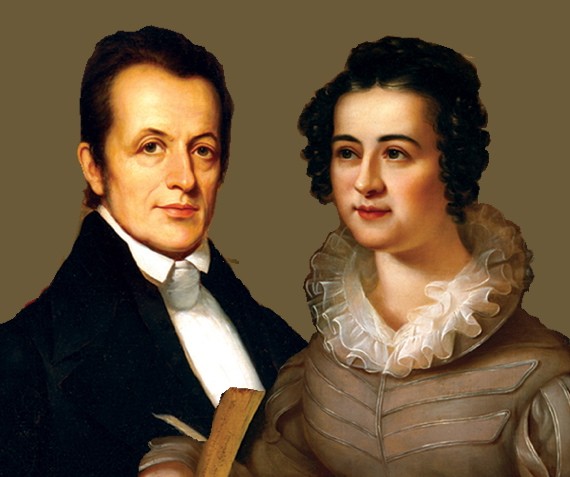
    AAJudsonAnn Hasseltine asked Adoniram Judson to write to her father and ask for permission in order to begin a courtship with her, this is what he wrote in July, 1810:

    “I have now to ask, whether you can consent to part with your daughter early next Spring, to see her no more in this world; whether you can consent to her departure, and her subjection to the hardships and sufferings of missionary life; whether you can consent to her exposure to the dangers of the ocean; to the fatal influence of the climate of India; to every kind of want and distress; to degradation, insult, persecution, and perhaps a violent death. Can you consent to all this, for the sake of him who left his heavenly home and died for her and for you; for the sake of perishing immortal souls; for the sake of Zion, and the glory of God?”

    That is some proposition!

    Ann’s parents ended up letting her make the decision. And in her journal she writes:

    Jesus is faithful; his promises are previous. Were it not for these considerations, I should, with my present prospects., sink down in despair, especially as no female has, to my knowledge, ever left the shores of America to spend her life among the heathen; nor do I yet know that I shall have a single female companion. But God is my witness, that I have not dared to decline the offer that has been made me, though so many are ready to call it a “wild, romantic, undertaking”.

  • Jonathan Edwards On The Nature Of Conversion

    Jonathan Edwards on conversion, in A Faithful Narrative of The Surprising Work of God:

    These gracious discoveries given, whence the first special comforts are derived, are in many respects very various. More frequently, Christ is distinctly made the object of the mind, in his all-sufficiency and willingness to save sinners; but some have their thoughts more especially fixed on God, in some of his sweet and glorious attributes manifested in the gospel, and shining forth in the face of Christ. Some view the all-sufficiency of the mercy and trace of God; some, chiefly the infinite power of God, and his ability to save them, and to do all things for them; and some look most at the truth and faithfulness of God. In some, the truth and certainty of the gospel in general is the first joyful discovery they have; in others, the certain truth of some particular promises; in some, the grace and sincerity of God in his invitations, very commonly in some particular invitation in the mind, and it now appears real to them that God does indeed invite them. Some are struck with the glory and wonderfulness of the dying love of Christ; and some with the sufficiency and preciousness of his blood, as offered to make an atonement for sin; and others with the value and glory of his obedience and righteousness. In some the excellency and loveliness of Christ, chiefly engages their thoughts; in some his divinity, that he is indeed the Son of the living Cod; and in others, the excellency of the way of salvation by Christ, and the suitableness of it to their necessities.

  • Church Marketing in 1892

    I’m slowly making my way through the reading of old church meeting minutes (as you do) and I’ve come across this entry in the Deacon’s Meeting on June 15, 1892:

    “Resolved that Sunday services be advertised in (The) Age newspaper every Saturday.”

    It seems that this is the first evidence of church public church marketing in this congregation. At a Deacon’s Meeting in on September 9 of the same year they extended this advertising to Mondays and Tuesdays too.

    Fascinating.