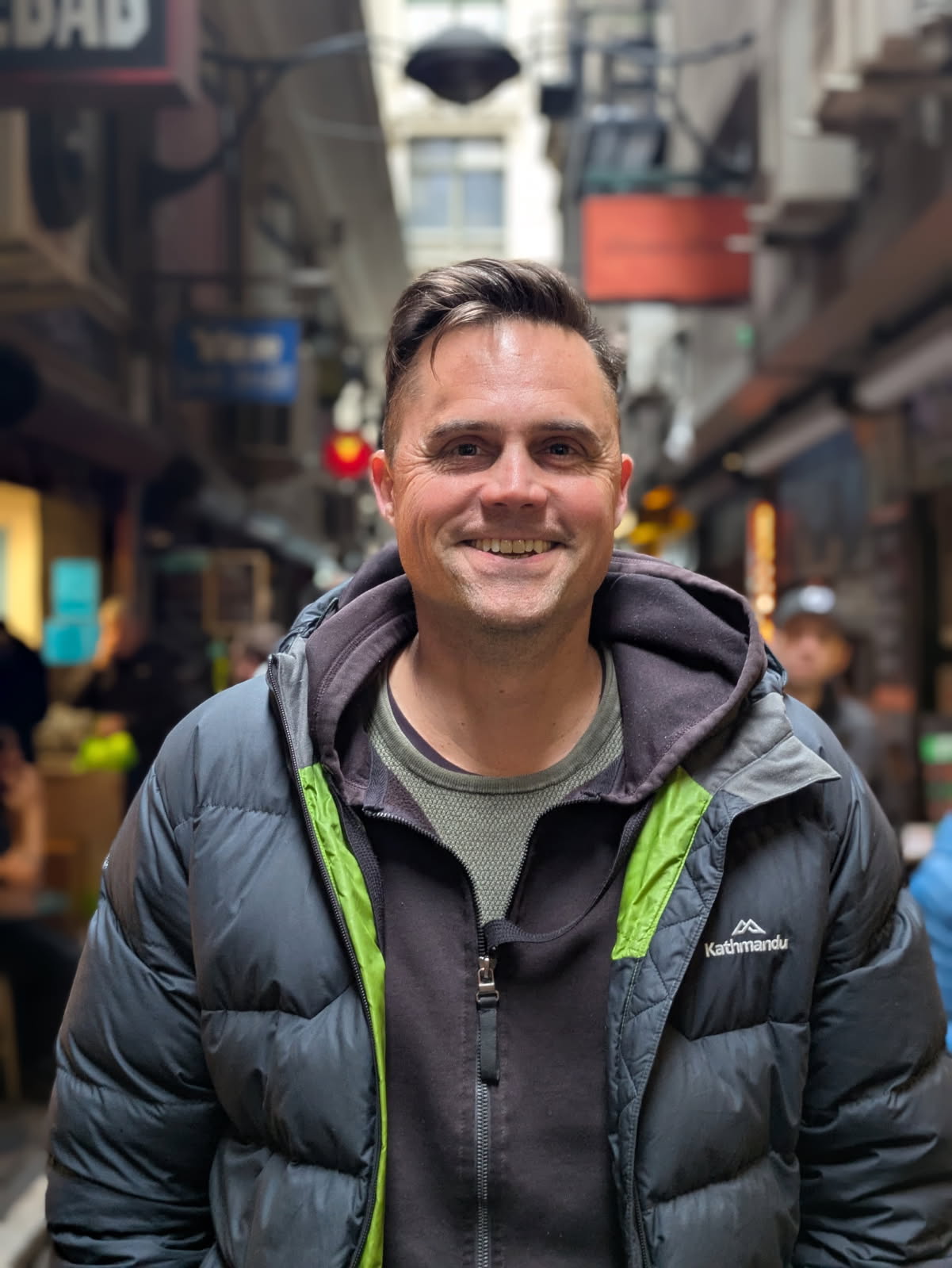
Hey, I’m Jon.
And this is where I write about life and faith, no niche included. Just an honest attempt to be faithful and fruitful for Jesus. If that’s something you want more of, subscribe.


  • My Top Books of 2022

    If you’re a regular reader of this blog then you’ll know books play a key role in my weekly, monthly, and yearly rhythm. I have numerous books going at once. I am surrounded by books in my office. If I’m not reading then I don’t think I’m living a particularly healthy or helpful life. And when it comes to holiday periods I’m usually struggling to decide which books to leave behind and not take with me. 

    This year has involved a few changes in life circumstances but it has also included a strong desire to keep reading, even though there have been times where it has lapsed for weeks on end. In any case, this year I’ve managed to work through 36 books, ranging from biography to practical theology to trashy crime novels. And, as usual, I have a few here to recommend to the interested reader.

    Bonhoeffer on the Christian Life: From the Cross, for the World by Stephen J. Nichols

    I can’t recommend ‘The Christian Life’ series enough, so much so that there are two on this list. 

    If you’re unfamiliar with Dietrich Bonhoeffer then this is a good introduction to him. He is considered a friend to both liberal and conservative theologians with much written about his days as a pastor-theologian in Germany during the 1930-40s. It is clear Bonhoeffer was a very smart and clever man, someone with an exceptional intellect who could interact with scholarship. However he is also known for his mentorship and community-driven focus on what it means to be the church together. This book highlights Bonhoffer’s life in Nazi Germany and the tension of being a disciple in such a regime, his heart as a pastor, and the various theological themes that helped guide his life and understanding of God.

    The Life of Martyn Lloyd-Jones – 1899-1981 by Iain H. Murray

    I think this is the best biography I have ever read. Murray condenses his large two-volume set on Lloyd-Jones into one, and I think he makes it better, sharper, and more poignant. 

    Martyn Lloyd-Jones was a significant Welsh evangelical pastor of the 20th century, sensing a call to the ministry while entering the echelons of the medical fraternity in London, England. Lloyd-Jones’ upbringing wasn’t easy, with his father making some unwise decisions for the family unit that meant they struggled financially. However, given his aptitude and some help along the way Lloyd-Jones studied and was mentored in medicine by the top doctors in Harley St, London. However, in his late-20s he sensed a call to preach and with his wife moved back to Wales to serve in a local church. After 7 years he then moved to London again and was involved as assistant or senior minister at Westminster Chapel. 

    This biography gives a terrific outline of his life and the major turning points in his faith. It works through his childhood and some tragedies that occurred during that time that may have shaped him further in life. The book I have now has oodles of underlines in it and it is an encouraging and inspiring read, particularly for anyone considering or in ministry. Those seeking to know more about a minister-preacher a generation or two behind us will also find it enjoyable. 

    Church Elders: How to Shepherd God’s People Like Jesus by Jeramie Rinne

    I found this a helpful book to consider what the criteria for elders is and also how to think through their role in the local church. It gives a clear understanding of biblical eldership, although some will debate the complementarianism that is explicit throughout. Nevertheless, this is a book worth working through with leadership groups or other pastoral staff. It is worth talking through the chapters presented with elders themselves. This book isn’t everyone’s cup of tea, but if you’re in church leadership or at a church that has people considered ‘elders’ then this would be a helpful volume. 

    Teach Us to Pray: The Lord’s Prayer in the Early Church and Today by Justo L. González

    I read a number of books on prayer in the lead up and during a series I preached through the Lord’s Prayer. I found this work to be the most fascinating as it works through each line of the prayer through a historical theology lens. That is, it talks about the meaning of the text as it has been understood by the great theologians and pastors of church history, working from the early church fathers, through the middle ages, into the reformation and then more recently. I just found this so helpful and it provided more insight into the text. It was also comforting to know how powerfully this prayer has been through the ages and that we continue to be part of that today. 

    The Lion, the Witch and the Wardrobe by C.S. Lewis

    The Narnia series is almost an annual read for me and in this year’s read through I was struck by the classic story of The Lion, the Witch and the Wardrobe. Perhaps part of the joy in reading this again was that I read it with my daughter too, but it again highlighted those Christian themes of discipleship, love, sacrifice, and the whole good versus evil things as well. If you’ve never read it then you’ve got to grab a copy. If you have and it’s been a while then I’d recommend returning to it. 

    Preaching for God’s Glory by Alistair Begg

    Preaching has gone up a step for me this year. In becoming a senior pastor the majority of the years preaching has now fallen to me. This being the case I thought this short book on preaching was a helpful reminder in the task. While I may have read plenty of books on preaching there is always more to learn, think through, and be reminded of. I found this book does all of these things. Plus, Alistair Begg is my favourite preacher of this era so I knew I was going to like it. 

    Philippians: An Introduction and Commentary by Jeannine K. Brown

    Next year our church will spend a significant amount of time in the Letter to the Philippians. As part of my preparation I read through this commentary on the book. It’s a reasonable length, published in 2022, and an update in the Tyndale New Testament Commentary series. 

    I found Brown engaging in her writing of this work and it gave me good insight into the issues that modern scholars are thinking through about the letter. Because it has been so recently released I feel like it has given me good oversight of things commentaries in the past may not have been thinking about. If you’re leading a Bible study on the book, preaching through the letter yourself, or just want some further depth to personal study then you won’t find much better. 

    The Work of The Pastor by William T. Still

    I’d never come across William Still before reading this book. He happens to be a 20th century minister of a church in Scotland and had a strong expository preaching ministry. Again, like Begg’s preaching book above, I found this a helpful volume as I stepped up into the senior leadership role. 

    This is part biography, part war stories, and part ministry tips. It’s not a long book, it’s full of examples that relate to anyone who has been in ministry for a while, and it provides insights to the work from a Scottish perspective. I was encouraged and inspired in parts as it reminded me of the main focus of pastoral ministry.

    Lloyd-Jones on the Christian Life: Doctrine and Life as Fuel and Fire by Jason C. Meyer

    Yep, you read that right, another Lloyd-Jones book, this time in ‘the Christian Life’ series. Flowing on from the Murray biography is a dense volume that not only dips into aspects of his life but gives a greater focus on the theology Lloyd-Jones taught and lived. From a theology of God the Father and God the Son through to the work of the Spirit to a theology of prayer and preaching this isn’t an easy read but a worthwhile one in thinking through such themes. I took a few turns in getting through it but found it helpful in my understanding of God and living the Christian life with solid foundations. 

    Well, this now makes it nine years in a row where I’ve published my favourite books of the year. If you’re game enough you can go back and have a read of previous years here: 2014, 2015, 2016, 2017, 2018, 2019, 2020, and 2021

    If you’re that keen to know all the books I’ve read in 2022 then head to Goodreads to see a summary.


    My Top Books: Yearly Series
    2014
    2015
    2016
    2017
    2018
    2019
    2020
    2021
    2022 (this post)
    2024
    2025

  • 3 Specific Reading Reflections

    Reading is an important building block in my life. It’s part of my relaxation and leisure time, it’s part of my role as a pastor, it’s part of my development both personally and professionally. Reading, forever and a day, has always been part of my life and I can’t really think of a time when I haven’t read. Maybe late high school and into university, but that’s about it.

    Each year I have a certain number of books I seek to read. This number of 26 (equivalent to one per fortnight) hasn’t changed since I was 24 years old. Some years I don’t make this target, most years I exceed it. And I don’t say this for boasting sake, but I say it for goal-setting purposes. I know I won’t be able to finish a book each week. I know I won’t be able to retain as much information as I would like if I read more non-fiction than I already do. I know I prefer to read physical books over audiobooks and ebooks. I know certain things about my reading habits, now having analysed my last 15 years of reading.

    However, over the years I have learnt certain aspects to reading that has helped me know myself more. This includes these three tips below. Perhaps they’ll be helpful for you as you think about your reading too.

    1. Choose Books You’re Interested In

    If you’re not interested in the topic or theme of a book don’t waste your time. There are too many books out there to waste time on ones you’re not interested in. For example, I’m not particularly interested in reading about military battles, so I don’t really read anything military related. I’m interested in sport biographies, particularly cricket and basketball. I’m interested in Christian history. I’m interested in junk-time crime thrillers. None of them may interest you, you may think they’d be so boring. Stay away then. Pick books you’ll be interested in, it makes reading easier.

    2. Stop Reading The Book If It’s Terrible

    There is no need to finish a book if it’s not happening for you. If you are finding a book isn’t meeting your expectations then just stop and leave it. You don’t have to finish every book you pick up. Last year I tried to read a very popular leadership book by one very famous and highly recommended leader. I got about 60-80 pages in and pulled the pin. I found the writing terrible, the examples used were lacking depth, and it just didn’t seem like a book worth the expectations. It was time to finish up.

    3. Use A Pencil, Mark-up the Margins, and Dog-ear the Pages

    A book is to be read, and to be used. Show me a book in perfect condition and I’ll show you a book that either hasn’t been read, thought about, or digested.

    A book is one of the cheapest development tools, particularly if we’re thinking non-fiction, and so we should mine the gold as much as possible. What other lifelong development tool is available for $15-$25?!

    When reading non-fiction I like to use a pencil to underline important sentences and paragraphs. I’ll also dog-ear the page so that I know there’s something important in the book that I can go back to and make reference to or re-read later. I also make notes or comments in the margins that spark thoughts or memories or questions. Sometimes I even write short notes at then of chapters. Doing this slows my reading down, but it also allows me to think through the various issues and helps me learn more from the book. At the end of every read I usually copy those underlines and dog-eared paragraphs into a searchable digital format.

    I get it. I enjoy reading. I enjoy learning. I think it has a place and priority in life. You may not. I get it. However, if you want to get more into reading or would like to improve in it then that’s a few random reading reflections for you. Any you would add?

  • My Top Posts of 2021

    I continue to write and seek to express myself and hopefully encourage others along the way too.

    This past year has seen my writing develop in different ways, and less so on this blog than I would’ve liked. I’ve been taken up with writing more sermons due to an increased teaching role at my church. And, one of the unique writing projects I completed this year was a weekly review focussed on Supercoach (fantasy AFL) during the footy season. This meant that time and dedication to writing in this space dissipated from previous years. And to be honest, another year of lockdowns had an affect on this too.

    Nevertheless, I continue to commit myself to writing. I find it is the best way for me to express myself and to find clarity of thought. It’s also an enjoyable experience to have written, to finally hit publish on a post about an idea that I’ve been mulling away on for a while.

    Having only posted 13 times in the past 12 months you’d think people would simply stop reading the articles and posts I have here. However, this hasn’t been the case. There are still a number of popular posts that continue to have traction with people, which is certainly pleasing as a writer! It seems that I had about the same amount view this blog as I did last year, which is to say just over 9200 hits all up.

    As to what has been popular this past year, here are the top five posts for 2021:

    1. God’s Love Expressed: Through The Cross
    2. The Lord of The Lockdowns (published in 2021 and on TGCA)
    3. Martin Luther On Complete Forgiveness of Christ
    4. My Theological Library
    5. 11 Things: The Senior Pastor-Youth Pastor Relationship

    If you’d like to explore more of what has been popular on here in previous years you can do so here: Top posts for 202020192018201720162015. I also have a collection of writings published elsewhere, which you can find here.

  • My Top Books of 2021

    I’ll be honest. I’m not particularly satisfied with the balance of my reading this year. Sure, I well and truly went over my goal of 26 books for the year, but the balance of authors and topics just wasn’t right. If I was to analyse it I would say that I didn’t have enough ‘old’ books, ones which might have helped my understanding of the present world from the perspective of a different time and place. Perhaps this might change as I begin to think about next year’s books.

    Nevertheless, there were some great books I did read this year, many of which I would strongly recommend to others and, in fact, have purchased as Christmas presents to fellow pastoral staff members. The books below are all books I gave 5 out of 5. In my opinion they were excellent.

    The Care of Souls by Harold L. Senkbeil
    It was no surprise this book won a 2020 Christianity Today Book Award. While Senkbeil is not of my denominational persuasion, it is clear that he has a great grasp on what it is to minister to people in a congregation. The book walks through aspects of pastoral ministry, highlighting the need to pastor souls within the system of the whole. What I found most helpful was the reminder to focus on people over programs, and the encouragement to give thought to helpful ways in which to care for people in life and death.

    Gentle and Lowly by Dane Ortlund
    This book has also won many plaudits and has been promoted heavily in certain circles. I loved the reminder of Jesus’ own description of himself as ‘gentle and lowly.’ I found the first half of the book the most compelling—so compelling that I used Ortlund’s angle in a sermon I preached on Matthew 11:28-30. In a time of busyness, change and added pressure, this book helped to remind me of how Jesus is the one in whom we can rest.

    Spirit and Sacrament by Andrew Wilson
    Our young-adults group did a four-week series on spiritual gifts earlier this year. I read plenty about the topic but found this book most helpful. While the Baptist in me had a few quibbles, the understanding of the Spirit’s work through the gifts today helped solidify my continuationist position. This is not a long book, but it is profound and gets straight to the core issues surrounding spiritual gifts and ordinances.

    Congregational Leadership in Anxious Times by Peter L. Steinke
    What other book does one need to read in the times we live when everyone seems anxious, weary, and stressed by the pressures of the day. Despite being written a little while ago, it is still helpful and helps the reader understand the ‘system’ of our churches. It can help us appreciate, not only understand, the levels of anxiety within our communities, and also how best to lead a congregation in these times. An excellent read for anyone in pastoral ministry

    Visit the Sick: Shepherding the Afflicted and Dying in Your Congregation by Brian Croft
    This is a short practical guide to help pastors and pastoral carers help those who are sick. Brian Croft uses his years of expertise in ministry to provide practical suggestions in how to care for those who are locked-in due to their health, or who need visiting in hospital or at home, or who need to be cared for because loved ones are dying. A perfect book to work through with a group of people and apply it to your local church community.

    Read to Lead by Jeff Brown
    I jumped on one of those pre-release deals to gain a whole lot of other resources alongside this book. I suspect that any of us who have written at TGCA or in these ‘Year in Books’ series would agree that our leadership has been helped by our reading. This book offers both anecdotal and research-based insight into the value of reading. It is a personal growth book with the sole purpose of encouraging leaders to read more and make time for it. I was inspired by the reminder of how the accumulation of reading helps widen and mould my leadership. The importance of reading can’t be underestimated.

    The Looming Tower: Al-Qaeda and the Road to 9/11 by Lawrence Wright
    With the 20th year anniversary of 9/11 this year, there were plenty of books, podcasts, and documentaries reflecting on its impact. I found myself listening to this in-depth audiobook, covering everything from the beginnings of Al-Qaeda, the political climate of the 1970s through to 2001, and the formation of those participants involved in the event itself. It was a compelling 15-hour listen, and I’d recommend it.

    Expositional Preaching by David R. Helm
    Again, this book isn’t a long one but is a great reminder of the importance and place of expositional preaching in the life of the church. While there is a brief case made for the priority of this preaching in the church, I found the practical aspects formational. Topics such as the importance of systematic theology; the balance of contextualisation; the arrangement of material in the sermon; effectiveness through understanding your audience, make this book a great gift for your pastoral team or a book to work through together.

    Leadership is Language: The Hidden Power of What You Say – and What You Don’t by L. David Marquet
    Leadership has evidently been a theme in my reading this year, and this was probably the best of the secular leadership books I read. Marquet is known for his TED talk and first book, Turn The Ship Around, which focusses on how, as the commander of a poor performing submarine, he made it the best performer by enabling others to make decisions. Leadership is Language focusses further by highlighting the need to not only ask others to collaborate but also to give people time to pause and reflect on what might help make the work more effective.

    I found this book helpful in providing me with better questions to ask. Marquet provides great examples of when and how to put intentional leadership into practice through the language we use, rather than stifling collaboration through directive and authoritarian questions. This is certainly a worthwhile read for those of us leading teams of people.

    This is now the eighth year in a row I’ve published a post that outlines my favourites books for the year. You can go back and have a read of previous years here: 201420152016201720182019, 2020.

    This post was also published at The Gospel Coalition Australia as part of their ‘My Year In Books’ series.

    If you’re that keen to know all the books I’ve read in 2021 then head to Goodreads to see a summary.


    My Top Books: Yearly Series
    2014
    2015
    2016
    2017
    2018
    2019
    2020
    2021 (this post)
    2022
    2024
    2025

  • Soft Serve Ice-Cream or How I am Trying to Avoid the Harm of Wealth Hoarded

    Below is a guest post by Steve, a member of my church, who writes a terrific little thoughtful piece that will make you think and have a chuckle at the same time. Enjoy.


    Recently my Mum passed away after a short illness. She was a generous soul. The whole experience has triggered a number of thoughts, including her lived example and images of soft serve ice cream.

    It’s a metaphor.

    Soft serve ice cream is hardly a food, certainly not one that is healthy or that we need but on occasion it is okay to have as a treat. In fact I believe it is very good to do so, and one day we won’t be able to treat our loved ones because they have gone; either passed on, or just away.

    In some ways my two children are smarter and, in some cases, even wiser than me (they must have had a good upbringing). I’ve had a tough time at work recently, actually over the last couple of years, and one of my children has repeatedly said to me that I should retire. True enough it would be good for my mental health. The reality is that it would mean quitting my job without an alternative source of income, which is not an ideal situation. Financially I am in an okay spot, and working keeps me in a good spot. However, my intention is not to store up riches upon riches as an end to itself but rather to prudently save. With enough extra for soft serve ice cream once in a while, of course. Neither extreme is good for me spiritually. To ask a rhetorical question – Why does God bless us with gifts, talents and finances if not to give them away?

    The words of Jesus in Matthew 6:19-20 are helpful for me in this.

    “Do not store up for yourselves treasures on earth, where moths and vermin destroy, and where thieves break in and steal.  But store up for yourselves treasures in heaven, where moths and vermin do not destroy, and where thieves do not break in and steal.”

    Are there certain lessons which we only truly learn through age and personal experience? Even though it ends up being an expensive way to learn. Probably.

    Of the times that I could have treated my children but didn’t for fear of spoiling them (and there were not many of those) I wish that I could go back and treat them ten times over. Perhaps this is also an impact of COVID lockdowns.

    We have all lost a lot, not the least of which is time, which is difficult to replace. I get the impression from reading the gospels that Jesus was always in the moment, blessing as the occasions presented and required.

    If I could have time with my Mum back what would I want to do?

    Probably go out for a soft serve ice cream.