• Preaching as Community Building

    Preaching as Community Building

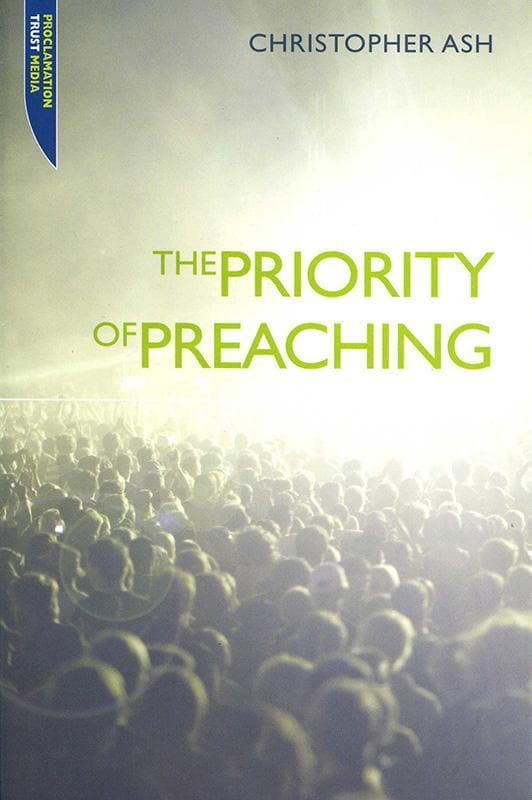
    In this book, The Priority of Preaching, Christopher Ash highlights how preaching isn’t just about personal or individual growth but it is for shaping and growing community. He pushes back against the idea of faith as an individual journey, suggesting instead that preaching is a communal act that draws the church together under God’s Word. He’s already made the point that preaching is to have a sense of urgency. Here Ash argues that preaching isn’t to be a private conversation between the preacher and the individual listener; it’s an act that gathers and unites believers who are strengthened and encouraged together by His grace

    At one point Ash writes, “The church is not a collection of individuals who sometimes assemble; it is an assembly whose members may sometimes be dispersed.” This reflects his belief that the church isn’t defined by the scattering of believers during the week but by their gathering regally together to hear the Word preached. Therefore, preaching builds up the church as a whole. It is the reminder that all parts of the body make up the body, when one part is missing then it’s not the whole. This is similar to 1 Corinthians 12:12, “Just as a body, though one, has many parts, but all its many parts form one body, so it is with Christ.”

    The communal nature of preaching can be traced back to the Israelites’ gatherings in the Old Testament. Ash points out that in Deuteronomy, the people didn’t gather as isolated individuals; they assembled as a covenant people, standing together to hear God’s Word (Deuteronomy 31:11-13). This gathering wasn’t just a formality; it was a formative experience where they were reminded of their identity and purpose as God’s people. Preaching today carries the same purpose: it’s an act that brings people together, grounding them in God’s promises and shaping their collective identity as a church.

    What are the implications for today, then? 

    First, it challenges the modern day consumer mentality that can (or has) crept into churches, where people approach a service or gathering as a personal experience. While personal application may well be the outcome of the preaching of the Word, it goes beyond that toward fostering a communal identity and purpose grounded in the gospel. Similarly to Ephesians 4:12-13, where Paul describes the goal of ministry as “to equip his people for works of service, so that the body of Christ may be built up until we all reach unity in the faith.” preaching isn’t just about a message delivered; it’s about building up the church as the body in Christ.

    Second, this focus on the communal aspect of preaching is a reminder that the church is firstly a gathering of people who are united in Christ. It’s not merely a place for individual self help but a community built on God’s Word. Preaching, then, serves as a regular reminder of who we are together as a church, connecting each believer’s personal faith to a larger identity and greater story of God’s people. This, hopefully, helps us reflect Christ’s love to the world, not as a scattered group but as a community.

    Third, the reminder that preaching is communal highlights the role it has in culture. Ash suggests that preaching, when done with the gathered church in mind, becomes a point of difference between church and the world. This is not to say that preaching is an exercise in cultural critique, rather it should be for the whole of the church to respond to the whole world from a biblical worldview and gospel understanding. When preaching for community, instead of the individual, it enables gospel response and gospel conviction.

    Fourth, this angle on preaching makes us think about the church as something a little more fluid because of the group aspect, rather than simple Sunday services, or select individuals with large voices or passions. It means making application points toward the group as a whole, not just individual self-help messages. For example, when preaching on forgiveness, this is not just about how individuals can forgive, but how we do that collectively in the church and as a church toward others. 

    In some ways, preaching as building community means the preacher needs to recognise the team or the body aspect of the church. In shaping the church culture the calling for action there becomes a clear ‘we’, rather than ‘you’ posture. It is to do what the people under Ezra and Nehemiah do, hear the Word of God, be attentive to the Word of God, and then turn to worship God under the Word of God (Nehemiah 8). 

    Christopher Ash’s vision of preaching as a communal building act causes us to move beyond thinking about the individual and realise its power in the collective gathering of God’s people. In doing so we are strengthened and bound more deeply together as followers of Jesus.

  • Preaching With Urgency

    Preaching With Urgency

    In The Priority of Preaching, Christopher Ash challenges those of us who preach with the call to urgency. Last time, I highlighted the idea of preaching grace, this time I want to explore how the pulpit isn’t just a platform for explaining scripture, but a place to bring a sense of urgency to the gospel. Ash argues that preaching isn’t simply giving over information, it’s a call to action that seeks a response. 

    Ash tells a story or illustration about “three apprentice devils” training under Satan. The first suggests they convince people there’s no God, but Satan isn’t impressed, noting that even in a secular world, many still feel a pull toward belief. The second proposes they argue there’s no judgment. Again, Satan says this won’t work, as people often sense that actions have consequences. Finally, the third apprentice suggests whispering, “There’s no hurry.” This plan, Satan says, will work because it plants a subtle complacency, pushing people to put off responding to the Word, assuming they’ll get to it someday.

    The point made here is connected to the words of Paul in 2 Corinthians 6:2, “Now is the time of God’s favor, now is the day of salvation”. Responding to the Good News is not something to delay. Preaching, then, needs a sense of urgency to combat the tendency to postpone faith or repentance. Without it, people may listen without ever responding, pushing away a decision that requires action today, not tomorrow.

    This urgency can shape the way we approach sermon content and tone as well. Ash writes, “The urgency of faith means we need to preach with urgent passionate clarity.” In other words, urgency doesn’t mean delivering an emotional message or stirring up an anxious response. It’s about bringing clarity and conviction, preaching with a confidence that God’s message requires immediate attention. 

    A look at biblical preaching shows this same urgency. John the Baptist’s message, for instance, was clear and direct: “Repent, for the kingdom of heaven has come near” (Matthew 3:2). Jesus Himself speaks with a sense of immediacy, calling people to follow Him without delay (Matthew 4:19-22). The apostles in Acts don’t simply preach for knowledge; they’re actively calling people to repent and believe, with Peter in Acts 2 urging his listeners, “Repent and be baptized…for the forgiveness of your sins” (Acts 2:38). In each of these cases, the call is immediate and direct, a reminder that responding to God’s Word is essential.

    Ash’s perspective on urgency challenges us to recognise that we have a responsibility not only to explain the Word but to call people to respond. There is a place for teaching and a place for exhorting, and urgent preaching holds both together, pointing people in the right direction but also giving a “shove,” as Ash puts it, to get them started. This approach challenges the idea of “neutral” preaching—an invitation to consider a message without pressing toward response. For Ash, that kind of preaching risks becoming little more than a lecture, missing the power and purpose of the pulpit.

    The urgency in preaching is not about creating panic or fear but about presenting the gospel in a way that recognises its eternal weight. Ash writes that preaching is never simply information transfer; it’s always aimed at transformation. This brings to mind the warning in Hebrews 3:15, “Today, if you hear his voice, do not harden your hearts.” 

    For those of us who preach regularly, this means preparing sermons with the challenge of urgent decision-making, rather than assuming listeners will naturally follow through. Ash’s approach encourages preachers to explicitly call for a response, trusting that God will use the preached Word to reach those who hear. Our role as preachers, then, isn’t just to explain; it’s to invite and challenge people toward an active faith that starts today.

    In the end, Ash’s perspective on urgency in preaching reminds us that the Word of God calls us to act now, not “someday.” This approach is a counterbalance to our tendency to wait, putting off faith decisions until they seem more convenient. Ash’s point is that, as preachers, we are watchmen—our role is to sound the alarm, not to let people stay in spiritual comfort or complacency.

  • Preaching Grace

    Preaching Grace

    In The Priority of Preaching, Christopher Ash writes about that which can get overlooked in our churches: preaching being centred on grace. Ash argues in his book that the preaching of grace is essential, as it keeps the church from turning into what he calls a “club” where people gather around shared interests or personalities rather than a shared commitment to Jesus Christ. Instead, preaching on grace builds a community in humility and binds us together through the Good News rather than individualism. Ash writes, “only the word of grace knocks down our pride.” And it is in this posture we are able to turn back to God, reminding each of us that we are “all one in Christ Jesus”. The playing field is levelled, all of us fall short, and the togetherness of us as believers is on our shared dependence on the mercy of God. 

    This emphasis on grace goes beyond just avoiding pride; it’s also about cultivating a healthy church culture. Without the regular proclamation of grace a church can quickly become an exclusive group that relies on human similarities rather than the gospel to stay connected. This drift can happen subtly, but Ash’s point is that grace is the only foundation strong enough to hold together a diverse community. The church isn’t meant to be a gathering of people who all look, think, and act alike; it’s a people transformed and unified by God’s grace, regardless of background or personality (Romans 12:3-5).

    The challenge to pastors is to make grace a consistent theme in our preaching, a commitment that prevents the church from developing a “club mentality.” Grace-centred preaching doesn’t just speak to an individual heart, it impacts and transforms the whole church. When grace is preached we are reminded of our own limitations, the unnecessary drive to prove ourselves, and a skewed view of success. The focus on grace points us back to the gospel, which calls us to be of one mind and heart, putting others above themselves (Philippians 2:1-14).

    As a flow on effect of this grace-filled preaching the life of the church reaches outside its walls. Well, it should drive us to this. If we are marked by humility and grace, which flows from this kind of preaching, then the culture of the church is to be a place where others are welcomed, even if they don’t seem to ‘fit’. Ash tells us that those churches that preach grace will stand out, drawing others in through the authenticity of the community that is impacted through grace. 

    In practice, this call to preach grace challenges those of us who do preach regularly to focus on the greatness of the gospel, not simply giving our hearers things ‘to do’. While there will be challenging moral and behavioural aspects articulated in preaching, because Scripture is like this too, it does mean framing these things in the context of grace. For example, instead of preaching a “try harder” message, we can emphasise that growth in holiness is an ongoing response to God’s love, not a checklist for approval.

    As Ash explains, grace is the church’s “ tune.” Without it the church will gradually lose its true identity. Grace keeps the church as the body of Christ. By keeping grace at the centre we create a church culture that reflects the gospel, and open ourselves to be a community that is transformed by it.

  • The Priority of Preaching by Christopher Ash

    The Priority of Preaching by Christopher Ash

    In The Priority of Preaching, Christopher Ash argues that preaching is not just another church activity but the foundation upon which the church is formed, sustained, and strengthened. Ash presents preaching as the central means by which God calls His people together, aligning the church under His Word to shape their lives, faith, and identity. While the book is a bit academic in parts, Ash’s use of memorable illustrations and his practical advice on the task of preaching make it worth the read.

    Ash builds his case around Deuteronomy, which he describes as less a “law book” and more a “preaching book.” He points out that in Deuteronomy, Israel gathers under Moses to hear God’s Word, binding them together as His people (Deuteronomy 31:11-13). This gathering isn’t about individuals gaining private insight; rather, it’s a communal moment where the people are shaped under the authority of God’s spoken Word. For Ash, this dynamic continues today. Preaching is a way for the church to gather, listen, and respond together to God.

    A major theme in this book is grace, which Ash argues must be central to preaching. He points out that without regular, grace-centred teaching, churches risk becoming exclusive clubs rather than communities of believers bound by Christ. He writes, “only the word of grace knocks down our pride,” reminding us that the gospel keeps believers grounded in humility and dependent on God (Ephesians 2:8-9). This recurring call to grace is a practical one, as it reinforces that the church’s unity and health are not built on shared interests or human qualities, but on the common need for God’s saving grace. Ash’s emphasis here brings to mind Paul’s words to the Galatians, that we are “one in Christ Jesus” (Galatians 3:28), a unity that only grace can sustain.

    Ash insists on the urgency of preaching. He uses an illustration of three apprentice devils who each try a different strategy to prevent people from responding to God’s Word. The final one whispers, “Tell them there’s no hurry.” This tactic succeeds, as people assume they can respond later, just “not today.” For Ash, preaching must challenge this mindset, delivering the message with urgency to avoid spiritual complacency. “The urgency of faith means we need to preach with urgent passionate clarity,” he writes, stressing that preaching should move people to a point of decision. This is a reminder that preaching isn’t just informative; it’s intended to encourage people toward repentance and faith, and “spur one another on toward love and good deeds” (Hebrews 10:24).

    Another key insight is the way Ash views preaching and community as closely connected. He argues that preaching isn’t just for individual growth but for binding the church together as a people. “The church is not a collection of individuals who sometimes assemble; it is an assembly whose members may sometimes be dispersed,” he says. This means that the assembly under the Word reflects Paul’s description of the church as “one body with many members” (1 Corinthians 12:12). It is a reminder that the church is not simply a place to receive spiritual insight but is a gathering that God shapes and grows collectively through His Word.

    In terms of the role of the pastor, Ash sees the pastor as a shepherd whose primary task is to “feed the flock” through preaching (John 21:17). Drawing on theologians like John Owen, Ash describes preaching as the pastor’s core responsibility, one that must be done with diligence and humility. The pastor’s role is not about personal authority but about humbly stewarding God’s Word to guide the church. 

    The Priority of Preaching is a book that reinforces the essential role of preaching for the church. The book has an academic tone that can make it a slower read in parts, but uses illustrations to enliven the chapters and make it more accessible. Although some sections may be dense, the book’s core ideas around grace, urgency, community, and pastoral responsibility make it a helpful resource for those who preach or lead within the church. With its combination of practical insights and vivid examples, The Priority of Preaching is a four out of five stars book, bringing practical depth and encouragement for the Church and the preacher. 

  • The Great Salvation: A Warning Against Neglect

    The Great Salvation: A Warning Against Neglect

    In my previous post, we explored how Hebrews 1 establishes the supremacy of Jesus over the angels. This understanding sets the foundation for the message in Hebrews 2—a warning not to neglect the great salvation that Jesus offers.

    This isn’t just an ancient admonition; it is also a warning for us today. We live in a world full of distractions, temptations, and trials. It’s easy to lose sight of what’s important, the core of our faith. Hebrews 2 urges us to hold fast, to be anchored, to Jesus, the author of our salvation. In so doing he tells us to be vigilant against the slow drift that can pull us away from Him.

    Do Not Neglect the Great Salvation

    Hebrews 2:1-4 opens with a direct and urgent exhortation:

    “We must pay the most careful attention, therefore, to what we have heard, so that we do not drift away.”

    The imagery of drifting is helpful.

    Think of a boat tied to a pier, its ropes securely fastened. As long as the knots are tight and the ropes strong, the boat remains anchored, no matter how strong the currents or waves. But if the knots loosen, if the ropes fray, the boat begins to drift, carried away by the unseen pull of the tides. The same is true for our faith. If we are not anchored to Jesus—in other words, ‘if we do not pay careful attention to what we have heard’—we can slowly, almost imperceptibly, drift away from our faith.

    The Danger of Drifting

    This warning isn’t about a sudden, conscious rejection of faith. It’s about the subtle, almost invisible drifting that can occur when we neglect our relationship with God. Some questions worth reflecting on for ourselves, which may help us evaluate where we are at, include:

    • Have you found yourself neglecting the reading of God’s Word, allowing days or weeks to pass without opening your Bible?
    • Have you neglected prayer, letting your conversations with God become infrequent or shallow?
    • Have you been absent from corporate worship, finding excuses to skip gathering with God’s people?
    • Have you neglected using your gifts to serve others, retreating into self-interest instead of investing in a community of faith?

    These are the areas where drifting often begins. The author of Hebrews warns that neglecting this great salvation will have serious consequences. He reminds us that the Law, delivered by angels, was binding and disobedience to it was met with just punishment. How much more severe will the consequences be if we neglect the salvation offered by Jesus, the Son who sits at the right hand of the Majesty (1:4)?.

    Anchoring Ourselves to Salvation

    So, how do we stay anchored?

    The answer is not just to “read your Bible and pray,” though those are essential practices. Staying anchored requires a conscious effort, an intentional commitment, to remain in communion with God. It means recognising our deep need for Him and seeking to deepen our relationship with Him through worship, community, and obedience. This could look like:

    Worship: Engage in both personal and corporate worship, reminding yourself of God’s greatness and your dependence on Him.

    Community: Stay connected with other believers who can encourage, challenge, and support you in your walk with Jesus.

    Obedience: Be diligent in following God’s commands, not out of obligation, but out of love and gratitude for the salvation He has given you.

    In a world that constantly tests and tempts, it’s easy to let those ropes loosen and find ourselves drifting. Hebrews reminds us of the greatness of the salvation we have in Jesus—a salvation confirmed by the apostles, witnessed through signs and wonders, and guaranteed by the Holy Spirit. Don’t neglect it. Stay anchored to Jesus and live with confidence in His power and presence.

    Like that securely tied boat, ensure that your faith is firmly anchored, not drifting away with the currents of life. Hold fast to the salvation that comes through Jesus, recognising the seriousness of the warning and the greatness of the gift we’ve been given.


    This is a series through the Letter to the Hebrews, based on sermons I have preached over the course of our sermon series. For other posts in this series please see:

  • New Podcast: Deep Dive

    New Podcast: Deep Dive

    In recent weeks I launched a new podcast, Deep Dive, for our church Mooroolbark Baptist Church.

    The idea had been bubbling away for some time. I think it give another good point of connection during the week, and the ability to communicate to our church in a different way and about a variety of things. At the moment it is focussed on providing a little more depth and application to our Sunday sermon series in Hebrews.

    There are now 4 episodes available online.

    Have a listen yourself and subscribe through Apple Podcasts, Spotify, or our YouTube channel.

  • Book Review: The Unhurried Pastor by Brian Croft and Ronnie Martin

    Book Review: The Unhurried Pastor by Brian Croft and Ronnie Martin

    The Unhurried Pastor by Brian Croft and Ronnie Martin is an important reminder for anyone in pastoral ministry, especially those feeling the strain of constant demands. The book challenges the modern ministry mindset, which often equates busyness with success, and instead offers a call to slow down, embrace limitations, and find strength in resting in Christ. There’s lots of thoughtful insights and practical wisdom. Croft and Martin help pastors rediscover a more sustainable and spiritually enriching way to lead.

    Embracing Limitations

    One of the foundational ideas in The Unhurried Pastor is the importance of accepting our limitations. Many ministers are driven by the desire to meet everyone’s expectations—whether those of their congregation, community, or even themselves. But this endless striving only leads to burnout and frustration. Croft and Martin remind us, drawing from the words of John Calvin, that “true and sound wisdom consists in two parts: the knowledge of God and of ourselves” (p. 3). This is a important point. When we are deeply aware of both who God is and who we are, we understand that our limitations are not failures—they’re a natural part of being human.

    Embracing limitations doesn’t mean we’re less effective; it means we’re leaning into God’s design. Instead of trying to be everywhere and do everything, we can rest in the truth that God is sovereign. The weight of the world—or the church—is not on our shoulders. When pastors accept their limits, they’re able to give more genuine attention to what truly matters, letting God’s strength work through their weaknesses. I will admit, this is something that can be hard to actually put into practice and I often need to remind myself of this.

    Redefining Productivity

    In a culture that prizes productivity, it’s easy to fall into the trap of measuring ministry success by how much gets done. The more programs, meetings, and events, the better—right? Croft and Martin challenge this assumption by encouraging pastors to redefine productivity in ministry. “True productivity in ministry is about being rather than doing” (p. 14), they write, pointing to the familiar story of Mary and Martha as a guiding example.

    Martha, in her busyness, missed the opportunity to sit at Jesus’ feet, while Mary chose the “better” portion by simply being present with Him. This story resonates with those who find themselves caught in a cycle of activity, running from one task to the next. The reality is that ministry is not about how many meetings are attended or how many tasks are accomplished. Instead, it’s about nurturing a relationship with Christ and leading others to do the same. By spending time in His presence, pastors can lead from a place of spiritual depth, rather than out of a need to prove their worth through endless busyness.

    For many of us, there’s a temptation to prioritise what’s urgent over what’s important. However, Croft and Martin remind us that spiritual productivity isn’t about ticking off tasks; it’s about being deeply rooted in Christ and allowing our ministry to flow from that relationship. This shift requires a rethinking of how we approach our day-to-day and week-to-week responsibilities, but as I’ve recognised, essential for a more sustainable ministry.

    Authentic Vulnerability

    Vulnerability has become a bit of a buzzword in leadership circles (thanks Brene Brown?), with many encouraging pastors to be more open about their struggles. But as Croft and Martin point out, there is a subtle but significant difference between authentic vulnerability and a curated image of vulnerability. The authors caution against the temptation to appear vulnerable without truly being transparent: “There is a difference between presenting oneself as a vulnerable and transparent pastor, rather than a vulnerable and transparent person” (p. 21).

    True vulnerability in ministry goes beyond the occasional mention of a struggle in a sermon or casual conversation. It’s about consistently living with honesty before God and others, even when it feels risky. Authentic vulnerability builds trust, both with God and with the congregation, because it shows a pastor who is fully human—dependent on God’s grace like everyone else. Croft and Martin encourage pastors to be more “psalmist-like,” laying their true selves before God in prayer and letting go of the need to maintain an image of invulnerability. When pastors model this kind of vulnerability, they help create a culture of authenticity within their church communities, where people feel safe to bring their own struggles and burdens to God.

    Rest and Renewal

    For me, perhaps the most important message in The Unhurried Pastor is the call to rest. In a world that glorifies hustle and productivity, the idea of rest can feel like a luxury—or even a weakness. Yet Croft and Martin emphasise that rest is not optional for those in ministry; it’s essential. They draw from the biblical pattern of Sabbath, reminding us that God built rest into the very fabric of creation. “The unhurried pastor knows Jesus is the Chief Shepherd over his church… It is only when a frantic, hurried pastor actually lets go that he truly rests” (p. 128).

    This kind of rest goes beyond simply taking a day off. It’s about a deep trust in God’s sovereignty, a willingness to release control and believe that God can and will sustain the ministry. When pastors neglect rest, they’re often trying to prove their worth by staying busy, or they’re afraid of what will happen if they’re not constantly ‘doing ministry’. But true rest comes when we let go and trust that God is in control. Rest, as Croft and Martin describe, is an act of faith—faith that God is capable of shepherding His people even when we’re not present.

    For pastors, this means regularly stepping away from the demands of ministry to replenish their souls, whether through prayer, time in Scripture, or simply enjoying life outside of pastoral duties. Without this regular rhythm of rest and renewal, burnout is inevitable. But when pastors take time to rest, they return to their work with greater clarity, energy, and a renewed sense of purpose.

    Conclusion

    The Unhurried Pastor is a timely and necessary reminder for those in pastoral ministry to slow down, embrace their humanity, and rest in God’s grace. Croft and Martin offer an alternative to the relentless demands of modern ministry (and life!), reminding us that our value is not in what we accomplish, but in who we are in Christ. By accepting our limitations, prioritising our relationship with God, and leading from a place of rest, we can experience a more sustainable and impactful ministry.

    As Croft and Martin conclude, “Pastors don’t need to be perfect or have it all together. They simply need Jesus” (p. 142). This truth is what sustains ministry—not our own efforts, but God’s grace working through us. For any pastor feeling the weight of their role or the pace of their life, this book offers practical wisdom and encouragement to embrace a slower, more sustainable approach to ministry.

  • The Supremacy of the Son Over Angels

    The Supremacy of the Son Over Angels

    Angels are a subject that often fascinates our culture. From their depictions in art and literature to their appearances in pop culture, angels are often portrayed as powerful, mysterious beings. Shows like “Supernatural” or “Touched by an Angel” present them as celestial figures with their own personalities and missions, often serving as intermediaries between heaven and earth. Even in music, with songs like Robbie Williams’ “Angels,” we see them as symbols of hope and protection. Yet, as captivating as these portrayals are, the Bible gives us a much deeper understanding of angels and their role in God’s kingdom.

    In the opening chapter of Hebrews, we find this truth: as significant as angels are, Jesus, the Son of God, is far greater.

    This isn’t just a theological point but begins to form our understanding of the greatness of the salvation Jesus offers. The writer of Hebrews makes this clear by emphasising the supremacy of the Son over angels, which sets the stage for the rest of the letter.

    Jesus Is Greater Than the Angels

    Hebrews 1:5-14 focuses on establishing the supremacy of Jesus over the angels. The author does this by weaving together a series of Old Testament references—seven in total—to demonstrate that Jesus has always been greater than the angels.

    1. The Reality of Angels

    The Bible doesn’t question the existence of angels; it assumes their reality. They are mentioned throughout Scripture as servants of God, carrying out His will. Angels protected Abraham (Genesis 19:1), delivered the Law to Moses (Acts 7:53), ministered to Elijah (1 Kings 19:5), and announced the birth of Jesus to Mary (Luke 1:26-38) and Joseph (Matthew 1:20-21). They even ministered to Jesus after His temptation in the wilderness (Matthew 4:11). In Revelation 5:11-12, we see angels worshipping Jesus, declaring His worthiness to receive power, wealth, wisdom, strength, honour, glory, and praise. Yet, despite their importance, they are never the focus of worship; that honour belongs to Jesus alone.

    2. The Son’s Greater Name

    The first point the writer makes is that Jesus’ name is far greater than any angelic name. In Hebrews 1:5, the author quotes Psalm 2:7 and 2 Samuel 7:14 to show that Jesus is uniquely identified as the Son of God. No angel has ever been given this title. The name of Jesus signifies His divine authority and unique relationship with the Father.

    3. The Son is Worshipped by Angels

    Hebrews 1:6-7 makes it clear that the angels worship Jesus (cf. Revelation 5:11-12). These divine celestial beings, who themselves are holy and God’s light, bow before Jesus, recognising His divine authority. This reinforces the idea that Jesus is not just another spiritual being; He is the object of angelic worship.

    4. The Son’s Exaltation

    Jesus has been exalted to the right hand of God, a position higher than the angels. This idea is supported by several Psalms (Psalm 45:6-7; 102:25-27; 110:1) quoted by the writer. The right hand of God is a place of supreme honour and authority, and it is here that Jesus is seated, ruling over all creation, including the angels.

    5. Angels as Servants

    Finally, Hebrews 1:14 tells us that angels are sent to serve those who will inherit salvation. This highlights their role as servants, not rulers. Their purpose is to assist in the unfolding of God’s plan, particularly in the lives of those who are saved by Jesus. This service again highlights the salvation Jesus offers, how it is so much greater that angels are sent to aid in its fulfilment.

    This first chapter of Hebrews serves as a powerful reminder: while angels are significant in God’s plan, they are not to be worshipped or revered above Jesus.

    The Son of God is far greater.

    He is the one whom the angels worship, and He is the one who holds the universe together.

    As we move into Hebrews chapter 2, we’ll see why this salvation that Jesus brings is something we must never neglect.


    This is a series through the Letter to the Hebrews, based on sermons I have preached over the course of our sermon series. For other posts in this series please see:

  • Pastoral Ministry and AFL Coaching

    In a recent article in The Age, Caroline Wilson explores a cultural shift in AFL coaching, where many top candidates have turned down the West Coast senior coaching position to prioritise family and personal well-being. This made me reflect on the parallels between the pressures faced by AFL coaches and those in pastoral ministry. Though these two fields operate in completely different arenas, they do share a number of common challenges around leadership, sacrifice, and the weight of responsibility.

    The Weight of Leadership

    In both AFL coaching and pastoral ministry, the role of a leader carries significant weight. For coaches, this involves the strategic management of a team, guiding players toward success while being under the constant scrutiny of fans and media. For pastors, the responsibility lies in shepherding a congregation, guiding them in their faith, and providing wisdom during life’s challenging moments. The Bible speaks to this in Luke 12:48, where Jesus says, “From everyone who has been given much, much will be demanded.” This isn’t just about material wealth but applies equally to those entrusted with leadership—whether on the field or in the church. Leadership demands much, and with it comes the pressure to meet those demands faithfully.

    The Relentless Pressure

    Wilson’s article highlights the high-pressure environment that AFL coaches endure, where every decision is analysed and critiqued. Pastors, depending on the season, can also operate in a similarly intense environment. The spiritual well-being of a congregation rests, in part, on their shoulders. The Apostle Paul understood this pressure well, when he shares in 2 Corinthians 11:28 that beyond his external trials, he faced “the daily pressure of concern for all the churches.” This type of pressure is sometimes relentless and requires both AFL coaches and pastors to have a strong foundation—whether it’s in their strategy, their faith, their identity, or all of the above.

    Sacrifices for Family

    One of the themes highlighted by Wilson is the decision by many coaches to prioritise their families over the senior coaching job. For pastors, this is similar. Ministry demands can easily encroach upon personal and family life, leading to burnout if not managed carefully. It’s a delicate balance, where one must constantly weigh the call to serve against the needs of those closest to them. However, the decision to prioritise family reflects a biblical principle found in 1 Timothy 3:4-5, where leaders in the church are instructed to manage their households well, for if they cannot do that, “how can they take care of God’s church?” This is a reminder that commitment to church leadership is balanced with a commitment to family.

    Mentorship and Influence

    AFL coaches are often seen as father figures or mentors to their players, providing guidance not just in the sport but in life. As spiritual shepherds, pastors seek to guide their congregation toward deeper faith and worship of God. The influence they have is often more significant than we realise, helping to shape those who lead. In Proverbs 4:23 we read, “Above all else, guard your heart, for everything you do flows from it.” For pastors, and perhaps coaches too, this is helpful wisdom; influence must flow from a place of integrity and care for those they lead. In a way, both are in the business of heart work—coaches on the playing field and pastors in the field of the soul.

    The Ultimate Sacrifice

    At the core of both AFL coaching and pastoral ministry is the concept of sacrifice. Wilson highlights how even lucrative and prestigious coaching positions are being passed over in favour of personal happiness and family commitments. In ministry, this sacrificial nature is a direct reflection of the gospel itself. The ultimate act of sacrifice is found in Jesus Christ, who laid down His life for the sake of others. Philippians 2:7-8 describes how Jesus

    “made himself nothing by taking the very nature of a servant, being made in human likeness. And being found in appearance as a man, he humbled himself by becoming obedient to death—even death on a cross!”

    This is the model for all Christian leadership: a life that prioritises the well-being of others, even at personal cost.

    Upon reflection, the challenges faced by AFL coaches are not entirely different from those encountered in pastoral ministry. Both roles require a balance of responsibility, the ability to endure pressure, and a heart willing to make sacrifices for the greater good. As pastoral leadership evolves, it’s crucial that those who lead do so with wisdom, resilience, and a deep commitment to the people they serve—always drawing strength and inspiration from the sacrificial love of Christ. This love, exemplified by Jesus on the cross, is the ultimate guide for anyone called to lead, whether in a sporting arena or a place of worship.


    If you’d like to read the full article from Caroline Wilson in The Age that inspired this post you can do so here (may be behind a pay wall).

  • The Great Son: Understanding the Supremacy of Jesus

    The Great Son: Understanding the Supremacy of Jesus

    The world is constantly changing, sometimes rapidly. Take technology for example. Remember when floppy disks were cutting-edge? Those little square disks held all our data and seemed revolutionary at the time. Then came CDs, USB drives, and portable hard drives. Now, we store and share data wirelessly through this mysterious cloud, data centres in various parts of the world. This evolution is a reminder that things change, often quickly, and how what was once essential can become no longer.

    In the opening verses of Hebrews, this idea of change is made front and centre. The writer introduces us to a new season in which God has revealed Himself in a way that surpasses all previous revelations—through His Son, Jesus.

    Jesus Is the Great Son

    In Hebrews 1:1-4, we read:

    In the past God spoke to our ancestors through the prophets at many times and in various ways, but in these last days he has spoken to us by his Son, whom he appointed heir of all things, and through whom also he made the universe. The Son is the radiance of God’s glory and the exact representation of his being, sustaining all things by his powerful word. After he had provided purification for sins, he sat down at the right hand of the Majesty in heaven.

    These verses highlight the supremacy of Jesus. He is greater than all who came before, the ultimate way in which God has chosen to reveal Himself.

    God is a God Who Speaks

    From the very beginning, God has been speaking. Genesis 1:3 tells us, “God said, ‘Let there be light,’ and there was light.” God continues to communicate with His creation, including us, giving instructions and maintaining a relationship with us. He is not distant; He is present, like a friend who is always just a call away, ready to help whenever we need it.

    Yet, despite God’s openness, we often hide from Him, just as Adam and Eve did in the garden after their rebellion. They were afraid, so they hid, but God sought them out. Similarly, when we realise our own shortcomings, we tend to withdraw, but God seeks us out, desiring a restored relationship. He wants to comfort and reassure us. The question is, do we have open hearts to hear from Him?

    God Spoke Through the Prophets

    In the past, God communicated through prophets in various ways. He spoke to Abraham in a vision (Genesis 15:1), to Moses through a burning bush (Exodus 3:2-4), to Samuel through a dream (1 Samuel 3:4-10), and to David through the prophet Nathan (2 Samuel 7:4-5). When we receive important news it may come via personal letter but probably via email or text or a phone call. Whatever the case, the message or important news is communicated to you. In the Old Testament, God’s messages were relayed through His prophets.

    God Speaks Through His Son

    But now, in these last days, God speaks to us through His Son. The writer of Hebrews emphasises that we are in a new era. The end times began with Jesus’ life, death, resurrection, and the outpouring of the Holy Spirit at Pentecost, and they will continue until Jesus returns. From this time on Jesus is final and complete revelation of God. As we seek to hear God’s voice and know His will, we turn to Jesus.

    Hebrews 1:2-4 gives us insight into the Son’s place and role. Jesus is the heir of all things, the creator and sustainer of the universe, and the exact representation of God’s being. He holds the universe together with His powerful word and sustains us.

    Jesus’ role is further confirmed by His actions. He provided purification for our sins through His death on the cross, allowing us to draw near to God with sincere hearts and the assurance that comes from faith. Though it might seem strange to modern ears, the concept of being cleansed by Jesus’ blood is deeply rooted in Scripture, from the sacrificial system of the Old Testament to the teachings of the New Testament.

    Conclusion

    Finally, we see Jesus exalted, seated at the right hand of God (1:4). This position confirms His superiority over everything that came before Him. Jesus, as the heir, sustainer, and purifier, is greater than the angels, the Law, Moses, the prophets, and the priests.

    Just as floppy disks and CDs have been replaced by more advanced technology, the old ways of understanding God have been surpassed by the ultimate revelation through His Son. Jesus isn’t just an update; He’s the final word, the complete picture of who God is and what He desires for us.

    The encouragement for us is simple: listen for His voice, trust in His authority, and worship Him as the sustainer of our world. We are to live in the light of His exaltation, seek His presence daily, and reflect His glory in all that we do.


    This is a series through the Letter to the Hebrews, based on sermons I have preached over the course of our sermon series. For other posts in this series please see: