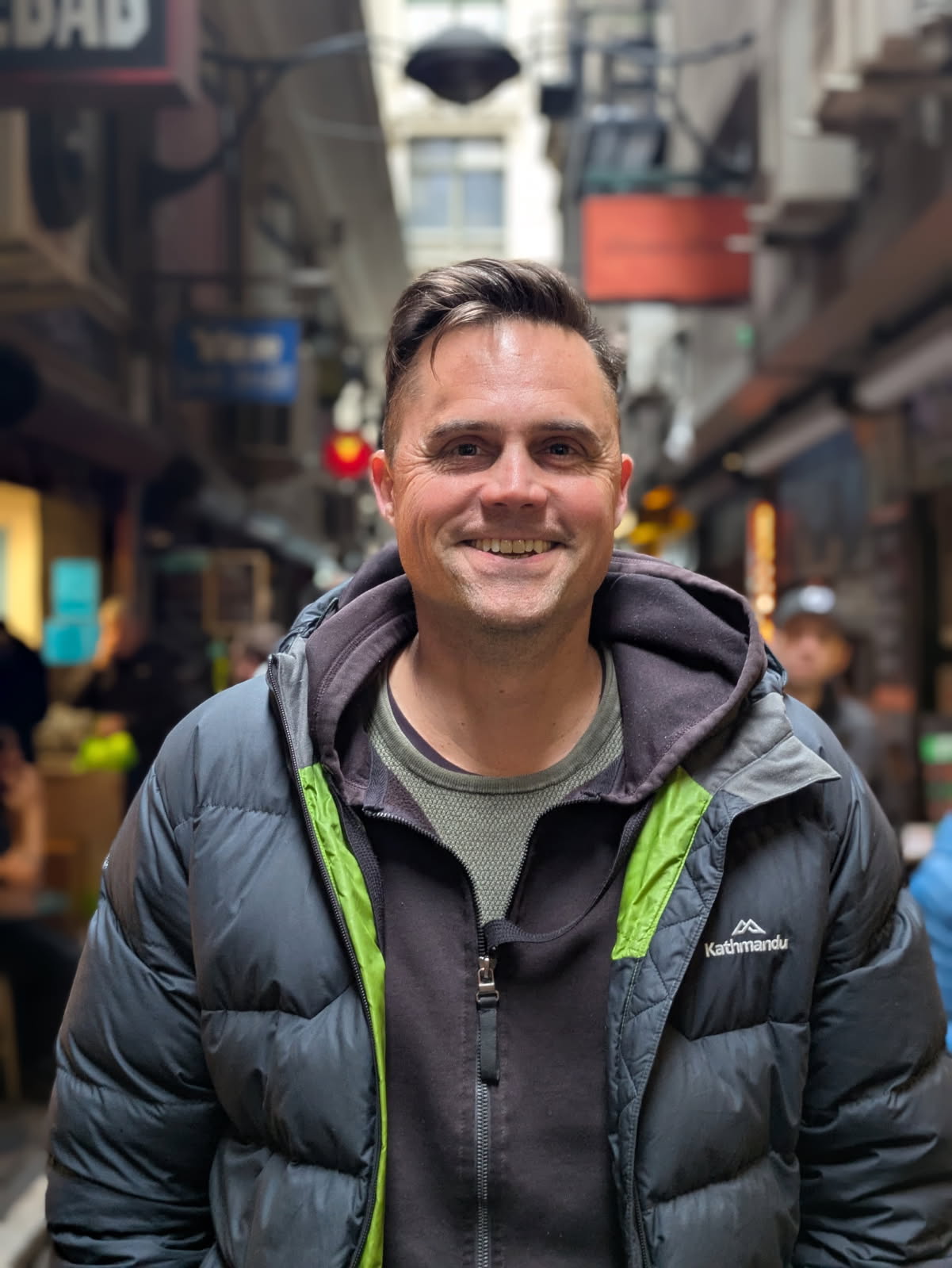
Hey, I’m Jon.
And this is where I write about life and faith, no niche included. Just an honest attempt to be faithful and fruitful for Jesus. If that’s something you want more of, subscribe.


  • The Autograph Book

    The Autograph Book

    Describe an item you were incredibly attached to as a youth. What became of it?

    I still have it.

    It’s tucked away in a box now. In some ways, I’m still attached to it. Logic says there’s no reason to hold onto it, but it’s not the item itself—it’s the memories it carries. It’s the way it triggers snapshots of my youth, moments spent in anticipation and excitement.

    I spent hours with this item. It came with me everywhere. It was always in my bag, ready for the next opportunity. Whenever I had a chance, I’d pull it out and add to it.

    Some people I knew even contributed to it, leaving their mark on its pages. I’ll admit, a few entries were made up—copied from somewhere else just to fill the gaps. But most of it was real, collected during hours of waiting, sometimes long into the night.

    These entries weren’t just ink on paper. They were people—heroes of mine. People I admired and tried to imitate as I practiced their craft. They weren’t just my heroes, either. They were legends for so many others, drawing crowds of thousands who came to watch them do what they did best.

    I’d stand around the boundary, waiting. Outside the changing rooms, I’d wait. I’d write letters with pre-stamped, self-addressed envelopes, hoping for a response. I was determined to get another entry—an autograph I didn’t yet have.

    This item, if you haven’t guessed by now, was my autograph book. A small, colourful book filled with the signatures of sporting heroes. Cricket captains, Australian players, touring sides—anyone who took to the pitch to play.

    Whether it was a Test match or a one-day game, I’d wait after play had finished, hoping to catch a glimpse of the players as they headed to their cars. And if I was lucky, I’d get their signature.

    It’s more than just a book. It’s a collection of memories, a connection to the joy of my youth. And now, as I pull it out to show my kids or take it to a game we’re going to, I’m instilling in them the same excitement and appreciation for heroes, patience, and the moments that stay with you forever.

    When I think about that autograph book, I’m reminded of how much time and effort I put into collecting those signatures. It’s a small picture of the kind of dedication and patience we’re called to in our faith.

    Hebrews 12:1-2 (CSB) says,

    “Let us run with endurance the race that lies before us, keeping our eyes on Jesus, the pioneer and perfecter of our faith.”

    Just as I stood waiting for hours to catch a glimpse of my heroes, we’re called to fix our eyes on Jesus, who is infinitely greater. The effort, time, and love we pour into following Him shape who we are, just as those hours around the boundary shaped my childhood.

  • Mission Possible

    Mission Possible

    What is your mission?

    My mission, if I choose to accept it, is to glorify God and enjoy Him forever.

    Borrowing from the Westminster Shorter Catechism, this mission aligns the whole of life with its ultimate purpose. As John Piper reframes it: “God is most glorified in us when we are most satisfied in Him.”

    But we live in a world full of missions. Whether it’s crafting a New Year’s resolution, striving for career success, or parenting through the seasons of childhood, everyone is pursuing something. These missions often shape our daily rhythms and long-term goals.

    For many, crafting a personal mission statement offers clarity and focus. Every few years, I revisit my values and ask whether they align with my daily life and priorities. This exercise helps me focus on what matters most, alongside this it has also taught me something deeper.

    Missions, as we often define them, are like to-do lists. They have a beginning, middle, and end. Once completed, we move on to the next. While this approach works for concrete goals—like finishing a project or achieving a fitness milestone—it can fall short when applied to life’s bigger intentions.

    Take faith, family, or health, for instance. These aren’t tasks to be completed but lifelong priorities. They require ongoing attention, growth, and care. You don’t “finish” being faithful, raising your family, or looking after your body. These are life long responsibilities, not one-off missions.

    Instead of viewing life’s intentions as a series of missions to accomplish, I’ve come to view them as as a set of sustainable priorities. Priorities allow for a lifelong focus, recognising that some tasks will never be fully completed but are worth our time and effort nonetheless.

    If we turn for a moment to our theological understanding of mission, mission isn’t just personal—it’s part of a bigger story. Jesus gave His followers a clear mission in Matthew 28:19-20 (CSB):

    “Go, therefore, and make disciples of all nations, baptizing them in the name of the Father and of the Son and of the Holy Spirit, teaching them to observe everything I have commanded you. And remember, I am with you always, to the end of the age.”

    Similarly, in Acts 1:8 (CSB), Jesus said:

    “But you will receive power when the Holy Spirit has come on you, and you will be my witnesses in Jerusalem, in all Judea and Samaria, and to the end of the earth.”

    This mission—the Great Commission—is ongoing. It’s not something we check off a list but a lifelong call to share the gospel and live as witnesses to Jesus.

    This perspective reframes how we think about mission. It’s not about achieving a specific result but faithfully living out our calling in Christ.

    It’s like building a house. A mission-driven approach might focus on completing individual rooms: the kitchen, the bedrooms, the living space. Each project has a clear endpoint.

    But a priorities-driven approach sees the house as a home—a place that constantly requires attention, care, and investment. It’s not about “finishing” the house but creating a space where life can flourish.

    Similarly, our faith is is a priority that requires daily investment—prayer, scripture, community, and service.

    Central to our faith and its mission is to glorify God. This mission extends beyond church walls and spiritual disciplines into every corner of life. Colossians 3:17 (CSB) reminds us:

    “And whatever you do, in word or in deed, do everything in the name of the Lord Jesus, giving thanks to God the Father through him.”

    Whether we’re at work, raising a family, or simply enjoying the beauty of creation, our mission is to honour God in all we do.

    The beauty of God’s mission is that while it remains unfinished in this life, it’s already fulfilled in Christ. Our call to glorify God and enjoy Him forever is both a present reality and an eternal hope.

    So, what is your mission? Is it a project to complete, or a priority to pursue?

  • The Greatest Gift

    The Greatest Gift

    What is the greatest gift someone could give you?

    How would you answer this question?

    There are so many angles to consider:

    • The angle of need and want in the material world in which we live.
    • The angle of the inner life, what we seek and need for our souls and hearts.
    • The angle of the right here and now, or the long-term perspective of life as a whole.

    I wonder how you would answer?

    For me, the answer is clear.

    I’ve already received the greatest gift.

    This is a gift I was given many years ago. It’s a gift many others have also accepted, and it’s one I hope others will receive too—particularly those I know and love.

    This gift is from God, who seeks to give all people the gift of His love through Jesus Christ.

    As the familiar words of John 3:16 remind us: 

    “For God so loved the world that He gave His one and only Son, that whoever believes in Him shall not perish but have eternal life.”

    This verse highlights God’s deep love for His people and all of creation. It speaks of a gift given so that the world may know true love—divine love—and receive eternal life.

    This is the gift of salvation. It’s the gift of forgiveness for sin. It’s the gift of being present with God. It’s the gift of peace, joy, and hope—those very themes we celebrate at Christmas.

    This is the greatest gift I have ever received, and it will always remain the greatest gift I could ever receive.

    What about you, how would you respond?


    This is a writing response to the WordPress daily prompt.

  • My Top Posts of 2024

    My Top Posts of 2024

    Another year, another blog post recap. 

    As the year wraps up, it’s time to look back and celebrate the posts that have resonated with you, my dear readers. To begin with, this year hasn’t exactly been a literary whirlwind. It’s been more a little bit of randomness and some adaptation of other content I’ve worked on. Evidently there are a few people who appreciate my ramblings though, and I’m grateful to have the opportunity to enjoy my writing and share it too. 

    Just like my post on the Top Books of 2024, without further ado, here are the stats and then a summary of the posts that had the most views. 

    Enjoy. 

    THE STATS:

    • Total Views: 8,944 (Clearly, you still like me!)
    • Unique Visitors: 7,058 (Some of you even brought friends—thanks!)
    • Comments: 11 (Keep them coming; I’m lonely over here)
    • Likes: 20 (A number so small, even my posts feel insecure)
    • Posts Published: 14 or 10,645 words (Let’s call it “quality over quantity”)

    THE POSTS:

    1. God’s Love Expressed: Through the Cross

    This post explores the sacrificial love of God, vividly demonstrated through the cross of Christ. Drawing on 1 John 4, it reflects on how God’s love transforms our sin and brokenness into something good through Jesus’ atoning sacrifice. If you’ve ever doubted God’s love or struggled with the weight of sin, this post will remind you of the grace that calls you “perfect” even in your mess.

    2. The Trial of Jesus: A Fulfilment of Prophecy

    Looking at Mark 14:53-65, this post unpacks the unjust trial of Jesus as both a moment of human injustice and a divine fulfilment of prophecy. Jesus’ silence, His declaration of being the Son of Man, and His willingness to endure suffering reveal the depths of God’s plan for salvation. It’s a reflection that leads us to the cross with gratitude and confidence in Christ’s work.

    3. Martin Luther on Complete Forgiveness in Christ

    Inspired by Luther’s Commentary on Galatians, this post delves into his reflections on the complete forgiveness found in Jesus. Luther’s bold and comforting words remind us that forgiveness is not something we earn but something Christ gives freely through His sacrifice.

    4. My Top Books for 2024

    So, after posting about my reading in 2024 and giving some recommendations for the year this post got a little traction. It ended up sneaking into the top 5 within a week. If you’d like to see what I’ve been reading and what books you might like to add to your list this coming year then heading over and have a look.

    5. Adoniram Judson’s Courtship Proposal

    Adoniram Judson’s marriage proposal to Ann Hasseltine is anything but ordinary. This post recounts the radical faith behind his request, as he asked Ann’s parents to release their daughter to a life of missionary hardship—and possibly death. Ann’s courageous response highlights the cost of following Christ and her shared commitment to God’s mission. It’s a love story that’s as inspiring as it is humbling.

    6. Book Review: Adoniram Judson by Jason G. Duesing

    This book review highlights the life and legacy of Adoniram Judson, the father of American missions. Through the lens of Duesing’s collection of essays, this post explores Judson’s faith in God’s sovereignty, his endurance through suffering, and his commitment to long-term service. If you’re looking for a book to inspire your faith and challenge your perspective on missions, this review will convince you to pick it up.


    So there you have it: my greatest hits of 2024. Thanks for reading, sharing, and sticking with me—even through my quieter years. This blog wouldn’t exist without you (well, it would, but it’d feel more like me talking to myself).

    This is something I’ve done in previous years, which you can find here: Top posts for 2022, 2021, 202020192018201720162015. I also have a collection of writings published elsewhere on the inter-webs, which you can read here.

    Got a favourite post or a burning topic you’d love me to tackle in 2025? Drop me a comment or message.

  • My Top Books of 2024

    My Top Books of 2024

    It’s been two years since I wrote about the books I’ve been reading. Last year I was not in a place that enabled me to write and my dear readers will have noticed that if they were observant enough. However, books and writing about books remain a cornerstone of my personal and ministry rhythm and I’ve been back in the swing of things for a little while now. 

    I find books inspire, challenge, and shape my understanding of the world, ministry, and myself. This year reading remained constant, with numerous books being read at the same time, whether in paper, digital, or audio form. 

    The top books I read this year include those below, they are books I rated 5 stars. From biographies to practical theology to books on leadership and burnout. This year’s reading list has been somewhat diverse, except for all those crime-thriller fiction books I read. 

    Without further ado, here are my top books of 2024: 

    Zeal without Burnout by Christopher Ash

    This is a short book, and it’s full of impact. Anyone in ministry should really read this. Ash reminds us that we are finite and fragile. Through scripture and personal experiences he highlights the importance of sustainable ministry. As Ash addresses the risk of burnout he offers practical, wise, and compassionate advice that is grounded in God. I reckon I’ve read this a few times now. In different seasons it has had more impact. This year it named things I hadn’t realised I was doing or experiencing before, and it has made me more self-aware of my experience in the past 12-18 months. 

    Tiger Woods by Armen Keteyian and Jeff Benedict

    This is a great biography of such an iconic sportsman. The real highlight of this biography is actually the writing, it was such great sports and biographical writing. 

    Woods is the all-time great golfer with unbelievable talent in his profession yet, as we know, is deeply flawed. This book walks through his childhood, his relationship with his father and mother, and seemingly pseudo-friends through his life. It really is a character study on family dynamics and the influence of nurture and nature. It is a captivating read and brings together talent, pressure, and personal struggle surrounded by celebrity and sports.  

    Burnout: A Guide to Identifying Burnout and Pathways to Recovery by Gordon Parker, Gabriela Tavell, and Kerrie Eyers

    This book provides a comprehensive guide to understanding, identifying, and recovering from burnout. It offers strategies for self-care, stress management, and developing resilience to prevent future occurrences. I find this book helpful as it provided me with understanding about something I’d experienced within the year prior to reading it. It’s a clear, compassionate, and actionable book, which is also based on practical research-based approaches. Many of the case studies from various industries are helpful as they confirm that many different people in many different roles in life can hit burnout. 

    The Song of Significance: A New Manifesto for Teams by Seth Godin

    Seth Godin is always a fun read and this one is no exception. I’ve found he just thinks differently, gives great historical background and context about culture, particularly work culture, and then reframes it. In this case, Godin reframes modern work, leadership, and team-based collaboration within business and organisation. It is a call to shift out ‘success metrics’ toward meaning, dignity, and purpose. For those of us who deal in teams, there is the encouragement to collaborate around a shared vision in order to flourish. 

    Pastoral Perseverance by Brian Croft and James Carroll

    I try to read anything Brian Croft writes. He’s a grounded ministry leader who provides plenty of practical experience for pastors. In Pastoral Perseverance the books does what it says in its title, it encourages pastors and provides strategies to help persevere in the ministry. From navigating the complexities of leadership, congregational life, and personal challenges Croft and Carroll offer encouragement and biblical depth to shepherding the flock. 

    Unmasked: My Life Solving America’s Cold Cases by Paul Holes

    I listen to a few of Paul Holes’ podcasts and have followed a few that speak into the Golden State Killer. Holes was the investigator who helped crack the case of GSK after so many years of pursuing him. In this account of his life and career Holes describes the personal, emotional, and career highs and lows in the police force. I found it fascinating but also reminded of the human cost to relentlessly pursuing ones goals. 

    Sacred Rhythms: Arranging Our Lives for Spiritual Transformation by Ruth Haley Barton

    Ruth Haley Barton has been recommended to me plenty of times in the last year or so and I had never heard of her before this time. I ended up picking this one up and giving it a go, to which I am rather thankful for. This is a book for the soul. There is wisdom and helpful teaching, but also practical spiritual practices that will nurture faith and depth of relationship with God. All the usual spiritual disciples of Word, prayer, silence, solitude, and the like, but in the context of a regular rhythm to life. Again, it is another book this year that focuses on the devotional life of a disciple and also a life that seeks to avoid burnout. 

    Four Thousand Weeks: Time Management for Mortals by Oliver Burkeman

    I reckon this is one of the best time management books around. Rather than simply teaching habits and strategies Burkeman makes us realise that these ‘hacks’ won’t actually help us accomplish a life we want to live. Instead, Burkeman is realistic, and highlights that we should be embracing our limitations and constraints in life and time in order to live meaningfully within them. It’s a thought-provoking book, and he’s helpful to listen to one a few podcasts too. Instead of striving for tweaks to life so that we might hit our goals and to-do-lists every so often, it’s about thinking about life in more depth and with deeper purpose in mind. 

    Spiritual Leadership: Principles of Excellence For Every Believer by J. Oswald Sanders

    This is a classic Christian leadership book that continues to be helpful and resonate. It’s quite easy to read because of the short chapters, but each one seems to pack a punch to the gut. Sanders doesn’t sugarcoat the cost and challenges of Christian leadership but also highlights the eternal significance of the work. 

    Pastoral Leadership: For the Care of Souls by Harold L. Senkbeil

    Harold Senkbeil is another one of those authors worth reading. I first came across his book “Care of Souls”, published a few years ago and then came across this one only a few months ago. While there would be some differences between him and I, he’s Lutheran and I’m Baptist for example, the pastoral wisdom is worth the price of any of his books. This is a guide to shepherding God’s people with humility, grace, and courage. It has theological depth and a deep concern for the pastoral care of those in a congregation. Again, there is emphasis on the care of the soul for the pastor as well, which seems to have been a theme in my reading this year. 

    Leading: Learning from Life and My Years at Manchester United by Alex Ferguson

    I was fascinated by listening to Alex Ferguson’s book on leadership. It was really his biography or another way of doing a memoir, but with some leadership principles applied. Evidently, a man who leads Manchester united for so long and with such sporting success will have a few things to say in this area of life. But, it was also a great insight into his life, values, and philosophy to football and leadership. 

    Love in a Time of War: My Years with Robert Fisk by Lara Marlowe

    Robert Fisk is one of the great writers about the Middle East. Evidently he has his demons and this is something that his former wife, Lara Marlowe, speaks into throughout this book. But his work cannot be ignored, nor his continual insight into the people of the Levant and beyond. Pity the Nation was the first book I read of his, which traces lines of history and experience for those who lived in Palestine-Israel and through the Lebanese civil war. This is more a personal memoir from Marlowe, who had known his for so long and worked alongside him in the Middle East and UK. A great read. 

    Well, that’s it for my top books for 2024. I had plenty books which were 4-star rated, and some special mentions of those include: 

    • The Unhurried Pastor by Brian Croft and Ronnie Martin
    • Humility: The Joy of Self-Forgetfulness by Gavin Ortlund
    • Digital Minimalism by Cal Newport
    • The Priority of Preaching by Christopher Ash
    • The Harvard Business Review’s Guide To Beating Burnout
    • And any crime thriller novel by Daniel Silva, James Patterson, David Baldacci or Vince Flynn. Always one of these on the go. 

    I’d love to hear what books have shaped you in 2024. Drop your recommendations in the comments—I’m always looking to add to my stack for 2025!

    This now makes it 10 years where I’ve published my favourite books of the year. If you’re keen enough you can go back and have a read of previous years here: 2014, 2015, 2016, 2017, 2018, 2019, 2020, and 2021, 2022

    If you’d like to see all the books I’ve read in 2024 then head to Goodreads to see a summary.


    My Top Books: Yearly Series
    2014
    2015
    2016
    2017
    2018
    2019
    2020
    2021
    2022
    2024 (this post)
    2025