Tag: AFL

  • Unity, Patience, and the Church: Lessons from Carlton’s Coaching Turmoil

    A recent article in The Age by Jake Niall (which may be behind a paywall) explores the inner tension at Carlton Football Club over the past three decades. The club was once defined by power and success then found itself in a cycle of division, instability, and impatience. Having had nine different coaches since 2000, multiple leadership changes at board level, and a struggle to perform on field, the article that Niall writes is a great case study in leadership, particularly for those in church ministry. 

    Obviously, professional sport and pastoral leadership operate in very different arenas, they do share some similarities, as I’ve written about before. Leadership struggles, the challenge of unity, the weight of expectations, and the temptation to look for a quick fix rather than embracing the slow and patient work of building something that will last. 

    A Divided House

    Denis Pagan, one of Carlton’s many coaches, described his tenure at the club as “an absolute nightmare”, primarily due to the fractured leadership: “Splinters everywhere… board level, administration level. The playing group was split.” It was a house divided against itself, as Niall writes. 

    Jesus’ words in Mark 3:25 speaks of this truism, “If a house is divided against itself, that house cannot stand.” This isn’t just true for football clubs; it’s true for churches as well. When leadership teams—pastors, elders, and deacons—are pulling in different directions, the whole church suffers.

    Paul understood this as well when he writes to the church in Ephesus to “make every effort to keep the unity of the Spirit through the bond of peace” (Ephesians 4:3). Unity isn’t automatic; it requires intentional effort. When a church operates more like a dysfunctional football club, where different factions vie for control, the focus shifts away from Jesus and his mission.

    Patience and the Slow Work of Discipleship

    Carlton’s downfall wasn’t just about division; it was also about impatience. The club became addicted to the idea of a quick fix—whether it was a high-profile coach, a big-name recruit, or a billionaire benefactor. As Malthouse put it, “This is going to take a slow burn to get right and it’s also going to take patience.” But patience was in short supply.

    Churches can fall into the same trap. We want fast results—spiritual growth that happens overnight, new programs that immediately bear fruit, discipleship that runs on a tight schedule. But faith formation, like rebuilding a football club, doesn’t work that way.

    Jesus consistently used farming illustrations to describe the Kingdom of God and the growth that happens over time. “First the stalk, then the head, then the full kernel in the head” (Mark 4:28). Paul says similarly about this patient approach to ministry, saying, “I planted the seed, Apollos watered it, but God has been making it grow” (1 Corinthians 3:6).

    Pastors, elders, and deacons need to embrace the long game of discipleship. There are no shortcuts. A healthy church isn’t built in a season or two—it takes years of faithful, consistent, and patient work.

    The Role of Leadership in the Church

    At Carlton, instability at the top had a ripple effect. Pagan noted that too many influential voices behind the scenes “wouldn’t have known a football from an Easter egg.” Leadership dysfunction filtered down to the players, resulting in a culture where no one was really set up for success.

    Churches can find themselves in a similar place. If the relationship between the pastoral team and church leadership is dysfunctional, the congregation feels its effects. Leadership in the church isn’t about control but about shepherding God’s people toward spiritual health. It reminds me of those words from 1 Peter 5:1-4, 

    “To the elders among you, I appeal as a fellow elder and a witness of Christ’s sufferings who also will share in the glory to be revealed: Be shepherds of God’s flock that is under your care, watching over them—not because you must, but because you are willing, as God wants you to be; not pursuing dishonest gain, but eager to serve; not lording it over those entrusted to you, but being examples to the flock. And when the Chief Shepherd appears, you will receive the crown of glory that will never fade away.”

    Ephesians 4:11-12 also describes the God-given role of leadership: 

    “Christ himself gave the apostles, the prophets, the evangelists, the pastors and teachers, to equip his people for works of service, so that the body of Christ may be built up.” 

    Leadership in the church exists for the nurturing of the people, not for power struggles or personal agendas.

    This is exactly how Jesus established his church. He didn’t appoint boardroom executives—he built his church on disciples who would faithfully shepherd his people. “On this rock I will build my church, and the gates of hell shall not prevail against it” (Matthew 16:18). The church belongs to Christ. It is grown through his Word, sustained by his Spirit, and led by those called to serve, not control.

    The Temptation of the Quick Fix

    Carlton’s desperation for success led to a flawed approach; new coaches, new strategies, new leadership—anything but patience and stability. As a result, they spent more time rebuilding than actually moving forward.

    We might be tempted to fall into the same mindset. A new program, a new vision statement, a new pastor—these things can feel like they’ll fix everything. But real transformation doesn’t come from quick changes, it comes from faithfulness.

    Jesus didn’t rush. He spent three years slowly forming twelve disciples, who still weren’t ready by the time of his crucifixion. Paul didn’t plant churches and expect them to mature overnight—he stayed, he invested, and when he moved on, he kept writing letters to guide them further.

    Carlton’s recent resurgence has come not from chasing instant success but from building long-term stability. Likewise, a healthy church doesn’t rely on the next big thing, it commits to the slow, faithful work of discipleship.

    A Different Kind of Leadership

    Carlton’s history serves as a warning. The church is not a football club, but if we aren’t careful, we can find ourselves running it like one.

    Instead, we are called to a different kind of leadership—a leadership rooted in unity, patience, and the long, steady work of building up the people of God. The ultimate model for this is Jesus, “who made himself nothing by taking the very nature of a servant” (Philippians 2:7).

    If we lead as Jesus led, if we remain united in purpose, and if we commit to the slow, faithful work of discipleship, we will see lasting transformation—not just in our churches, but in the lives of those we are called to shepherd.

    After all, the church isn’t chasing a premiership. We’re building something eternal.

  • Pastoral Ministry and AFL Coaching

    In a recent article in The Age, Caroline Wilson explores a cultural shift in AFL coaching, where many top candidates have turned down the West Coast senior coaching position to prioritise family and personal well-being. This made me reflect on the parallels between the pressures faced by AFL coaches and those in pastoral ministry. Though these two fields operate in completely different arenas, they do share a number of common challenges around leadership, sacrifice, and the weight of responsibility.

    The Weight of Leadership

    In both AFL coaching and pastoral ministry, the role of a leader carries significant weight. For coaches, this involves the strategic management of a team, guiding players toward success while being under the constant scrutiny of fans and media. For pastors, the responsibility lies in shepherding a congregation, guiding them in their faith, and providing wisdom during life’s challenging moments. The Bible speaks to this in Luke 12:48, where Jesus says, “From everyone who has been given much, much will be demanded.” This isn’t just about material wealth but applies equally to those entrusted with leadership—whether on the field or in the church. Leadership demands much, and with it comes the pressure to meet those demands faithfully.

    The Relentless Pressure

    Wilson’s article highlights the high-pressure environment that AFL coaches endure, where every decision is analysed and critiqued. Pastors, depending on the season, can also operate in a similarly intense environment. The spiritual well-being of a congregation rests, in part, on their shoulders. The Apostle Paul understood this pressure well, when he shares in 2 Corinthians 11:28 that beyond his external trials, he faced “the daily pressure of concern for all the churches.” This type of pressure is sometimes relentless and requires both AFL coaches and pastors to have a strong foundation—whether it’s in their strategy, their faith, their identity, or all of the above.

    Sacrifices for Family

    One of the themes highlighted by Wilson is the decision by many coaches to prioritise their families over the senior coaching job. For pastors, this is similar. Ministry demands can easily encroach upon personal and family life, leading to burnout if not managed carefully. It’s a delicate balance, where one must constantly weigh the call to serve against the needs of those closest to them. However, the decision to prioritise family reflects a biblical principle found in 1 Timothy 3:4-5, where leaders in the church are instructed to manage their households well, for if they cannot do that, “how can they take care of God’s church?” This is a reminder that commitment to church leadership is balanced with a commitment to family.

    Mentorship and Influence

    AFL coaches are often seen as father figures or mentors to their players, providing guidance not just in the sport but in life. As spiritual shepherds, pastors seek to guide their congregation toward deeper faith and worship of God. The influence they have is often more significant than we realise, helping to shape those who lead. In Proverbs 4:23 we read, “Above all else, guard your heart, for everything you do flows from it.” For pastors, and perhaps coaches too, this is helpful wisdom; influence must flow from a place of integrity and care for those they lead. In a way, both are in the business of heart work—coaches on the playing field and pastors in the field of the soul.

    The Ultimate Sacrifice

    At the core of both AFL coaching and pastoral ministry is the concept of sacrifice. Wilson highlights how even lucrative and prestigious coaching positions are being passed over in favour of personal happiness and family commitments. In ministry, this sacrificial nature is a direct reflection of the gospel itself. The ultimate act of sacrifice is found in Jesus Christ, who laid down His life for the sake of others. Philippians 2:7-8 describes how Jesus

    “made himself nothing by taking the very nature of a servant, being made in human likeness. And being found in appearance as a man, he humbled himself by becoming obedient to death—even death on a cross!”

    This is the model for all Christian leadership: a life that prioritises the well-being of others, even at personal cost.

    Upon reflection, the challenges faced by AFL coaches are not entirely different from those encountered in pastoral ministry. Both roles require a balance of responsibility, the ability to endure pressure, and a heart willing to make sacrifices for the greater good. As pastoral leadership evolves, it’s crucial that those who lead do so with wisdom, resilience, and a deep commitment to the people they serve—always drawing strength and inspiration from the sacrificial love of Christ. This love, exemplified by Jesus on the cross, is the ultimate guide for anyone called to lead, whether in a sporting arena or a place of worship.


    If you’d like to read the full article from Caroline Wilson in The Age that inspired this post you can do so here (may be behind a pay wall).

  • Published: SuperCoach Weekend Wrap | Round One

    I’ve been playing AFL SuperCoach for around 12-13 years now. It’s a fun little hobby of mine that happens during the AFL season. I take it more seriously that I probably should, but in the process have made some good connections and had some traditional rivalries with mates. And let’s be honest, it’s a good bit of wholesome fun.

    For a long time I’ve been a keen listener of the Coaches Panel podcast, and a reader of their regular posts. I’m also a patreon member for the Coaches Panel too, which just shows I take it all too seriously. For the uninitiated, this means I pay them money to support them, they give me patreon-only access to their content.

    But…the big news this week is that I’ve started writing for them. I’ve begun a series that will come out on a Monday (or when the round finished) giving a SuperCoach wrap-up from the weekend just gone. It’s a bit of fun and a new writing avenue, and I’m looking forward to having a good play around with the content I provide through it. If you’re a SuperCoach player, come on over and have a read. The weekend wrap-up for round one was published a few days ago.

  • Here It Is: Paul Roos, Leadership, And Youth Ministry

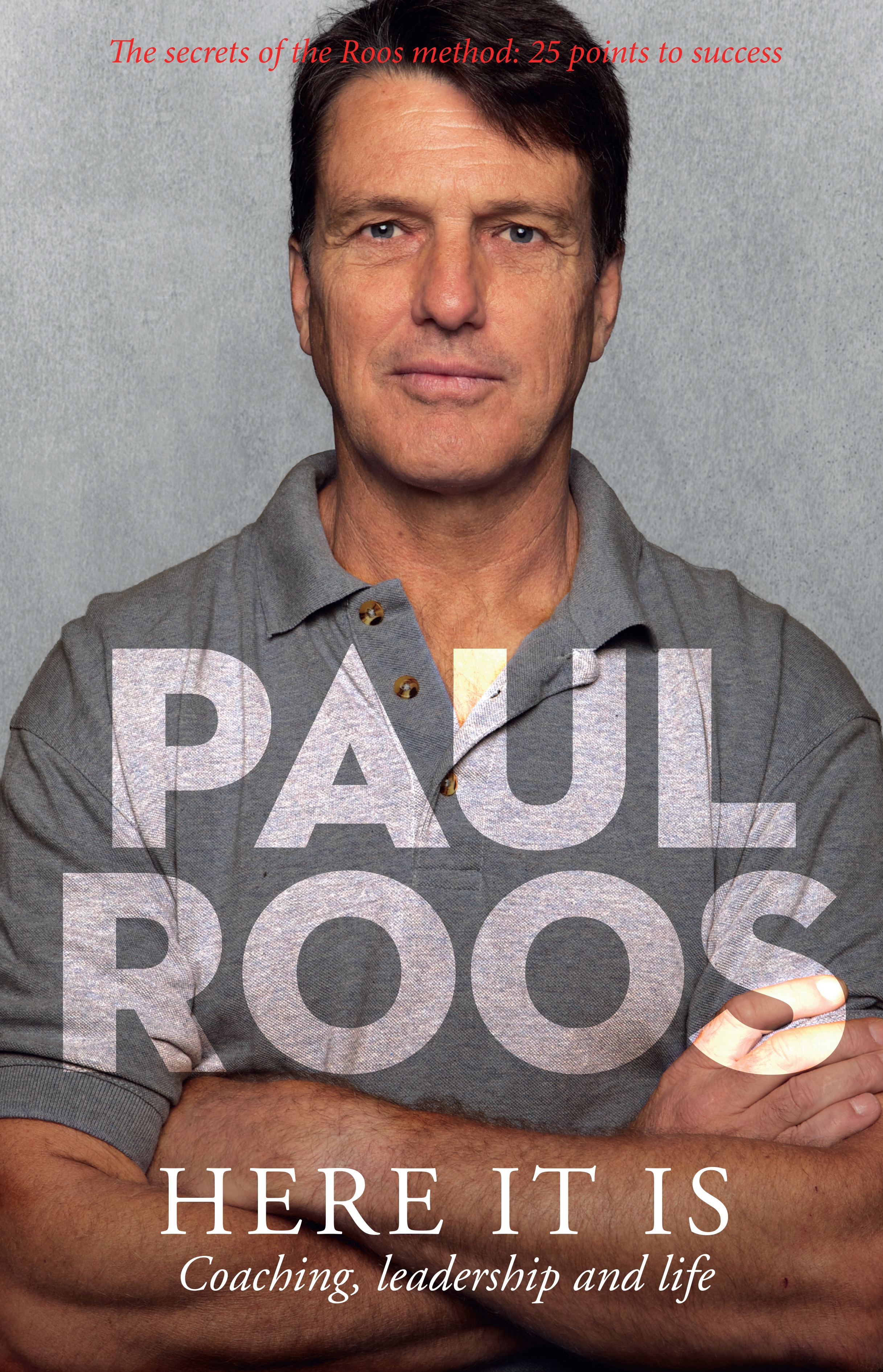
    I recently finished reading the latest book by Paul Roos, “Here It Is: Coaching, Leadership and Life.” Paul Roos is a very successful AFL coach and highly sought after for his man-management and leadership coaching. This year I’ve enjoyed listening to him in the commentary box and was intrigued to read how he approached coaching and working with teams.

    I often wonder how closely coaching an elite sporting team and being involved in Christian ministry align. Obviously, there are significant differences, and the markers of success are worlds apart. However, leadership is still leadership and so part of reading this book was to gain insights for youth ministry. As I read the book I was constantly thinking how his principles for leadership applied to youth ministry. I found much of what he talked about helpful because (1) I enjoy sport and AFL, and (2) I could see his approach being similar to other things I’ve read or heard regarding ministry.

    Below are 10 ideas I found helpful. I wonder if they impact the way we approach youth ministry ourselves?

    Here it is

    (1) The Importance Of Relationships

    Roos emphasises relationships as the key to success at a football club. He played at a time where it was ‘old school’ football. A time where the players would simply train, turn up to play, and do whatever the coach would ask. Often there was little relationship between players, coach, and other staff. After observing this as a player he decided to approach things differently and have a focus on positive inter-club relationships.

    In youth ministry (and church ministry) it’s all about relationships. I’ve been reminded by this in other ways recently, and will hopefully elaborate on that in coming posts. But, needless to say, everything in youth ministry is about relationships. It’s about relationship with God and relationship between people. It’s about relationship with pastoral staff, it’s about relationship with leaders, and between leaders. It’s about relationship with young people and the relationships they have between themselves. It’s about relationship with everyone. Youth ministry is about relationships.

    (2) The 25-points

    Within a month of finishing up as a player Roos wrote down 25-points that were essentially values and standards he would articulate and live out as a coach. These 25-points include the majority of the points I am drawing out here, but the point is he actually wrote down the values he wanted to keep to and they helped guide him in his coaching.

    I wonder whether we as youth ministry write down standards and values that guide us in our leadership? It is worth considering what is most important to you, and where you believe leadership in youth ministry should be focussed on. When being interviewed for the role I currently have I took with me a sheet of paper that had some key scriptures for the way I approached ministry and also seven, what I called, ‘Pastoral Pillars’ that would be my guide as a Youth Pastor. The headings for each of these were: (1) Relational, (2) Disciple Development, (3) De-Program, (4) Leader Development, (5) Mission Posture, (6) Framed Risk, (7) Grey OK. This helped me articulate where I was at and also informed the committee who they were getting. I found it helpful. I think they did too. Do you have something similar?

    (3) The Calm Leader

    Roos played in an era where coaches going off their head was common practice. Giving a good dressing down, dragging the players off the field and onto the bench when they made a mistake, and generally trying to motivate players through yelling and shame. Roos saw this wasn’t benefiting anyone, particularly in keeping morale up, developing players, and providing motivation. His response was to make sure he kept himself calm. He made sure he was emotionally stable in his leadership and provided confidence in doing so. He didn’t want to react in an emotionally volatile way when winning or losing.

    In youth ministry, are you a stable and calm leader? A big influence on me has been the idea of being a ‘non-anxious presence’. That is, someone who is calm, not anxious, and emotionally stable during times of upset, crisis, and conflict. I have wondered whether this can be detrimental when certain situations call for passion, enthusiasm, and excitement. But, in general, a person who leads in youth ministry needs to be calm and in doing so inspire confidence and trust in their leadership.

    When a kid has fall and breaks their foot at a youth camp, be calm and deal with it appropriately. When a leader seems to be going through some sort of crisis and requires some extra attention, be calm and deal with it appropriately. When a parent doesn’t like an action that has been taken and let’s fly with their complaint, be calm and deal with it appropriately. In youth ministry, we need calm, non-anxious, leaders who in doing so help inspire, motivate, and build trust with people around them.

    (4) The Time It Takes To Develop People

    Roos understood that it takes time to develop players. He comments that the age of great learning for a footballer is 18-22 years old. They get drafted, and then take years to develop in their skills, learning about the game, and general aptitude for elite AFL football. Recognising this, Roos seemed to do a few things. First, he made sure the players understood his game plan, their role in the team, and the skills required for top level football. Second, he took time in bringing them into the elite league of the game, often keeping them in second tier competitions for longer than other coaches would. There is the implication that it takes a number of years to develop as a player, helping this development from a young age was his goal. This was clear within his chapters on leading the Sydney football academy for talented teenagers.

    In youth ministry, it takes time to develop faith and to develop in leadership. I think faith could be explored separately to this, but leadership and learning the ropes of youth ministry can begin to be taught while students are still going through youth group and the youth ‘programs’. The youth programs can be tools for discipleship, leadership development, and possibly even church leadership too. But even if we’re intentional it will take time. As hard as it sounds, not all people will have the character or aptitude for youth ministry leadership, I don’t think God has made everyone equal in this regard. However, there are plenty of people who one may not think as ‘youth ministry potential’ who are able to learn and grow in their leadership skills. This simply takes time.

    (5) Everyone Has A Role

    Following on from development is also the question of role. Roos outlined clearly how everyone in the team had a role. Sometimes this was different to what the player had always known. The player may have believed that getting 30 possessions a match was his role, but actually, his role was part of a larger system, the team system, to which they all played a vital part. If that player only had 20 possessions but played their role as they were supposed to then the team had better success than if they went it alone, believing they had to win the game for the team. Roos believes that everyone at the football club has a role and it needs to be defined. Everyone from the President, CEO, Senior Coach, Assistant Coaches, and the players. In some ways, this aligns with another of his values, which was to deal with every player individually, knowing their personal strengths and weaknesses. This avoids lumping everyone into the same box. It is about getting the most out of each person.

    I wonder how we view our youth ministries? Do we do that for our students? For our leaders? For our wider church? The Youth Pastor has a role, that seems to be more defined than others in the church. But, I would argue that just as Paul in 1 Corinthians 12:12-27 writes about the body of Christ, so too, everyone in the church has a role in regard to youth ministry. It’s just not defined or communicated. Therefore, rather than getting every youth leader to be involved in everything on a Friday night perhaps some people are better at talks and should those gifts more often. Perhaps others are good at social media and should look at being communication co-ordinators. Perhaps others are good at running games, explaining them well and getting the group involved. Perhaps others are good at administration and should be looking at the database and helping people in that way. This would help with leadership development, understanding of the various facets of youth ministry, and also help with delegation.

    (6) Team Formed Standards And Values

    A key aspect to Roos’s approach with coaching was to involve every one of the players in determining what the team stood for. The team would have a pre-season camp and flesh out what their values and standards were. This would include values like honesty, hard work, and a never give up attitude. As these values made their way through the team the players themselves would be the ones enforcing the standards. In this way, everyone is invested in the performance of everyone else. Not only on the field, but also off it.

    Could this be a way forward for youth leadership teams? I know I’ve done this a little with my youth leadership teams. We’ve created some leadership commitment guidelines to help guide what it means to be a leader in the youth ministry. I’m sure this could be enforced more, and with each other helping to lift their game in various areas. As an example, one of these guidelines is child safety. If a leader goes outside the bounds, say, initiates a hug with a student, and another leader sees this, they would then pull them up for it. If there is feedback given in terms of the talk or a game, then another leader can do that – encouraging them and also helping them to improve. I see big advantages when the leadership team is invested in creating the standards and values of the ministry.

    (7) A Yearly Review

    Each year Roos would sit down with each individual player and work through strengths and growth areas.

    In youth ministry this would be worth doing also, not only together as a team but individually. As a Youth Pastor I would expect to catch up with my leaders reasonably regularly anyway. But, there could be an intentional one-on-one at the end of the year. This could touch on topics such as discipleship growth, spiritual disciplines, church involvement, and an area to grow in next year.

    (8) The Attitude That Rubs Off

    Roos knew that his attitude would rub off on the players. As the central leader of the club his attitude meant everything. He made sure he was positive and had a positive outlook on the club, the players, and what they could achieve. This doesn’t mean he never made critical judgements about what was going on or was disappointed in players actions. He simply wanted to be positive in his attitude no matter the result.

    Youth ministry isn’t in the win-loss premiership game, but we still have indicators that mean we are satisfied or dissatisfied with the way things are going. At the end of youth group leaders can be up and about because they believe the night went well. Or, they can be flat and a bit disappointed. A process for assessing each youth event and program is vital. But, even more so, the positive attitude of the main leader keeps the big picture in mind and helps other leaders assess correctly. The attitude of the Youth Pastor or key leader has a big impact.

    (9) The Game Plan

    Once all his big blocks of values and standards, attitude and roles were in place Roos also had a game plan to win each match. This game plan seemed to be the same from year one to year ten. It didn’t seem to change much. However, there was a plan. As it has been said, “If you fail to plan, you are planning to fail”.

    It is important to plan in youth ministry. Not just planning a few months out but also having a plan for each event, small group, or youth group night. It is important that everyone on the team knows that plan. I am one who prefers to have those plans early in the week. Others prefer to bring the plan to the night an hour before we start. In any case, a basic plan for us on a Friday night is (1) Welcome, (2) Games, (3) Talk, (4) Discussion Groups. We may also include a time for snacks or for making sure a couple of leaders are at the door when parents arrive for pick-up. After the night is done and things are packed up we as leaders gather and chat through the highlights and lowlights of the evening. It is important to have a plan for youth ministry, one that is broad and one that is specific.

    (10) Communicate, Communicate

    With his commitment to relationships Roos had an emphasis on communication. He kept it simple and constant. Communication between everyone was vital is sustaining relationships and also reinforcing the values and standards of the football club.

    If there is little communication the youth ministry will not go well. There is communication needed between many different parties and in a variety of ways. Communication between Youth Pastor and leadership team and pastoral team. Communication between youth group leaders and parents and students. Communication between youth ministry and wider church. Any relationship you can think of relating to youth ministry requires some form of communication. It is an important part of the gig. And at the end of the day, it is another key aspect to building relationships.