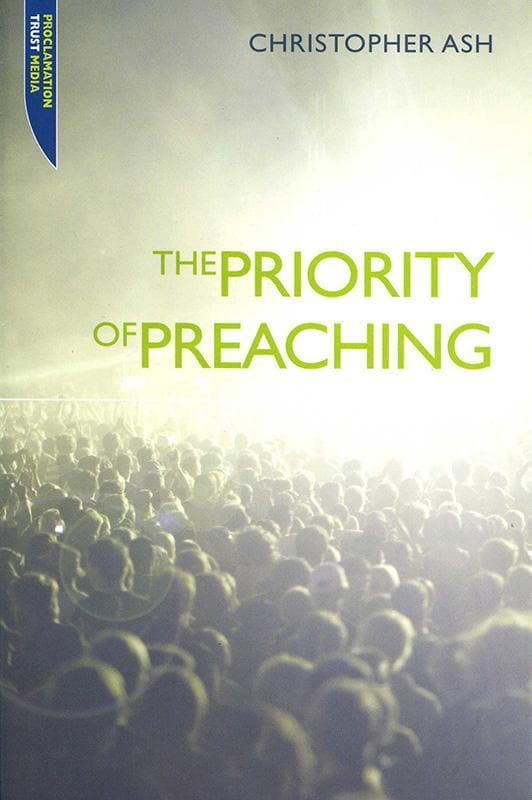
Christopher Ash’s The Priority of Preaching outlines a vision for pastoral ministry that puts preaching front and centre. According to Ash, a pastor’s main responsibility is to feed the congregation through diligent and faithful preaching. This is not an add-on or bit part to ministry but at the core of it. In this little gem of a book, as I’ve already written about, Ash understands the priority, graciousness, urgency, and community aspects of preaching. Here I’m focussing on how, like a good meal, the pastors views preaching, using it to nourish and shape the hearers.
Ash uses the image of the pastor as a shepherd who feeds the flock through the Word. Drawing on the example of John 21, where Jesus commissions Peter to “feed my sheep” (John 21:17), Ash suggests that pastoral ministry centres on delivering God’s Word in a way that sustains and strengthens the church. Preaching is not just one task among many; it is the primary way a pastor fulfils the call to shepherd God’s people. The words of Paul to Timothy echo this focus: “Preach the Word; be prepared in season and out of season; correct, rebuke and encourage—with great patience and careful instruction” (2 Timothy 4:2). For Ash, preaching is the pastor’s highest responsibility, and it’s a role that calls for dedication, preparation, and humility.
The shepherd’s role is also one of “borrowed authority,” as Ash puts it. This authority doesn’t rest in the pastor’s own wisdom or personal charisma but is grounded in the Word of God. Ash warns that preaching is “costly,” because it requires the pastor to set aside personal ambition and serve as a messenger. This humility is vital, as James 3:1 reminds us: “Not many of you should become teachers, my fellow believers, because you know that we who teach will be judged more strictly.” The authority that comes with preaching is given from God, and it calls pastors to treat the pulpit with a sense of reverence, understanding that they are accountable to God for how they handle His Word.
One of Ash’s strongest points is that pastoral ministry, centred on preaching, is about leading people to grace. Preaching isn’t primarily about moral instruction or behaviour change; it’s about continually pointing people back to the grace of God, bringing them back to the gospel. This is what sustains. This is what transforms. This emphasis on grace aligns Titus 2:11-12, which teaches that “the grace of God has appeared that offers salvation to all people. It teaches us to say ‘No’ to ungodliness and worldly passions.” For Ash, the pastor’s call is to regularly remind the congregation that grace is at the heart of the Christian life. This is the true “food” of the flock, helping them grow in faith and godliness.
Ash’s perspective on preaching as a form of shepherding challenges us to think about ministry not as a collection of tasks but as a singular calling to nurture and sustain God’s people through the Word. This vision pushes back against the idea that a pastor’s role is primarily administrative or focused on personal connections. While those are important aspects, Ash argues that the heart of the role is to be a steward of grace through preaching. This focus calls pastors to prioritise their study, prayer, and preparation for the pulpit above other activities. It echoes the approach of the apostles in Acts 6:4, who, despite the demands of church leadership, committed themselves “to prayer and the ministry of the word.”
This view also has practical implications for how pastors approach their work. Effective pastoral ministry requires a commitment to feed the church regularly and intentionally through the Word. This means more than just delivering a message each week; it involves shepherding the church toward spiritual maturity, addressing encouragement and correction where needed. It’s in line with Paul’s charge to the Ephesian church to “equip his people for works of service, so that the body of Christ may be built up until we all reach unity in the faith and in the knowledge of the Son of God” (Ephesians 4:12-13). Preaching is a means in which God uses to guide the church toward unity and maturity.
However, this isn’t all about the congregation either. This perspective encourages pastors to approach their calling with humility, and also with the need of grace. It’s one thing to deliver a sermon, having spent time in God’s Word during the week, but it’s another to make sure it is in you. It is shaping and nourishing me as the preacher. I, more than anyone else, know the grace I need each and every week. And with the responsibility, the care, and the excitement of getting up there on a Sunday morning I know more than anyone else in front of me how much of that grace God has given during the week. To preach with conviction and to authentically will mean the need to be walking closely with God throughout.
To finish this series of reflections on this book by Ash it is a reminder that pastors are not just communicators or leaders, but that we are people who dispense grace. To keep the gospel central to our own lives and the lives of those we shepherd.
 Life + Faith – joncoombs.com