Tag: Book Review

  • Book Review: The Pastor’s Kid

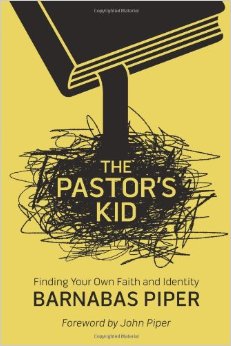
    the pastors kid bookMy father is a Pastor.

    My grandfather was a Pastor.

    My great grandfather was a Pastor too.

    When I was a boy I lay on top of my bed one night balling my eyes out.

    The reason?

    I didn’t want to be a Pastor.

    Because of the heritage of my family I thought that to be a ‘Coombs’ meant you had to be a Pastor. I looked down the generations and saw that the first born son turned out to be a Pastor. Something at the age of twelve I didn’t want to be.

    This was one of many unique challenges I can remember growing up as a Pastor’s kid (PK). Granted, this was more a phenomenon of our family’s rich Christian tradition. Yet, there are other challenges of living with the forever abbreviated title of ‘PK’ that others don’t face. And these challenges are the reason I find the book, ‘The Pastor’s Kid’ by Barnabas Piper an excellent book.

    Piper has recently published this book about PKs for PKs, Pastors and churches. A book that “describes the unique challenges PKs have faced being the children of ministers”.

    Throughout the book Piper seeks to serve individuals and churches by highlighting the challenges that come from being a child with a Pastor as parent. Through his own experience as a PK, and conversations with others, Piper gives insight into these challenges. As he puts it,

    “The constant pressure to be something, do something, and believe something creates enormous confusion for PKs. And one of the main confusions is about who we are…”

    After all, nobody chooses to be a PK, you’re either born into it or brought into it through the calling of your parents.

    On one hand it is a privilege. The constant meeting of new people from different parts of the world. The hearing of what God is doing in different countries and places. The unconscious absorption of biblical teaching. And the community of people that you’re surrounded by. All these things provide the PK with tremendous opportunity to hear about God, what He has done, and what He continues to do.

    On the other hand, it is a situation where the fishbowl of the local church can strangle the life out of you. Where there is an ambivalence to the truth because you’ve heard the stories so often. Church becomes a place where everyone knows of you, but no one actually knows you. Where expectations are laid on thick, from parents to congregation. And, of course, where you get to see the ugliness of sinners dealing with sinners from the front row.

    Therefore, PKs turn out differently as they seek to find themselves within the life of the church and the world around them. Some stay within the faith, following in the steps of their parents. Others rebel, leaving the church behind for a life apart from God. And others end up finding God and their place in the world in a way that is their own.

    Piper rightly highlights the need for grace for the PK, as they seek to grow from within the all-encompassing nature of church ministry. Grace that is experienced and shown, not just told. Grace that recognises that legalism and rules won’t help. Grace that recognises the PK has their own journey of faith-discovery and self-discovery. Grace that is therefore holistic, unassuming, respectful and full of hope for the PK as a person. Grace that comes from Jesus Christ, shown through the Pastor and the church.

    A PK isn’t anyone special. They are as special as everyone else. But they do have unique challenges.

    This book is a great conversation starter for you and your family. I’d strongly recommend you buy this book – read it and talk about it. It’ll help you as a PK. It’ll help you as a Pastor. And it’ll help you as a church member.


    This book review was also posted on the Baptist Union of Victoria’s ‘Witness Blog’ on the 22/09/2014. 

  • Book Review: The Road Trip by Mark Sayers

    theroadtripHere is a travel book with a difference.

    Most travel books give information about a certain place. The good and bad hotels, the best restaurants, the sites to see. In The Road Trip Mark Sayers travels through the last 50 years of culture enlightening us on what’s happened to the West. Following the travels of Jack Kerouac, writer and experiential junkie of the 1950s, Sayers shows how Kerouac’s journey across America is now mainstream for the life of a Western young adult.

    The book is in two parts. The first, offers a critique of young adult life in the 21st Century. The themes, illustrations, and connections between the journey of Kerouac and journey of today’s millennials resonates strongly. The second, turns toward the cross and gives broad examples of what the church must do to re-engage with young adults today. Following the journey of Abraham and centred of the cross Sayers describes how young adults can find true meaning for their lives.

    Here’s what I liked about the book:

    (1) The Cultural Analysis

    In many ways Sayers depicts young adult culture; its aims, its experiences, its lack of meaning, its search for something better, its hopelessness, with compelling accuracy.

    (2) The Writing

    Sayers pulls you along with him. It’s hard to put the book down. There are illustrations, quotes, stories, and his own ideas, which keep you reading and reading. It’s a very well written book that enables you to travel the cultural contours with him.

    (3) The Gospel

    In part-two Sayers turns to how Christianity is to deal with this “culture of the road” that young adults seek to travel. The central answer to this ‘issue’ is the Gospel, which “reconciles us to God, others, and creation”. It is only through Christ’s death on the cross that gives meaning to this world and to this life. Therefore, it is this reality that provides the necessary answer to this “culture of the road”. It is an encouragement to see the explicitness of the Gospel within this book, and how it is the basis for further application.

    (4) Morality and Covenant

    These are two themes, among others, are tackled by Sayers toward the end of the book. They are themes put on the agenda for Christians and wider Western society to think through. Morality and covenant have both been thrown out the metaphorical window in recent time and so it is a good reminder to again reflect on these issues.

    Here’s what could be improved:

    I should say that I liked everything in the book. It was very good. There is much to take away and dwell on, particularly for those in youth and young adult ministry. It’s hard to come up with much in terms of critique or growth areas. However, when I put the book down I did feel there was something missing.

    A couple of caveats:

    First, I opened the book expecting big things. Maybe bigger than Sayers could deliver. I’ll name that.

    Second, I recognise I’m involved in young adult ministry. I get to see the culture first-hand and affirm almost everything Sayers said about it. I believe these two factors affect my thoughts here.

    However, toward the end I was wanting to know more. I was wanting to know what was next. I was wanting to know how to connect the young adult world of experience, journey, and meaninglessness to the worldview of the Bible.

    I know I was offered suggestions; to bring back the transcendent, to bring back covenant, to bring back sacredness, to bring back commitment. In other words, to show that living the Christian life actually means giving up what the world offers and travelling the journey of God into full discipleship and devotion. This was made clear, I don’t want to deny that. Yet, this still leaves me hanging for more as I try to connect and apply these themes back to culture.

    Since finishing the book I’ve worked out what I’m really asking. It’s the “How?” question.

    How do we bring these themes back in a way that enables young adults to have a big vision of God and involved in His mission in the whole of life?

    Maybe that’s not Sayer’s task here but mine as the practitioner. In any case, it’s left me pondering that task and something all of us should be pondering as we reach out to the young adults of today.


    After writing this review Mark was kind enough to go back and forth on some of my thoughts. Below is an excerpt from our conversation and a reply to the “how” question. Many thanks to Mark Sayers for his time and willingness for this.

    Mark’s response:

    “…As I get around across the evangelical/charismatic/pente scene I notice that there is no one programmatic thing that is reaching young adults. Rather, it is the simple stuff in the book which I think is important e.g. covenant, living at the foot of the cross etc. I think because western young adult culture at the beginning of 21st Century seems so shiny and powerful we expect the answer to be so as well, but again I think that the answer is simple, humble obedience to Christ, simple non-sexy stuff that we already know. I have positioned our whole Church around this idea – no show, just less of us, and excitingly over time it is incredibly transformational…

    …The other thing is that I often notice after workshops and talks that I do, describing western cultures journey to secularism and now post-secularism, that people become overwhelmed and want quick and easy answers. However, how do you reverse 500 years of this stuff in some simple ministry tips? I don’t think you can, it is going to take generations to turn things around in my opinion. No one likes to think of it this way but the questions of today’s young adults are essentially Hamlet’s questions at the dawn of the modern. We have a lot of work to do.”

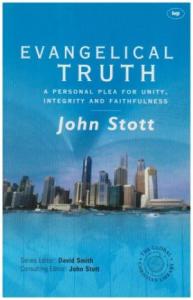
  • Evangelical Truth by John Stott

    evangelicaltruth stottJohn Stott and his ministry is well known and well respected throughout the world. He has written numerous books and articles, and up until his death in 2011 he was considered a worldwide Christian leader.

    In this little book of 149 pages Stott explains the essentials of the Christian faith and makes a strong plea for unity. Here, toward the end of his life, Stott continues to write with great insight, making you think about the primary and secondary issues within the Christian faith. There is constant debate between Christians, now more than ever it seems, over all sorts of theological and social issues. Stott believes these issues should be discussed, but at times there is a need to lessen the vigour and closed-handedness of these debates.

    Evangelical Truth has five chapters, including the introduction and conclusion. The three main chapters cover the following areas: the revelation of God, the cross of Christ, and the ministry of the Holy Spirit.

    In the introduction Stott gives a brief rundown of his definition of evangelicalism. He pitches this definition against that of fundamentalism and liberalism. Within this chapter he also gives information about evangelicalism has evolved and its main historical turning points within the church.

    The chapter on revelation, as expected, is based on the revelation of God through the bible. Stott speaks of general and specific revelation, progressive and personal revelation, inspiration, authorship, biblical authority. He touches on the debate between the sufficiency of scripture and also the inerrancy of scripture. Here Stott makes his stand against using the term ‘inerrancy’.

    Chapter three is essentially the gospel. It is the message of the cross well explained. He gives a helpful explanation of ‘justification by faith’, and grapples with what disciples and mission are. It is the shortest chapter in the book but also the most concise and straight-forward. It was good to hear the gospel again.

    A final chapter on the ministry of the Holy Spirit makes Evangelical Truth truly trinitarian. The topics of assurance, holiness, purity, community, mission, and hope are all covered. Stott is really telling the reading of how the Holy Spirit works; in the New Testament and his continuing work today. This is a good chapter and well explained.

    To conclude, Stott summarises his point and pleads with the reader to be united with Christian brothers and sisters around the globe. He calls for Christians to endure hardship and wants to be an encouraging voice within that. You can really see in the writing that Stott has a wealth of experience and knowledge of the gospel, is passionate about the things of God, and wants Christians around the world to be united under the gospel. He encourages all believers to lead with humility and to love one-another with Christian love.

    A great primer of the Christian faith. Get on it.

    John Stott, Evangelical Truth: A Personal Plea For Unity, Integrity and Faithfulness (149 pages; Leicester, UK: Inter-Varsity Press), 2003.

  • Power Through Prayer by EM Bounds

    EM Bounds is known as a prolific prayer-warrior, mainly because of his many and various books on the topic. While they were written many, many, years ago they are still greatly relevant for our soul today.

    “Power Through Prayer” is a book written particularly for ministers, that’s certainly the impression you get from reading it. Bounds encourages everyone, but particularly those who preach, to come back to prayer, to fight for prayer, and to do all things with and through prayer. Bounds stresses the power that comes through prayer, and through close communion with God in prayer you soul will be lifted high unto the heavens.

    Bounds tells tales and stories of people of the past who have spent many hours on their knees fighting for their congregation, the people they minister to. Throughout the book there are various quotes about prayer from famous churchmen in Christian history, including a special affection for David Brainerd, the young American preacher and Indian missionary of the 18th century. They are very inspiring and perfect for an Instquote if one could be bothered. In fact, much of the book is quotable as he wrestles the reader to the ground, urging them to take up a prayer ministry. There is constant encouragement to spend time in prayer, praying for the sermon, and the souls of men and women.

    An example of this would be:

    “What the Church needs to-day is not more machinery or better, not new organizations or more and novel methods, but men whom the Holy Ghost can use — men of prayer, men mighty in prayer. The Holy Ghost does not flow through methods, but through men. He does not come on machinery, but on men. He does not anoint plans, but men — men of prayer.”

    Even though the book is only 128 pages it is an inspirational book. It will shake you up and help you understand the power of prayer in the Christian life. I would highly recommend it to anyone who is wondering about prayer and its importance. It is an excellent book, and you can even download a free PDF of it here.

    E. M. Bounds, Power Through Prayer (128 pages; London, UK: Marshall, Morgan & Scott).

  • George Whitefield (Vol 1) by Arnold Dallimore

    This great volume comprehensively describes the life and times of George Whitefield.

    Starting with his early years right through to the age of 26, Arnold Dallimore describes the wanderings and impact of this young man. Using previous biographies, and the more important journals of the man himself, Dallimore outlines Whitefield’s contribution to the spiritual state of Britain and America during the 18th century.

    This book is brilliantly illustrated with stories of his time at home and at school. There is detailed analysis of his time at university, where he became a true convert of Christ and became firm in his understanding of the doctrines of grace.

    GeorgeWhitefieldv1and2

    His travels throughout Britain and America take up considerable pages, but these are very much the guts of his ministry. The book ends with Whitefield about to face more trials as he returns to England for the second time.

    As I’ve written previously, there are a number of things to take away from this work. His preaching ministry is a powerful manifestation of the Spirit, and his courage in the face of adversity is something to behold. He began preaching while in his teens, and soon began speaking to crowds upwards of 20-30,000 people. Such was the power of his preaching.  Furthermore, there is a sense of his overwhelming love for his fellow brethren, wanting to be united with the many ministers and other preachers.

    This is only book one of a two volume set, and there is much depth and content to be gleaned about the man. It’s worth the read.

    Arnold Dallimore, George Whitefield: The Life And Times Of The Great Evangelist Of The 18th Century Revival (vol. 1, 590 pages, London: Banner of Truth Trust), 1970.

  • Respectable Sins by Jerry Bridges

    In this book Jerry Bridges writes about a number of sins the Western church has, for some odd reason, decided it’s OK with.

    The author focuses on the verse from 1 Peter 5:5, “God opposes the proud but gives grace to the humble”, and tackles the issues such as pride, selfishness, ungodliness, unthankfulness, anger, self-control (or lack thereof), impatience, envy, jealousy, sins of the tongue and many others.

    Grounded in the doctrines of cross and the sovereignty of God, Bridges calls his readers to take a long, hard, look at themselves. He encourages people to see the way following Jesus impacts their lives, each and every part of it. Behind that thick wall of pride what do we think and do that we tell ourselves is OK in little doses but really isn’t? It is a very searching and convicting book, highlighting the work of the Spirit to convict his readers about those sins he comments on.respectable sins by jerry birdges

    This is a really good and thought-provoking book.

    Bridges challenges each individual to be humble before the Almighty and recognise that there are sins, sins which we ‘take for granted’, that need to be confessed and repented of.

    At times you might debate whether or not everything he mentions are actually sins, but he writes in a humble and good-natured way that urges godliness. I found it a book that slaps you around the head a bit–but in a good way.

    It’s not a long book, finishing up at 181 pages. It would be a good book for small group discussions, or a preaching series. I’d encourage anyone wanting to flee from sin or grow in godliness to pick this book up, and read it.

    Jerry Bridges, Respectable Sins: Confronting The Sins We Tolerate (181 pages, USA: Navpress), 2007.

  • Leaders Who Will Last by Tim Hawkins

    leaders who will lastTim Hawkins has been involved in youth ministry  here in Australia for many years. ‘Leaders Who Will Last‘ is his second book on the topic of youth ministry. His first, ‘Fruit That Will Last‘, was written in the late 1990s and is a foundational text for youth ministry practitioners, particularly here in Australia. Before reading Leaders Who Will Last I’d highly recommend reading his first. 

    Leaders Who Will Last, published in 2002, is, as you can imagine, all about youth ministry leadership. I have just finished my first reading of it and would recommend it to anyone in the youth ministry field. However, this book is not only for those in youth ministry on a paid basis, but for anyone involved in a voluntary capacity–parent, youth leader, small group leader etc. 

    Leaders Who Will Last is grounded in scripture and gives good advice for youth leaders. There are three main sections of the book; one on vision, one on character, and one on skills.

    It is under vision that the main biblical foundations are set. The issues of calling, shepherding, and servanthood are rightly portrayed as important. The main characteristics of a leader are to be faithful, reliable, and a follower of those in higher authority, such as the senior pastor, youth pastor, or lead leader.

    In terms of skills, the emphasis is on teaching the bible, whether at the main youth gathering or through a bible study. This I find is a bit light, I think there are more things a youth leader should also be across, not just being able to teach the bible. In fact, I think some leaders may not even be able to do that, but there are other skills that they may bring to the overall health of a youth ministry.

    Hawkins also describes, in 16 points, the various aspects to youth work and the type of person a youth leader can be, i.e. a pray-er, an organiser, a counsellor etc.

    Overall I thought the book was good. An area of improvement would be a deeper theological basis for youth leadership and youth ministry in general. While a biblical theology of youth ministry is not what this book is about I continue to search for such a work. They’re hard to find, even among all the youth ministry books at the theological college I attend. 

    Much of what was written applies directly to me, particularly the issue of getting right with God and staying right. I must set my heart on his ways and his agenda. This book pushes me to pray more, I don’t pray nearly enough for my leaders, my peers, my kids, or my church.

    And finally, it is a book that I will recommend to fellow youth leaders. There is so much information in this book that is helpful to any leadership position, but specifically to those in youth ministry.