Tag: Book Review

  • The Glue by Mike Stevens

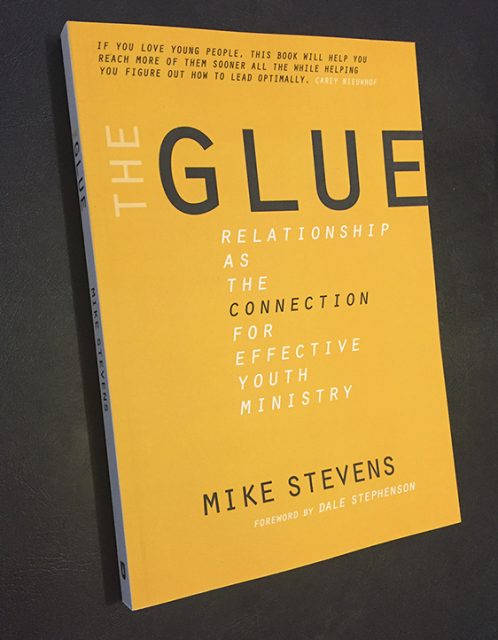
    Mike Stevens recently self-published a youth ministry book for youth pastors and youth ministry leaders. “The Glue: Relationship As The Connection For Effective Youth Ministry” is a helpful volume in thinking through the practicalities of youth ministry. It is a good addition to the youth ministry literature, and terrific to have another youth ministry resource produced here in Australia. Here are a few of my reflections on the book after reading it recently.

    thegluemikestevens

    In this book, Mike seeks to put his ideas about youth ministry leadership onto paper. He gives us a view into the way he thinks about youth ministry and its leadership, suggesting what might be most useful for us as youth pastors, leaders, and churches.

    What I found most beneficial in this book was to be reminded again of the importance of relationship in leadership, and in the developing of leaders. The relational element of the leadership development process is what stood out to me the most. While there is much to think through practically, which Mike outlines throughout, it is relationships that make youth ministry an actual ministry. Relationship is central to any youth ministry, both relationship with God and with one-another. And so, the main aim of this book is to remind us that youth ministry is relational ministry. This is front and centre throughout, and is the core of each chapter (or section).

    Clearly the book is focussed on being practical. There are sections and sub-sections on being a disciple, personal development, developing others, youth ministry foundations and the like. But within each chapter there are also short and sharp tips for anyone in youth ministry. This includes, how to communicate with leaders and parents, why camps are important, what questions to ask in beginning at a new church, how to finish a role well etc. The book aims at being practical and it does just that. This is opposed to being more theological in nature. There is brief mention of theological principles and foundations, which is quite common in youth ministry literature, and 99% of the word count is spent on application and concrete youth work. It’s clearly a practical youth ministry book.

    A unique aspect to this book is the reflection section at the end of each chapter. These reflection pieces enable the reader to dig deeper into the content and see how it applies to their context. I found these reflection sections a worthwhile addition to this book, with good questions asked of the reader. I think is particularly useful for youth leadership teams who may work through this book together and make the content specific to their ministry or church.

    I liked the reminder about relationship being central to youth ministry. Often we can quickly lose sight of the relationships we are building as we plan and prepare for the upcoming youth group event or small group. But, I also appreciated the sub-section on “The Four Big Asks of Youth Leadership” (p87-100). Here Mike outlines the clarity in which we need to communicate to our youth leaders. After all, what exactly are we asking them to do, say, on a Friday night? Mike summarises his answer to this in four parts: (1) Lead from your growing relationship with Jesus, (2) Follow up young people, (3) Prepare for Game Time (i.e. a youth group night or event), and (4) Deliver on Game Time (i.e. be punctual, present, willing to serve, and take initiative). This is not only an example of the practical nature of this book but also highlights the thinking and clarity we should be seeking to lead from.

    The Glue is a very easy read and is written like a series of blog posts, which I believe some of these chapters were originally. As I mentioned earlier, I think this is a good addition to the numerous books on youth ministry, particularly for us here in Australia. It is more for youth pastors and youth ministry leaders, but would be helpful for parents and the wider church too. Unless you’re already across the basics of a theology of youth ministry then I’d recommend reading this alongside “Gospel-Centred Youth Ministry” or Andrew Root’s “Taking Theology to Youth Ministry” series.


    It would be worth me disclosing that I do in fact know Mike! We have been colleagues for a few years now within the wider Baptist movement here in Australia. But even though I do know him, alas, I was not paid or given any sort of favour for this reflection! If you’re considering buying this book I’d recommend you get it directly from his website, as that’ll help him cover his self-publishing costs. Enjoy.

  • Growing Young – Final Reflections

    This is post nine in a series of reflections on the book Growing Young: Six Essential Strategies To Help Young People Discover And Love Your Church. For an introduction to the series please read part one and continue reading the reflections in part two, three , fourfivesixseven, and eight.


    Over three months ago I started a series of reflections on the book ‘Growing Young: Six Essential Strategies To Help Young People Discover And Love Your Church’. The sentences have been underlined, the pages have been marked, and the book has now been read. Each reflection worked through each chapter, giving thought to the main research and learnings from the Fuller Youth Institute team. Much has been learnt and there continues to be much to learn from this work.

    This final post about Growing Young seeks to evaluate the book and the research as a whole. While each chapter has its own learnings it is valuable to end this series with a broader scope, looking at what to take away and what to leave behind.

    gy_book_straight
    From the outset it is important to say that this book needs to be read for what it is. It is a book summarising research on what keeps ‘young people’ at churches. Despite the title’s byline it isn’t seeking to push a particular youth ministry philosophy. Furthermore, the research cuts across denominational and theological lines because it is summarising the results of said research.

    At the same time, because of the way this research has been put together it can come across pragmatic in nature. The main point of each chapter implies what churches should focus on, implication being that overtime a church may well ‘grow young’. For example, in the chapter ‘Unlocking Keychain Leadership’ the main idea is to equip and grow young people to be leaders in key areas of responsibility. In ‘Fuel a Warm Community’ the emphasis is to be a church that is genuinely caring of students in every principle and program. In the chapter ‘Prioritising Young People (and Families) Everywhere’ the key idea is is to look at the structures and systems within the church to help facilitate integrated ministry and partnering with parents. The inference being that by doing these things your church is more likely to ‘grow young’.

    However, the research findings doesn’t mean that a church should begin implementing a certain structure, program, or idea for a select period of time. No, this book is really talking about cultural change. This cultural change is focussed on growing young as a church and the principles behind it are based on the solid research from the FYI. To implement this kind of cultural change will take many years to implement and be a painful process for many congregations.

    Another way this book is pragmatic is at the end of each chapter. Helpfully, the authors have included some reflection questions and ideas at the end of each section for reflection and application. By doing his the book becomes a help in encouraging churches to grow young.

    In one sense Growing Young doesn’t promote a particular ministry philosophy but the way it is written means that there is a ‘system’ that can be formulated through it.

    I have written extensively about the strengths of the book and each chapter in my earlier reflections. So it is worth asking how this book could have been more helpful, particularly for those of us in youth and young adult ministry.

    First, I’d say, and say this very gently, that when reading a book like this those of us in youth ministry can be prone to affirming everything without sifting it through the lens of the Bible. Of course, there is the assumption that everyone who reads this is a professing believer. Yet, as I’ve pondered this research further I’ve come away thinking ‘so what?’

    Of course, we want more young people in churches. We want young people to be involved in the things we do at church. We want young people to meet Jesus and know that they can have a relationship with him. We want young people to grasp the Gospel and realise that God is God and we are not. We want young people to understand that God is a personal God whom we worship, enjoy, and follow.

    The danger with a book like this is that we can take the ideas, insights, and inspirations and attempt to make the church younger without making it more faithful.

    I can walk away from this book thinking that my youth and young adult ministry can get bigger and more influential within the church by implementing these things. Instead I want my youth and young adult ministries to know Jesus more and grow in faith and godliness. Why can’t we use the Bible as the ‘strategy’ rather than seeking a temporary solution that seems to fit with the cultural milieu?

    This is not to say culture is unimportant. I’m not saying that. We are living in a culture which requires a certain cultural response. But, if we believe that it is the Word of God that speaks, and that through that speaking God creates, and that through that creation young people’s hearts are opened to the Good News of what Jesus has done, then this becomes a central cog in the youth ministry wheel. Off this cog are the systems and processes and ideas that this book talks about.

    So how does this research affect me as a Youth and Young Adults Pastor going forward?

    • This book has provided excellent food for thought.
    • It has given a framework to assess the youth and young adult ministry I currently lead.
    • The emphasis continues to be on the long-term, not on short-term fixes.
    • The research provides data regarding youth ministries and churches.
    • It continues to affirm the much needed work of youth ministry within churches.

    Finally, before this post gets far too long, this is an excellent resource for any youth leader, parent, church leader or Pastor in any church. For those who’ve been in the youth ministry world with a discipleship and mission mindset there won’t be too many surprises, but the framing of these things is excellent. I’d encourage you to read the book and talk with someone on the leadership team at your church about it.

    Further Resources:

    The NYMC Podcast = Episode 15 + 16 – This two-part podcast delves into each chapter of Growing Young and discusses the research at length.

    Book review of Growing Young by Seth Stewart

    Carey Nieuwhof Leadership Podcast (106): Kara Powell On How Many Average Churches Are Actually Reaching Millennials

    Book reflection by Trevin Wax


    Here are the links to the series of reflections on the book:

    1. Growing Young
    2. Growing Young – Keychain Leadership
    3. Growing Young – Empathise With Today’s Young People
    4. Growing Young – Take Jesus’ Message Seriously
    5. Growing Young – Fuel A Warm Community
    6. Growing Young – Prioritise Young People (And Families) Everywhere
    7. Growing Young – Be The Best Neighbours
    8. Growing Young – Growing Young In Your Context
    9. Growing Young – Final Reflections
  • My Top Books of 2016

    This is the week in the blogosphere where all bloggers release those awful list posts, humbly bragging about what they read this year. It’s an easy post to write, tickles the ego, and promotes faux intelligence. It also makes you feel bad for not achieving your own reading goals, and a reminder of all those other goals you failed to complete this year.

    Well, here’s another.

    0ppkxwtyh0g-clem-onojeghuo.jpg

    For me, 2016 was a horrendous reading year. I only finished 11 books. I won’t give you my excuses but will put reading back into its rightful position in 2017.

    So for the third year in a row, and in no particular order, here are my top books of 2016:

    Do More Better: A Practical Guide To Productivity by Tim Challies

    Here’s a little gem, at just over 100 pages, which helps you think through your own productivity system. Much of the advice given can be applied to the different spheres in which you find yourself – work, family, personal, recreation etc. It just helps having a good system and the one by Challies’ outlined here is a good fit for me.

    Gospel-Centered Youth Ministry: A Practical Guide by Cameron Cole and Jon Nielson

    If you want a good primer on youth ministry, giving theological grounding and practical outworking of that theology, then this is a good book. Every Senior Pastor and Youth Pastor should read this. If you’re in youth ministry as a volunteer it will give you a good idea of the foundational thinking your Youth Pastor should be thinking through, as well as providing you with excellent training in the process.

    Each chapter is about a particular topic: making disciples in youth ministry, teaching the Bible, building relationships, forming a gospel-community, partnering with parents, how to make youth ministry inter-generational, small groups, leadership training, music and worship, retreats and events, evangelism, serving the poor, and short-term missions. There’s a lot there and it’s all very solid.

    This book would now make my Top 3 Books for Youth Ministry.

    Martyn Lloyd-Jones: His Life And Relevance For The 21st Century by Christopher Catherwood

    There is something about Martyn Lloyd-Jones that draws me to read about his life and ministry. His own writings and sermons are invaluable themselves, but so are the reflections of others about his life. In this book Lloyd-Jones’s eldest grandson gives a brief precis about his life before delving into topics missed by other biographers. There are the chapters to expect, one on preaching and another on the centrality of Scripture. But, there are also chapters on home life, and how he is relevant and appealing to Millennials and the 21st century.

    It’s not a long book and is easy to digest. It’s worth the read.

    Luther on The Christian Life: Cross & Freedom by Carl R. Trueman

    The ‘On The Christian Life‘ series is a terrific series for those of us that enjoy biography and historical theology. Bringing this together with Martin Luther, one of the most significant figures in Christian history, Carl Trueman does an exceptional job. Albeit I’m a bit of a Trueman fanboy, but he does do a great job in outlining Luther’s life and theological growth, centred on his theology of the cross.

    Chapters cover Luther’s life, the Word, liturgy, baptism and mass, righteousness, and living and dying in the world.

    Growing Young: 6 Essential Strategies To Help Young People Discover And Love Your Church by Kara Powell, Jake Mulder, and Brad Griffin

    I can’t really go through this list without mentioning Growing Young. This is the book I’ve spent the most time in this year, thinking it through and reflecting upon it. To get a better idea of the book you can read all nine reflection posts on this blog if you’re so inclined!

    The main premise of this volume is what keeps young people in church. Much has been written about why young people are leaving the church, but this is a piece of research summarised into six core reasons why young people stay.

    This is a book for anyone who works with young people in churches. From senior leadership to volunteer leaders to parents and grandparents, this is a good resource to help you think through how to integrate young people in your church.


    Well, that’s the top 5 for 2016. If you’d like to read 2014 and 2015 then go ahead and do so.

    I hope you’re 2016 reading was better than mine, but if it wasn’t then why not try this awesome reading challenge for 2017?

    reading-challenge-2017


    My Top Books: Yearly Series
    2014
    2015
    2016 (this post)
    2017
    2018
    2019
    2020
    2021
    2022
    2024
    2025

  • My Top Books of 2015

    At the start of each year I set out to read, on average, one book per fortnight. By the end of the year I’ve usually achieved this goal. What can I say? I enjoy reading. There’s usually a mix of fiction (40%) and non-fiction (60%), this year is no different. The list of books I read don’t include those I simply dip into here and there. These are the ones I read right through. If you’d like to see every book I’ve read this year then head here. Otherwise, below is a list of the top books I read. These all achieved 5-stars in my subjective rating system. 🙂

    old books

    Adoniram Judson by Jason G. Duesing

    Few books I read significantly shape me. The last would’ve been around a decade ago. Yet, in January one more was added to that elite list, this biographical account of the life of Adoniram Judson. Perhaps it was the timing, just before our miscarriage and a rather painful time for us as a family. It was helpful for that period but also for deeper reflection in what it means to live a life following Jesus and making him known to others.

    The book was so good I had to review it. The review gives you a better outline and idea of the book than I can give here. I also quoted him a little in some previous posts. It’s a great read and was significant to me at the time and as I’ve continued to reflect on it.

    In brief Judson was the first American Baptist missionary sent out, ever. He had a great impact on current day Burma/Myanmar, fruit which continues to be seen today. He endured so much personal and ministerial hardship, including the deaths of many of his children and two of three wives. He seems like an amazing man and very much worth the read.

    Michael Jordan: The Life by Ronald Lazenby

    Michael Jordan was the most iconic sportsman while I was growing up. Probably still is. He’d certainly be the best basketballer the world has ever seen. This biography is a comprehensive outline of his life and family. Lazenby begins generations before MJ was born and makes his way through the family tree before spending much of the 720 pages talking about his career. The Life outlines Jordan’s relationship with his father, family, coaches and team mates. It is a great read and even more so if you remember the glory days of Jordan and his Bulls.

    Bonhoeffer: Pastor, Martyr, Prophet, Spy by Eric Metaxas

    Another biography makes the list here too. Can you tell the stories of others interest me?

    Bonhoeffer was a pastor during the time of Hitler-led Germany and into World War II. He was one of few who saw Hitler for what he was and went against the traditional German church at the time. This leads him to be a main player in seeking to assassinate Hitler during the war, which he is consequently imprisoned for. Metaxas is a great writer and gives a detailed account of Bonhoeffer’s life. It took longer than I would’ve liked reading this on Kindle but it was still worth the 5-stars.

    When Helping Hurts: How to Alleviate poverty Without Hurting the Poor…and Yourself by Steven Corbett and Brian Fikkert

    As part of my role with Global Interaction I have had the privilege of facilitating and leading short-term mission or exposure teams. This involves preparing people to engage in missions in another culture and with other religions. At the same time questions are often raised as to the validity and method of these trips, quite often seen as a waste of money with little help to others. I have my own thoughts on this of course but this book helps put many of these things in perspective.

    This is a good primer on poverty and dealing with people who are impoverished. It also has some good chapters on what non-profits can do to safe guard themselves in dealing with the poor, whether that be processes or programs or finances etc. I was particularly interested in how they approached short-term teams and there is a whole chapter dedicated to that. Consequently they have elaborated that chapter into and entire book now too. In any case, this one was excellent and gave me a real insight into dealing with things regarding the poor and social justice.

    Leading from the Second Chair: Serving Your Church, Fulfilling Your Role, and Realizing Your Dreams by Mike Bonem and Roger Patterson

    So in January I become an Associate Pastor. I thought it worthwhile to read up on what some of this may entail. This book was rightly recommended to me and very much worth the read. It is written by two guys with much experience in associate roles and delves into three particular tensions those who lead from the second chair may face. It gives a good picture of the realities of this role, whether it be in a church or other place of work.

    Knowing God by J.I. Packer

    Knowing God is a Christian classic and remains so today. This is a re-read for me but it had been 10 years since I last picked it up. Packer outlines the Christian faith and the central aspects of it. As the title suggests, it helps us in getting to know God, who he is and what he is like. As I read this it reminded me of how ‘lite’ the Christian Living books are today. If you’d like something of substance to read this coming year then give this one a go.

    This time of year often produces ‘best of’ type lists on various websites. I mainly stick with books and you can read 2014’s list too if you like.


    My Top Books: Yearly Series
    2014
    2015 (this post)
    2016
    2017
    2018
    2019
    2020
    2021
    2022
    2024
    2025

  • Book Review: Adoniram Judson by Jason G. Duesing

    Judson bookThe last book I can remember reading that had such an impact on me was in my later university years. I read a young adult version of the biography of Jim Elliot, a missionary martyr to Ecuador. His life and faith were an inspiration as I worked out my faith during my university years and spurred me into the world of missions.

    That was over 10 years ago now.

    So it seems very few books I read spur me into greater action and reflection. Most books invite me into the story and may give good information about a particular person or period. But I can’t think of more than a handful of books I’ve read that spur me into action and greater obedience to God.

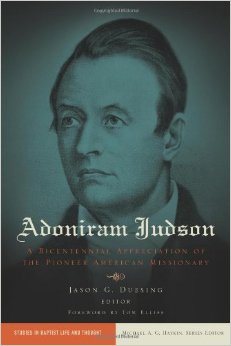
    But the book Adoniram Judson: A Bicentennial Appreciation of The Pioneer American Missionary by Jason G. Duesing, is one of those books.

    This book isn’t written by one author. We could say it’s a collection of essays combined to give an excellent picture of Judson’s life and ministry. The book goes deep into his early life, his Christian life, his missionary life, his married life, and the influential life he led.

    It is a wonder as to why I hadn’t previously read a book about Judson. He is highly esteemed, particularly by those in America and the missions world. He is recognised as the father of American missions. The little I previously knew was from John Piper’s biographical message on the man from 2003. Yet in this written volume, with references to his and his wives’ journals and letters, there is a terrific account of this “mighty man”.

    Three main areas I saw highlighted in the book were Judson’s faith in the sovereignty of God, endurance through suffering, and commitment to long-term missions service.

    Sovereignty
    The faith Judson and his wives’ had in God is simply an inspiration.

    I say wives because Judson ended up having three. Ann and Sarah, his first two, died during his lifetime and Emily passed away only a few years after Judson himself died. I feel this needs to be clarified so there is no miscommunication. 🙂

    But all four individuals were wholeheartedly followers of Jesus Christ and sought to be obedient to His call, wherever that led. This begins with the conversion of Adoniram Judson soon after hearing one of his good friends from university die in the room next to him. He literally heard this man passing away during the night and upon finding out who it was the next morning was thrown into turmoil about his own soul.

    Judson sees the light and the graciousness of God through his Son and clings to the cross for forgiveness and salvation. He realises that it is only the cross that can bring true salvation. The trust he has in God at this early stage is evident. The way God’s hand guided him from being the son of a Congregationalist minister into atheism through university and then into a living, vibrant, and heartfelt faith when he was 20 years old is clearly seen. God’s sovereignty is at work.

    With this as the banner of his life he pursues a life that will count. He seeks to see others come to know God through his Son, so that they too may see salvation through the cross.

    He trusts God in his studies, as he heads to theological college without an active faith. Over the course of his studies he converts and has an unrivaled desire to be a missionary is Asia. He trusts God as he seeks a wife and proposes to Ann Hasseltine, loving her and trusting she will be willing to come with him to Burma and the East. In a letter to her parents, seeking to begin a relationship with her, he very early on describes his intentions for life and what that will mean for them and their daughter. In July, 1810, he writes,

    I have now to ask, whether you can consent to part with your daughter early next Spring, to see her no more in this world; whether you can consent to her departure, and her subjection to the hardships and sufferings of missionary life; whether you can consent to her exposure to the dangers of the ocean; to the fatal influence of the climate of India; to every kind of want and distress; to degradation, insult, persecution, and perhaps a violent death. Can you consent to all this, for the sake of him who left his heavenly home and died for fer and for you; for the sake of perishing immortal souls; for the sake of Zion, and the glory of God?

    As they travel he trusts God’s plans as they make the controversial but convicted decision to become Baptists after studying the scriptures. In the four months from leaving the American shores he and his wife Ann see the truth in Believer’s Baptism and are baptised themselves by colleagues of William Carey in India.

    In his first marriage with Ann, and consequently the ones following, the sovereignty of God is central to their faith and obedience.

    Suffering
    Judson and his wives’ suffered immensely. He saw the death of two wives, the death of over five children, and the death of colleagues in the mission work. He was imprisoned for nearly two years by the brutal regime in Burma at the time. When he lost his firstborn son he wrote:

    Our little Roger died last Saturday morning. We looked at him through the day, and on the approach of night we laid him in the grave. This is the fourth day, and we just begin [sic] to think, What can we do for the heathen? But yet it seems hard to forget little Roger so soon, to force off our thoughts from the attractive, painful subject, and to return to our usual employments. O may we not suffer in vain! May this bereavement be sanctified to our souls! and for this I hope we have your prayers. (p88)

    Ann experienced the same difficulty. In a letter to her parents, she expressed her confidence in God’s sovereign goodness, even in the death of her child:

    We do not feel a disposition to murmur, or inquire of our Sovereign why he has done this. We wish rather to sit down submissively under the rod and bear the smart, till the end for which the affliction was sent shall be accomplished. Our hearts were bound up in this child; we felt he was our earthly all, our only source of innocent recreation in this heathen land. But God saw it was necessary to remind us of our error and strip us of our little all. Oh may it not be in vain that he has done it. May we so improve that he will stay his hand and say, ‘It is enough’. (p88)

    What inspiration and trust in the Lord!

    Added to this is the ridicule he received from the local Burmese. It took seven years into the work before the Judson’s saw a convert. The constant health issues and lack of ‘success’ in the conversion of the people he sought to reach, and the death and disease he saw drove him to leave the main town he was living in and live by himself, in the jungle, sitting and staring into a shallow grave he had dug.

    Thankfully it was the years after this that Judson saw the fruit of his work but the suffering had an effect, as one could expect.

    Service
    The commitment of Judson and his wives’ have had a lasting impact on the lives and ministry of those who have gone after him. Their service of nearly 40 years, with one furlough back to America, is something to behold in the modern day. I understand that this was a different era, but the long lasting commitment of Judson and his wives attest to the fruit from long-term service.

    As mentioned, they didn’t see a convert for seven years. They experienced great suffering in their own lives and also saw it among the people they served. Yet, they continued to work in building relationships and translating the Bible into the native tongue of the Burmese. To this end Judson had a commitment to being contextual in everything and learn the culture well.

    The Judson’s immediately set about learning the Burmese language. Understanding Burmese was crucial for personal evangelism and Bible translation, both of which were necessary if the gospel was to gain a foothold in Burma. It was not enough to learn the language; the Judsons also had to learn how to live and minister in a Burmese context. Phyllis Rodgerson Pleasants describes the centrality of this learning for the Judsons’ mission:

    “The Judsons recognised that they had to be learners before they would be able to teach anything. They were persistent in learning from the Burmese [sic], their entire lives in order to communicate the gospel authentically in ways natural to the Burmese instead of trying to make the Burmese American so they could understand the gospel. More than learning the language from their teachers, the Judsons learned what it meant to be Burmese.”

    Learning the Burmese language and being immersed in Burman culture were critical components in providing a contextually appropriate Christian witness. The Judsons eventually excelled at both. (p81)

    This led Judson to be a communicator in word and deed. Alongside the work of translation was the contextual approach to being a witness for Christ.

    We agree in the opinion that our sole object on earth is to introduce the Religion of Jesus Christ into the empire of Burmah; and that the means by which we hope to effect this are translating, printing, and distributing the Holy Scriptures, preaching the Gospel, circulating religious tracts, and promoting the instruction of native children.

    Cross-cultural communication of the gospel was the Judsons’ heartbeat.

    Jusdon understood that translation work could commence more quickly in Burma that in some settings because, as Wayland surmised from Judson’s letters, “The Burmans are reading people. They have their religious books, and possess the teachings of Gaudama in their own language.’ However, Judson prioritised proclamation, “The press can never supplant the pulpit’.

    Language acquisition came gradually with parallel cultural knowledge, giving them the ability to interpret nuanced Burmese meanings, and worldview complexes of belief and practice. One of Judson’s first forays in adapting his technique to the culture was to stop building a zayat, a speaking point at the end of his house where passersby would stop to inquire this foreigner and his teaching. Eventually it became a place to hold public worship. Even though he borrowed the zayat idea from Buddhist priests, he clearly distinguished his zayat from theirs. His diary described the design and function of the building and recorded that it ‘is whitewashed, to distinguish it from the other zayats around us’. (p139)

    Conclusion

    Much more could be said. The book is well worth a read and some days spent in reflection of it. It was an inspiring read and one that made me think about my commitment to Christ and the way in which missions is currently done.