Tag: Christianity

  • Preaching Grace

    Preaching Grace

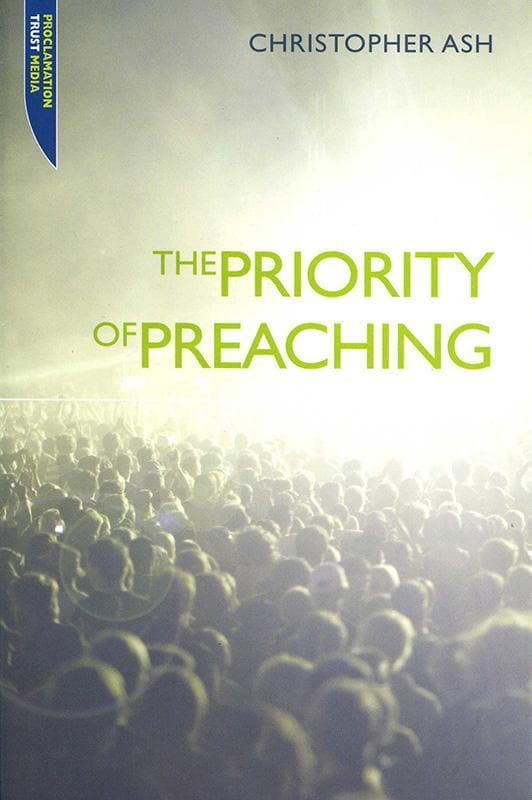
    In The Priority of Preaching, Christopher Ash writes about that which can get overlooked in our churches: preaching being centred on grace. Ash argues in his book that the preaching of grace is essential, as it keeps the church from turning into what he calls a “club” where people gather around shared interests or personalities rather than a shared commitment to Jesus Christ. Instead, preaching on grace builds a community in humility and binds us together through the Good News rather than individualism. Ash writes, “only the word of grace knocks down our pride.” And it is in this posture we are able to turn back to God, reminding each of us that we are “all one in Christ Jesus”. The playing field is levelled, all of us fall short, and the togetherness of us as believers is on our shared dependence on the mercy of God. 

    This emphasis on grace goes beyond just avoiding pride; it’s also about cultivating a healthy church culture. Without the regular proclamation of grace a church can quickly become an exclusive group that relies on human similarities rather than the gospel to stay connected. This drift can happen subtly, but Ash’s point is that grace is the only foundation strong enough to hold together a diverse community. The church isn’t meant to be a gathering of people who all look, think, and act alike; it’s a people transformed and unified by God’s grace, regardless of background or personality (Romans 12:3-5).

    The challenge to pastors is to make grace a consistent theme in our preaching, a commitment that prevents the church from developing a “club mentality.” Grace-centred preaching doesn’t just speak to an individual heart, it impacts and transforms the whole church. When grace is preached we are reminded of our own limitations, the unnecessary drive to prove ourselves, and a skewed view of success. The focus on grace points us back to the gospel, which calls us to be of one mind and heart, putting others above themselves (Philippians 2:1-14).

    As a flow on effect of this grace-filled preaching the life of the church reaches outside its walls. Well, it should drive us to this. If we are marked by humility and grace, which flows from this kind of preaching, then the culture of the church is to be a place where others are welcomed, even if they don’t seem to ‘fit’. Ash tells us that those churches that preach grace will stand out, drawing others in through the authenticity of the community that is impacted through grace. 

    In practice, this call to preach grace challenges those of us who do preach regularly to focus on the greatness of the gospel, not simply giving our hearers things ‘to do’. While there will be challenging moral and behavioural aspects articulated in preaching, because Scripture is like this too, it does mean framing these things in the context of grace. For example, instead of preaching a “try harder” message, we can emphasise that growth in holiness is an ongoing response to God’s love, not a checklist for approval.

    As Ash explains, grace is the church’s “ tune.” Without it the church will gradually lose its true identity. Grace keeps the church as the body of Christ. By keeping grace at the centre we create a church culture that reflects the gospel, and open ourselves to be a community that is transformed by it.

  • The Priority of Preaching by Christopher Ash

    The Priority of Preaching by Christopher Ash

    In The Priority of Preaching, Christopher Ash argues that preaching is not just another church activity but the foundation upon which the church is formed, sustained, and strengthened. Ash presents preaching as the central means by which God calls His people together, aligning the church under His Word to shape their lives, faith, and identity. While the book is a bit academic in parts, Ash’s use of memorable illustrations and his practical advice on the task of preaching make it worth the read.

    Ash builds his case around Deuteronomy, which he describes as less a “law book” and more a “preaching book.” He points out that in Deuteronomy, Israel gathers under Moses to hear God’s Word, binding them together as His people (Deuteronomy 31:11-13). This gathering isn’t about individuals gaining private insight; rather, it’s a communal moment where the people are shaped under the authority of God’s spoken Word. For Ash, this dynamic continues today. Preaching is a way for the church to gather, listen, and respond together to God.

    A major theme in this book is grace, which Ash argues must be central to preaching. He points out that without regular, grace-centred teaching, churches risk becoming exclusive clubs rather than communities of believers bound by Christ. He writes, “only the word of grace knocks down our pride,” reminding us that the gospel keeps believers grounded in humility and dependent on God (Ephesians 2:8-9). This recurring call to grace is a practical one, as it reinforces that the church’s unity and health are not built on shared interests or human qualities, but on the common need for God’s saving grace. Ash’s emphasis here brings to mind Paul’s words to the Galatians, that we are “one in Christ Jesus” (Galatians 3:28), a unity that only grace can sustain.

    Ash insists on the urgency of preaching. He uses an illustration of three apprentice devils who each try a different strategy to prevent people from responding to God’s Word. The final one whispers, “Tell them there’s no hurry.” This tactic succeeds, as people assume they can respond later, just “not today.” For Ash, preaching must challenge this mindset, delivering the message with urgency to avoid spiritual complacency. “The urgency of faith means we need to preach with urgent passionate clarity,” he writes, stressing that preaching should move people to a point of decision. This is a reminder that preaching isn’t just informative; it’s intended to encourage people toward repentance and faith, and “spur one another on toward love and good deeds” (Hebrews 10:24).

    Another key insight is the way Ash views preaching and community as closely connected. He argues that preaching isn’t just for individual growth but for binding the church together as a people. “The church is not a collection of individuals who sometimes assemble; it is an assembly whose members may sometimes be dispersed,” he says. This means that the assembly under the Word reflects Paul’s description of the church as “one body with many members” (1 Corinthians 12:12). It is a reminder that the church is not simply a place to receive spiritual insight but is a gathering that God shapes and grows collectively through His Word.

    In terms of the role of the pastor, Ash sees the pastor as a shepherd whose primary task is to “feed the flock” through preaching (John 21:17). Drawing on theologians like John Owen, Ash describes preaching as the pastor’s core responsibility, one that must be done with diligence and humility. The pastor’s role is not about personal authority but about humbly stewarding God’s Word to guide the church. 

    The Priority of Preaching is a book that reinforces the essential role of preaching for the church. The book has an academic tone that can make it a slower read in parts, but uses illustrations to enliven the chapters and make it more accessible. Although some sections may be dense, the book’s core ideas around grace, urgency, community, and pastoral responsibility make it a helpful resource for those who preach or lead within the church. With its combination of practical insights and vivid examples, The Priority of Preaching is a four out of five stars book, bringing practical depth and encouragement for the Church and the preacher. 

  • The Great Salvation: A Warning Against Neglect

    The Great Salvation: A Warning Against Neglect

    In my previous post, we explored how Hebrews 1 establishes the supremacy of Jesus over the angels. This understanding sets the foundation for the message in Hebrews 2—a warning not to neglect the great salvation that Jesus offers.

    This isn’t just an ancient admonition; it is also a warning for us today. We live in a world full of distractions, temptations, and trials. It’s easy to lose sight of what’s important, the core of our faith. Hebrews 2 urges us to hold fast, to be anchored, to Jesus, the author of our salvation. In so doing he tells us to be vigilant against the slow drift that can pull us away from Him.

    Do Not Neglect the Great Salvation

    Hebrews 2:1-4 opens with a direct and urgent exhortation:

    “We must pay the most careful attention, therefore, to what we have heard, so that we do not drift away.”

    The imagery of drifting is helpful.

    Think of a boat tied to a pier, its ropes securely fastened. As long as the knots are tight and the ropes strong, the boat remains anchored, no matter how strong the currents or waves. But if the knots loosen, if the ropes fray, the boat begins to drift, carried away by the unseen pull of the tides. The same is true for our faith. If we are not anchored to Jesus—in other words, ‘if we do not pay careful attention to what we have heard’—we can slowly, almost imperceptibly, drift away from our faith.

    The Danger of Drifting

    This warning isn’t about a sudden, conscious rejection of faith. It’s about the subtle, almost invisible drifting that can occur when we neglect our relationship with God. Some questions worth reflecting on for ourselves, which may help us evaluate where we are at, include:

    • Have you found yourself neglecting the reading of God’s Word, allowing days or weeks to pass without opening your Bible?
    • Have you neglected prayer, letting your conversations with God become infrequent or shallow?
    • Have you been absent from corporate worship, finding excuses to skip gathering with God’s people?
    • Have you neglected using your gifts to serve others, retreating into self-interest instead of investing in a community of faith?

    These are the areas where drifting often begins. The author of Hebrews warns that neglecting this great salvation will have serious consequences. He reminds us that the Law, delivered by angels, was binding and disobedience to it was met with just punishment. How much more severe will the consequences be if we neglect the salvation offered by Jesus, the Son who sits at the right hand of the Majesty (1:4)?.

    Anchoring Ourselves to Salvation

    So, how do we stay anchored?

    The answer is not just to “read your Bible and pray,” though those are essential practices. Staying anchored requires a conscious effort, an intentional commitment, to remain in communion with God. It means recognising our deep need for Him and seeking to deepen our relationship with Him through worship, community, and obedience. This could look like:

    Worship: Engage in both personal and corporate worship, reminding yourself of God’s greatness and your dependence on Him.

    Community: Stay connected with other believers who can encourage, challenge, and support you in your walk with Jesus.

    Obedience: Be diligent in following God’s commands, not out of obligation, but out of love and gratitude for the salvation He has given you.

    In a world that constantly tests and tempts, it’s easy to let those ropes loosen and find ourselves drifting. Hebrews reminds us of the greatness of the salvation we have in Jesus—a salvation confirmed by the apostles, witnessed through signs and wonders, and guaranteed by the Holy Spirit. Don’t neglect it. Stay anchored to Jesus and live with confidence in His power and presence.

    Like that securely tied boat, ensure that your faith is firmly anchored, not drifting away with the currents of life. Hold fast to the salvation that comes through Jesus, recognising the seriousness of the warning and the greatness of the gift we’ve been given.


    This is a series through the Letter to the Hebrews, based on sermons I have preached over the course of our sermon series. For other posts in this series please see:

  • The Supremacy of the Son Over Angels

    The Supremacy of the Son Over Angels

    Angels are a subject that often fascinates our culture. From their depictions in art and literature to their appearances in pop culture, angels are often portrayed as powerful, mysterious beings. Shows like “Supernatural” or “Touched by an Angel” present them as celestial figures with their own personalities and missions, often serving as intermediaries between heaven and earth. Even in music, with songs like Robbie Williams’ “Angels,” we see them as symbols of hope and protection. Yet, as captivating as these portrayals are, the Bible gives us a much deeper understanding of angels and their role in God’s kingdom.

    In the opening chapter of Hebrews, we find this truth: as significant as angels are, Jesus, the Son of God, is far greater.

    This isn’t just a theological point but begins to form our understanding of the greatness of the salvation Jesus offers. The writer of Hebrews makes this clear by emphasising the supremacy of the Son over angels, which sets the stage for the rest of the letter.

    Jesus Is Greater Than the Angels

    Hebrews 1:5-14 focuses on establishing the supremacy of Jesus over the angels. The author does this by weaving together a series of Old Testament references—seven in total—to demonstrate that Jesus has always been greater than the angels.

    1. The Reality of Angels

    The Bible doesn’t question the existence of angels; it assumes their reality. They are mentioned throughout Scripture as servants of God, carrying out His will. Angels protected Abraham (Genesis 19:1), delivered the Law to Moses (Acts 7:53), ministered to Elijah (1 Kings 19:5), and announced the birth of Jesus to Mary (Luke 1:26-38) and Joseph (Matthew 1:20-21). They even ministered to Jesus after His temptation in the wilderness (Matthew 4:11). In Revelation 5:11-12, we see angels worshipping Jesus, declaring His worthiness to receive power, wealth, wisdom, strength, honour, glory, and praise. Yet, despite their importance, they are never the focus of worship; that honour belongs to Jesus alone.

    2. The Son’s Greater Name

    The first point the writer makes is that Jesus’ name is far greater than any angelic name. In Hebrews 1:5, the author quotes Psalm 2:7 and 2 Samuel 7:14 to show that Jesus is uniquely identified as the Son of God. No angel has ever been given this title. The name of Jesus signifies His divine authority and unique relationship with the Father.

    3. The Son is Worshipped by Angels

    Hebrews 1:6-7 makes it clear that the angels worship Jesus (cf. Revelation 5:11-12). These divine celestial beings, who themselves are holy and God’s light, bow before Jesus, recognising His divine authority. This reinforces the idea that Jesus is not just another spiritual being; He is the object of angelic worship.

    4. The Son’s Exaltation

    Jesus has been exalted to the right hand of God, a position higher than the angels. This idea is supported by several Psalms (Psalm 45:6-7; 102:25-27; 110:1) quoted by the writer. The right hand of God is a place of supreme honour and authority, and it is here that Jesus is seated, ruling over all creation, including the angels.

    5. Angels as Servants

    Finally, Hebrews 1:14 tells us that angels are sent to serve those who will inherit salvation. This highlights their role as servants, not rulers. Their purpose is to assist in the unfolding of God’s plan, particularly in the lives of those who are saved by Jesus. This service again highlights the salvation Jesus offers, how it is so much greater that angels are sent to aid in its fulfilment.

    This first chapter of Hebrews serves as a powerful reminder: while angels are significant in God’s plan, they are not to be worshipped or revered above Jesus.

    The Son of God is far greater.

    He is the one whom the angels worship, and He is the one who holds the universe together.

    As we move into Hebrews chapter 2, we’ll see why this salvation that Jesus brings is something we must never neglect.


    This is a series through the Letter to the Hebrews, based on sermons I have preached over the course of our sermon series. For other posts in this series please see:

  • The Great Son: Understanding the Supremacy of Jesus

    The Great Son: Understanding the Supremacy of Jesus

    The world is constantly changing, sometimes rapidly. Take technology for example. Remember when floppy disks were cutting-edge? Those little square disks held all our data and seemed revolutionary at the time. Then came CDs, USB drives, and portable hard drives. Now, we store and share data wirelessly through this mysterious cloud, data centres in various parts of the world. This evolution is a reminder that things change, often quickly, and how what was once essential can become no longer.

    In the opening verses of Hebrews, this idea of change is made front and centre. The writer introduces us to a new season in which God has revealed Himself in a way that surpasses all previous revelations—through His Son, Jesus.

    Jesus Is the Great Son

    In Hebrews 1:1-4, we read:

    In the past God spoke to our ancestors through the prophets at many times and in various ways, but in these last days he has spoken to us by his Son, whom he appointed heir of all things, and through whom also he made the universe. The Son is the radiance of God’s glory and the exact representation of his being, sustaining all things by his powerful word. After he had provided purification for sins, he sat down at the right hand of the Majesty in heaven.

    These verses highlight the supremacy of Jesus. He is greater than all who came before, the ultimate way in which God has chosen to reveal Himself.

    God is a God Who Speaks

    From the very beginning, God has been speaking. Genesis 1:3 tells us, “God said, ‘Let there be light,’ and there was light.” God continues to communicate with His creation, including us, giving instructions and maintaining a relationship with us. He is not distant; He is present, like a friend who is always just a call away, ready to help whenever we need it.

    Yet, despite God’s openness, we often hide from Him, just as Adam and Eve did in the garden after their rebellion. They were afraid, so they hid, but God sought them out. Similarly, when we realise our own shortcomings, we tend to withdraw, but God seeks us out, desiring a restored relationship. He wants to comfort and reassure us. The question is, do we have open hearts to hear from Him?

    God Spoke Through the Prophets

    In the past, God communicated through prophets in various ways. He spoke to Abraham in a vision (Genesis 15:1), to Moses through a burning bush (Exodus 3:2-4), to Samuel through a dream (1 Samuel 3:4-10), and to David through the prophet Nathan (2 Samuel 7:4-5). When we receive important news it may come via personal letter but probably via email or text or a phone call. Whatever the case, the message or important news is communicated to you. In the Old Testament, God’s messages were relayed through His prophets.

    God Speaks Through His Son

    But now, in these last days, God speaks to us through His Son. The writer of Hebrews emphasises that we are in a new era. The end times began with Jesus’ life, death, resurrection, and the outpouring of the Holy Spirit at Pentecost, and they will continue until Jesus returns. From this time on Jesus is final and complete revelation of God. As we seek to hear God’s voice and know His will, we turn to Jesus.

    Hebrews 1:2-4 gives us insight into the Son’s place and role. Jesus is the heir of all things, the creator and sustainer of the universe, and the exact representation of God’s being. He holds the universe together with His powerful word and sustains us.

    Jesus’ role is further confirmed by His actions. He provided purification for our sins through His death on the cross, allowing us to draw near to God with sincere hearts and the assurance that comes from faith. Though it might seem strange to modern ears, the concept of being cleansed by Jesus’ blood is deeply rooted in Scripture, from the sacrificial system of the Old Testament to the teachings of the New Testament.

    Conclusion

    Finally, we see Jesus exalted, seated at the right hand of God (1:4). This position confirms His superiority over everything that came before Him. Jesus, as the heir, sustainer, and purifier, is greater than the angels, the Law, Moses, the prophets, and the priests.

    Just as floppy disks and CDs have been replaced by more advanced technology, the old ways of understanding God have been surpassed by the ultimate revelation through His Son. Jesus isn’t just an update; He’s the final word, the complete picture of who God is and what He desires for us.

    The encouragement for us is simple: listen for His voice, trust in His authority, and worship Him as the sustainer of our world. We are to live in the light of His exaltation, seek His presence daily, and reflect His glory in all that we do.


    This is a series through the Letter to the Hebrews, based on sermons I have preached over the course of our sermon series. For other posts in this series please see:

  • Greater Than: The Message of Hebrews

    Greater Than: The Message of Hebrews

    Have you ever found yourself at the point where you realised whatever you’re doing isn’t worth the time, energy, or effort to continue, so you quit?

    Many of us have experienced this with various things in life, like gym memberships, growing a veggie patch in our yard, or even more significant commitments like jobs or relationships. It’s a common human experience.

    We’ve begun a new sermon series at our church where we’re diving into the book of Hebrews, a letter that inspires and encourages us not to quit but to persevere in our walk with Jesus.

    The central message of Hebrews is that Jesus is greater than all. He is the ultimate revelation of God, providing us with everything we need for our souls, life, and faith. This then leads to the constant encouragement to not give up, to not quit the faith, but to keep on keeping on.

    If you’ve ever signed up for a gym membership, then you may have experienced something of the following. You sign up inspired to get healthy, turn up 3-4 times per week, and want to make use of the classes on offer or the swimming pool in the complex. But about 6 weeks in, the results aren’t there. Another 6 weeks later, you realise you haven’t attended in a while, and then 6 weeks after that, you realise you’re paying a good amount of money for nothing. So, you quit. You give up on it.

    In our faith we may be tempted to do the same. We get some months or years or even decades down the road of faith and drift. We drift so much, we decide it’s not true, or not worth the time, or we’re not longer convinced it’s worth it.

    This is where the message of Hebrews comes in. It is written to encourage us not to give up, but to persevere in light of who Jesus is and what he has done for us. It is written with teachings, with warnings, and with encouragements to help us do just that. To keep going.

    This sermonic letter opens with a majestic declaration:

    “In the past God spoke to our ancestors through the prophets at many times and in various ways, but in these last days he has spoken to us by his Son, whom he appointed heir of all things, and through whom also he made the universe. The Son is the radiance of God’s glory and the exact representation of his being, sustaining all things by his powerful word.” (Hebrews 1:1-3)

    As the letter progresses, we see that Jesus is greater than the angels, Moses, the priests, and the old sacrificial system. He is our Great High Priest, who mediates between God and his people, and offers Himself as the perfect sacrifice once and for all. This truth is at the heart of our faith and is written to give us the strength to keep going.

    Toward the end of the book Hebrews 12:1-2 says the following to continue this encouragement:

    “Therefore, since we are surrounded by such a great cloud of witnesses, let us throw off everything that hinders and the sin that so easily entangles. And let us run with perseverance the race marked out for us, fixing our eyes on Jesus, the pioneer and perfecter of faith. For the joy set before him he endured the cross, scorning its shame, and sat down at the right hand of the throne of God.”

    In our faith journey, we might face moments where we want to quit due to life’s challenges, doubts, or our own shortcomings. But we are not alone. We are surrounded by a ‘great cloud of witnesses’—those who have gone before us and those walking alongside us. Most importantly, we have Jesus, who endured the cross for us and intercedes for us.

    The continued encouragement is to commit to running the race of faith with faith, fixing our eyes on Jesus, and drawing strength from His example and the community of believers around us.

    I look forward to sharing more on Hebrews in coming months as we explore this book.

  • Exploring The Habits of The Christian Life: Reading The Bible For Application

    In recent time I’ve been exploring what modern Christianity would call the ‘spiritual disciplines’. These are the habits, the actions, the lifestyle, the regular practices, which shape spiritual formation for the self.

    As you can imagine these practices are centred around the Word and prayer. However, they also bring with them other practices that can help in our communion with God (think: fasting, solitude, silence, giving etc). And in the end that is the purpose of these practices, to help in our communion with God, leading us to enjoying Him in greater depth.

    Modern proponents of the spiritual disciplines are people like Dallas Willard, Eugene Peterson, Richard Foster, Donald Whitney and others. But generally when reading their books they are often footnoting the divines of ages past. This week, as I’ve been reading David Mathis’ book, The Habits of Grace, one such quote from the Puritan preacher Thomas Watson caught my eye enough to highlight. He writes,

    “Take every word as spoken to yourselves. When the word thunders against sin, think thus: “God means my sins;” when it presseth any duty, “God intends me in this.” Many put off scripture from themselves, as if it only concerned those who lived in the time when it was written; but if you intend to profit by the word, bring it home to yourselves: a medicine will do no good, unless it be applied.”

    How often do we read the Bible and seek to apply it to ourselves in a way that brings it home to ourselves? Often we can read the Bible for the sake of understanding more of the Bible, it’s history, it’s context, the people it was originally written to, but how often do we apply it to ourselves in a way that means we need to apply it?

    For those of us who have been walking with Jesus for a while, who are familiar with the Bible, and understand many of its contours we can easily skip the application of the text for us.

    As Mathis rightfully highlights following this quote, it is important to understand the Word in its context, how it relates to Jesus and the cross, before seeking to apply it to ourselves. But after reading it in this way, do we take the next step in applying it for ourselves, meditating on it to find where it may be speaking to us, insightfully helping us to see how we may need to change our thinking or actions?

  • Published: The Performance Trap

    Last week I wrote about often feeling inadequate in the ministry, and it raised a few questions and comments. However, it also dove-tailed with a post I had published on The Gospel Coalition Australia later in the week, entitled “The Performance Trap“.

    In this post I write about the amazing grace God gives to us, not because of anything we’ve done, but simply as a gift. Even though we may know this intellectually, often we fall back into performance-based living.

    You can read the whole thing here.

    “Intellectually we get it. We understand the heart of Christianity really isn’t about us, it’s about God and what he has done. Yet functionally we keep trying to make it about us. We are drawn back to performance in our attempt to live out our faith. In the end, we fall into performance traps; distorting the gospel and making our faith about us once again. “

    Screen Shot 2019-10-05 at 2.53.07 pm

  • New Children’s Ministry Initiative Makes Worship Leaders Walk Out Of Service

    In an effort to be more inclusive of children in their services Pleasantville Baptist Church has encouraged those under the age of 12 to bring their own instruments to church for the opening bracket of songs.

    For three weekends in a row the services at PBC have included a time for inviting children to the front with their instruments. In preparation for the change to the Sunday service the PBC Worship And Musical Praise Singing Committee (otherwise known as WAMPS for short) decided to provide instruments for those who need them. Thinking particularly of visitors, or children who don’t have their own instrument, WAMPS provides a surprisingly large wicker basket full of maracas, shaker eggs, castanets, handle bells, tambourines, jingle sticks, and, for one lucky child, a kazoo.

    New Children's Ministry Initiative Make Worship Leaders Walk Out Of Service

    Those attending on Sundays have taken this idea to heart. Each week families make sure their children now take their favourite musical instrument to church, alongside the few coins they contribute to the offering. Dale Lewis, father of three boys aged 9, 7 and 4, says it has really encouraged his children in their worship of God. He said, “After this initiative was introduced our boys have really enjoyed bringing their recorders and joining in with the music team.”

    Part-time Children’s Director, Kimberly Hutchinson, is particularly pleased with this initiative. She’s been suggesting this idea to the WAMPS committee for the last four and a half years, finally getting them to agree to it after the positive response during their Christmas service.

    However, in dramatic scenes this past Sunday, worship leaders Ella McKenzie and Cory Smith couldn’t cope. Not having led worship at PBC for a couple of months they were surprised to see so many children in front of them with their random assortment of instruments. During the seventh repeat of the chorus to one of the church’s favourite songs, ‘Shout To The Lord’, both McKenzie and Smith had had enough. They stopped singing, put down their instruments, and told the congregation they “…couldn’t continue to lead worship with the racket being made in front of them.”

    The congregation were left confused as to what was happening up the front. Unfortunately, no one heard what McKenzie and Smith said because the children kept worshipping with their own instruments; drowning out any possible sound from the late-1980s microphones still waiting to be upgraded.

    In a meeting with the Senior Pastor during the week both McKenzie and Smith explained their decision to walk out.

    “We walked out because all these other instruments meant we couldn’t feel the Holy Spirit. At our six-hour practice during the week we agreed that the four songs we’d chosen would take the congregation on a journey of reflection and into the moment. We didn’t feel this could be achieved with the out-of-tune kazoo being blown on 1 and 3. Don’t get us wrong, we think it would be lovely for the children to be involved somehow, but perhaps that could be clapping their hands as they stand next to their parents.” 

    As we write, the emergency WAMP meeting is now entering its fourth hour. Sources are suggesting that a literal understanding of Psalm 150 may be turning the tide in the children’s ministry favour.

    “Praise him with the sounding of the trumpet,
        praise him with the harp and lyre,
    praise him with timbrel and dancing,
        praise him with the strings and pipe,
    praise him with the clash of cymbals,
        praise him with resounding cymbals.”

    As Matthew Finkle, one of the children’s ministry volunteers, said upon arriving for the meeting, “Won’t somebody please think of the children?!”


    Other satire pieces, where I attempt to amuse myself, can also be found at the following:

  • Published: Gay Girl, Good God by Jackie Hill Perry

    I recently read the book Gay Girl, Good God by Jackie Hill Perry.

    It’s a book I’d highly recommend. And it is a book I found time to write a reflection on to better process some of the content.

    As it happens, I’ve had that reflection published as a book review at The Gospel Coalition Australia site. You can read it here.

    “I couldn’t be more different from Jackie Hill Perry.

    I’m a man, she’s a woman.

    I’m white, she’s black.

    I’m from the wealthier side of Melbourne, Australia. Jackie is from a rougher area in Chicago, USA.

    I’m hetero, she’s a former lesbian.

    There’s a few differences, yet at the same time we now find ourselves brother and sister in Christ. No matter the differences of the past, or the differences now, our stories intersect as part of God’s grander story in Christ. And what a privilege that is having now read Jackie’s memoir, Gay Girl, Good God.”

    I found it to be a great memoir, exploring the intersection of God’s story upon Jackie’s story as she wrestles with her sexuality and upbringing. It’s well worth reading if you have the time.

    The full review can be found here.

    Other books I’ve read recently, and written short summaries on, can be found here.