Tag: Christianity

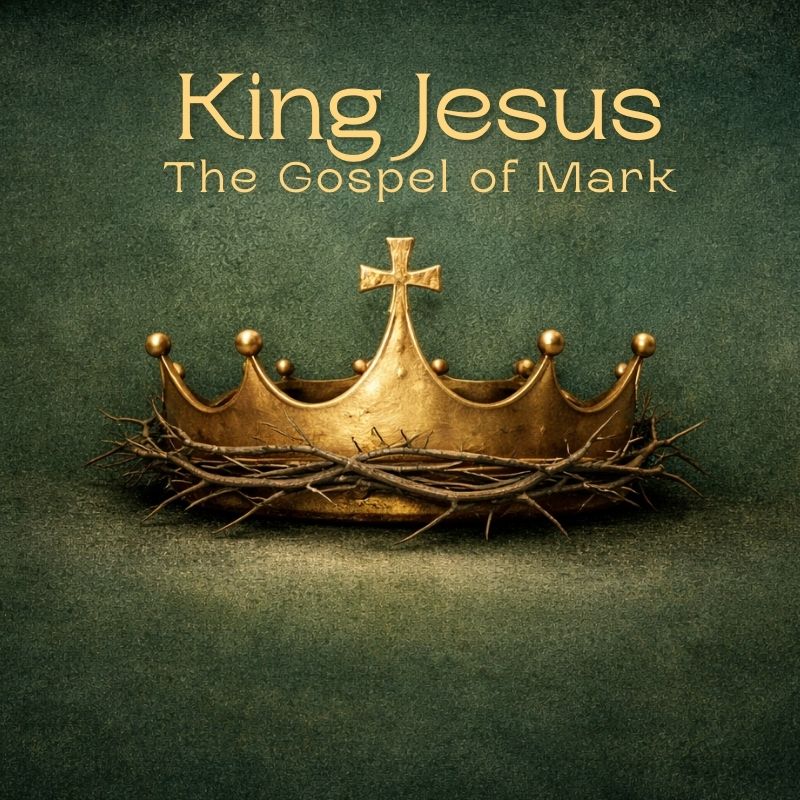
  • King Jesus: The Beginning of The Good News

    Do you like a good action movie?

    A James Bond film, Mission Impossible, or one of the Bourne movies? The kind where things are moving from the opening scene and the story carries real momentum.

    If one of the gospels were turned into action flick, Mark would be the script. It moves quickly, has lots of movement, and gets straight to the point. There is no warmup, no stretching beforehand, no long preamble. It is like the starter’s gun at the beginning of a race and we are off.

    Mark begins like this:

    “The beginning of the good news about Jesus the Messiah, the Son of God.” (Mark 1:1)

    That single line acts as both introduction and purpose statement. It tells us what the whole book is about before anything else is said. Like the opening line of a great novel, it draws us in. Except this isn’t fiction. This is the announcement of a real person and the purpose for which he came.

    Mark doesn’t include genealogies, birth stories, or any post-resurrection events. His focus is clear and deliberate. He wants to announce and show that Jesus is the Messiah and the Son of God. The book is centred on who Jesus is, what he does, and what it means to follow him.

    The word gospel (euangelion in the Greek) means good news. In the first century, good news would be publicly proclaimed when there was a military victory or a royal announcement. You can picture the town crier calling out the news of the day in the streets. In that sense, Mark is like a paper boy standing on the corner calling out the headline,

    “Good news. Jesus Christ, the Messiah, the Son of God has arrived.”

    But this good news is greater than a victory in battle or the birthday of an emperor. This is the announcement of God’s King and the fulfilment of long-awaited expectation and hope.

    The good news is not merely an event. It is a person. Jesus himself.

    Notice the titles Mark gives him. Messiah. Christ. Son of God. These are not polite honourifics. They are identity claims. They tell us that Jesus is not simply another religious teacher or prophet. He is uniquely connected with God and shares in God’s own identity.

    From the first sentence, Mark wants us to know who stands at the centre of this story. Everything else in the book hangs from this opening declaration.

  • Book Review: Spurgeon’s Sorrows – Realistic Hope for Those Who Suffer from Depression

    Would it surprise you to learn that one of the greatest preachers in Christian history, the so-called ‘Prince of Preachers’, struggled with depression throughout his life and ministry? 

    Charles Haddon Spurgeon, pastor of the Metropolitan Tabernacle in 19th-century London, preached to thousands weekly, wrote extensively, and continues to shape preachers today. Yet behind the sermons, quotes, and books was a man who often walked through deep fog and valleys of darkness.

    I have known for many years that Spurgeon battled various health concerns, and at least a little depression, but I hadn’t realised how pervasive it actually was. In reading Spurgeon’s Sorrows by Zack Eswine I gained a better picture of the man but also the depths to which his depression and anxiety impacted his life. The other surprising thing about this was how public and how often he spoke about it. This short little volume (just over 100 pages) really opens the reality of mental illness not just for believers but also for pastors. I know it’s not talked about often, if at all, and this book is so helpful and insightful for all saints and sufferers. 

    Our churches are full of people who are going through depression, anxiety, and all ranges of mental illness. We may not see it while interacting with them on a Sunday morning, but they sit there, often silently, battling the melancholy of the mind. Older people carrying the weight of loneliness, middle-aged adults questioning their position in life, young people navigating their identity and uncertain future. They may not look depressed but are sure to be there in the pews. 

    As Christians it is important to talk about this. The Psalms do. So does Job. So does Elijah. So does Paul. And so does Spurgeon. One reason I found this book helpful was the normalising of this conversation without reducing it to Christian cliches or simplistic solutions.

    To give you an idea of the depth of Spurgeon’s struggle he once said, 

    “The mind can descend far lower than the body, for in it there are bottomless pits. The flesh can bear only a certain number of wounds and no more, but the soul can bleed in ten thousand ways, and die over and over again each hour.”

    He knew the darkness that makes it hard to pray, to preach, to feel anything at all. That numbness that comes over us when walking through an unending fog. He writes about this kind of depression as something that comes uninvited and stays longer than is welcome. And yet, in all of this, he saw no contradiction between faith and depression. He writes elsewhere, “Depression of spirit is no index of declining grace”. 

    This is encouraging for us as believers. It’s comforting to hear this from someone who has lived faithfully under the weight of this burden. How often are we prone to think such a thought or such a condition may disqualify us of our belief? But it is not so!

    We walk with Christ in the valleys and on the mountaintops and everywhere in between. 

    Eswine writes with care and warmth. He doesn’t overreach. He lets Spurgeon speak and then offers reflections that feel more like a conversation. 

    In one part of the book Eswine lists various helps that Spurgeon would undertake to help him recover from these periods of flatness, which again was really helpful. But he goes on to talk about how, 

    “The melancholy life thrives when it runs marathons instead of sprints, or when it sprints often, only to rest often. You needn’t try to do “the most things” in “the fastest ways” anymore. To resist this is to have seasons of rest and nature forced upon us by breakdown.”

    This is helpful for all of us who find ourselves running too fast and living on the edge of our limits. Whether it’s burnout, exhaustion, or anxiety, there is the invitation to slow down and let go of that performance mentality. 

    At times Spurgeon himself described what it was like when the overwhelm was upon him.In a sermon called The Christian’s Heaviness and Rejoicing he preached these words:

    “I was lying upon my couch during this last week, and my spirits were sunken so low that I could weep by the hour like a child, and yet I knew not what I wept for…”

    How about that!? How raw. How open. How vulnerable and honest. It’s not the kind of thing we would hear out of a 21st-century preacher would we?

    The book, thankfully, doesn’t offer neat answers, tied up firmly like a shoelace. It doesn’t promise that darkness will lift, but what it does do is point to Christ. It points to Christ to declare that He is the one who truly understands what we may be going through. 

    I would recommend this book to anyone, it’s a must read. It’s five stars. If you’re a pastor it will do your own soul a truckload of good, and also help you walk with those who suffer from mental illness themselves. If you’re someone who experiences depression, or are in it now, then this book gives you a helpful and faithful voice to that which you struggle with. And if you walk with those who do walk the road of mental illness then this book might help you understand it a little more. 

    To close I can’t but leave you with one of my favourite quotes from Spurgeon about suffering and depression. While speaking about God providing all our needs from Philippians 4:19 he preaches,

    “Then comes our need in suffering, for many of us are called to take our turn in the Lord’s prison camp. Here we need patience under pain and hope under depression of spirit. Who is sufficient for furnace-work? Our God will supply us with those choice Graces and consolations which shall strengthen us to glorify His name even in the fires! He will either make the burden lighter, or the back stronger—He will diminish the need, or increase the supply.”

    Amazing. 

    How great that the Lord our God is with us through the troughs of life and will indeed supply us with everything we need. 

  • The Ethics of AI: A Pastoral Reflection

    The Ethics of AI: A Pastoral Reflection

    AI is no longer just a buzzword or a new toy for those tech enthusiasts, is it? It’s here, beginning to expand its tentacles into our lives. Whether it’s at home, at work, our life admin, our church, and even our habits of thought and prayer, AI is making an impact. It’s fast. It’s smart (-ish). And if we’re honest, it can become slightly addictive. 

    Beyond the speed and fascination I’ve found myself asking some of those deeper questions about AI. Not about what it can do, but what it’s doing to me, to us. I’ve moved on from the question about whether it is right or wrong, and beginning to think through the way it forms me and my faith. What kind of person am I being shaped into, and is this coherent with the way of Jesus? 

    This is certainly not a how-to article on AI. Nor is it a listicle full of tips about the best apps or top tips in ethical AI use. Rather, it’s a reflection, a pastoral reflection seeking to bring to the top that question of, “Who am I becoming as I use this tech?”

    The reality is that tools don’t just serve us, they shape us. And AI, more than any other since the creation of the smartphone, is beginning to reach into parts of life where formation may already be fragile. 

    Worship Is Where Ethics Begins

    The starting point for Christian ethics is worship.

    Romans 12 doesn’t begin with behaviour. It begins with a posture drawn from the well of God. It says, 

    “In view of God’s mercy, offer your bodies as living sacrifices…”

    In other words, ethics isn’t just about what we do. It’s about how we live before God and who we are becoming because of God. It’s not just doing the ‘right’ things, it’s about the ‘who’ things. And so perhaps the first questions to ask ourselves is, “Is this helping me to live and worship and trust in God”? 

    This is where the hammer hits the nail for me. 

    AI, in all its cleverness, doesn’t only help me perform tasks. It makes me more efficient. It removes uncomfortable thinking, and sometimes thinking all together! And if I’m not careful it pushes me forward into a way of life that looks like a worldly hustle rather than the unhurried pace of the Spirit of God. 

    I’m not here to cry foul of all of AI, nor even say it is inherently wrong. I use it regularly. But I am saying we need to stop and reflect on how we are using it. I’m saying it’s worth watching closely its impact in not just our lives but in our hearts. If I don’t walk in the mercy of God, and stay firm in that foundation and identity, then I will find myself using these AI tools to keep producing and performing more and more. And I know if I walk that path then I’ll slowly but surely become less present to God, to others, and to myself. 

    The Promise and the Pushback

    A little while ago Kenny Jahng wrote an article called Beyond Binary Morality: How AI Challenges Traditional Christian Ethical Frameworks. It’s certainly worth your time to go and read. Kenny argues that AI reveals the limits of simple “right/wrong” categories. Algorithms, after all, aren’t choosing between good and evil by they’re weighing trade-offs, running probabilities, and calculating complexity.

    And in many ways, I agree with him. Wisdom in our time requires nuance (as it always has, no doubt). Neat moral boxes are beginning to be stretched for us, there is complexity and complication when thinking through Christian ethics of AI. 

    Where I found myself gently pushing back on this article, however, was the idea that AI might be the solution to pastoral overwhelm. As Kenny writes, many pastors feel burdened by tasks that don’t require their spiritual gifts—like creating policy and guidelines, doing administration, or making decisions on future projects and ministries without experience. Some of these aren’t soul-shaping tasks but just the cost of managing and navigating church life in the modern day. 

    AI, he argues, can be a relief valve.

    And he’s right, it can. It has been for me, in some areas of ministry. I’ve used it to help structure content, bring creativity to my thinking about ministry areas, and provide clearer communication to the church. This has meant I’ve had more time to focus on people, to be creative, and I’ve even found more time for prayer. But I do acknowledge there is another side to this. 

    That other side, the shadow side, is the fact that AI doesn’t remove the overwhelm, it can accelerate it. 

    If I don’t deal with what’s happening in my heart, the time I’ve saved won’t go to the priorities of prayer and preaching and other elements of what I call ‘Wordwork’, it’ll go to more output. More tasks. More tweaks. More production. More performance.

    This is why I keep coming back to remember that ethics begins with worship. When my use of AI is grounded in worship of God then the posture I hold is one of submission, surrender, and obedience. When it flows out of a need to produce, to prove myself, or to perform in front of others then it becomes something else. 

    Something that promises rest but quietly feeds the restlessness.

    Babel and the Illusion of Control

    That story from Genesis 11 is one that lives rent free in my mind at the moment. 

    “Come, let us build ourselves a city, with a tower that reaches to the heavens, so that we may make a name for ourselves…”

    The Tower of Babel is a story about autonomy. It’s about humans using their creativity not in response to God, but in competition with him.

    And I think it’s an image that speaks into our age of AI. Not because AI is evil, but because it tempts us to think like Babel: I can control more. I can create more. I can become more. 

    But we’re not created in God’s image to view our lives and all that it entails in this way. We’re not given such responsibility. We’re made to receive the mercy and grace of God. We’re made to live in communion with God, not as optimised beings. 

    As we explore AI’s possibilities it’s worth asking ourselves the question, “Are we building a life with God or are we building a life for ourselves? 

    The Way of Jesus

    The more I use AI, the more I feel the invitation to slow down.

    It’s one thing to use a tool. It’s another to let it use you. And I don’t want to become the person who outsources the very parts of life and ministry that form and shape me as a child of God. 

    Sermons aren’t just written, they’re lived. 

    Pastoral care isn’t just organised, it’s personal and relational. 

    Discipleship isn’t just explanation and knowledge, it’s years-long formation under God and his people. 

    The way of Jesus is still slow. It’s relational. It’s incarnational. It requires presence. And if AI helps me serve others better, I’ll use it. But if it pulls me away from the kind of person Jesus is shaping me to be then it might be time to put it down.


    If you’re interested to explore this further you can also listen to our church podcast where we are beginning to explore AI in the church. You can grab the episodes here or on YouTube.


    AI and Ministry
    The Ethics of AI: A Pastoral Reflection
    Related: AI, Ministry, and the Shape of Discipleship

  • God’s Glory in Jesus: An Easter Reflection

    God’s Glory in Jesus: An Easter Reflection

    I preached this little reflection as part of our Service of Shadows at our Easter Thursday evening gathering.

    Hebrews 1:3 describes for us a clear and powerful summary of who Jesus is.

    The Son is the radiance of God’s glory and the exact representation of his being, sustaining all things by his powerful word.

    What do we find of Jesus in this stunning sentence?

    1. He radiates.
    2. He represents.
    3. He sustains.

     First, he radiates.

    The Son is the radiance of God’s glory… (Hebrews 1:3)

    This is the image of light bursting forth from its source. Like the sun breaking through the clouds on an overcast day, with spots of light radiating through.

    Jesus doesn’t just reflect the glory of God, like a mirror reflects what is in front of it. Rather, he is the radiance of it. His light isn’t borrowed from somewhere or someone else, it actually comes from him directly. He is the light of the world after all (John 8:12). The glory of God shines through him.

    In a world clouded by confusion and darkness, Jesus is the one who shines clearly. If you’ve ever wondered what God is like, the answer is this Jesus, who radiates the heart of God.

    Second, he represents.

    …and the exact representation of his being… (Hebrews 1:3)

    He is the exacts representation of his being. Jesus isn’t a shadow or a copy. He’s not like a movie that has been adapted from a book, which never quite does the book justice. He’s not like a photocopied document, which is as never as clear as the original.

    He is the exact imprint of God’s nature. His character, his heart, and his holiness are all in Jesus.

    Colossians 1:15 says,

    He is the image of the invisible God.

    And in John 14:9, Jesus says,

    Whoever has seen me has seen the Father.

     In Jesus we don’t just get a glimpse of God—we get God himself.

    Jesus shouldn’t just remind us of God, he reveals God and makes the unknowable known.   

     Third, he sustains.

    …sustaining all things by his powerful word. (Hebrews 1:3)

    As we gather this evening, right now, Jesus is holding the universe together. He’s not straining to do this, he’s not finding it particularly difficult or has to put in a lot of effort, but he is doing this through his word.

    The breath we take, the turning of the earth in time, the presence and placement of the stars and the moon are all upheld by Jesus and his word.

    John 1:3 reminds us that,

    …through him all things were made; without him nothing was made that has been made.

     And Colossians 1:17 tells us,

    He is before all things, and in him all things hold together.

    This Jesus, the one who we hear in each of the readings here in our Service of Shadows, readings that speak of Jesus’ mocking, bruising, and crucifying, but who is also the one who sustains the universe.

    Even though we will hear the end of Jesus’ earthly life through these readings, his power isn’t diminished by the cross. In fact, it is the other way around, his power is revealed through it.

    As we sit in stillness and walk through the shadows on the way to the cross we know that Jesus is (1) the radiance of God’s glory, and yet went to the cross for our sake. We know that he is (2) the exact representation of God’s nature, and yet sacrificed himself for you and for me. And we know that he is (3) the one who sustains all things, upholding our very lives, yet gave up his life for ours, taking our place on the cross for our restoration to God.

  • AI, Ministry, and the Shape of Discipleship

    AI, Ministry, and the Shape of Discipleship

    There’s something particularly human about opening the Bible and seeking to make sense of it for others. For pastors, that moment of sermon preparation isn’t just about information or knowledge transfer, it’s about formation, for the preacher and the people who hear it. Now, however, we need to deal with AI. It’s fast. It’s helpful. And, it’s kind of fun too! 

    But, it also raises deeper questions about our pastoral and ministerial calling, especially when it comes to the slow and patient work of preaching and shepherding others in the way of Jesus. 

    Recently, I’ve listened to two podcast episodes (here and here) from the team at the Expositors Collective (who I’d recommend you follow) and been reflecting on AI, sermon preparation, and its wider use in church ministry. 

    Tools or Crutches

    Tools abound for pastors and ministry leaders of churches. Whether it’s Bible software, commentaries, whiteboards, Canva, or various books and study guides, there’s plenty out there. AI fits into this category. A tool. It can structure meetings, summarise transcripts, brainstorm sermon series, and tidy up emails. It’s like a digital intern who doesn’t need smoke-o. 

    But there is a tipping point. And for some that might be further down the track than others. Nevertheless, the tipping point is when the tool becomes a crutch, something that ends up doing the deep work that is part of the calling of gospel ministry–the exegesis, illustration, sermon outlining, the writing, even. This tipping point comes when we trade formation for efficiency. And it is a poor trade. We may well save time, but what we risk is the personal formation of our soul and a disservice to our people.

    Sermons are lived, they are to be ‘in’ us, they are to be lifted up in prayer, and spoken through the Spirit by a person, not a prompt. 

    Presence Over Productivity

    Of course, AI promises productivity. And it’s a performance trap for us too. In some areas, like admin, research, and note-making, it’s certainly very helpful. But ministry isn’t measured by these things, nor is it measured by performance and efficiency. It’s measured in faithfulness, presence, and love for others. Those in the church who are dealing with challenge, hardship, grief, health concerns, financial difficulty, or a dark night of the soul don’t need a TED Talk crafted message, they need a pastor who has sat with the text, prayed through the text, and then communicates through the work of the Spirit. 

    And don’t get me wrong, I’m not some Luddite with anti-tech sensibilities. I’m engaging with AI tools in many areas of life, including church ministry. But we’ve got to remind ourselves that our calling is to shepherd not to massage content in ChatGPT. 

    I suppose, the danger isn’t really AI itself, it’s what it might slowly be doing to our hearts as we build faster content but remain less formed and wise in the process. 

    Discernment In Discipleship

    My point is that we’re not here to create fear or hype about AI. Every generation is already using it to some degree, and those digital natives among us are well beyond this being ‘new’. Our job is more about wisdom and discernment than it is to give some moral judgement on these technologies. It’s to help people realise that following Jesus may not be the road of shortcuts and speed.

    We need to help our churches, our people, see the difference between information and wisdom. To be able to sit in the deep with God, and let him do the work within us over a long period of time. Outsourcing formation won’t get us very far, but embracing slow discipleship, the unhurried way of Jesus will. 

    So, yes, we use these tools. But we realise that this is what they are. The question of challenge is whether I am shaping this tool or is it shaping me?


    AI and Ministry
    AI, Ministry, and the Shape of Discipleship
    Related: The Ethics of AI: A Pastoral Reflection