Tag: dailyprompt

  • The Pastor’s Role in Preaching

    The Pastor’s Role in Preaching

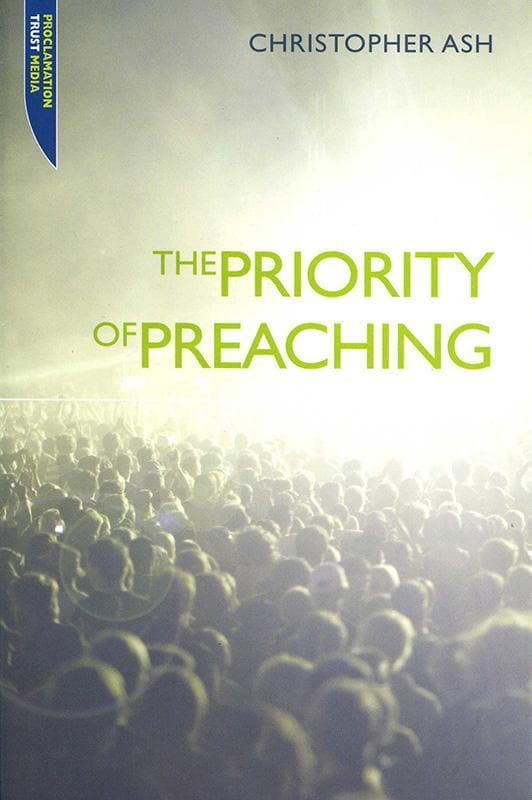
    Christopher Ash’s The Priority of Preaching outlines a vision for pastoral ministry that puts preaching front and centre. According to Ash, a pastor’s main responsibility is to feed the congregation through diligent and faithful preaching. This is not an add-on or bit part to ministry but at the core of it. In this little gem of a book, as I’ve already written about, Ash understands the priority, graciousness, urgency, and community aspects of preaching. Here I’m focussing on how, like a good meal, the pastors views preaching, using it to nourish and shape the hearers. 

    Ash uses the image of the pastor as a shepherd who feeds the flock through the Word. Drawing on the example of John 21, where Jesus commissions Peter to “feed my sheep” (John 21:17), Ash suggests that pastoral ministry centres on delivering God’s Word in a way that sustains and strengthens the church. Preaching is not just one task among many; it is the primary way a pastor fulfils the call to shepherd God’s people. The words of Paul to Timothy echo this focus: “Preach the Word; be prepared in season and out of season; correct, rebuke and encourage—with great patience and careful instruction” (2 Timothy 4:2). For Ash, preaching is the pastor’s highest responsibility, and it’s a role that calls for dedication, preparation, and humility.

    The shepherd’s role is also one of “borrowed authority,” as Ash puts it. This authority doesn’t rest in the pastor’s own wisdom or personal charisma but is grounded in the Word of God. Ash warns that preaching is “costly,” because it requires the pastor to set aside personal ambition and serve as a messenger. This humility is vital, as James 3:1 reminds us: “Not many of you should become teachers, my fellow believers, because you know that we who teach will be judged more strictly.” The authority that comes with preaching is given from God, and it calls pastors to treat the pulpit with a sense of reverence, understanding that they are accountable to God for how they handle His Word.

    One of Ash’s strongest points is that pastoral ministry, centred on preaching, is about leading people to grace. Preaching  isn’t primarily about moral instruction or behaviour change; it’s about continually pointing people back to the grace of God, bringing them back to the gospel. This is what sustains. This is what transforms. This emphasis on grace aligns Titus 2:11-12, which teaches that “the grace of God has appeared that offers salvation to all people. It teaches us to say ‘No’ to ungodliness and worldly passions.” For Ash, the pastor’s call is to regularly remind the congregation that grace is at the heart of the Christian life. This is the true “food” of the flock, helping them grow in faith and godliness.

    Ash’s perspective on preaching as a form of shepherding challenges us to think about ministry not as a collection of tasks but as a singular calling to nurture and sustain God’s people through the Word. This vision pushes back against the idea that a pastor’s role is primarily administrative or focused on personal connections. While those are important aspects, Ash argues that the heart of the role is to be a steward of grace through preaching. This focus calls pastors to prioritise their study, prayer, and preparation for the pulpit above other activities. It echoes the approach of the apostles in Acts 6:4, who, despite the demands of church leadership, committed themselves “to prayer and the ministry of the word.”

    This view also has practical implications for how pastors approach their work. Effective pastoral ministry requires a commitment to feed the church regularly and intentionally through the Word. This means more than just delivering a message each week; it involves shepherding the church toward spiritual maturity, addressing encouragement and correction where needed. It’s in line with Paul’s charge to the Ephesian church to “equip his people for works of service, so that the body of Christ may be built up until we all reach unity in the faith and in the knowledge of the Son of God” (Ephesians 4:12-13). Preaching is a means in which God uses to guide the church toward unity and maturity. 

    However, this isn’t all about the congregation either. This perspective encourages pastors to approach their calling with humility, and also with the need of grace. It’s one thing to deliver a sermon, having spent time in God’s Word during the week, but it’s another to make sure it is in you. It is shaping and nourishing me as the preacher. I, more than anyone else, know the grace I need each and every week. And with the responsibility, the care, and the excitement of getting up there on a Sunday morning I know more than anyone else in front of me how much of that grace God has given during the week. To preach with conviction and to authentically will mean the need to be walking closely with God throughout. 

    To finish this series of reflections on this book by Ash it is a reminder that pastors are not just communicators or leaders, but that we are people who dispense grace. To keep the gospel central to our own lives and the lives of those we shepherd. 

  • Clear the Clutter: Steps to Simplify Your Life and Focus on Faith

    Clear the Clutter: Steps to Simplify Your Life and Focus on Faith

    Where can you reduce clutter in your life?

    So much of life fills up, doesn’t it?  

    Our homes, our schedules, and even our minds can start to feel crammed with things that don’t belong—things that weigh us down instead of lifting us up. Clutter creeps in slowly, often unnoticed, until one day we find ourselves overwhelmed, out of focus, and running on empty.

    But what if clearing out the clutter could make more space for what truly matters? What if it’s not just about tidying up but about making room for God to work in and through us?

    When tackling clutter we might consider the physical, mental, and spiritual areas of life. 

    1. Your Physical Space

    It’s common for the environment around us to shape how we feel and function. Whether it’s your kitchen bench, your wardrobe, or that drawer stuffed with everything from rubber bands to old receipts, physical clutter can weigh you down.

    Jesus told his disciples, “Do not store up for yourselves treasures on earth… but store up for yourselves treasures in heaven” (Matthew 6:19-20). While he wasn’t talking about organising your pantry, the principle underneath this is that our physical space, like our homes, are places to reflect kingdom priorities, not consumerist ones.

    Simplifying your space can free your energy to focus on what matters most.

    2. Your Schedule

    One of the great lies culture tells us is that busyness equals importance. But constant activity doesn’t make us more faithful or fruitful—it just makes us tired and exhausted.

    Paul writes in Ephesians 5:15-16, “Be very careful, then, how you live—not as unwise but as wise, making the most of every opportunity.” Making the most of every opportunity doesn’t mean cramming your calendar with commitments; it means being intentional about where your time goes.

    I regularly look at my schedule to make sure I’ve said “yes” to the important things and align the week to my priorities. It’s not easy when there are so many options and things to do, but sometimes we need to clear the clutter in our diaries so we have time and space for what God is calling us to do. 

    3. Your Mind

    Clutter isn’t just about stuff; it’s about the noise in your head—the to-do lists, the comparisons, the worries. It’s easy to let your thoughts spiral into overwhelm, but Scripture gives us a different way.

    “Do not be conformed to the pattern of this world, but be transformed by the renewing of your mind” (Romans 12:2). Renewing your mind means filtering out the distractions and lies, and filling your thoughts with God’s truth instead.

    Start small. Take five minutes at the start or end of your day to sit quietly with God. Pray, journal, or meditate on Scripture. Over time, this discipline will help clear the mental clutter and create space for his peace to settle in.

    4. Your Spiritual Life

    Finally, consider where spiritual clutter might be crowding out your relationship with Jesus. This might look like going through the motions in your faith or holding onto things that keep you from walking closely with Him.

    Hebrews 12:1 encourages us to “throw off everything that hinders and the sin that so easily entangles. And let us run with perseverance the race marked out for us.” What’s holding you back? Are there habits, distractions, or misplaced priorities you need to surrender to God?

    Clearing spiritual clutter doesn’t mean adding more “holy” activities to your week. It’s about returning to the basics—prayer, Scripture, and worship—and letting God reorder your heart.

    Clearing Clutter for the Kingdom

    At its core, reducing clutter isn’t about perfection; it’s about purpose. It’s about removing the distractions that pull our hearts away from God so we can live with intention and freedom.

    So where can you begin? Pick one area—your home, your schedule, your thoughts, or your spiritual walk—and ask God to help you clear what’s unnecessary. It’s not always easy, but it’s always worth it. As we make space, we open ourselves up to the life Jesus promised: one of peace, joy, and fullness in him.

  • The Autograph Book

    The Autograph Book

    Describe an item you were incredibly attached to as a youth. What became of it?

    I still have it.

    It’s tucked away in a box now. In some ways, I’m still attached to it. Logic says there’s no reason to hold onto it, but it’s not the item itself—it’s the memories it carries. It’s the way it triggers snapshots of my youth, moments spent in anticipation and excitement.

    I spent hours with this item. It came with me everywhere. It was always in my bag, ready for the next opportunity. Whenever I had a chance, I’d pull it out and add to it.

    Some people I knew even contributed to it, leaving their mark on its pages. I’ll admit, a few entries were made up—copied from somewhere else just to fill the gaps. But most of it was real, collected during hours of waiting, sometimes long into the night.

    These entries weren’t just ink on paper. They were people—heroes of mine. People I admired and tried to imitate as I practiced their craft. They weren’t just my heroes, either. They were legends for so many others, drawing crowds of thousands who came to watch them do what they did best.

    I’d stand around the boundary, waiting. Outside the changing rooms, I’d wait. I’d write letters with pre-stamped, self-addressed envelopes, hoping for a response. I was determined to get another entry—an autograph I didn’t yet have.

    This item, if you haven’t guessed by now, was my autograph book. A small, colourful book filled with the signatures of sporting heroes. Cricket captains, Australian players, touring sides—anyone who took to the pitch to play.

    Whether it was a Test match or a one-day game, I’d wait after play had finished, hoping to catch a glimpse of the players as they headed to their cars. And if I was lucky, I’d get their signature.

    It’s more than just a book. It’s a collection of memories, a connection to the joy of my youth. And now, as I pull it out to show my kids or take it to a game we’re going to, I’m instilling in them the same excitement and appreciation for heroes, patience, and the moments that stay with you forever.

    When I think about that autograph book, I’m reminded of how much time and effort I put into collecting those signatures. It’s a small picture of the kind of dedication and patience we’re called to in our faith.

    Hebrews 12:1-2 (CSB) says,

    “Let us run with endurance the race that lies before us, keeping our eyes on Jesus, the pioneer and perfecter of our faith.”

    Just as I stood waiting for hours to catch a glimpse of my heroes, we’re called to fix our eyes on Jesus, who is infinitely greater. The effort, time, and love we pour into following Him shape who we are, just as those hours around the boundary shaped my childhood.

  • Mission Possible

    Mission Possible

    What is your mission?

    My mission, if I choose to accept it, is to glorify God and enjoy Him forever.

    Borrowing from the Westminster Shorter Catechism, this mission aligns the whole of life with its ultimate purpose. As John Piper reframes it: “God is most glorified in us when we are most satisfied in Him.”

    But we live in a world full of missions. Whether it’s crafting a New Year’s resolution, striving for career success, or parenting through the seasons of childhood, everyone is pursuing something. These missions often shape our daily rhythms and long-term goals.

    For many, crafting a personal mission statement offers clarity and focus. Every few years, I revisit my values and ask whether they align with my daily life and priorities. This exercise helps me focus on what matters most, alongside this it has also taught me something deeper.

    Missions, as we often define them, are like to-do lists. They have a beginning, middle, and end. Once completed, we move on to the next. While this approach works for concrete goals—like finishing a project or achieving a fitness milestone—it can fall short when applied to life’s bigger intentions.

    Take faith, family, or health, for instance. These aren’t tasks to be completed but lifelong priorities. They require ongoing attention, growth, and care. You don’t “finish” being faithful, raising your family, or looking after your body. These are life long responsibilities, not one-off missions.

    Instead of viewing life’s intentions as a series of missions to accomplish, I’ve come to view them as as a set of sustainable priorities. Priorities allow for a lifelong focus, recognising that some tasks will never be fully completed but are worth our time and effort nonetheless.

    If we turn for a moment to our theological understanding of mission, mission isn’t just personal—it’s part of a bigger story. Jesus gave His followers a clear mission in Matthew 28:19-20 (CSB):

    “Go, therefore, and make disciples of all nations, baptizing them in the name of the Father and of the Son and of the Holy Spirit, teaching them to observe everything I have commanded you. And remember, I am with you always, to the end of the age.”

    Similarly, in Acts 1:8 (CSB), Jesus said:

    “But you will receive power when the Holy Spirit has come on you, and you will be my witnesses in Jerusalem, in all Judea and Samaria, and to the end of the earth.”

    This mission—the Great Commission—is ongoing. It’s not something we check off a list but a lifelong call to share the gospel and live as witnesses to Jesus.

    This perspective reframes how we think about mission. It’s not about achieving a specific result but faithfully living out our calling in Christ.

    It’s like building a house. A mission-driven approach might focus on completing individual rooms: the kitchen, the bedrooms, the living space. Each project has a clear endpoint.

    But a priorities-driven approach sees the house as a home—a place that constantly requires attention, care, and investment. It’s not about “finishing” the house but creating a space where life can flourish.

    Similarly, our faith is is a priority that requires daily investment—prayer, scripture, community, and service.

    Central to our faith and its mission is to glorify God. This mission extends beyond church walls and spiritual disciplines into every corner of life. Colossians 3:17 (CSB) reminds us:

    “And whatever you do, in word or in deed, do everything in the name of the Lord Jesus, giving thanks to God the Father through him.”

    Whether we’re at work, raising a family, or simply enjoying the beauty of creation, our mission is to honour God in all we do.

    The beauty of God’s mission is that while it remains unfinished in this life, it’s already fulfilled in Christ. Our call to glorify God and enjoy Him forever is both a present reality and an eternal hope.

    So, what is your mission? Is it a project to complete, or a priority to pursue?

  • The Greatest Gift

    The Greatest Gift

    What is the greatest gift someone could give you?

    How would you answer this question?

    There are so many angles to consider:

    • The angle of need and want in the material world in which we live.
    • The angle of the inner life, what we seek and need for our souls and hearts.
    • The angle of the right here and now, or the long-term perspective of life as a whole.

    I wonder how you would answer?

    For me, the answer is clear.

    I’ve already received the greatest gift.

    This is a gift I was given many years ago. It’s a gift many others have also accepted, and it’s one I hope others will receive too—particularly those I know and love.

    This gift is from God, who seeks to give all people the gift of His love through Jesus Christ.

    As the familiar words of John 3:16 remind us: 

    “For God so loved the world that He gave His one and only Son, that whoever believes in Him shall not perish but have eternal life.”

    This verse highlights God’s deep love for His people and all of creation. It speaks of a gift given so that the world may know true love—divine love—and receive eternal life.

    This is the gift of salvation. It’s the gift of forgiveness for sin. It’s the gift of being present with God. It’s the gift of peace, joy, and hope—those very themes we celebrate at Christmas.

    This is the greatest gift I have ever received, and it will always remain the greatest gift I could ever receive.

    What about you, how would you respond?


    This is a writing response to the WordPress daily prompt.