Tag: Gospel

  • The Pastor’s Role in Preaching

    The Pastor’s Role in Preaching

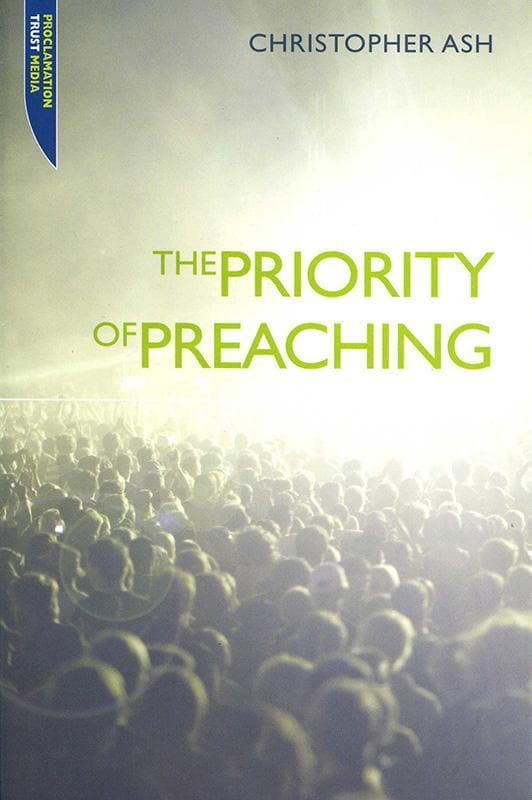
    Christopher Ash’s The Priority of Preaching outlines a vision for pastoral ministry that puts preaching front and centre. According to Ash, a pastor’s main responsibility is to feed the congregation through diligent and faithful preaching. This is not an add-on or bit part to ministry but at the core of it. In this little gem of a book, as I’ve already written about, Ash understands the priority, graciousness, urgency, and community aspects of preaching. Here I’m focussing on how, like a good meal, the pastors views preaching, using it to nourish and shape the hearers. 

    Ash uses the image of the pastor as a shepherd who feeds the flock through the Word. Drawing on the example of John 21, where Jesus commissions Peter to “feed my sheep” (John 21:17), Ash suggests that pastoral ministry centres on delivering God’s Word in a way that sustains and strengthens the church. Preaching is not just one task among many; it is the primary way a pastor fulfils the call to shepherd God’s people. The words of Paul to Timothy echo this focus: “Preach the Word; be prepared in season and out of season; correct, rebuke and encourage—with great patience and careful instruction” (2 Timothy 4:2). For Ash, preaching is the pastor’s highest responsibility, and it’s a role that calls for dedication, preparation, and humility.

    The shepherd’s role is also one of “borrowed authority,” as Ash puts it. This authority doesn’t rest in the pastor’s own wisdom or personal charisma but is grounded in the Word of God. Ash warns that preaching is “costly,” because it requires the pastor to set aside personal ambition and serve as a messenger. This humility is vital, as James 3:1 reminds us: “Not many of you should become teachers, my fellow believers, because you know that we who teach will be judged more strictly.” The authority that comes with preaching is given from God, and it calls pastors to treat the pulpit with a sense of reverence, understanding that they are accountable to God for how they handle His Word.

    One of Ash’s strongest points is that pastoral ministry, centred on preaching, is about leading people to grace. Preaching  isn’t primarily about moral instruction or behaviour change; it’s about continually pointing people back to the grace of God, bringing them back to the gospel. This is what sustains. This is what transforms. This emphasis on grace aligns Titus 2:11-12, which teaches that “the grace of God has appeared that offers salvation to all people. It teaches us to say ‘No’ to ungodliness and worldly passions.” For Ash, the pastor’s call is to regularly remind the congregation that grace is at the heart of the Christian life. This is the true “food” of the flock, helping them grow in faith and godliness.

    Ash’s perspective on preaching as a form of shepherding challenges us to think about ministry not as a collection of tasks but as a singular calling to nurture and sustain God’s people through the Word. This vision pushes back against the idea that a pastor’s role is primarily administrative or focused on personal connections. While those are important aspects, Ash argues that the heart of the role is to be a steward of grace through preaching. This focus calls pastors to prioritise their study, prayer, and preparation for the pulpit above other activities. It echoes the approach of the apostles in Acts 6:4, who, despite the demands of church leadership, committed themselves “to prayer and the ministry of the word.”

    This view also has practical implications for how pastors approach their work. Effective pastoral ministry requires a commitment to feed the church regularly and intentionally through the Word. This means more than just delivering a message each week; it involves shepherding the church toward spiritual maturity, addressing encouragement and correction where needed. It’s in line with Paul’s charge to the Ephesian church to “equip his people for works of service, so that the body of Christ may be built up until we all reach unity in the faith and in the knowledge of the Son of God” (Ephesians 4:12-13). Preaching is a means in which God uses to guide the church toward unity and maturity. 

    However, this isn’t all about the congregation either. This perspective encourages pastors to approach their calling with humility, and also with the need of grace. It’s one thing to deliver a sermon, having spent time in God’s Word during the week, but it’s another to make sure it is in you. It is shaping and nourishing me as the preacher. I, more than anyone else, know the grace I need each and every week. And with the responsibility, the care, and the excitement of getting up there on a Sunday morning I know more than anyone else in front of me how much of that grace God has given during the week. To preach with conviction and to authentically will mean the need to be walking closely with God throughout. 

    To finish this series of reflections on this book by Ash it is a reminder that pastors are not just communicators or leaders, but that we are people who dispense grace. To keep the gospel central to our own lives and the lives of those we shepherd. 

  • The Greatest Gift

    The Greatest Gift

    What is the greatest gift someone could give you?

    How would you answer this question?

    There are so many angles to consider:

    • The angle of need and want in the material world in which we live.
    • The angle of the inner life, what we seek and need for our souls and hearts.
    • The angle of the right here and now, or the long-term perspective of life as a whole.

    I wonder how you would answer?

    For me, the answer is clear.

    I’ve already received the greatest gift.

    This is a gift I was given many years ago. It’s a gift many others have also accepted, and it’s one I hope others will receive too—particularly those I know and love.

    This gift is from God, who seeks to give all people the gift of His love through Jesus Christ.

    As the familiar words of John 3:16 remind us: 

    “For God so loved the world that He gave His one and only Son, that whoever believes in Him shall not perish but have eternal life.”

    This verse highlights God’s deep love for His people and all of creation. It speaks of a gift given so that the world may know true love—divine love—and receive eternal life.

    This is the gift of salvation. It’s the gift of forgiveness for sin. It’s the gift of being present with God. It’s the gift of peace, joy, and hope—those very themes we celebrate at Christmas.

    This is the greatest gift I have ever received, and it will always remain the greatest gift I could ever receive.

    What about you, how would you respond?


    This is a writing response to the WordPress daily prompt.

  • Preaching as Community Building

    Preaching as Community Building

    In this book, The Priority of Preaching, Christopher Ash highlights how preaching isn’t just about personal or individual growth but it is for shaping and growing community. He pushes back against the idea of faith as an individual journey, suggesting instead that preaching is a communal act that draws the church together under God’s Word. He’s already made the point that preaching is to have a sense of urgency. Here Ash argues that preaching isn’t to be a private conversation between the preacher and the individual listener; it’s an act that gathers and unites believers who are strengthened and encouraged together by His grace

    At one point Ash writes, “The church is not a collection of individuals who sometimes assemble; it is an assembly whose members may sometimes be dispersed.” This reflects his belief that the church isn’t defined by the scattering of believers during the week but by their gathering regally together to hear the Word preached. Therefore, preaching builds up the church as a whole. It is the reminder that all parts of the body make up the body, when one part is missing then it’s not the whole. This is similar to 1 Corinthians 12:12, “Just as a body, though one, has many parts, but all its many parts form one body, so it is with Christ.”

    The communal nature of preaching can be traced back to the Israelites’ gatherings in the Old Testament. Ash points out that in Deuteronomy, the people didn’t gather as isolated individuals; they assembled as a covenant people, standing together to hear God’s Word (Deuteronomy 31:11-13). This gathering wasn’t just a formality; it was a formative experience where they were reminded of their identity and purpose as God’s people. Preaching today carries the same purpose: it’s an act that brings people together, grounding them in God’s promises and shaping their collective identity as a church.

    What are the implications for today, then? 

    First, it challenges the modern day consumer mentality that can (or has) crept into churches, where people approach a service or gathering as a personal experience. While personal application may well be the outcome of the preaching of the Word, it goes beyond that toward fostering a communal identity and purpose grounded in the gospel. Similarly to Ephesians 4:12-13, where Paul describes the goal of ministry as “to equip his people for works of service, so that the body of Christ may be built up until we all reach unity in the faith.” preaching isn’t just about a message delivered; it’s about building up the church as the body in Christ.

    Second, this focus on the communal aspect of preaching is a reminder that the church is firstly a gathering of people who are united in Christ. It’s not merely a place for individual self help but a community built on God’s Word. Preaching, then, serves as a regular reminder of who we are together as a church, connecting each believer’s personal faith to a larger identity and greater story of God’s people. This, hopefully, helps us reflect Christ’s love to the world, not as a scattered group but as a community.

    Third, the reminder that preaching is communal highlights the role it has in culture. Ash suggests that preaching, when done with the gathered church in mind, becomes a point of difference between church and the world. This is not to say that preaching is an exercise in cultural critique, rather it should be for the whole of the church to respond to the whole world from a biblical worldview and gospel understanding. When preaching for community, instead of the individual, it enables gospel response and gospel conviction.

    Fourth, this angle on preaching makes us think about the church as something a little more fluid because of the group aspect, rather than simple Sunday services, or select individuals with large voices or passions. It means making application points toward the group as a whole, not just individual self-help messages. For example, when preaching on forgiveness, this is not just about how individuals can forgive, but how we do that collectively in the church and as a church toward others. 

    In some ways, preaching as building community means the preacher needs to recognise the team or the body aspect of the church. In shaping the church culture the calling for action there becomes a clear ‘we’, rather than ‘you’ posture. It is to do what the people under Ezra and Nehemiah do, hear the Word of God, be attentive to the Word of God, and then turn to worship God under the Word of God (Nehemiah 8). 

    Christopher Ash’s vision of preaching as a communal building act causes us to move beyond thinking about the individual and realise its power in the collective gathering of God’s people. In doing so we are strengthened and bound more deeply together as followers of Jesus.

  • Preaching With Urgency

    Preaching With Urgency

    In The Priority of Preaching, Christopher Ash challenges those of us who preach with the call to urgency. Last time, I highlighted the idea of preaching grace, this time I want to explore how the pulpit isn’t just a platform for explaining scripture, but a place to bring a sense of urgency to the gospel. Ash argues that preaching isn’t simply giving over information, it’s a call to action that seeks a response. 

    Ash tells a story or illustration about “three apprentice devils” training under Satan. The first suggests they convince people there’s no God, but Satan isn’t impressed, noting that even in a secular world, many still feel a pull toward belief. The second proposes they argue there’s no judgment. Again, Satan says this won’t work, as people often sense that actions have consequences. Finally, the third apprentice suggests whispering, “There’s no hurry.” This plan, Satan says, will work because it plants a subtle complacency, pushing people to put off responding to the Word, assuming they’ll get to it someday.

    The point made here is connected to the words of Paul in 2 Corinthians 6:2, “Now is the time of God’s favor, now is the day of salvation”. Responding to the Good News is not something to delay. Preaching, then, needs a sense of urgency to combat the tendency to postpone faith or repentance. Without it, people may listen without ever responding, pushing away a decision that requires action today, not tomorrow.

    This urgency can shape the way we approach sermon content and tone as well. Ash writes, “The urgency of faith means we need to preach with urgent passionate clarity.” In other words, urgency doesn’t mean delivering an emotional message or stirring up an anxious response. It’s about bringing clarity and conviction, preaching with a confidence that God’s message requires immediate attention. 

    A look at biblical preaching shows this same urgency. John the Baptist’s message, for instance, was clear and direct: “Repent, for the kingdom of heaven has come near” (Matthew 3:2). Jesus Himself speaks with a sense of immediacy, calling people to follow Him without delay (Matthew 4:19-22). The apostles in Acts don’t simply preach for knowledge; they’re actively calling people to repent and believe, with Peter in Acts 2 urging his listeners, “Repent and be baptized…for the forgiveness of your sins” (Acts 2:38). In each of these cases, the call is immediate and direct, a reminder that responding to God’s Word is essential.

    Ash’s perspective on urgency challenges us to recognise that we have a responsibility not only to explain the Word but to call people to respond. There is a place for teaching and a place for exhorting, and urgent preaching holds both together, pointing people in the right direction but also giving a “shove,” as Ash puts it, to get them started. This approach challenges the idea of “neutral” preaching—an invitation to consider a message without pressing toward response. For Ash, that kind of preaching risks becoming little more than a lecture, missing the power and purpose of the pulpit.

    The urgency in preaching is not about creating panic or fear but about presenting the gospel in a way that recognises its eternal weight. Ash writes that preaching is never simply information transfer; it’s always aimed at transformation. This brings to mind the warning in Hebrews 3:15, “Today, if you hear his voice, do not harden your hearts.” 

    For those of us who preach regularly, this means preparing sermons with the challenge of urgent decision-making, rather than assuming listeners will naturally follow through. Ash’s approach encourages preachers to explicitly call for a response, trusting that God will use the preached Word to reach those who hear. Our role as preachers, then, isn’t just to explain; it’s to invite and challenge people toward an active faith that starts today.

    In the end, Ash’s perspective on urgency in preaching reminds us that the Word of God calls us to act now, not “someday.” This approach is a counterbalance to our tendency to wait, putting off faith decisions until they seem more convenient. Ash’s point is that, as preachers, we are watchmen—our role is to sound the alarm, not to let people stay in spiritual comfort or complacency.

  • Preaching Grace

    Preaching Grace

    In The Priority of Preaching, Christopher Ash writes about that which can get overlooked in our churches: preaching being centred on grace. Ash argues in his book that the preaching of grace is essential, as it keeps the church from turning into what he calls a “club” where people gather around shared interests or personalities rather than a shared commitment to Jesus Christ. Instead, preaching on grace builds a community in humility and binds us together through the Good News rather than individualism. Ash writes, “only the word of grace knocks down our pride.” And it is in this posture we are able to turn back to God, reminding each of us that we are “all one in Christ Jesus”. The playing field is levelled, all of us fall short, and the togetherness of us as believers is on our shared dependence on the mercy of God. 

    This emphasis on grace goes beyond just avoiding pride; it’s also about cultivating a healthy church culture. Without the regular proclamation of grace a church can quickly become an exclusive group that relies on human similarities rather than the gospel to stay connected. This drift can happen subtly, but Ash’s point is that grace is the only foundation strong enough to hold together a diverse community. The church isn’t meant to be a gathering of people who all look, think, and act alike; it’s a people transformed and unified by God’s grace, regardless of background or personality (Romans 12:3-5).

    The challenge to pastors is to make grace a consistent theme in our preaching, a commitment that prevents the church from developing a “club mentality.” Grace-centred preaching doesn’t just speak to an individual heart, it impacts and transforms the whole church. When grace is preached we are reminded of our own limitations, the unnecessary drive to prove ourselves, and a skewed view of success. The focus on grace points us back to the gospel, which calls us to be of one mind and heart, putting others above themselves (Philippians 2:1-14).

    As a flow on effect of this grace-filled preaching the life of the church reaches outside its walls. Well, it should drive us to this. If we are marked by humility and grace, which flows from this kind of preaching, then the culture of the church is to be a place where others are welcomed, even if they don’t seem to ‘fit’. Ash tells us that those churches that preach grace will stand out, drawing others in through the authenticity of the community that is impacted through grace. 

    In practice, this call to preach grace challenges those of us who do preach regularly to focus on the greatness of the gospel, not simply giving our hearers things ‘to do’. While there will be challenging moral and behavioural aspects articulated in preaching, because Scripture is like this too, it does mean framing these things in the context of grace. For example, instead of preaching a “try harder” message, we can emphasise that growth in holiness is an ongoing response to God’s love, not a checklist for approval.

    As Ash explains, grace is the church’s “ tune.” Without it the church will gradually lose its true identity. Grace keeps the church as the body of Christ. By keeping grace at the centre we create a church culture that reflects the gospel, and open ourselves to be a community that is transformed by it.

  • Conduct Reflects The Gospel

    We know when people work together in unity much can be achieved. There is a bond together, there is a goal to achieve, there is progress made, sometimes quite rapidly, when people are united.

    We may have experienced this before ourselves when working with others on a particular task, on a particular project, or toward a particular goal. We might even look at the natural world and think of the ant colony that works together in various lines to sustain themselves, or birds flying in a V formation to make a flight easier, or lionesses hunting in packs to capture their prey.

    When in community with others being united is important in achieving common goals and objectives. And for the church at Philippi, to not crumble under the pressure they are facing, Paul presses on them the need to be united at the end of chapter one, verse 27.

    “Whatever happens, conduct yourselves in a manner worthy of the gospel of Christ. Then, whether I come and see you or only hear about you in my absence, I will know that you stand firm in the one Spirit, striving together as one for the faith of the gospel…”

    Reflecting The Gospel In Unity

    Paul names the unity of the church as a way for the church to conduct themselves in a manner worthy of the gospel.

    This is how the gospel is displayed, through the unity of believers.

    Whether Paul is with them or not, that in the end doesn’t matter. What does matter is that the conduct worthy of the gospel will be displayed through the church’s unity and togetherness.

    The church in Philippi is under some pressure and persecution. We read in v28 of some opponents and Paul’s word to the church is, “to stand firm in one Spirit, in one accord, contending together for the faith of the gospel, not being frightened in any way by your opponents.”

    As the church stands firm, and are of one accord, through the work of the Holy Spirit, then in their striving together they are contending for the faith. In their unity they are displaying the unity they have in the gospel, in Christ. In their unity they are conducting themselves in a manner worthy of the gospel.

    Disunity In The Church

    In my experience of church life I have seen and experienced plenty of disunity within the church. So much so I wonder what I’m still doing here sometimes. You may well know or have experienced times when a church has not been united either. And when this occurs, when there is disunity in the church, things can go wrong, very wrong.

    The conduct of people goes awry,

    The idea of where the church should be putting its energies gets pulled this way and that.

    There is commonly some relational breakdown.

    It becomes a very poor witness to the Christian community, let alone the wider community.

    And the main thing no longer becomes the main thing. The gospel is sidelined, pettiness and gossip increase, and it becomes awkward and awful for many.

    When we read the scriptures we are encouraged and challenged toward unity by these words of Paul. As we seek to conduct ourselves worthy of the gospel may we be people who stand firm in the Spirit and in one accord contending together for the faith of gospel.

    In today’s polarised society, achieving this unity can seem like an uphill battle.

    Unity In An Age of Polarisation

    Like the Philippians, we face growing skepticism of Christianity in our society. The secular nature of our society may sometimes conflict with gospel-worthy conduct, creating tension. Furthermore, our era is characterised by extreme polarisation, where civil discourse has been replaced by a binary divide, fostering an us-versus-them mentality.

    The challenge we face is how we can maintain unity amid the cacophony of differing opinions and debates. A congregation of 150-200 people will naturally hold differing views, much like any friend or family group. Yet, this must not deter us from seeking unity in our common faith while still encouraging healthy dialogue and disagreement.

    As we navigate complex societal issues like:

    • government and political ethics
    • euthanasia
    • race and discrimination
    • personal and corporate justice
    • substance use
    • relationship dynamics
    • reproductive technologies
    • sexuality and gender issues
    • economic disparities
    • health matters
    • environmental stewardship
    • and for us in Australia this year – the Voice to Parliament

    We must constantly ask ourselves how to live in a manner worthy of the gospel. It is not about agreement on all matters but upholding the spirit of unity and love as taught by Christ.

    As we live in the reality whereby issues such as these are part of our lives and culture how do we remain united around the gospel while wrestling with these things?

    Love On Display

    Thankfully Paul writes about this unity in a few places in his letters, and he speaks no better about unity than in 1 Corinthians 12 and 13. Beginning with the illustration of the church being one body with many parts he moves on to his most crucial point regarding unity–love. In 13:4-8 we read,

    Love is patient, love is kind. It does not envy, it does not boast, it is not proud. It does not dishonour others, it is not self-seeking, it is not easily angered, it keeps no record of wrongs. Love does not delight in evil but rejoices with the truth. It always protects, always trusts, always hopes, always perseveres. Love never fails.

    It is love which is most central to unity, it is love which is most central to Paul, and it is love which is most central to our faith. It is the “more excellent way” as he writes in 1 Corinthians 12:31.

    Christians are to be marked by love and to be unified by love.

    That love is best displayed when we head to the cross.

    That sacrificial, God-exalting, sinner-redeeming love is most clearly seen through Jesus’ death and unifies all believers to love others rather than themselves.

    Why is it that churches split, that conflict occurs, that disunity abounds?

    It is because there is no Christ-like love.

    On the other hand, why does unity occur?

    It is because there is love.

    It’s not actually unity through diversity that Paul is calling for here, which for some is a common catch-cry, it’s actually unity through love.

    And through the cross of Christ and the love of Christ unity is found.

    As people, and as the Church, who are conducting ourselves in a manner worthy of the gospel may we be encouraged and challenged to be united through the message of Christ, and in so doing display the love of Christ.


    This post is part of an ongoing series where we dive into the themes, messages, and lessons found throughout the book of Philippians. For earlier posts please see:

  • The Gospel Impacts Conduct

    According to several scientific studies conducted about first impressions, it takes seven seconds for the human brain to create an impression about someone upon first meeting them. And in that initial meet every second is important in creating a good impression. Unfortunately, first impressions can only be made once and it is over in a matter of seconds, meaning that the short interaction can have a lasting impact. Think about where this might make an impact say in a job interview, or on a date, or even when going to church for the first time. Impressions are made quickly. And the way a person conducts themselves, even in those first brief seconds of interaction, can have a lasting impact on how they are perceived.

    In Philippians 1:27-30 Paul, the writer of this letter, presses upon his audience the importance of conducting themselves in a manner worthy of the gospel. He isn’t aware of these scientific studies about how quickly people might form opinions of others, but he is aware that the gospel impacts the conduct of a believer.

    An Exhortation

    In v27 Paul gives his first exhortation to the church in Philippi.

    v27-30 is one whole sentence in its original language but try speaking that in English and seeing how you go. And if you’re someone who enjoys knowing the technical detail of scripture then know that it is from this opening line, the opening sentence in English, that everything else hangs off. Like a wardrobe, the beginning of v27 is the bar across wardrobe and the rest is on hangers.  

    Different English translations have sought to express the exact nature of what Paul is saying here, some say, “Whatever happens, conduct yourselves in a manner worthy of the gospel of Christ.” The one I tend to use, the CSB, says, “Just one thing: As citizens of heaven, live your life worthy of the gospel of Christ.”

    We’re essentially hearing the same thing just in different words. Paul wants to get across the fact that as citizens of Christ’s kingdom, as the people of God, the Philippians are to conduct themselves in a manner worthy of the message of Christ.

    And this is the encouragement, to conduct ourselves in a manner worthy of the gospel, because it is through the gospel we are shaped.

    The Gospel On Repeat

    The gospel, the good news of what God has done in Christ, is of such importance for Paul that he can’t help but keep it on repeat.

    Back in the olden days when people would use CD players you would hit a button and it would allow you to repeat the song over and over. Now we have a similar button in the music app on our phones. When we enjoy a song, when we want to hear the song again and again, then we put it on repeat.

    For us as Christians we need the gospel on repeat.

    It reminds us of what God has done in Christ.

    It allows us to enjoy the good news of the gospel again and again.

    We constantly need the gospel on repeat in our lives for it to keep making an impact because if we’re honest we’re prone to forget it too.

    We don’t just accept the gospel and move on with our lives, no, we need the gospel again and again and again. We need to hear the story of the gospel, the message of the gospel, of God’s great plan of salvation for us through his Son Jesus, again and again.

    Paul recognises this and keeps reminding the church about this. Everything is founded on the gospel and the gospel impacts everything (Philippians 1:5, 8, 12, 16, and 27).

    The Gospel On Display

    The gospel shapes our conduct, our behaviour, our attitudes, and our lives will display just how central the gospel is to us.

    As Carolyn Mahaney, pastor wife and author has written,

    “Our conduct has a direct influence on how people think about the gospel. The world doesn’t judge us by our theology; the world judges us by our behaviour. People don’t necessarily want to know what we believe about the Bible. They want to see if what we believe makes a difference in our lives.”

    And CS Lewis speaks in a similar, albeit in a negative way, saying,

    “When we Christians behave badly, or fail to behave well, we are making Christianity unbelievable to the outside world.”

    The gospel shapes us.

    The gospel displays us.

    And so the exhortation comes from Paul, that because we are gospel citizens, because we are gospel people, then we are to conduct ourselves in a manner worthy of the gospel.


    This post is part of an ongoing series where we dive into the themes, messages, and lessons found throughout the book of Philippians. For earlier posts please see:

  • The Advance of the Gospel: In Joy

    The book of Job in the Old Testament presents the story of a man who, despite his righteousness, is subjected to immense suffering. Job’s friends, in their misguided attempts to provide comfort, suggest that his misfortune must be due to some hidden sin. Job, in defiance, is confident that God will ultimately vindicate him, that his trials will lead to deliverance.

    This ancient narrative finds a parallel in Paul’s letter to the Philippians. Paul draws on Job’s language of deliverance when he writes in 1:18-20 about the joy and confidence he derives from the support of the church and their prayers in the Spirit of Christ.

    Paul’s hope for deliverance is twofold: liberation from those who preach Christ with false motives and possible physical release from his imprisonment. Regardless of the specific form his deliverance might take, he is assured of his ultimate vindication.

    And so Paul is hopeful.

    His attitude hasn’t been dampened because of the circumstances he finds himself in. Rather, he is aware of what has ultimate value.

    He is not ashamed of being in chains, of being in prison. He is not ashamed of the sufferings and gossip of others. In fact, he expects to be given courage to face these challenges through Christ. Whether he is alive in body or not. Whatever situation he finds himself in he wishes to exalt Christ, to honour Christ, and in so doing the gospel will advance.

    It is an incredible conviction to have, an incredible attitude to have.

    How often might we find ourselves in hardship?

    There is tremendous hardship in our world. We read about it every week. We see images of it that scar our minds. We don’t have to live long to experience it ourselves or know of others who experience trauma, grief, sadness, loneliness, brokenness, and other sufferings . We are after all sinners, saints, and sufferers.

    And to be quite frank, everyone has a story.

    Everyone is going through something.

    Some things may cause our hearts to strain, to question the faithfulness of God, or bring to mind doubts in God’s goodness.

    And often there are no easy answers to those questions and doubts.

    We may be left in a place of not knowing, others times we are left to the mystery of providence.

    In Philippians we see that despite the circumstances Paul the message of Christ still advances.

    Christ is still exalted through such circumstances.

    And for this he rejoices, he rejoices in Christ.

    I wonder if we’ve ever thought that in amongst carrying that pain, brokenness, and heartache within that there is the opportunity to advance the gospel in there somewhere?

    Can our pain be used in God’s power to proclaim Christ?

    Would we be able to say, that what I really want you to know brothers and sisters is that the loss of my job has really served to advance the message of Christ?

    Would we be able to say, that what I really want you to know brothers and sisters is that the cancer or chronic health issue has actually served to advance Christ?

    Would we be able to say, that what I really want you to know brothers and sisters is that our miscarriage has actually served to advance Christ?

    Would we be able to say, that what I really want you to know brothers and sisters is that my wrestle with singleness has actually served to advance Christ?

    Would we be able to say, that what I really want you to know brothers and sisters is that the car accident has actually served to advance Christ?

    Would we be able to say, that what I really want you to know brothers and sisters is that the passing of a loved one has actually served to advance Christ?

    I just wonder. I just wonder that in the hardship of life we not only are able to find the comfort of Christ for our grief and lament, but that we also find Christ will be exalted and the gospel advancing.

    And so I wonder, despite it all, whether we can rejoice in Christ?


    This post is part of an ongoing series where we dive into the themes, messages, and lessons found throughout the book of Philippians. For earlier posts please see:

  • The Advance of the Gospel: Selfish Motives vs. True Intentions

    In Philippians 1:15-18, Paul provides insight into how the message of Christ is being proclaimed and how the gospel is advancing, despite his imprisonment. Intriguingly, there seem to be two groups of people within close proximity to Paul, possibly in the city where he is imprisoned, each preaching Christ but with divergent intentions.

    One group proclaims Christ out of goodwill and love, stepping into the void left by Paul’s incarceration. Their motivation is driven by Paul’s dedication to defending the gospel, which is now public knowledge, given his impending trial for his belief and proclamations. These unsung heroes might not be directly identified, but Paul, in his letter to the Romans, does acknowledge several individuals for their ‘hard work in the Lord’. It’s possible that he might be referring to some of these individuals.

    Understanding God’s Plan in Less Than Ideal Circumstances

    Such situations force us to ponder the grand designs of God. When seen from a human perspective, we notice problems, gaps, and less than ideal circumstances. Yet, God always seems to have His people precisely where they need to be for the advancement of the gospel.

    In the first chapter of his first letter to the Corinthians, Paul assures them that they lack no spiritual gift as they eagerly wait for the Lord’s revelation. This statement suggests that they have everything they need to be the Church at that moment. An analogous situation is unfolding here; despite Paul’s imprisonment, the gospel is still being propagated. Those free to continue the mission have everything they need to carry on the work Paul initiated.

    Unveiling The Motive Behind Gospel Proclamation

    On the other side of the coin, we encounter another group of people with less than altruistic motives. Their proclamation of Christ is driven by envy, rivalry, and selfish ambition. Though they remain unnamed, their objective is clear – to sow discord for Paul.

    How does Paul react to this less-than-ideal situation in verse 18?

    With joy. He rejoices!

    Regardless of the motivations, Paul celebrates that Christ is being preached.

    And at this point I have a few questions for old mate Paul.

    Does Paul believe that the ends justify the means? Does it matter how Christ is being proclaimed? Are the motives behind our evangelistic or mission endeavours of any importance, as long as the gospel is being spread?

    Questioning Our Motives in Ministry

    Reflecting on Paul’s emphasis on motives rather than methods, and his subsequent admonishment of selfish ambition, it’s clear that motives do matter. Despite the poor motives of the second group, the gospel continues to advance. This is a cause for celebration, but it also poses a challenge. We must continuously assess our motivations in ministry and mission.

    We need to question ourselves: Why am I involved in this ministry? What kind of attitude am I bringing into serving this way? Is my motive pure, or is it centred?

    Despite Our Flaws, the Gospel Advances

    It’s a humbling realisation that even when we falter, God’s work continues. Despite our own brokenness and failures, the gospel continues to advance. As Paul wrote to the Ephesians, salvation comes through grace and faith, not works (Ephesians 2:8-9). Our relationship with God isn’t about performance; it’s about God’s grace gifted to us through Jesus Christ.

    In serving God, we have been gifted the opportunity to partake in His work in the world. Even if we falter, God’s work continues, and the message of Christ still advances. It’s not about perfection in our service but the humble acceptance of the fact that God can use us despite our imperfections.

    Inherent Challenge and Joy

    As we strive to serve in the mission and ministry of Christ we do so with and goodwill. We need to continually evaluate our motivations and seek to align them with the purpose of Christ. When we face the challenges of ministry we seek to do so with humility, remembering that our failings do not hinder God’s work. Instead, they highlight the boundless grace of God, as the gospel continues to advance despite our weaknesses.

    We read and watch plenty who on the surface seem to serve with motives that are questionable to us. Yet, as Paul’s experience suggests, even these circumstances cannot thwart God’s plan. The gospel continues to spread, and that in itself is a reason for us to rejoice!

    The Triumph of the Gospel

    In the end, Paul’s tale is a testament to the triumphant advance of the gospel. Despite less-than-ideal circumstances, despite the challenges of imprisonment, and despite the differing motives of those spreading the Word, the message of Christ continues to resonate far and wide. In every circumstance, we are reminded of the astounding grace of God that ensures the gospel’s advance.

    In our service to God it isn’t about a flawless performance or ulterior motives; it’s about participating in the divine symphony of the gospel. Even when our notes falter, the music plays on, bringing joy to the listener and proclaiming the glory of God. The opportunity before us is to be part of the melody in the mission of God through the message of Christ


    This post is part of an ongoing series where we dive into the themes, messages, and lessons found throughout the book of Philippians. For earlier posts please see:

  • The Advance of the Gospel: In Suffering

    When baking, it’s often wise to follow a recipe, as it guides us to create the delicacy we envision. It instructs us on the ingredients to add, how to mix them together, and even specifies the right oven temperature to bake that perfect cake you’re dreaming of right now.

    In the grand scheme of Christian ministry, we often expect a similar recipe for success. We anticipate a clear path, a favourable environment, and the right mix of circumstances to see the advancement of the gospel. Yet, in the narrative of the Apostle Paul, as seen in his letter to the church in Philippi, we find a different kind of recipe. After affirming the friendship he has with the church in Philippi in v11, Paul goes on to describe his current situation in v12-26. He speaks about how his imprisonment, a circumstance that doesn’t look like a favourable environment, is actually helping spread the message of Christ in v12-14. It might not be the gospel recipe book we would imagine, but amidst suffering and persecution, even amidst selfishness and ego, the message of Christ is being proclaimed and advancing. And it is to these verses we turn now in our little series on Philippians.

    The Unexpected Catalyst: Paul’s Imprisonment

    In v12-14 Paul writes,

    12 Now I want you to know, brothers and sisters, that what has happened to me has actually served to advance the gospel. 13 As a result, it has become clear throughout the whole palace guard and to everyone else that I am in chains for Christ. 14 And because of my chains, most of the brothers and sisters have become confident in the Lord and dare all the more to proclaim the gospel without fear.

    Despite the dire circumstances Paul finds himself in, the gospel continues to advance. Almost unexpectedly, the message of Christ makes progress even while Paul is confined in prison.

    While in prison the guards and others in the palace find out why he is there. As the guards rotate through their shifts word gets out that Paul is imprisoned because he claims Jesus as Lord. This has religious connotations because of the Roman gods and idol worship. It also has political connotations because at this time the Roman Emperor was considered divine and a ‘son of god’. When Paul is publicly declaring Jesus as Lord, and as the Son of God, we can understand there might be a bit of push back. No one is to be considered Lord except the Caesar himself.

    It seems, however, that Paul’s imprisonment is an inspiration to the other believers with him or those in close contact. The gospel is advancing because Paul is suffering and locked away, and it is inspiring Christians in their boldness to share this message of Jesus with others too.

    Despite the less-than-ideal circumstances the gospel is at work inspiring faith.

    Inspiration from Unlikely Heroes: Stories of Faith Amidst Persecution

    Inspiration for our faith can come from a range of sources and through a range of people. I don’t know about you, but I’ve been deeply moved by the stories of other Christians and the significant impact their lives have had on others. Some of these have been missionaries and Christian workers of the past, like Jim Elliot, John Paton, Corrie Ten Boom, William Jay, JI Packer, Joni Eareckson Tada, to name a few. Others have been people I know, colleagues, family members, teachers, and people in churches I’ve been in. My faith is inspired by those who are living out their faith despite hard circumstances and situations. In fact, it is in hearing these stories, that often include hardship and suffering, I have found the gospel advancing in me, it is working in me through the life and times of others.

    That may well be a reason why Hebrews 11 and 12 are so powerful to me. Those chapters in Hebrews list saints of the past, saints of the Bible, who are an inspiration to our faith. Their stories are written to inspire our faith.

    There is the aspect of inspiration here, mixed with the persecution of Paul, locked away for his faith and proclaiming the gospel.

    Flourishing Faith in the Face of Hardship: The Unforeseen Advance of the Gospel

    Today we can search and read information about Christians around the world who are living out their faith despite the threat and reality of persecution, particularly in the majority world.

    In the 1950s missionaries were kicked out of China at the time of the revolution yet the gospel advanced to such a degree that there are now millions of believers living out their faith in less-than-ideal situations.

    In more recent times in Africa, Boko Haram are an extremist group who persecutes Christians in Nigeria on a regular basis. Yet as many are killed for their faith the Christians continue to live lives of faith under the most harrowing of pressures, instability, and concern for their lives.

    In Iraq, Christian families and churches face threats on a regular basis. Despite the constant pressure and threat, house church leaders continue to minister, and against all odds, the gospel continues its work, advancing the message of Christ.

    Knowing the stories of Christians past or present are inspiring. Their faith, their hustle, their confidence, and their trust in the Lord. Through their faith and faithfulness they display the ‘all surpassing value of Jesus Christ’ (Philippians 3:8).

    How does knowing about these stories impact your own faith? How might you live differently knowing that the gospel can advance in the most unexpected environments?

    Through suffering, through hardship, through difficulty the gospel advances. And for us today we can be inspired, encouraged, and given courage in our walk of faith. In what, from a human perspective, might be the least expected environments, the gospel can indeed flourish.


    This post is part of an ongoing series where we dive into the themes, messages, and lessons found throughout the book of Philippians. For earlier posts please see: