Tag: Grace

  • The Scandal of Grace

    The Scandal of Grace

    Scandals are usually thought of in negative terms like the sports star who is caught out or the celebrity news on the gossip pages. It’s negative, possibly something immoral to the world, and breaks the internet for a day or two. 

    In preaching through the book of Jonah recently I’ve continued to have it pressed home to me just how scandalous the grace of God is. God’s free gift of salvation through Jesus Christ offered to all who receive it is a scandal. Scandalous. It sounds odd to hear as we never name it as such, but it really is. 

    In Jonah 4 we find the prophet outside the city of Nineveh, sitting at a lookout point, watching and hoping that God will bring fire and sulphur down on this city like he did on Sodom and Gomorrah. Jonah has just preached his short, reluctant sermon to the Ninevites, seen an entire city turn from its evil ways, and watched God relent from the judgement they deserved.

    But Jonah is furious. He’s so angry. You’d think he’d be happy, after all, he is a missionary! 

    He says to God in verse 2, 

    “I knew that you are a gracious and compassionate God, slow to anger and abounding in love, a God who relents from sending calamity.”

    Jonah knows exactly who God is. He knows his character and he has experienced the breadth and depth of that tender mercy of God himself. He was rescued from drowning, delivered from the belly of a fish, and given a second chance when he had run as far as he could in the opposite direction. God showed grace to Jonah, and ironically, when that same grace is extended to Nineveh he cannot bear it. 

    It’s a reaction we might understand ourselves. The Ninevites weren’t just a bunch of foreigners Jonah happened to dislike. These were the Nazis, the al-Qaeda, the ISIS of the ancient world. The Assyrians were vicious, brutal, and violent. They had God’s people in their sights and everyone knew it. Within a generation they would conquer the northern tribes of Israel (2 Kings 17:6). Jonah knew what these people were capable of and he seemed to know what was coming.

    Yet, God showed them grace anyway.

    This is the scandal.

    This event and the story of Jonah asks a question of us, it turns the mirror toward us and asks, “How far does our love and grace really extend?”

    Perhaps as an illustration we might think of that Navy Seal team who was brought together to take out Osama bin Laden all those years ago. Let’s imagine that instead of this team the US President sent a crack evangelist team to convert him. And in so doing they didn’t kill him, but they reached him with the good news of Jesus. Let’s say he repented, placed his faith in Jesus, and became part of God’s family. 

    How are you going to respond to that? 

    If you feel a twinge of discomfort, anger even, while reading that then you know exactly how Jonah felt sitting outside Nineveh.  

    The scandal of grace is that God’s compassion and mercy is open to the most ghastly serial killer, the most despised paedophile, the rapist, the war criminal, the dictator, the murderer. If I’m honest, there’s a part of me that is angry at God right now, just like Jonah. It’s not fair. It doesn’t feel fair to respond to such evil and wrongdoing with grace. It’s outrageous. My human understanding struggles to believe this.

    Alongside this scandal of grace we also need to hold onto something. God is not letting anyone off the hook. He is not being unjust. In fact, in order to even offer this grace, God provided his Son Jesus Christ as the one who absorbed the full force of the justice and judgement that is rightfully deserved by all who have sinned, all who have done evil, all who have broken God’s law and God’s ways (Isaiah 53:5; Romans 5:8). Every murderer and rapist, every liar and adulterer, every person consumed by anger or greed or pride — the judgement they deserve was placed on Jesus where God dealt with evil fully and finally at the cross.

    It is at the cross where the grace is offered and it is at the cross where it remains. This isn’t cheap grace. It’s not grace that ignores wrongdoing. But it is costly, blood-bought grace that has dealt with sin at its epicentre and is now extended by invitation to all people everywhere.

    This is why we call it amazing grace. This is why I’m calling it scandalous grace. 

    God’s final question to Jonah, “Should I not have concern for this great city?”, is a question that exposes the limits we place on grace. It exposes the idols we carry in our hearts. It is that attitude of silently deciding others don’t deserve it. 

    In Luke 15 Jesus tells a story along similar lines. A father opens his arms and offers grace to a son who has wasted everything. Standing outside the celebration, unwilling to go in, is the elder brother who has been faithful and dutiful all his life. And there he stands furious that grace has been shown to someone who in his view simply doesn’t deserve it. The father comes out to him and says: everything I have is yours, but one who was lost has been found. 

    Like the book of Jonah, the parable of the Prodigal Son ends without answer. The scandal of grace toward the Ninevites and the younger brother is the same grace that God gifts us and is ours to receive. His arms are wide open. 

    The mirror has turned toward us, and the question remains, “How far does our love and grace really extend?”


    More Than: A Series in Jonah
    Part 1: More Than A Mission You Can Refuse
    Part 2: More Than Running Away
    Part 3: More Than A Prayer
    Part 4: More Than A Second Chance
    Part 5: More Than Anger
    Related: The Scandal of Grace

  • Preaching as Community Building

    Preaching as Community Building

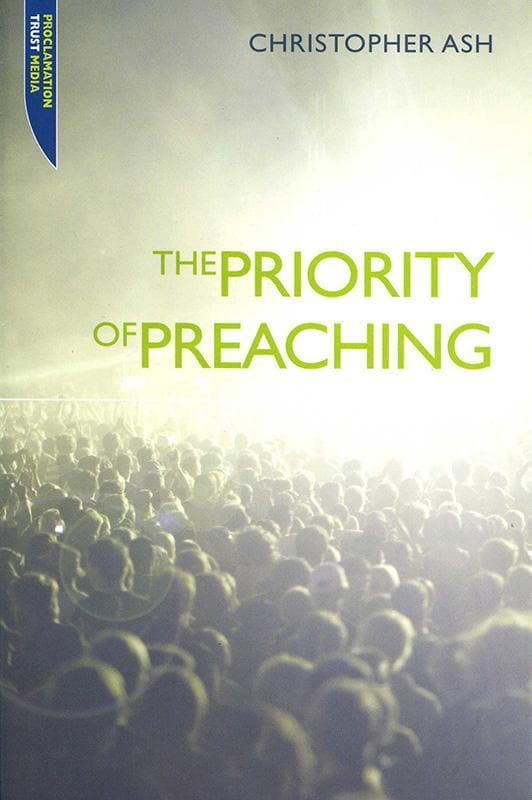
    In this book, The Priority of Preaching, Christopher Ash highlights how preaching isn’t just about personal or individual growth but it is for shaping and growing community. He pushes back against the idea of faith as an individual journey, suggesting instead that preaching is a communal act that draws the church together under God’s Word. He’s already made the point that preaching is to have a sense of urgency. Here Ash argues that preaching isn’t to be a private conversation between the preacher and the individual listener; it’s an act that gathers and unites believers who are strengthened and encouraged together by His grace

    At one point Ash writes, “The church is not a collection of individuals who sometimes assemble; it is an assembly whose members may sometimes be dispersed.” This reflects his belief that the church isn’t defined by the scattering of believers during the week but by their gathering regally together to hear the Word preached. Therefore, preaching builds up the church as a whole. It is the reminder that all parts of the body make up the body, when one part is missing then it’s not the whole. This is similar to 1 Corinthians 12:12, “Just as a body, though one, has many parts, but all its many parts form one body, so it is with Christ.”

    The communal nature of preaching can be traced back to the Israelites’ gatherings in the Old Testament. Ash points out that in Deuteronomy, the people didn’t gather as isolated individuals; they assembled as a covenant people, standing together to hear God’s Word (Deuteronomy 31:11-13). This gathering wasn’t just a formality; it was a formative experience where they were reminded of their identity and purpose as God’s people. Preaching today carries the same purpose: it’s an act that brings people together, grounding them in God’s promises and shaping their collective identity as a church.

    What are the implications for today, then? 

    First, it challenges the modern day consumer mentality that can (or has) crept into churches, where people approach a service or gathering as a personal experience. While personal application may well be the outcome of the preaching of the Word, it goes beyond that toward fostering a communal identity and purpose grounded in the gospel. Similarly to Ephesians 4:12-13, where Paul describes the goal of ministry as “to equip his people for works of service, so that the body of Christ may be built up until we all reach unity in the faith.” preaching isn’t just about a message delivered; it’s about building up the church as the body in Christ.

    Second, this focus on the communal aspect of preaching is a reminder that the church is firstly a gathering of people who are united in Christ. It’s not merely a place for individual self help but a community built on God’s Word. Preaching, then, serves as a regular reminder of who we are together as a church, connecting each believer’s personal faith to a larger identity and greater story of God’s people. This, hopefully, helps us reflect Christ’s love to the world, not as a scattered group but as a community.

    Third, the reminder that preaching is communal highlights the role it has in culture. Ash suggests that preaching, when done with the gathered church in mind, becomes a point of difference between church and the world. This is not to say that preaching is an exercise in cultural critique, rather it should be for the whole of the church to respond to the whole world from a biblical worldview and gospel understanding. When preaching for community, instead of the individual, it enables gospel response and gospel conviction.

    Fourth, this angle on preaching makes us think about the church as something a little more fluid because of the group aspect, rather than simple Sunday services, or select individuals with large voices or passions. It means making application points toward the group as a whole, not just individual self-help messages. For example, when preaching on forgiveness, this is not just about how individuals can forgive, but how we do that collectively in the church and as a church toward others. 

    In some ways, preaching as building community means the preacher needs to recognise the team or the body aspect of the church. In shaping the church culture the calling for action there becomes a clear ‘we’, rather than ‘you’ posture. It is to do what the people under Ezra and Nehemiah do, hear the Word of God, be attentive to the Word of God, and then turn to worship God under the Word of God (Nehemiah 8). 

    Christopher Ash’s vision of preaching as a communal building act causes us to move beyond thinking about the individual and realise its power in the collective gathering of God’s people. In doing so we are strengthened and bound more deeply together as followers of Jesus.


    The Priority of Preaching: Reflections on Christopher Ash’s Book
    Review: The Priority of Preaching by Christopher Ash
    Part 1: Preaching Grace
    Part 2: Preaching With Urgency
    Part 3: Preaching as Community Building
    Related: The Pastor’s Role in Preaching

  • Preaching Grace

    Preaching Grace

    In The Priority of Preaching, Christopher Ash writes about that which can get overlooked in our churches: preaching being centred on grace. Ash argues in his book that the preaching of grace is essential, as it keeps the church from turning into what he calls a “club” where people gather around shared interests or personalities rather than a shared commitment to Jesus Christ. Instead, preaching on grace builds a community in humility and binds us together through the Good News rather than individualism. Ash writes, “only the word of grace knocks down our pride.” And it is in this posture we are able to turn back to God, reminding each of us that we are “all one in Christ Jesus”. The playing field is levelled, all of us fall short, and the togetherness of us as believers is on our shared dependence on the mercy of God. 

    This emphasis on grace goes beyond just avoiding pride; it’s also about cultivating a healthy church culture. Without the regular proclamation of grace a church can quickly become an exclusive group that relies on human similarities rather than the gospel to stay connected. This drift can happen subtly, but Ash’s point is that grace is the only foundation strong enough to hold together a diverse community. The church isn’t meant to be a gathering of people who all look, think, and act alike; it’s a people transformed and unified by God’s grace, regardless of background or personality (Romans 12:3-5).

    The challenge to pastors is to make grace a consistent theme in our preaching, a commitment that prevents the church from developing a “club mentality.” Grace-centred preaching doesn’t just speak to an individual heart, it impacts and transforms the whole church. When grace is preached we are reminded of our own limitations, the unnecessary drive to prove ourselves, and a skewed view of success. The focus on grace points us back to the gospel, which calls us to be of one mind and heart, putting others above themselves (Philippians 2:1-14).

    As a flow on effect of this grace-filled preaching the life of the church reaches outside its walls. Well, it should drive us to this. If we are marked by humility and grace, which flows from this kind of preaching, then the culture of the church is to be a place where others are welcomed, even if they don’t seem to ‘fit’. Ash tells us that those churches that preach grace will stand out, drawing others in through the authenticity of the community that is impacted through grace. 

    In practice, this call to preach grace challenges those of us who do preach regularly to focus on the greatness of the gospel, not simply giving our hearers things ‘to do’. While there will be challenging moral and behavioural aspects articulated in preaching, because Scripture is like this too, it does mean framing these things in the context of grace. For example, instead of preaching a “try harder” message, we can emphasise that growth in holiness is an ongoing response to God’s love, not a checklist for approval.

    As Ash explains, grace is the church’s “ tune.” Without it the church will gradually lose its true identity. Grace keeps the church as the body of Christ. By keeping grace at the centre we create a church culture that reflects the gospel, and open ourselves to be a community that is transformed by it.


    The Priority of Preaching: Reflections on Christopher Ash’s Book
    Review: The Priority of Preaching by Christopher Ash
    Part 1: Preaching Grace
    Part 2: Preaching With Urgency
    Part 3: Preaching as Community Building
    Related: The Pastor’s Role in Preaching

  • The Priority of Preaching by Christopher Ash

    The Priority of Preaching by Christopher Ash

    In The Priority of Preaching, Christopher Ash argues that preaching is not just another church activity but the foundation upon which the church is formed, sustained, and strengthened. Ash presents preaching as the central means by which God calls His people together, aligning the church under His Word to shape their lives, faith, and identity. While the book is a bit academic in parts, Ash’s use of memorable illustrations and his practical advice on the task of preaching make it worth the read.

    Ash builds his case around Deuteronomy, which he describes as less a “law book” and more a “preaching book.” He points out that in Deuteronomy, Israel gathers under Moses to hear God’s Word, binding them together as His people (Deuteronomy 31:11-13). This gathering isn’t about individuals gaining private insight; rather, it’s a communal moment where the people are shaped under the authority of God’s spoken Word. For Ash, this dynamic continues today. Preaching is a way for the church to gather, listen, and respond together to God.

    A major theme in this book is grace, which Ash argues must be central to preaching. He points out that without regular, grace-centred teaching, churches risk becoming exclusive clubs rather than communities of believers bound by Christ. He writes, “only the word of grace knocks down our pride,” reminding us that the gospel keeps believers grounded in humility and dependent on God (Ephesians 2:8-9). This recurring call to grace is a practical one, as it reinforces that the church’s unity and health are not built on shared interests or human qualities, but on the common need for God’s saving grace. Ash’s emphasis here brings to mind Paul’s words to the Galatians, that we are “one in Christ Jesus” (Galatians 3:28), a unity that only grace can sustain.

    Ash insists on the urgency of preaching. He uses an illustration of three apprentice devils who each try a different strategy to prevent people from responding to God’s Word. The final one whispers, “Tell them there’s no hurry.” This tactic succeeds, as people assume they can respond later, just “not today.” For Ash, preaching must challenge this mindset, delivering the message with urgency to avoid spiritual complacency. “The urgency of faith means we need to preach with urgent passionate clarity,” he writes, stressing that preaching should move people to a point of decision. This is a reminder that preaching isn’t just informative; it’s intended to encourage people toward repentance and faith, and “spur one another on toward love and good deeds” (Hebrews 10:24).

    Another key insight is the way Ash views preaching and community as closely connected. He argues that preaching isn’t just for individual growth but for binding the church together as a people. “The church is not a collection of individuals who sometimes assemble; it is an assembly whose members may sometimes be dispersed,” he says. This means that the assembly under the Word reflects Paul’s description of the church as “one body with many members” (1 Corinthians 12:12). It is a reminder that the church is not simply a place to receive spiritual insight but is a gathering that God shapes and grows collectively through His Word.

    In terms of the role of the pastor, Ash sees the pastor as a shepherd whose primary task is to “feed the flock” through preaching (John 21:17). Drawing on theologians like John Owen, Ash describes preaching as the pastor’s core responsibility, one that must be done with diligence and humility. The pastor’s role is not about personal authority but about humbly stewarding God’s Word to guide the church. 

    The Priority of Preaching is a book that reinforces the essential role of preaching for the church. The book has an academic tone that can make it a slower read in parts, but uses illustrations to enliven the chapters and make it more accessible. Although some sections may be dense, the book’s core ideas around grace, urgency, community, and pastoral responsibility make it a helpful resource for those who preach or lead within the church. With its combination of practical insights and vivid examples, The Priority of Preaching is a four out of five stars book, bringing practical depth and encouragement for the Church and the preacher. 


    The Priority of Preaching: Reflections on Christopher Ash’s Book
    Review: The Priority of Preaching by Christopher Ash
    Part 1: Preaching Grace
    Part 2: Preaching With Urgency
    Part 3: Preaching as Community Building
    Related: The Pastor’s Role in Preaching

  • A Psalm For Our Sanity

    Ooft, there’s no other way to say it, the restrictions now placed on us here in Melbourne are brutal.

    Yesterday evening we entered a ‘State of Disaster’, which now means we have a curfew, limited time for exercise, and we’re unable to travel more than 5km from our home (except for special circumstances). This is now in place for six weeks, and is off the back of a second lockdown of which we had already been in for three weeks.

    There’s not much to say.

    It’s been tough, it’s going to continue to be tough.

    There’s a range of feels–annoyance, sadness, denial, shock, depression, apathy, anger, and whatever else you’ve been going through.

    It’s times like this I’m thankful for the Psalms.

    5 Yes, my soul, find rest in God;
        my hope comes from him.
    6 Truly he is my rock and my salvation;
        he is my fortress, I will not be shaken.
    7 My salvation and my honour depend on God;
        he is my mighty rock, my refuge.
    8 Trust in him at all times, you people;
        pour out your hearts to him,
        for God is our refuge. (Psalm 62:5-8)

    There are plenty of Psalms that may help those of us who are struggling right now. And it seems the lament-style are the most appropriate ones. Here in Psalm 62 I find comfort in the words like rest, hope, rock, fortress, refuge and trust. These are words that resonate with the God I know, and I hope they are words that resonate with the God you know too. With so much changing, often by the day, knowing God is firm and solid and provides care and refuge for us is important. He gives us something stable to rely on in these unreliable days.

    These days are not easy. And while we may all be in this wild seas together, each household is in a different boat. As we navigate the range of emotions we feel and the situations we find ourselves in may we show the kindness and graciousness of God to each other and to ourselves.