Tag: Ministry

  • My Top Books of 2024

    My Top Books of 2024

    It’s been two years since I wrote about the books I’ve been reading. Last year I was not in a place that enabled me to write and my dear readers will have noticed that if they were observant enough. However, books and writing about books remain a cornerstone of my personal and ministry rhythm and I’ve been back in the swing of things for a little while now. 

    I find books inspire, challenge, and shape my understanding of the world, ministry, and myself. This year reading remained constant, with numerous books being read at the same time, whether in paper, digital, or audio form. 

    The top books I read this year include those below, they are books I rated 5 stars. From biographies to practical theology to books on leadership and burnout. This year’s reading list has been somewhat diverse, except for all those crime-thriller fiction books I read. 

    Without further ado, here are my top books of 2024: 

    Zeal without Burnout by Christopher Ash

    This is a short book, and it’s full of impact. Anyone in ministry should really read this. Ash reminds us that we are finite and fragile. Through scripture and personal experiences he highlights the importance of sustainable ministry. As Ash addresses the risk of burnout he offers practical, wise, and compassionate advice that is grounded in God. I reckon I’ve read this a few times now. In different seasons it has had more impact. This year it named things I hadn’t realised I was doing or experiencing before, and it has made me more self-aware of my experience in the past 12-18 months. 

    Tiger Woods by Armen Keteyian and Jeff Benedict

    This is a great biography of such an iconic sportsman. The real highlight of this biography is actually the writing, it was such great sports and biographical writing. 

    Woods is the all-time great golfer with unbelievable talent in his profession yet, as we know, is deeply flawed. This book walks through his childhood, his relationship with his father and mother, and seemingly pseudo-friends through his life. It really is a character study on family dynamics and the influence of nurture and nature. It is a captivating read and brings together talent, pressure, and personal struggle surrounded by celebrity and sports.  

    Burnout: A Guide to Identifying Burnout and Pathways to Recovery by Gordon Parker, Gabriela Tavell, and Kerrie Eyers

    This book provides a comprehensive guide to understanding, identifying, and recovering from burnout. It offers strategies for self-care, stress management, and developing resilience to prevent future occurrences. I find this book helpful as it provided me with understanding about something I’d experienced within the year prior to reading it. It’s a clear, compassionate, and actionable book, which is also based on practical research-based approaches. Many of the case studies from various industries are helpful as they confirm that many different people in many different roles in life can hit burnout. 

    The Song of Significance: A New Manifesto for Teams by Seth Godin

    Seth Godin is always a fun read and this one is no exception. I’ve found he just thinks differently, gives great historical background and context about culture, particularly work culture, and then reframes it. In this case, Godin reframes modern work, leadership, and team-based collaboration within business and organisation. It is a call to shift out ‘success metrics’ toward meaning, dignity, and purpose. For those of us who deal in teams, there is the encouragement to collaborate around a shared vision in order to flourish. 

    Pastoral Perseverance by Brian Croft and James Carroll

    I try to read anything Brian Croft writes. He’s a grounded ministry leader who provides plenty of practical experience for pastors. In Pastoral Perseverance the books does what it says in its title, it encourages pastors and provides strategies to help persevere in the ministry. From navigating the complexities of leadership, congregational life, and personal challenges Croft and Carroll offer encouragement and biblical depth to shepherding the flock. 

    Unmasked: My Life Solving America’s Cold Cases by Paul Holes

    I listen to a few of Paul Holes’ podcasts and have followed a few that speak into the Golden State Killer. Holes was the investigator who helped crack the case of GSK after so many years of pursuing him. In this account of his life and career Holes describes the personal, emotional, and career highs and lows in the police force. I found it fascinating but also reminded of the human cost to relentlessly pursuing ones goals. 

    Sacred Rhythms: Arranging Our Lives for Spiritual Transformation by Ruth Haley Barton

    Ruth Haley Barton has been recommended to me plenty of times in the last year or so and I had never heard of her before this time. I ended up picking this one up and giving it a go, to which I am rather thankful for. This is a book for the soul. There is wisdom and helpful teaching, but also practical spiritual practices that will nurture faith and depth of relationship with God. All the usual spiritual disciples of Word, prayer, silence, solitude, and the like, but in the context of a regular rhythm to life. Again, it is another book this year that focuses on the devotional life of a disciple and also a life that seeks to avoid burnout. 

    Four Thousand Weeks: Time Management for Mortals by Oliver Burkeman

    I reckon this is one of the best time management books around. Rather than simply teaching habits and strategies Burkeman makes us realise that these ‘hacks’ won’t actually help us accomplish a life we want to live. Instead, Burkeman is realistic, and highlights that we should be embracing our limitations and constraints in life and time in order to live meaningfully within them. It’s a thought-provoking book, and he’s helpful to listen to one a few podcasts too. Instead of striving for tweaks to life so that we might hit our goals and to-do-lists every so often, it’s about thinking about life in more depth and with deeper purpose in mind. 

    Spiritual Leadership: Principles of Excellence For Every Believer by J. Oswald Sanders

    This is a classic Christian leadership book that continues to be helpful and resonate. It’s quite easy to read because of the short chapters, but each one seems to pack a punch to the gut. Sanders doesn’t sugarcoat the cost and challenges of Christian leadership but also highlights the eternal significance of the work. 

    Pastoral Leadership: For the Care of Souls by Harold L. Senkbeil

    Harold Senkbeil is another one of those authors worth reading. I first came across his book “Care of Souls”, published a few years ago and then came across this one only a few months ago. While there would be some differences between him and I, he’s Lutheran and I’m Baptist for example, the pastoral wisdom is worth the price of any of his books. This is a guide to shepherding God’s people with humility, grace, and courage. It has theological depth and a deep concern for the pastoral care of those in a congregation. Again, there is emphasis on the care of the soul for the pastor as well, which seems to have been a theme in my reading this year. 

    Leading: Learning from Life and My Years at Manchester United by Alex Ferguson

    I was fascinated by listening to Alex Ferguson’s book on leadership. It was really his biography or another way of doing a memoir, but with some leadership principles applied. Evidently, a man who leads Manchester united for so long and with such sporting success will have a few things to say in this area of life. But, it was also a great insight into his life, values, and philosophy to football and leadership. 

    Love in a Time of War: My Years with Robert Fisk by Lara Marlowe

    Robert Fisk is one of the great writers about the Middle East. Evidently he has his demons and this is something that his former wife, Lara Marlowe, speaks into throughout this book. But his work cannot be ignored, nor his continual insight into the people of the Levant and beyond. Pity the Nation was the first book I read of his, which traces lines of history and experience for those who lived in Palestine-Israel and through the Lebanese civil war. This is more a personal memoir from Marlowe, who had known his for so long and worked alongside him in the Middle East and UK. A great read. 

    Well, that’s it for my top books for 2024. I had plenty books which were 4-star rated, and some special mentions of those include: 

    • The Unhurried Pastor by Brian Croft and Ronnie Martin
    • Humility: The Joy of Self-Forgetfulness by Gavin Ortlund
    • Digital Minimalism by Cal Newport
    • The Priority of Preaching by Christopher Ash
    • The Harvard Business Review’s Guide To Beating Burnout
    • And any crime thriller novel by Daniel Silva, James Patterson, David Baldacci or Vince Flynn. Always one of these on the go. 

    I’d love to hear what books have shaped you in 2024. Drop your recommendations in the comments—I’m always looking to add to my stack for 2025!

    This now makes it 10 years where I’ve published my favourite books of the year. If you’re keen enough you can go back and have a read of previous years here: 2014, 2015, 2016, 2017, 2018, 2019, 2020, and 2021, 2022

    If you’d like to see all the books I’ve read in 2024 then head to Goodreads to see a summary.


    My Top Books: Yearly Series
    2014
    2015
    2016
    2017
    2018
    2019
    2020
    2021
    2022
    2024 (this post)
    2025
  • Book Review: The Unhurried Pastor by Brian Croft and Ronnie Martin

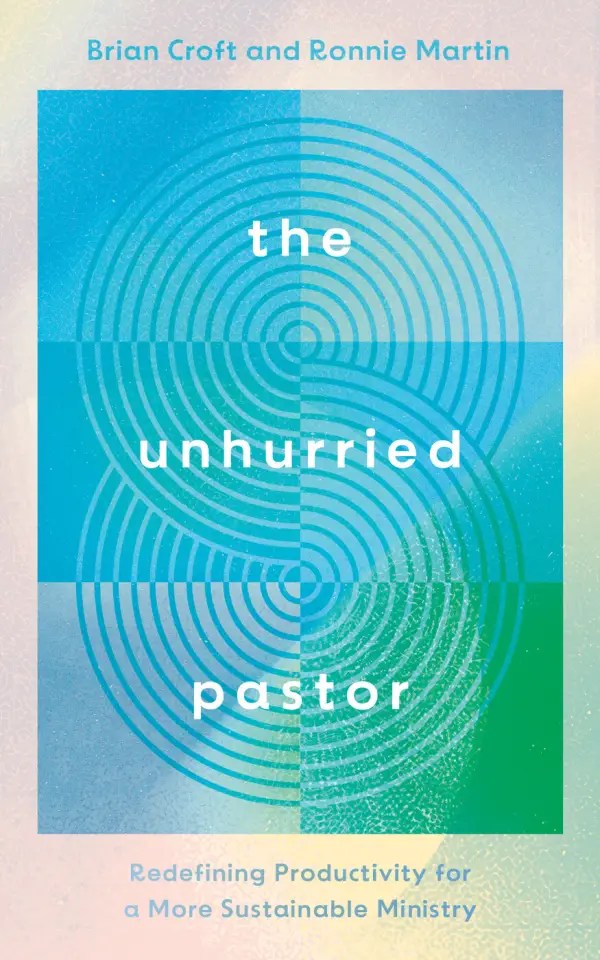
    Book Review: The Unhurried Pastor by Brian Croft and Ronnie Martin

    The Unhurried Pastor by Brian Croft and Ronnie Martin is an important reminder for anyone in pastoral ministry, especially those feeling the strain of constant demands. The book challenges the modern ministry mindset, which often equates busyness with success, and instead offers a call to slow down, embrace limitations, and find strength in resting in Christ. There’s lots of thoughtful insights and practical wisdom. Croft and Martin help pastors rediscover a more sustainable and spiritually enriching way to lead.

    Embracing Limitations

    One of the foundational ideas in The Unhurried Pastor is the importance of accepting our limitations. Many ministers are driven by the desire to meet everyone’s expectations—whether those of their congregation, community, or even themselves. But this endless striving only leads to burnout and frustration. Croft and Martin remind us, drawing from the words of John Calvin, that “true and sound wisdom consists in two parts: the knowledge of God and of ourselves” (p. 3). This is a important point. When we are deeply aware of both who God is and who we are, we understand that our limitations are not failures—they’re a natural part of being human.

    Embracing limitations doesn’t mean we’re less effective; it means we’re leaning into God’s design. Instead of trying to be everywhere and do everything, we can rest in the truth that God is sovereign. The weight of the world—or the church—is not on our shoulders. When pastors accept their limits, they’re able to give more genuine attention to what truly matters, letting God’s strength work through their weaknesses. I will admit, this is something that can be hard to actually put into practice and I often need to remind myself of this.

    Redefining Productivity

    In a culture that prizes productivity, it’s easy to fall into the trap of measuring ministry success by how much gets done. The more programs, meetings, and events, the better—right? Croft and Martin challenge this assumption by encouraging pastors to redefine productivity in ministry. “True productivity in ministry is about being rather than doing” (p. 14), they write, pointing to the familiar story of Mary and Martha as a guiding example.

    Martha, in her busyness, missed the opportunity to sit at Jesus’ feet, while Mary chose the “better” portion by simply being present with Him. This story resonates with those who find themselves caught in a cycle of activity, running from one task to the next. The reality is that ministry is not about how many meetings are attended or how many tasks are accomplished. Instead, it’s about nurturing a relationship with Christ and leading others to do the same. By spending time in His presence, pastors can lead from a place of spiritual depth, rather than out of a need to prove their worth through endless busyness.

    For many of us, there’s a temptation to prioritise what’s urgent over what’s important. However, Croft and Martin remind us that spiritual productivity isn’t about ticking off tasks; it’s about being deeply rooted in Christ and allowing our ministry to flow from that relationship. This shift requires a rethinking of how we approach our day-to-day and week-to-week responsibilities, but as I’ve recognised, essential for a more sustainable ministry.

    Authentic Vulnerability

    Vulnerability has become a bit of a buzzword in leadership circles (thanks Brene Brown?), with many encouraging pastors to be more open about their struggles. But as Croft and Martin point out, there is a subtle but significant difference between authentic vulnerability and a curated image of vulnerability. The authors caution against the temptation to appear vulnerable without truly being transparent: “There is a difference between presenting oneself as a vulnerable and transparent pastor, rather than a vulnerable and transparent person” (p. 21).

    True vulnerability in ministry goes beyond the occasional mention of a struggle in a sermon or casual conversation. It’s about consistently living with honesty before God and others, even when it feels risky. Authentic vulnerability builds trust, both with God and with the congregation, because it shows a pastor who is fully human—dependent on God’s grace like everyone else. Croft and Martin encourage pastors to be more “psalmist-like,” laying their true selves before God in prayer and letting go of the need to maintain an image of invulnerability. When pastors model this kind of vulnerability, they help create a culture of authenticity within their church communities, where people feel safe to bring their own struggles and burdens to God.

    Rest and Renewal

    For me, perhaps the most important message in The Unhurried Pastor is the call to rest. In a world that glorifies hustle and productivity, the idea of rest can feel like a luxury—or even a weakness. Yet Croft and Martin emphasise that rest is not optional for those in ministry; it’s essential. They draw from the biblical pattern of Sabbath, reminding us that God built rest into the very fabric of creation. “The unhurried pastor knows Jesus is the Chief Shepherd over his church… It is only when a frantic, hurried pastor actually lets go that he truly rests” (p. 128).

    This kind of rest goes beyond simply taking a day off. It’s about a deep trust in God’s sovereignty, a willingness to release control and believe that God can and will sustain the ministry. When pastors neglect rest, they’re often trying to prove their worth by staying busy, or they’re afraid of what will happen if they’re not constantly ‘doing ministry’. But true rest comes when we let go and trust that God is in control. Rest, as Croft and Martin describe, is an act of faith—faith that God is capable of shepherding His people even when we’re not present.

    For pastors, this means regularly stepping away from the demands of ministry to replenish their souls, whether through prayer, time in Scripture, or simply enjoying life outside of pastoral duties. Without this regular rhythm of rest and renewal, burnout is inevitable. But when pastors take time to rest, they return to their work with greater clarity, energy, and a renewed sense of purpose.

    Conclusion

    The Unhurried Pastor is a timely and necessary reminder for those in pastoral ministry to slow down, embrace their humanity, and rest in God’s grace. Croft and Martin offer an alternative to the relentless demands of modern ministry (and life!), reminding us that our value is not in what we accomplish, but in who we are in Christ. By accepting our limitations, prioritising our relationship with God, and leading from a place of rest, we can experience a more sustainable and impactful ministry.

    As Croft and Martin conclude, “Pastors don’t need to be perfect or have it all together. They simply need Jesus” (p. 142). This truth is what sustains ministry—not our own efforts, but God’s grace working through us. For any pastor feeling the weight of their role or the pace of their life, this book offers practical wisdom and encouragement to embrace a slower, more sustainable approach to ministry.

  • Pastoral Ministry and AFL Coaching

    In a recent article in The Age, Caroline Wilson explores a cultural shift in AFL coaching, where many top candidates have turned down the West Coast senior coaching position to prioritise family and personal well-being. This made me reflect on the parallels between the pressures faced by AFL coaches and those in pastoral ministry. Though these two fields operate in completely different arenas, they do share a number of common challenges around leadership, sacrifice, and the weight of responsibility.

    The Weight of Leadership

    In both AFL coaching and pastoral ministry, the role of a leader carries significant weight. For coaches, this involves the strategic management of a team, guiding players toward success while being under the constant scrutiny of fans and media. For pastors, the responsibility lies in shepherding a congregation, guiding them in their faith, and providing wisdom during life’s challenging moments. The Bible speaks to this in Luke 12:48, where Jesus says, “From everyone who has been given much, much will be demanded.” This isn’t just about material wealth but applies equally to those entrusted with leadership—whether on the field or in the church. Leadership demands much, and with it comes the pressure to meet those demands faithfully.

    The Relentless Pressure

    Wilson’s article highlights the high-pressure environment that AFL coaches endure, where every decision is analysed and critiqued. Pastors, depending on the season, can also operate in a similarly intense environment. The spiritual well-being of a congregation rests, in part, on their shoulders. The Apostle Paul understood this pressure well, when he shares in 2 Corinthians 11:28 that beyond his external trials, he faced “the daily pressure of concern for all the churches.” This type of pressure is sometimes relentless and requires both AFL coaches and pastors to have a strong foundation—whether it’s in their strategy, their faith, their identity, or all of the above.

    Sacrifices for Family

    One of the themes highlighted by Wilson is the decision by many coaches to prioritise their families over the senior coaching job. For pastors, this is similar. Ministry demands can easily encroach upon personal and family life, leading to burnout if not managed carefully. It’s a delicate balance, where one must constantly weigh the call to serve against the needs of those closest to them. However, the decision to prioritise family reflects a biblical principle found in 1 Timothy 3:4-5, where leaders in the church are instructed to manage their households well, for if they cannot do that, “how can they take care of God’s church?” This is a reminder that commitment to church leadership is balanced with a commitment to family.

    Mentorship and Influence

    AFL coaches are often seen as father figures or mentors to their players, providing guidance not just in the sport but in life. As spiritual shepherds, pastors seek to guide their congregation toward deeper faith and worship of God. The influence they have is often more significant than we realise, helping to shape those who lead. In Proverbs 4:23 we read, “Above all else, guard your heart, for everything you do flows from it.” For pastors, and perhaps coaches too, this is helpful wisdom; influence must flow from a place of integrity and care for those they lead. In a way, both are in the business of heart work—coaches on the playing field and pastors in the field of the soul.

    The Ultimate Sacrifice

    At the core of both AFL coaching and pastoral ministry is the concept of sacrifice. Wilson highlights how even lucrative and prestigious coaching positions are being passed over in favour of personal happiness and family commitments. In ministry, this sacrificial nature is a direct reflection of the gospel itself. The ultimate act of sacrifice is found in Jesus Christ, who laid down His life for the sake of others. Philippians 2:7-8 describes how Jesus

    “made himself nothing by taking the very nature of a servant, being made in human likeness. And being found in appearance as a man, he humbled himself by becoming obedient to death—even death on a cross!”

    This is the model for all Christian leadership: a life that prioritises the well-being of others, even at personal cost.

    Upon reflection, the challenges faced by AFL coaches are not entirely different from those encountered in pastoral ministry. Both roles require a balance of responsibility, the ability to endure pressure, and a heart willing to make sacrifices for the greater good. As pastoral leadership evolves, it’s crucial that those who lead do so with wisdom, resilience, and a deep commitment to the people they serve—always drawing strength and inspiration from the sacrificial love of Christ. This love, exemplified by Jesus on the cross, is the ultimate guide for anyone called to lead, whether in a sporting arena or a place of worship.


    If you’d like to read the full article from Caroline Wilson in The Age that inspired this post you can do so here (may be behind a pay wall).

  • 11 Helpful Books on Burnout and Ministry

    Read these. They’ll be helpful for you.

    Sacred Rhythms: Arranging Our Lives for Spiritual Transformation by Ruth Haley Barton

    Barton explores how to create a rhythm of spiritual practices that nourish the soul and bring a sense of peace and balance. The book emphasises the importance of solitude, prayer, and other disciplines to maintain spiritual vitality and avoid burnout.

    Managing Leadership Anxiety: Yours and Theirs by Steve Cuss

    Cuss addresses the common issue of anxiety in leadership, offering strategies to manage personal and organisational anxiety. The book provides practical tools to create a healthier, more effective leadership environment.

    The Unhurried Pastor: Redefining Productivity for a More Sustainable Ministry by Brian Croft and Ronnie Martin

    Croft and Martin challenges the conventional notions of productivity in ministry, advocating for a more sustainable approach. They provide practical guidance for pastors to slow down, prioritise their well-being, and maintain long-term ministry effectiveness.

    Pastoral Perseverance by Brian Croft and James Carroll

    Brian Croft and James Carroll strengthen pastors by pointing them to God’s word for help in facing the unique challenges of pastoral ministry in the modern day so that they will not merely survive, but stay, endure, and even thrive.

    Zeal without Burnout by Christopher Ash

    Ash addresses the risk of burnout in ministry, offering practical advice for maintaining zeal and passion without sacrificing personal health and well-being. The book emphasises the importance of rest, boundaries, and reliance on God.

    Spurgeon’s Sorrows: Realistic Hope for those who Suffer from Depression by Zack Eswine

    Eswine delves into the life and struggles of Charles Spurgeon, offering hope and practical advice for those suffering from depression. The book combines historical insights with pastoral care principles to support those experiencing mental health challenges.

    Emotionally Healthy Spirituality by Peter Scazzero

    Scazzero argues that true spiritual maturity requires emotional health. He provides a framework for integrating emotional and spiritual growth, offering practical steps to address emotional issues and foster a healthier spiritual life.

    Slow Productivity: The Lost Art of Accomplishment Without Burnout by Cal Newport

    Newport discusses how to achieve sustainable productivity without succumbing to burnout. He explores the principles of slow productivity, which prioritise meaningful work and long-term success over immediate results and constant busyness.

    Burnout: A Guide to Identifying Burnout and Pathways to Recovery by Gordon Parker

    Parker provides a comprehensive guide to understanding, identifying, and recovering from burnout. The book offers strategies for self-care, stress management, and developing resilience to prevent future episodes of burnout.

    HBR Guide to Beating Burnout by Harvard Business Review

    This guide compiles insights and strategies from various experts to help professionals recognise the signs of burnout and take proactive steps to address it. The book covers practical approaches to managing stress and improving work-life balance.

    The Ruthless Elimination of Hurry by John Mark Comer

    Comer addresses the problem of busyness, arguing that it hinders spiritual health and well-being. He advocates for a slower, more intentional life through practices like Sabbath, simplicity, and solitude to align more closely with God’s purposes and experience deeper meaning.

  • 5 Ways To ‘Recover’ From A Short-term Mission Team

    When leaving the gym I often observe people immediately drinking their protein shakes. I’m not entirely convinced of their usefulness for an average fitness plodder like myself. However, I can understand the need for these recovery shakes to be consumed by those involved in elite sport. You see, recovery is viewed as an important part of any athletes training regime. It’s not just about preparation and training. Nor is it simply about what happens on the day of competition. Included in a holistic approach to the athlete’s growth and health is recovery.

    This is the same when it comes to short-term mission teams (an in reality most ministry programs and events).

    5 Ways To Recover From a Short-term Mission Team

    It can often be the case that recovery from these short-term experiences is severely lacking. Much time is spent in preparation and on the trip itself. However, when it comes to debrief and recovery many find themselves left alone to work out how to process such an experience.

    But recovery is so essential in these situations. Whether it is a cross-cultural short-term team, or whether it is in a place where we feel more comfortable, recovery and debrief are vital in helping us process what we’ve experienced and learnt during the adventure.

    These type of trips and teams are particularly intense for a short period of time, often with people we don’t know so well, and doing tasks and activities out of our comfort zone. With it comes culture, relational, and emotional shock because of what we see, hear, smell, and taste. Therefore, it is important to ‘recover’ and reflect from these things.

    Using the word ‘recover’ in this way is not to suggest negativity, but it is about reflecting on the experience. It is about making decisions and gaining clarity and perspective on what we learnt during our time away.

    What recovering is not is making sure we are the same person upon our return. No, we hope to be changed, we hope we provided some change to others ourselves. And this is good. The point of recovery is not to regress back to the way things were, but point forward and apply the impact of our experience into our lives.

    I’m a big believer in these short-term teams and also reflecting on these experiences. I believe anyone should go on one of these types of teams in their lifetime. They will widen our view of the world and provide tangible experiences of people and cultures that are different from us. But coming back into our own culture, with all its regular activities and people and responsibilities brings with it some difficulty. It can be a shock, it can be lonely, it can be disappointing, compared to the excitement and conversations going on in the trip. And so once it’s all over here are five things we can do to help us recover from such an experience.

    First, we can pray. 

    This seems obvious. But how often do we actually do it?

    Praying gives us the opportunity to raise up our praises and gratitude for what God has given us, particularly the experiences we have had on a short-term mission trip. We can lift up those who we have met, the activities we were involved in, and the conversations that struck us. Our prayer lives are often enhanced because of these trips because they give us greater perspective. We can thank God for that.

    But in prayer we can also lift up our questions, our struggles, and our joys. Prayer is an excellent start when seeking to recover from such a trip.

    Second, we can spend time by ourselves reflecting on significant questions. 

    Every time I have led a team I have always provided questions for each individual participant to complete once they are back home. Questions can make us think more deeply, and are helpful in making us think through our experience. There will have been joys and challenges, and we need the ability to name them. While conversations are helpful, time set apart for ourselves to think and process what we’ve done upon our return can helpful. I’d recommend doing this after 6-weeks, the 3-months, 6-months, and 12 months from your return.

    Some questions you might like to consider are:

    • What did I learn about myself during my time away?
    • What did I learn about God and what it means to follow him as a disciple of Christ?
    • What did I learn about the people, the church, and the Christian community in the places I visited?
    • What did I learn about how culture impacts the way people live and understand the world?
    • How has my faith been impacted because of this experience? Have I learnt more about my own Christian calling through this trip?

    What other questions might you add? 

    Third, we can spend time with the people we went with. 

    A meeting 4-6 weeks after the end of the trip is helpful to rekindle thought and relationship with those who went on the trip. If your group is from different geographical areas, then a video chat session would be another way to do this.

    The reason for a team gathering soon after returning is because it helps us share stories. It provides an opportunity to share what has made a lasting impact. And it helps to know you’re not the only one going through the same challenges and struggles in coming home.

    You generally form a strong bond with the people you go away with. Sometimes it doesn’t go well, and that means there might be other ways debrief and recovery needs to occur. But, most of the time, meeting up and telling the stories of the trip; what it’s like to be home and the hopes for the future, will be an encouraging way to wrap up the team experience.

    Fourth, we can make sure we tell the stories with others. 

    It is in the ability to tell the story of what has gone on during your time away that helps you become clearer in what you learnt, what God seems to be saying to you, and what the impact of the trip had upon you.

    If you have gone with a team through your church then the opportunity to talk about your experience in a service, in a small group, or with a circle of friends is perfect. This helps you share what you’ve been up to, but also encourages others around you. Sometimes the reactions we receive from others is somewhat of a surprise, but it is important to remember that they can’t visualise or understand many of the things you went through. This is why sharing the stories is important, for you and for others.

    I remember coming back from one short-term team, having spent a few weeks overseas with people I didn’t know too well. I had to talk it out with my colleagues and my wife, just to recover from what I’d experienced while away. Funnily enough, it wasn’t the cultural aspects, nor the project we were involved in, that caused the most anxiety. It was the team members I was with, and how they responded to various situations they were put in!

    Sharing the stories and talking it out with safe friends and people is important in re-adjusting to ‘normal’ life.

    Fifth, we can set some goals for the future.

    As you have worked through these things it is also worth writing down things you’d like to accomplish off the back of this trip.

    If we don’t set goals from the trip then it will just become another exciting experience that we’ve been on, perhaps a bit of travel to remember sometime in the future. Yet, if we believe God is working in us and through us, to grow us to be more like him and in his Christlike character, then it is worth pondering what life might look like having had this experience.

    These goals don’t have to be world dominating. They could be three simple changes you’d like to make in your own life or faith. It could be one particular resolution you’d like to make because of what you’ve seen and heard. These goals could be anything from giving money to the projects you were involved in, praying for the place you visited, or become more involved in your church’s mission team. The goals and resolutions can be endless. However, sometimes it is better to set goals which are achievable. A goal that is personal, a goal that is faith-orientated, and a goal that is for the service of others.

    With these in mind we can have confidence that this experience will last a lifetime.