Tag: Missions

  • The Relevance Of Jim Elliot For Youth Ministry

    Let me tell you about Jim.

    Jim was an active young man who enjoyed sharing his faith with others. He was a social kind of guy. He liked people and people liked him.

    He grew up in the United States and was an excellent student in high school and university. During these years he became a Christian, and from that point sought to share his faith with everyone he knew. In university he led a bible study and was the editor of the college newspaper. He studied hard, and received good grades.

    At one point he became interested in a girl. This interest occurred as he was exploring options to serve God in a mission capacity overseas.

    jim_elliot_by_gregchapin-d6jqcxv

    He married Elisabeth and they moved to Ecuador as missionaries. They first learnt the language before moving out near the jungle. Jim had a passion to reach a group of people who had never heard the name Jesus before. He wanted to share Jesus with them and had a few friends wanting to do the same.

    After a couple of years Jim and four other friends began to search for a tribe that had never heard about Jesus. They did a number of flyovers of the jungle looking for a particular tribe, their huts and living arrangements. After a number of months they found the tribe they’d been looking for. They began to gently make contact with them through giving them gifts; gifts of food and other packages useful to their tribe were lowered out of the plane they were in.

    On one particular day they decided to make closer contact with the tribe by flying to an open area near the village, landing on some hard sand next to a river. The whole day the team chatted with a couple of people from the tribe the best way they knew how. They were encouraged, believing they had made a good impression.

    Unbeknownst to the group the rest of the tribe had surrounded them as they had been talking throughout the day. In the thick of the trees and scrubs of the jungle were the men of the village. After dark these tribesmen came out of hiding and killed them, putting an end to their mission task.

    Once the guys didn’t arrive home the wives and children soon realised what had happened. In the weeks and months following many, understandably, left Ecuador for home.

    But this isn’t the end of the story.

    Jim’s wife, Elisabeth, and their daughter, ended up making contact with the tribe. Elisabeth and her daughter became friends with this tribe and ended up living with them for a number of years.

    They lived with the people who had killed their husband and father.

    Over the course of time the tribe turned to Jesus and from its violent ways into a loving people who cherished the Good News.

    The story of Jim Elliot and his wife Elisabeth is a famous story in mission circles. It is a story that has inspired many people to take the leap into cross-cultural mission, and I’d have to be included with them.

    However, this isn’t simply a story worth limiting to global missions. It can also be a story relevant to us in youth ministry. Here’s how:

    First, Jim’s story reminds us of the concern for sharing the Good News. 

    This Good News is the story of what God has done through Jesus. It is the story of God creating and calling a people to himself. It is a story that understands each individual student, parent, family, church member, and member of society, as a loved, cared for, and important person to God himself.

    In youth ministry we seek to connect God’s story with the stories of those who we come into contact with. We seek to connect the Good News with the story of each individual connected with our youth ministry. Jim’s story is a reminder that sharing God’s story is to be at the forefront of what we do. It is what we are to be passionate about and committed to. It is a reminder that our youth ministries are to be mission-shaped.

    Second, Jim’s story reminds us to be strategic. 

    There is strategy behind the plans Jim and his friends had to achieve their mission. This strategy was thought out as they tried to show their love and care for the tribe in a respectful and meaningful way.

    In youth ministry it’s important to have a strategy in determining how you go about what you do. Sometimes this might be in your head, but eventually it is worth having something written out in order to explain what you’re doing and why you’re doing it. A youth ministry without a strategy is like going on a car ride without a map. It helps keep you focussed and helps you know when you’re heading off track.

    Third, Jim’s story reminds us of the need for passion and commitment.

    No one will deny Jim had passion and commitment. Jim realised the need to be involved in the long-term mission task. He had a passion to share the Good News and to make it known to people who wouldn’t have known otherwise. He also committed himself to this task, commitment even to death.

    If you’re in youth ministry and don’t have the passion for it, nor the commitment to it, then why do you even #youthmin?

    Passion doesn’t need to be loud and proud, it might be through an inner sense of satisfaction. Commitment will be shown through your presence, your people interactions, and your punctuality to name a few character traits. Encourage those traits and stoke that passion…or find someone to take over.

    What inspires me about Jim’s story is his willingness to share the gospel with people and to also share his life with them. He not only gave his live for the cause of Christ but was seeking to share his life with people he didn’t know. He was one of five young men to be martyred that day in 1956, all striving to share their faith with this unreached tribe who had never heard the Good News before. Yet, it took their death for the sharing of the Good News to this tribe to occur.

    I doubt you’re putting yourself on the line like Jim Elliot and this mates did when rocking up to youth group on a Friday night. That’s OK. But, whatever your youth ministry looks like remember that it is like double-sided sticky-tape, its about sharing the Good News and about sharing your life.

    “…because we loved you so much, we were delighted to share with you not only the gospel of God but our lives as well.” – 1 Thessalonians 2:8. 
  • Published: The Encounter At The Well

    Having been on staff for Global Interaction here in Victoria I’ve been able to write a few things for them in the past. I ended up helping out in writing some of their May Mission Month bible study material for young adults this year.

    You can find it here.

  • Para-Church Triage In Youth Ministry

    It could be the regular emails sent by various para-church organisations. It could be actual snail mail arriving through the church office. It could be the phone calls from representatives seeking your ear.

    In church ministry there is the constant demand from people in Christian organisations around the country who would love to ‘partner’ with you. They email, post, call or seek coffee with you regularly enough that a whole day of your week could be filled with meeting people para-church organisations.

    So, what do you do?

    On one hand, it seems rude to palm people off and not hear what they have to say about their organisation and what they’re doing. On the other, there is only a certain amount of time, money, and space you can give to various organisations.

    How do you prioritise which organisations you will closely ‘partner’ with?

    I’ve come to see the answer to this question as para-church triage.

    If there is some form of health crisis and you need to go to hospital for help you usually head straight to the emergency department. If you’ve ever been to the emergency department you’ll know that the first person you see is the ‘triage nurse’. The triage nurse is someone who takes your details, assesses your condition, and then places you in the appropriate spot in the queue to see the doctor. This assessment and placement is known as triage. The nurse is evaluating where you should be placed on the priority list, whether you’ll be seen quickly or whether you’ll need to sit a while. If the triage nurse is making the right assessments someone with a drug overdose should be seen quickly while you wait with your basketball-induced sprained ankle.

    It’s the same with para-church triage.

    As a youth pastor, or any type of pastor I suspect, you need to do a little triage. That is, you need to decide where in the priority queue the various para-church organisations are placed. Some organisations might be at the front of that metaphorical queue and have a strong relationship with you, others might find themselves having to wait a while or work on the relationship, and then there are others who probably need to move queues.

    What kind of system is useful in order to perform this triage?

    I’ve come up with a framework that helps me think through what to prioritise. I understand that it will have flaws, but it might be helpful for some.

    Para-Church Triage Framework

    Priority 1: A relationship of openness, trust, and engagement

    • The organisation already has an ongoing relationship with the church.
    • The organisation is given financial support through the annual church budget.
    • The organisation employs members of the church.
    • The organisation is aligned theologically with the church.
    • The organisation can helpfully contribute to the vision and mission of the church.

    Priority 2: A relationship that is cautiously open

    • The organisation is known to you and you affirm their work.
    • The organisation has connection with people who attend the church.
    • The organisation has been recommended to you by people you respect.
    • The organisation helps train and develop disciples through people, events, and resources.
    • The organisation reaches out, wanting to improve its partnership with the church.

    Priority 3: A relationship of little or no connection

    • The organisation is not known to you and there is no relationship with them.
    • The organisation doesn’t fit with the vision and mission of the church.
    • The organisation doesn’t align theologically or philosophically.
    • The organisation pushes for financial support over relationship.

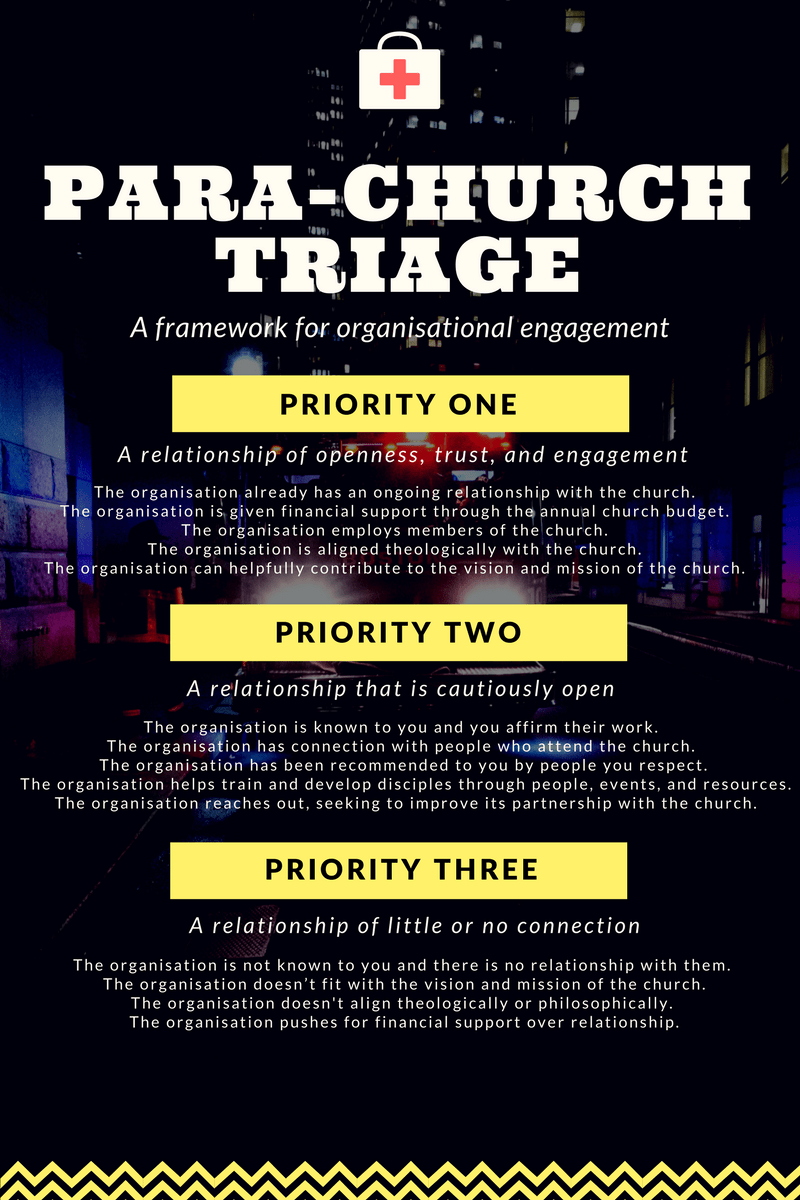
    That’s the framework, and one that I hope helps you think through this issue. It’s not an issue that’s overly appealing so I’ve created a graphic to go with this to make it that little bit more sexy.

    para-church-triage-graphic

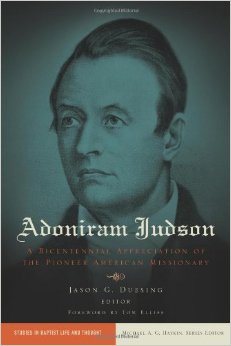
  • Book Review: Adoniram Judson by Jason G. Duesing

    Judson bookThe last book I can remember reading that had such an impact on me was in my later university years. I read a young adult version of the biography of Jim Elliot, a missionary martyr to Ecuador. His life and faith were an inspiration as I worked out my faith during my university years and spurred me into the world of missions.

    That was over 10 years ago now.

    So it seems very few books I read spur me into greater action and reflection. Most books invite me into the story and may give good information about a particular person or period. But I can’t think of more than a handful of books I’ve read that spur me into action and greater obedience to God.

    But the book Adoniram Judson: A Bicentennial Appreciation of The Pioneer American Missionary by Jason G. Duesing, is one of those books.

    This book isn’t written by one author. We could say it’s a collection of essays combined to give an excellent picture of Judson’s life and ministry. The book goes deep into his early life, his Christian life, his missionary life, his married life, and the influential life he led.

    It is a wonder as to why I hadn’t previously read a book about Judson. He is highly esteemed, particularly by those in America and the missions world. He is recognised as the father of American missions. The little I previously knew was from John Piper’s biographical message on the man from 2003. Yet in this written volume, with references to his and his wives’ journals and letters, there is a terrific account of this “mighty man”.

    Three main areas I saw highlighted in the book were Judson’s faith in the sovereignty of God, endurance through suffering, and commitment to long-term missions service.

    Sovereignty
    The faith Judson and his wives’ had in God is simply an inspiration.

    I say wives because Judson ended up having three. Ann and Sarah, his first two, died during his lifetime and Emily passed away only a few years after Judson himself died. I feel this needs to be clarified so there is no miscommunication. 🙂

    But all four individuals were wholeheartedly followers of Jesus Christ and sought to be obedient to His call, wherever that led. This begins with the conversion of Adoniram Judson soon after hearing one of his good friends from university die in the room next to him. He literally heard this man passing away during the night and upon finding out who it was the next morning was thrown into turmoil about his own soul.

    Judson sees the light and the graciousness of God through his Son and clings to the cross for forgiveness and salvation. He realises that it is only the cross that can bring true salvation. The trust he has in God at this early stage is evident. The way God’s hand guided him from being the son of a Congregationalist minister into atheism through university and then into a living, vibrant, and heartfelt faith when he was 20 years old is clearly seen. God’s sovereignty is at work.

    With this as the banner of his life he pursues a life that will count. He seeks to see others come to know God through his Son, so that they too may see salvation through the cross.

    He trusts God in his studies, as he heads to theological college without an active faith. Over the course of his studies he converts and has an unrivaled desire to be a missionary is Asia. He trusts God as he seeks a wife and proposes to Ann Hasseltine, loving her and trusting she will be willing to come with him to Burma and the East. In a letter to her parents, seeking to begin a relationship with her, he very early on describes his intentions for life and what that will mean for them and their daughter. In July, 1810, he writes,

    I have now to ask, whether you can consent to part with your daughter early next Spring, to see her no more in this world; whether you can consent to her departure, and her subjection to the hardships and sufferings of missionary life; whether you can consent to her exposure to the dangers of the ocean; to the fatal influence of the climate of India; to every kind of want and distress; to degradation, insult, persecution, and perhaps a violent death. Can you consent to all this, for the sake of him who left his heavenly home and died for fer and for you; for the sake of perishing immortal souls; for the sake of Zion, and the glory of God?

    As they travel he trusts God’s plans as they make the controversial but convicted decision to become Baptists after studying the scriptures. In the four months from leaving the American shores he and his wife Ann see the truth in Believer’s Baptism and are baptised themselves by colleagues of William Carey in India.

    In his first marriage with Ann, and consequently the ones following, the sovereignty of God is central to their faith and obedience.

    Suffering
    Judson and his wives’ suffered immensely. He saw the death of two wives, the death of over five children, and the death of colleagues in the mission work. He was imprisoned for nearly two years by the brutal regime in Burma at the time. When he lost his firstborn son he wrote:

    Our little Roger died last Saturday morning. We looked at him through the day, and on the approach of night we laid him in the grave. This is the fourth day, and we just begin [sic] to think, What can we do for the heathen? But yet it seems hard to forget little Roger so soon, to force off our thoughts from the attractive, painful subject, and to return to our usual employments. O may we not suffer in vain! May this bereavement be sanctified to our souls! and for this I hope we have your prayers. (p88)

    Ann experienced the same difficulty. In a letter to her parents, she expressed her confidence in God’s sovereign goodness, even in the death of her child:

    We do not feel a disposition to murmur, or inquire of our Sovereign why he has done this. We wish rather to sit down submissively under the rod and bear the smart, till the end for which the affliction was sent shall be accomplished. Our hearts were bound up in this child; we felt he was our earthly all, our only source of innocent recreation in this heathen land. But God saw it was necessary to remind us of our error and strip us of our little all. Oh may it not be in vain that he has done it. May we so improve that he will stay his hand and say, ‘It is enough’. (p88)

    What inspiration and trust in the Lord!

    Added to this is the ridicule he received from the local Burmese. It took seven years into the work before the Judson’s saw a convert. The constant health issues and lack of ‘success’ in the conversion of the people he sought to reach, and the death and disease he saw drove him to leave the main town he was living in and live by himself, in the jungle, sitting and staring into a shallow grave he had dug.

    Thankfully it was the years after this that Judson saw the fruit of his work but the suffering had an effect, as one could expect.

    Service
    The commitment of Judson and his wives’ have had a lasting impact on the lives and ministry of those who have gone after him. Their service of nearly 40 years, with one furlough back to America, is something to behold in the modern day. I understand that this was a different era, but the long lasting commitment of Judson and his wives attest to the fruit from long-term service.

    As mentioned, they didn’t see a convert for seven years. They experienced great suffering in their own lives and also saw it among the people they served. Yet, they continued to work in building relationships and translating the Bible into the native tongue of the Burmese. To this end Judson had a commitment to being contextual in everything and learn the culture well.

    The Judson’s immediately set about learning the Burmese language. Understanding Burmese was crucial for personal evangelism and Bible translation, both of which were necessary if the gospel was to gain a foothold in Burma. It was not enough to learn the language; the Judsons also had to learn how to live and minister in a Burmese context. Phyllis Rodgerson Pleasants describes the centrality of this learning for the Judsons’ mission:

    “The Judsons recognised that they had to be learners before they would be able to teach anything. They were persistent in learning from the Burmese [sic], their entire lives in order to communicate the gospel authentically in ways natural to the Burmese instead of trying to make the Burmese American so they could understand the gospel. More than learning the language from their teachers, the Judsons learned what it meant to be Burmese.”

    Learning the Burmese language and being immersed in Burman culture were critical components in providing a contextually appropriate Christian witness. The Judsons eventually excelled at both. (p81)

    This led Judson to be a communicator in word and deed. Alongside the work of translation was the contextual approach to being a witness for Christ.

    We agree in the opinion that our sole object on earth is to introduce the Religion of Jesus Christ into the empire of Burmah; and that the means by which we hope to effect this are translating, printing, and distributing the Holy Scriptures, preaching the Gospel, circulating religious tracts, and promoting the instruction of native children.

    Cross-cultural communication of the gospel was the Judsons’ heartbeat.

    Jusdon understood that translation work could commence more quickly in Burma that in some settings because, as Wayland surmised from Judson’s letters, “The Burmans are reading people. They have their religious books, and possess the teachings of Gaudama in their own language.’ However, Judson prioritised proclamation, “The press can never supplant the pulpit’.

    Language acquisition came gradually with parallel cultural knowledge, giving them the ability to interpret nuanced Burmese meanings, and worldview complexes of belief and practice. One of Judson’s first forays in adapting his technique to the culture was to stop building a zayat, a speaking point at the end of his house where passersby would stop to inquire this foreigner and his teaching. Eventually it became a place to hold public worship. Even though he borrowed the zayat idea from Buddhist priests, he clearly distinguished his zayat from theirs. His diary described the design and function of the building and recorded that it ‘is whitewashed, to distinguish it from the other zayats around us’. (p139)

    Conclusion

    Much more could be said. The book is well worth a read and some days spent in reflection of it. It was an inspiring read and one that made me think about my commitment to Christ and the way in which missions is currently done.

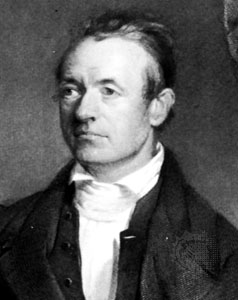
  • Judson’s Missionary Advice

    ijudson001p1In 1832 Adoniram Judson wrote to the Foreign Missionary Association of the Hamilton Literary and Theological Institution, NY. In the letter he gives 10 points of advice to missionary candidates. They are as follows:

    In commencing my remarks, I take you as you are. You are contemplating a missionary life.

    First, then, let it be a missionary life; that is, come out for life, and not for a limited term. Do not fancy that you have a true missionary spirit, while you are intending all along to leave the heathen soon after acquiring their language. Leave them! for what? To spend the rest of your days in enjoying the ease and plenty of your native land?

    Secondly. In choosing a companion for life, have particular regard to a good constitution, and not wantonly, or without good cause, bring a burden on yourselves and the mission.

    Thirdly. Be not ravenous to do good on board ship. Missionaries have frequently done more hurt than good, by injudicious zeal, during their passage out.

    Fourthly. Take care that the attention you receive at home, the unfavorable circumstances in which you will be placed on board ship, and the unmissionary examples you may possibly meet with at some missionary stations, do not transform you from living missionaries to mere skeletons before you reach the place of your destination. It may be profitable to bear in mind, that a large proportion of those who come out on a mission to the East die within five years after leaving their native land. Walk softly, therefore; death is narrowly watching your steps.

    Fifthly. Beware of the reaction which will take place soon after reaching your field of labor. There you will perhaps find native Christians, of whose merits or demerits you can not judge correctly without some familiar acquaintance with their language. Some appearances will combine to disappoint and disgust you. You will meet with disappointments and discouragements, of which it is impossible to form a correct idea from written accounts, and which will lead you, at first, almost to regret that you have embarked in the cause. You will see men and women whom you have been accustomed to view through a telescope some thousands of miles long. Such an instrument is apt to magnify. Beware, therefore, of the reaction you will experience from a combination of all these causes, lest you become disheartened at commencing your work, or take up a prejudice against some persons and places, which will embitter all your future lives.

    Sixthly. Beware of the greater reaction which will take place after you have acquired the language, and become fatigued and worn out with preaching the gospel to a disobedient and gainsaying people. You will sometimes long for a quiet retreat, where you can find a respite from the tug of toiling at native work — the incessant, intolerable friction of the missionary grindstone. And Satan will sympathize with you in this matter; and he will present some chapel of ease, in which to officiate in your native tongue, some government situation, some professorship or editorship, some literary or scientific pursuit, some supernumerary translation, or, at least, some system of schools; anything, in a word, that will help you, without much surrender of character, to slip out of real missionary work. Such a temptation will form the crisis of your disease. If your spiritual constitution can sustain it, you recover; if not, you die.

    Seventhly. Beware of pride; not the pride of proud men, but the pride of humble men — that secret pride which is apt to grow out of the consciousness that we are esteemed by the great and good. This pride sometimes eats out the vitals of religion before its existence is suspected. In order to check its operations, it may be well to remember how we appear in the sight of God, and how we should appear in the sight of our fellow-men, if all were known. Endeavor to let all be known. Confess your faults freely, and as publicly as circumstances will require or admit. When you have done something of which you are ashamed, and by which, perhaps, some person has been injured (and what man is exempt?), be glad not only to make reparation, but improve the opportunity for subduing your pride.

    Eighthly. Never lay up money for yourselves or your families. Trust in God from day to day, and verily you shall be fed.

    Ninthly. Beware of that indolence which leads to a neglect of bodily exercise. The poor health and premature death of most Europeans in the East must be eminently ascribed to the most wanton neglect of bodily exercise.

    Tenthly. Beware of genteel living. Maintain as little intercourse as possible with fashionable European society. The mode of living adopted by many missionaries in the East is quite inconsistent with that familiar intercourse with the natives which is essential to a missionary.

    For the entire letter, see here.