Tag: Pastor

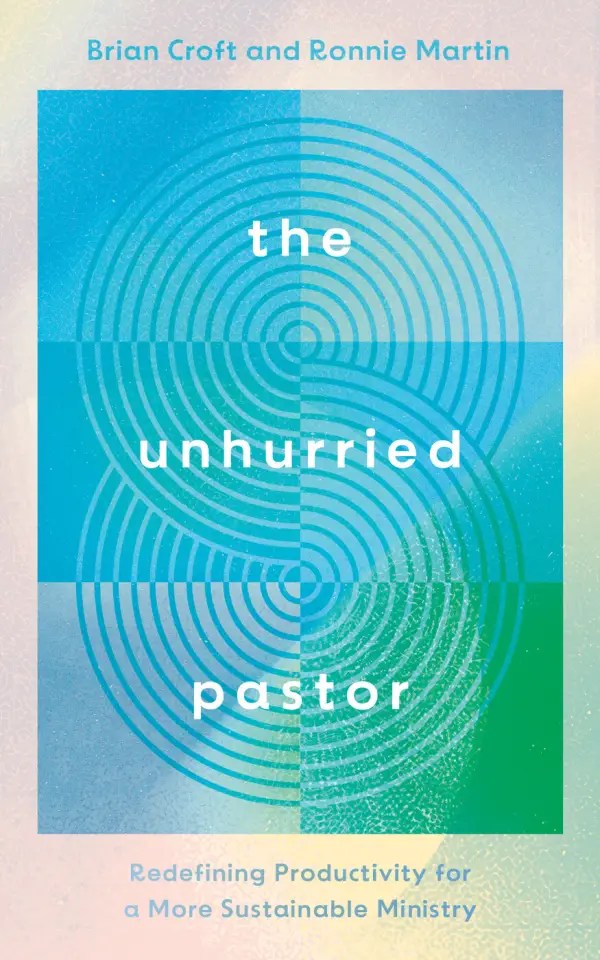
  • Book Review: The Unhurried Pastor by Brian Croft and Ronnie Martin

    Book Review: The Unhurried Pastor by Brian Croft and Ronnie Martin

    The Unhurried Pastor by Brian Croft and Ronnie Martin is an important reminder for anyone in pastoral ministry, especially those feeling the strain of constant demands. The book challenges the modern ministry mindset, which often equates busyness with success, and instead offers a call to slow down, embrace limitations, and find strength in resting in Christ. There’s lots of thoughtful insights and practical wisdom. Croft and Martin help pastors rediscover a more sustainable and spiritually enriching way to lead.

    Embracing Limitations

    One of the foundational ideas in The Unhurried Pastor is the importance of accepting our limitations. Many ministers are driven by the desire to meet everyone’s expectations—whether those of their congregation, community, or even themselves. But this endless striving only leads to burnout and frustration. Croft and Martin remind us, drawing from the words of John Calvin, that “true and sound wisdom consists in two parts: the knowledge of God and of ourselves” (p. 3). This is a important point. When we are deeply aware of both who God is and who we are, we understand that our limitations are not failures—they’re a natural part of being human.

    Embracing limitations doesn’t mean we’re less effective; it means we’re leaning into God’s design. Instead of trying to be everywhere and do everything, we can rest in the truth that God is sovereign. The weight of the world—or the church—is not on our shoulders. When pastors accept their limits, they’re able to give more genuine attention to what truly matters, letting God’s strength work through their weaknesses. I will admit, this is something that can be hard to actually put into practice and I often need to remind myself of this.

    Redefining Productivity

    In a culture that prizes productivity, it’s easy to fall into the trap of measuring ministry success by how much gets done. The more programs, meetings, and events, the better—right? Croft and Martin challenge this assumption by encouraging pastors to redefine productivity in ministry. “True productivity in ministry is about being rather than doing” (p. 14), they write, pointing to the familiar story of Mary and Martha as a guiding example.

    Martha, in her busyness, missed the opportunity to sit at Jesus’ feet, while Mary chose the “better” portion by simply being present with Him. This story resonates with those who find themselves caught in a cycle of activity, running from one task to the next. The reality is that ministry is not about how many meetings are attended or how many tasks are accomplished. Instead, it’s about nurturing a relationship with Christ and leading others to do the same. By spending time in His presence, pastors can lead from a place of spiritual depth, rather than out of a need to prove their worth through endless busyness.

    For many of us, there’s a temptation to prioritise what’s urgent over what’s important. However, Croft and Martin remind us that spiritual productivity isn’t about ticking off tasks; it’s about being deeply rooted in Christ and allowing our ministry to flow from that relationship. This shift requires a rethinking of how we approach our day-to-day and week-to-week responsibilities, but as I’ve recognised, essential for a more sustainable ministry.

    Authentic Vulnerability

    Vulnerability has become a bit of a buzzword in leadership circles (thanks Brene Brown?), with many encouraging pastors to be more open about their struggles. But as Croft and Martin point out, there is a subtle but significant difference between authentic vulnerability and a curated image of vulnerability. The authors caution against the temptation to appear vulnerable without truly being transparent: “There is a difference between presenting oneself as a vulnerable and transparent pastor, rather than a vulnerable and transparent person” (p. 21).

    True vulnerability in ministry goes beyond the occasional mention of a struggle in a sermon or casual conversation. It’s about consistently living with honesty before God and others, even when it feels risky. Authentic vulnerability builds trust, both with God and with the congregation, because it shows a pastor who is fully human—dependent on God’s grace like everyone else. Croft and Martin encourage pastors to be more “psalmist-like,” laying their true selves before God in prayer and letting go of the need to maintain an image of invulnerability. When pastors model this kind of vulnerability, they help create a culture of authenticity within their church communities, where people feel safe to bring their own struggles and burdens to God.

    Rest and Renewal

    For me, perhaps the most important message in The Unhurried Pastor is the call to rest. In a world that glorifies hustle and productivity, the idea of rest can feel like a luxury—or even a weakness. Yet Croft and Martin emphasise that rest is not optional for those in ministry; it’s essential. They draw from the biblical pattern of Sabbath, reminding us that God built rest into the very fabric of creation. “The unhurried pastor knows Jesus is the Chief Shepherd over his church… It is only when a frantic, hurried pastor actually lets go that he truly rests” (p. 128).

    This kind of rest goes beyond simply taking a day off. It’s about a deep trust in God’s sovereignty, a willingness to release control and believe that God can and will sustain the ministry. When pastors neglect rest, they’re often trying to prove their worth by staying busy, or they’re afraid of what will happen if they’re not constantly ‘doing ministry’. But true rest comes when we let go and trust that God is in control. Rest, as Croft and Martin describe, is an act of faith—faith that God is capable of shepherding His people even when we’re not present.

    For pastors, this means regularly stepping away from the demands of ministry to replenish their souls, whether through prayer, time in Scripture, or simply enjoying life outside of pastoral duties. Without this regular rhythm of rest and renewal, burnout is inevitable. But when pastors take time to rest, they return to their work with greater clarity, energy, and a renewed sense of purpose.

    Conclusion

    The Unhurried Pastor is a timely and necessary reminder for those in pastoral ministry to slow down, embrace their humanity, and rest in God’s grace. Croft and Martin offer an alternative to the relentless demands of modern ministry (and life!), reminding us that our value is not in what we accomplish, but in who we are in Christ. By accepting our limitations, prioritising our relationship with God, and leading from a place of rest, we can experience a more sustainable and impactful ministry.

    As Croft and Martin conclude, “Pastors don’t need to be perfect or have it all together. They simply need Jesus” (p. 142). This truth is what sustains ministry—not our own efforts, but God’s grace working through us. For any pastor feeling the weight of their role or the pace of their life, this book offers practical wisdom and encouragement to embrace a slower, more sustainable approach to ministry.

  • 11 Helpful Books on Burnout and Ministry

    Read these. They’ll be helpful for you.

    Sacred Rhythms: Arranging Our Lives for Spiritual Transformation by Ruth Haley Barton

    Barton explores how to create a rhythm of spiritual practices that nourish the soul and bring a sense of peace and balance. The book emphasises the importance of solitude, prayer, and other disciplines to maintain spiritual vitality and avoid burnout.

    Managing Leadership Anxiety: Yours and Theirs by Steve Cuss

    Cuss addresses the common issue of anxiety in leadership, offering strategies to manage personal and organisational anxiety. The book provides practical tools to create a healthier, more effective leadership environment.

    The Unhurried Pastor: Redefining Productivity for a More Sustainable Ministry by Brian Croft and Ronnie Martin

    Croft and Martin challenges the conventional notions of productivity in ministry, advocating for a more sustainable approach. They provide practical guidance for pastors to slow down, prioritise their well-being, and maintain long-term ministry effectiveness.

    Pastoral Perseverance by Brian Croft and James Carroll

    Brian Croft and James Carroll strengthen pastors by pointing them to God’s word for help in facing the unique challenges of pastoral ministry in the modern day so that they will not merely survive, but stay, endure, and even thrive.

    Zeal without Burnout by Christopher Ash

    Ash addresses the risk of burnout in ministry, offering practical advice for maintaining zeal and passion without sacrificing personal health and well-being. The book emphasises the importance of rest, boundaries, and reliance on God.

    Spurgeon’s Sorrows: Realistic Hope for those who Suffer from Depression by Zack Eswine

    Eswine delves into the life and struggles of Charles Spurgeon, offering hope and practical advice for those suffering from depression. The book combines historical insights with pastoral care principles to support those experiencing mental health challenges.

    Emotionally Healthy Spirituality by Peter Scazzero

    Scazzero argues that true spiritual maturity requires emotional health. He provides a framework for integrating emotional and spiritual growth, offering practical steps to address emotional issues and foster a healthier spiritual life.

    Slow Productivity: The Lost Art of Accomplishment Without Burnout by Cal Newport

    Newport discusses how to achieve sustainable productivity without succumbing to burnout. He explores the principles of slow productivity, which prioritise meaningful work and long-term success over immediate results and constant busyness.

    Burnout: A Guide to Identifying Burnout and Pathways to Recovery by Gordon Parker

    Parker provides a comprehensive guide to understanding, identifying, and recovering from burnout. The book offers strategies for self-care, stress management, and developing resilience to prevent future episodes of burnout.

    HBR Guide to Beating Burnout by Harvard Business Review

    This guide compiles insights and strategies from various experts to help professionals recognise the signs of burnout and take proactive steps to address it. The book covers practical approaches to managing stress and improving work-life balance.

    The Ruthless Elimination of Hurry by John Mark Comer

    Comer addresses the problem of busyness, arguing that it hinders spiritual health and well-being. He advocates for a slower, more intentional life through practices like Sabbath, simplicity, and solitude to align more closely with God’s purposes and experience deeper meaning.

  • Blogging In Youth Ministry

    The other week I came across a youth ministry site highlighting their top five youth ministry blogs. As I read through the list I noticed 80% of those mentioned were actually youth ministry sites who provide a blog with a range of contributors. This is slightly different to a personal blog, whereby the individual youth pastor might write their own content on their own site. Unfortunately, I can’t link you to the list because it seems the post was taken down.

    Nevertheless, with four of the five blogs coming from large youth ministry sites I was reminded of this article by Tim Challies earlier in the year. While writing about the current state of Christian blogging he highlighted the demise of personal blogs in favour of edited articles through large ministry organisation websites. It seems the same goes for youth ministry as it does for the wider church.

    Blogging In Youth Ministry

    Over the past few years I’ve noticed more and more personal youth ministry blogs drop in content. Instead, authors become part of a larger ministry platform and provide content for them at the expense of their own blog. Evidently, the youth ministry blogging sector isn’t as large as the general church. However, it is telling that there are few who continue to regularly produce blog posts in youth ministry through their own blog.

    I’ll also be the first to admit that I enjoy writing for the larger ministry sites too. I have had some writing goals in recent years which have included being published on these ministry sites (You can even read what I’ve had published on those sites here). At the same time, I’ve been conscious to continue to write regularly for my own audience; seeking to work at the craft of writing and reflect on ministry to youth and young adults. There is something about putting my own thoughts down in my own space. As I curate my own content I improve my writing and communication, and gain clarity on my own thoughts and thinking.

    There are some great organisations creating some terrific content in written, verbal, and visual form for those of us in youth ministry. The production of high quality curriculum, podcasts, articles, and other resources is worth using and adapting. These are worth contributing to as well. However, there is currently a significant lack of youth pastors and youth ministry practitioners giving their own thoughts and reflections in their own space. As I look through my youth ministry blog feed I see 25 different blogs on the list, five of them are personal blogs actively writing about youth ministry. That’s not many; and it has decreased in the last few years.

    As I’ve thought more about this recently it is worth naming some other observations I believe have made an impact in this area. At the end of the day I’d love to see more youth pastors and practitioners writing about their reflections on youth ministry. This would help all of us as we seek to be better in our roles, and encourage us to keep going. But for what it’s worth, here are a few more thoughts about why there may be a distinct lack of bloggers in the youth ministry space.

    First, it is a niche area of ministry.

    Youth and young adult ministry is niche. There aren’t too many who stay in a role long-term in this area of ministry. If they do they may not feel like they need to share their expertise through a blog.

    Second, youth ministry brings with it young pastors with little experience to share.

    I don’t think this is a reason not to blog. But, I realise that many youth pastors are young themselves and young in terms of experience. This raises the question of what they should share in a blog. However, I often feel the same, even with nearly 20 years experience. There are observations and reflections I find helpful from people of all ages and experiences. Some may be things I’ve heard before, but they are given a new perspective or voice. There are other things I may simply need reminding of. Whatever the case, if you’ve got a writing bone in your body and in youth ministry then come and join the small band of bloggers doing the same.

    Third, there is a higher rate of consumption through visual media than through written media.

    As the years have gone by so has the increase in the use of YouTube and Insta as some of the main ways content is delivered. The written word, and spending time to think and clarify thought through the written word, has been overtaken by other means of distribution. In the age group of our ministry, and even in the age group of fresh youth pastors, videos and podcasts are more and more important. I do wonder whether this has had an impact on youth ministry bloggers.

    Fourth, in the age of platform people seek platform.

    There is the very real temptation to always search out a larger audience. We are in the age of likes, comments, and shares. Those who seek to produce content hope their work will be distributed far and wide. But it seems the search for platform has become normal. So, if we want our message to be read by the most amount of people possible then it makes sense to write for large ministry sites rather than a personal blog viewed a few times per week. It would be of no surprise if the decrease in personal blogging, in youth ministry or throughout the church, is because there is a sinful search for platform.

    I want to encourage those involved in youth ministry to start writing. It may not be a particular desire you have right now but I’d ask to you pick up a pen (or keyboard) and write your reflections about youth ministry as you work in it.

    I started my blogging adventure four years into paid ministry. That was 2009. It’s coming up 10 years since I posted my first blog. Since then I’ve written some terrible stuff. But in recent time I’ve been encouraged to continue to write, and hopefully become more thoughtful, articulate, and clear on my reflections in youth ministry.

    You can do that too. 

    Writing, not only the published pieces on a blog but also those words in a journal and notebook, have all contributed to thoughtful engagement in youth ministry. Some believe youth ministry is a pretty thoughtless exercise – dodgeball and abstinence training as some have said – but they don’t know what they’re talking about. As you continue to do the work, pray, stay, and love others I’m sure you will find plenty to reflect on, much of it worth sharing with the rest of us. I’d encourage you to do just that.

  • 5 Learnings From Being ‘Acting Senior Pastor’

    Earlier in the year my Senior Pastor went on paternity leave for three weeks.

    I was technically ‘Acting Senior Pastor’ during that time. There were extra responsibilities. This is what I learned.

    5 Learnings From Being 'Acting Senior Pastor'

    1. The amount and variety of decisions required to be made is enormous.

    This is the main difference between what my role is normally and what I stepped up to.

    It took me nearly two weeks to realise the main difference in roles was that of decision-making.

    Each day there were new queries, new decisions to make, new things to have conversations about and then make follow up decisions to enable progress. Upon reflection, I realised that the decision-making required is at a new level, a level you just don’t get at the associate pastor level.

    At first I was tempted to put this down to not being used to making these decisions, but after further reflection I don’t think it’s just that. I need to make many decisions in the associate role, some I’ve been used to making for many years. But in the senior role there are a greater variety and range of questions asked of you, leading to a greater variety and range of decisions required.

    2. The regular preaching is a joy and privilege.

    I expected to be weighed down because of the extra preaching load. Rather than preach once a month or so I had to preach five out of six weeks.

    Maybe it was the series we covered, an expositional series on the book of Ruth, but I was enthusiastic and excited about teaching and preaching each week. It was great to prepare for it as a series and to then present the material through the preached Word each week.

    3. The one-on-ones became more reactive than active.

    In reality the extra load did mean there were some things I didn’t do that I normally would’ve. One of those things is actively searching out young adults and others for one-on-one catch-ups during the week. Instead of being active is sourcing these meetups those I did have were usually reactive. That is, people would call and want to meet, or people popped by the church office and sat in with me for a while. Both are important of course, but I do prefer being active rather than reactive.

    4. The phone becomes more important than ever.

    The invention of the phone has got to be the greatest thing in the ministry kit bag. I was on the phone a lot more, particularly through phone calls, than I usually am. Part of this is the greater number of people who want to talk to me, or share something, or who I needed to follow up. But, the phone became a great resource for me to have pastoral conversations and show care to those in the congregation.

    5. The true day off, mentally and physically, is nearly impossible.

    I am usually pretty good at switching off and making sure I’m not available. But, I also find myself thinking about youth ministry a lot because I am passionate about it. I like to reflect, write, and think through it.

    In the senior position I found myself thinking about the church, its people, and the ministry more often than I would normally. People didn’t know when my days off were and so I would get calls on every day of the week. This led me to then take the call or return the call on the same day because of the context I am in. And so, a full day off of nothing was something that became harder to implement, even though my intentions were to do so.

    There’s a lesson in self-care here somewhere.

  • Being Pastor To A Pastor’s Kid

    I’m a Pastor’s kid.

    I’ve also been the Youth Pastor to the Senior Pastor’s kids.

    It’s a weird situation.

    I recently wrote about the Senior Pastor-Youth Pastor relationship. Off the back of this a mate of mine suggested I write more specifically about dealing with a dynamic many Youth Pastors face – You’re the Youth Pastor of the Senior Pastor’s kids.

    img_6075

    On one hand you want to to lead the youth ministry in a way that you believe is appropriate. A way that is contextual to young people while also coming under the vision, mission and values of your church. Under normal circumstances this wouldn’t be a problem.

    But on the other hand, the Senior Pastor, the one you as Youth Pastor report to, has children in the youth ministry. And while they trust you and your leadership; they have an added desire to see their children come to faith under your ministry. This is not to say their children are any more important than another parent’s child, not at all. It just happens to be that your ‘direct manager’ is also a parent.

    It becomes an interesting dance.

    And so, it’s worth thinking through this particular topic from four perspectives.

    First, the Senior Pastor perspective.

    Their desire is for their children to come to know and follow Jesus. The Pastor, with their spouse, has sensed a call to the ministry. They have invested time, money, and energy into the local church. They continue to teach and counsel the members of the congregation. But, their children are special to them. They are their children! They love them, want the best for them, and over the years have been teaching them the ways of the Lord in the family context.

    Like any other parent you deal with as a Youth Pastor the Senior Pastor and their spouse is no different. They have a strong desire in seeing their child come to faith in Jesus, raised well in the context of their local church, included in the church family in a way that is meaningful, and have them grow in faith.

    Second, the local church perspective.

    To the congregation, the children of the Senior Pastor reflect their Pastor. Depending on the context this could be a small thing or it could be quite a big thing. Either way, there is some form of reflection.

    For some reason most churches believe they own the children of the Pastor and consider them one of their own. They have unsaid and unintentional expectations on how the Senior Pastor’s kids are to behave, what they should be doing, what they believe, and how much biblical knowledge they should have. Whether it is during a church service or while they’re at youth group, the church is watching them.

    The church loves these children though. They give them extra servings at church lunches, a gift at Christmas, or something special for their birthday. This doesn’t come to every child in the congregation, some things are specifically for the Pastor’s kid.

    In one’s most skeptical moments there is the thought that this special attention given to the Pastor’s children is solely because their parent is the key leader of the church. Most of the time this is out of love and care and concern. But, at other times this could be a way for certain members to get back at their Pastor, an attempt to bring some form of turmoil to the Pastor’s family or ministry. This is not to say that the small minority causing these issues are prevalent in every church. It’s something to be aware of.

    There are expectations coming from the congregation regarding the Pastor and his family. They are often unsaid. But at the end of the day it will cause grief, not just as a parent, if the Pastor’s kid goes off the rails. It will cause the Pastor to wonder whether they are worthy of the position they are in, and this may even be voiced by some in the congregation.

    Depending on what season of life the child is in will depend on how the church reacts to certain actions, beliefs and behaviours of said child. Considering we’re talking about those youth ministry years you can imagine the things going on here.

    Third, the Youth Pastor perspective.

    The Youth Pastor is in an interesting position. They are seeking to disciple the Senior Pastor’s children. They don’t believe they should be doing anything different for this child despite the parent being their boss. But, this is a fine balance, as they want the best for this kid, like all the others in the youth ministry.

    The Youth Pastor is employed by the church and sits under the Senior Pastor. At times, whether in a Pastoral Team meeting or at a church event, the Senior Pastor will have two hats – that of parent and that of Pastor. To know which is on at which time could lead to confusion and misunderstanding if not careful.

    It is also worth pointing out that the Youth Pastor may be lulled into unhealthy thinking; believing that if the Senior Pastor’s child is doing alright then they might have an ease of pressure from their superior.

    At the end of the day it is worth having some clear guidelines about how to approach this. Some of the following suggestions might be helpful:

    1. Have a conversation with the Senior Pastor about dealing with their children. Just open up the conversation and see what comes of it. Often it is in having the conversation that a greater understanding of the issue can be seen. There needs to be awareness from both the Youth Pastor and Senior Pastor that this topic can be a minefield and lead to conflict.
    2. Suggest that the Senior Pastor isn’t the parent that brings parenting questions to the Youth Pastor. Have a clear guideline that means the spouse of the Senior Pastor raises issues or concerns to the Youth Pastor.
    3. Work out boundaries on how much or how little to share about the Pastor’s kid. Often Youth Pastors will know stuff about the child that the Senior Pastor won’t even know.
    4. Have an advocate from outside the church come and speak to the Senior Pastor on your behalf or with you. This could be a denominational leader or simply another Pastor who you trust will mediate fairly.

    Fourth, the Pastor’s kid perspective.

    It’s not often we end up thinking how things might look from the Pastor’s kid perspective. As a Youth Pastor we obviously want to be aware of their needs, and the challenges they are facing in any particular season. But, who really thinks about the perspective of the Pastor’s kid? Here’s a little of what they’re thinking while they traverse church life as they go through their teen years.

    • They are aware that everyone in the church is looking at them; their beliefs, attitudes, and behaviours.
    • They are aware that their parent is the key leader of the church and that his leadership is something God has ordained.
    • They are aware that they didn’t ask for this role of Pastor’s kid. They had no say in it, it just is.
    • They are aware that their coming to faith or turning from the faith has an impact on their family. Anything from parental disappointment to job loss.
    • They are aware that the Youth Pastor doesn’t want to show them any more special treatment than they do to others. This means it might actually be harder for them to integrate or feel comfortable in the community.
    • They are aware that the Youth Pastor is under the leadership of their parent and so can play this off if they were inclined to do so.
    • They are aware that what they say about the Youth Pastor at home might have an impact on the Youth Pastor’s relationship with their parents.
    • They are aware that they are expected to be at youth events and enjoy the youth ministry that their church has.

    This can be a thorny issue for Youth Pastor’s. It is worth thinking about, at least at some level.

    A terrific resource about Pastor’s kids is Barnabas Piper’s book ‘The Pastor’s Kid’. It would be useful for all Pastors and church members to read. If you’re a Youth Pastor and you haven’t thought too much about the Pastor’s kid then I’d encourage you to read this. I have written a review of the book here.