Tag: Rest

  • Pull Up A Pew

    Pull Up A Pew

    I’ve been toying around with poetry lately, both as a fun little exercise and something to learn and improve my writing.

    I wrote the following after reflecting on Matthew 14:23, where Jesus, even after all the ministry and miracles, withdraws alone to pray. I suspect many of us live in the tension of hurry and stillness, this is a kind of prayer from that place. An invitation to slow down and respond out of the rest in his presence.

    Pull Up A Pew

    Driven, my heart beats fast and faster
    Hurried, from one to the next
    The urgent crowds out my time and place
    To sit, be still, and seek your face. 

    The mind, it races on and on
    Thinking, what I ought to do
    So much, so many, so few pursue
    But here you call, pull up a pew.

    You stopped and went with task after task
    Up the mountain, where in the Father you bask
    Teach me your ways, for I forget
    Instead I find I just project.

    I want to stop and pray my Lord
    To find the rest you promise so
    To leave the work in your hands
    As you lead me to the silent lands.

    After dismissing the crowds, he went up on the mountain by himself to pray. Well into the night, he was there alone. – Matthew 14:23

  • Rest in the Rock – A Rest That Transforms

    Rest in the Rock – A Rest That Transforms

    In Part 1 of this series, we explored the idea of finding true rest in God alone. In Part 2, we looked at what it means to trust in God amid the pressures of life. Now, in this concluding post, we turn our attention to how resting in the Rock transforms us—not just offering relief but reshaping how we live, think, and step through the world.

    Psalm 62 doesn’t simply speak of rest as a static concept, like sitting on the couch after a long day. Instead, it invites us into a dynamic relationship with God—a rest that reshapes our priorities, grows resilience, and reframes how we engage with the world.

    A Rest That Reshapes Priorities

    It is written in Psalm 62:11-12:

    One thing God has spoken, two things I have heard:
    ‘Power belongs to you, God, and with you, Lord, is unfailing love’;
    and, ‘You reward everyone according to what they have done.’

    Here we see a contrast: God is mighty and loving. His strength speaks to his stability, while his love invites us into relationship. When we rest in God we see life differently. Our priorities shift. Power, wealth, and status lose its allure because we understand that only God will satisfy.  

    There has been told the story of a man who worked hard to climb the corporate ladder. He had everything—position, wealth, influence, power—but at the peak of his career, he found himself empty. One day, during an unplanned visit to a small country church, he heard the words of Matthew 16:26, “What good will it be for someone to gain the whole world, yet forfeit their soul?” 

    In that moment his heart was convicted. The words stopped him in his tracks. He realised those things he’d been striving for were fragile and fleeting. Change didn’t come overnight, but slowly he had a shift in focus. He spent more time with his family, he had a new depth of relationship with God. He began to serve others rather than himself. His soul found rest, not in what he achieved but in whom he trusted. 

    A Rest That Grows Resilience

    Rest in God isn’t passive; it is active and brings with it a sense of hope. In Jeremiah 17:7-8 we are given a picture of a tree planted by a stream. It says, 

    But blessed is the one who trusts in the Lord, whose confidence is in him. They will be like a tree planted by the water that sends out its roots by the stream. It does not fear when heat comes; its leaves are always green.

    The pressures of life, like uncertainty, grief, and stress, don’t suddenly disappear when we rest in God. Like that tree, however, we are given life and hope and nourishment that comes from a deep well. We are given greater resilience and allows us to face these challenges without breaking, snapping, or losing all hope.  

    When we rest in God we find that our we are refined like gold with fire. Instead of being unable to hope and unable to cope we are given deep resources by grace. His grace. For us. A grace that comes from resting in the Rock. 

    A Rest That Reframes Our Life

    So resting in this Rock doesn’t mean we will abandon all responsibilities and become monks or nuns. Instead, we approach these responsibilities of life with a different frame of mind. In Matthew 11:28-30, Jesus invites us to take his yoke upon us. Now, a yoke is a tool, not a device to help us lounge around, and it is to be used in partnership with another. When Jesus speaks of his yoke being easy and his burden light it is because he is the partner who carries the weight. Much of our baggage is not ours to carry, and so Jesus is there with us taking it upon himself. Just like he took our sins and burdens upon himself at the cross, so too he carries our daily worries and anxieties to help us rest. When we rest in Jesus, our life becomes less about proving ourselves and more about walking in step with him.

    As someone who enjoys ticking things off the to-do list, it’s easy to fall into the trap of measuring my worth by what I’ve done. When I take time to rest in God though, well, my life and perspective is different. I recognise it is by his grace, and I can say ‘no’ to certain things, and ‘yes’ to other things that seem to me to be right priorities. 

    Resting in God is not an escape from life but a way of being that transforms everything we do. It reshapes our priorities, grows our resilience, and reframes our lives. It’s not about doing less but about trusting more. And in that trust, we find a rest that satisfies our souls and empowers our lives.

  • Rest in the Rock – Trusting God in the Pressure Cooker of Life

    Rest in the Rock – Trusting God in the Pressure Cooker of Life

    We live in a world that celebrates busyness and productivity, yet many of us feel burned out and empty. Sometimes we feel like we’re barely holding it together. All these demands on our time and on our life stack up, and no matter how hard you try to push through, telling yourself it’ll be easier once this season of busyness is over, the pressure doesn’t ease. 

    In working through Psalm 62 we don’t find a quick fix or productivity hacks, but we find something deeper, something that speaks into this reality: rest in the refuge of God. 

    In my last post we explored the idea of finding our true rest in God alone, using the phrase ‘Rest in the Rock’ as somewhat of a reminder of this. Flowing on from this we find Psalm 62 helpful as we navigate the pressure cooker of life, reminding us that trusting in God as our refuge provides rest for us. 

    The Pressure Cooker

    Over Summer, here in Melbourne, we’ve already had plenty of days that have hit 30 degrees or more. Days where the heat is sapping our energy, where if we’re out in the heat of the day for too long we are drained more than usual and only find relief in our iced drinks air conditioned living rooms. It sometimes surprises us that a heatwave, even a couple of days in a row, can bring on a sense of weariness. 

    The psalmist David captures this kind of weariness in Psalm 62 when he writes, 

    Surely the lowborn are but a breath, the highborn are but a lie. If weighed on a balance, they are nothing; together they are only a breath. (Psalm 62:9)

    If we’re honest this verse can be a bit of a downer. It gives a picture of the fleeting life. No matter our position or status, no matter the things we chase after like wealth, recognition, and achievement, it’ll all be gone. It’s the same for all.  

    When we are faced with a heatwave we go searching for shade or a cool room. When we are inside with the blinds drawn, or under the air conditioner, or even in the pool, the sun is still there. The heat is still there. What those things do is shield us and offer us relief. This is what it means to take refuge in God. It doesn’t mean the pressure of life will vanish, but he gives our soul a place to breathe, to rest, to cool down again. 

    The False Refuge

    But, when the pressures of life stack up, one upon another, we don’t always run to God first. Often we turn to those temporary comforts. 

    These days it’s most likely going to be scrolling through social media or playing around on our phones. But it could go the other way, being focussed so much on work or picking up a project that stops us from being involved in others responsibilities in life. These ‘refuges’ dull that heatwave of pressure but leave us just as empty as before. 

    In v10 the psalmist warns about these false refuges when he writes, 

    Do not trust in extortion or put vain hope in stolen goods; though your riches increase, do not set your heart on them. (Psalm 62:10)

    I doubt most of us are engaging in extortion or stealing or fraud, but the bigger point is about what we put our trust in. Whether it is money, status, performance, or distraction, these things are not given to us to sustain us. In fact, they are as fleeting as our own lives. Our search for rest and fulfilment in these things soon become as exhausting as the other pressures of life.

    God Our Refuge

    Instead, Psalm 62 offers up a better way.

    Trust in him at all times, you people; pour out your hearts to him, for God is our refuge. (Psalm 62:8)

    We have here an invitation into an honest relationship with God. 

    It’s funny how we often put aside our raw and honest selves, hiding those things deep within our hearts to God. He knows them anyway, but something about the sin and brokenness of our soul makes us shield ourselves from the guilt and shame we know sits there. We’d like to present polished versions of ourselves to God, but instead we’re like Adam and Eve just after they’ve eaten from the forbidden tree, hiding our true selves from the God who loves us so. 

    God, after all, is the only refuge in life that we can come to in total abandon. He is the one who will hear us, have compassion and kindness toward us, when we ‘pour out our hearts’ to him. Like a dam that must release the overflow, our hearts full of the pressures of life are invited to release and freedom when we acknowledge our trust in him. 

    Rest In Jesus

    This theme of refuge finds its fulfilment in Jesus. In Matthew 11:28-30, Jesus gives this powerful invitation:

    Come to me, all you who are weary and burdened, and I will give you rest. Take my yoke upon you and learn from me, for I am gentle and humble in heart, and you will find rest for your souls.

    This is the kind of rest we need—not just relief from our circumstances but a deep, soul-level peace that comes from knowing we are held by him who loves us.

    Jesus doesn’t promise to remove life’s pressures, but he does offer to walk with us through them. When we trust him as our refuge, we find freedom from striving to prove our worth or control everything ourselves.

    Psalm 62 reminds us that our true refuge is in God. He is the shade in the heat, and the rest our souls long for.

  • Rest in the Rock – Rediscovering True Rest

    Rest in the Rock – Rediscovering True Rest

    Rest.

    It’s most likely different for all of us. For some, it is sinking into the couch at the end of a long day; for others, it’s going to a favourite cafe for a quiet coffee, or perhaps it’s just a moment to catch your breath in between all those tasks to do.

    If we’re honest, many of us aren’t great at resting. Even when we try, our minds race with unfinished tasks, or we find ourselves turning to distractions that promise rest but leave us feeling just as drained.

    Challenging Our Restlessness

    After a recent pastoral retreat with our team, Psalm 62 has become a bit of a motto for me this year. It’s a psalm about rest—not the kind you get from a good night’s sleep, but the deep, soul-level rest that comes from trusting in God. It challenges us to rethink what rest really means and to ask some deeper questions, like:

    • What is driving me to avoid rest?
    • Why do I keep going and going without stopping?

    Psalm 62 doesn’t offer tips or techniques for resting better. Instead, it points us to the source of true rest—God Himself. The refrain that keeps going around my head is ‘Rest in the Rock’, which, as you’ll see, is a key theme that comes through this psalm.

    Rest in the Rock

    Psalm 62 begins with a declaration:

    Truly my soul finds rest in God; my salvation comes from him.  Truly he is my rock and my salvation; he is my fortress, I will never be shaken. (Psalm 62:1-2)

    These verses set the tone for the whole psalm. Rest isn’t about doing nothing or escaping life’s pressures. It’s about where we place our trust. The psalmist is clear: true rest is only found in God.

    The image of God as a rock, a fortress, and a refuge runs throughout Scripture. It’s a picture of stability, strength, and security. I think of birds nesting in the crevices of a cliff face during a storm, safe from the wind and rain. Or rabbits darting into their burrows when danger is near. These animals instinctively know where to go for refuge. But for us, it’s not always so simple.

    When life gets overwhelming, or gets busy, we often look for comfort in all the wrong places. This can be zoning out in front of the TV, scrolling endlessly on our phones, or chasing achievements to prove our worth. These things might give us a momentary escape, but they don’t provide the deep rest our souls need.

    Psalm 62 calls us to a different kind of refuge:

    Trust in him at all times, you people; pour out your hearts to him, for God is our refuge. (Psalm 62:8)

    True rest comes from trusting God with the pressures of life. It means pouring out our hearts to Him—our worries, fears, and frustrations—and finding in Him the security and peace we’re looking for.

    But why is this so hard? Why do we resist the very rest we know we need?

    The psalmist speaks about the pressures of life and the distractions of the world in a few ways:

    • The pursuit of power and status (v9).
    • The lure of wealth and possessions (v10).
    • The fear of what others think or say about us (v3-4).

    These things promise satisfaction but leave us restless. As Augustine famously wrote:

    “You have made us for yourself, O Lord, and our hearts are restless until they rest in You.”

    Where Do You Find Your Rest?

    Where are you seeking rest outside of God? What is driving your busyness or your need to keep going?

    I’ve been exploring this more honestly with myself over the last 12–18 months. There have been seasons, and no doubt there will be more, where I have sought refuge in productivity, trying to prove my worth by how much I could accomplish. As I continue to be honest with myself, I am constantly tempted to put my trust in my own efficiency. But Psalm 62 reminds me that my salvation, my identity, and my rest depend on God, not on anything I do.

    Perhaps this is just a word for myself as I step into this year. Perhaps it is also a word for you, as you try and deal with the overwhelm.

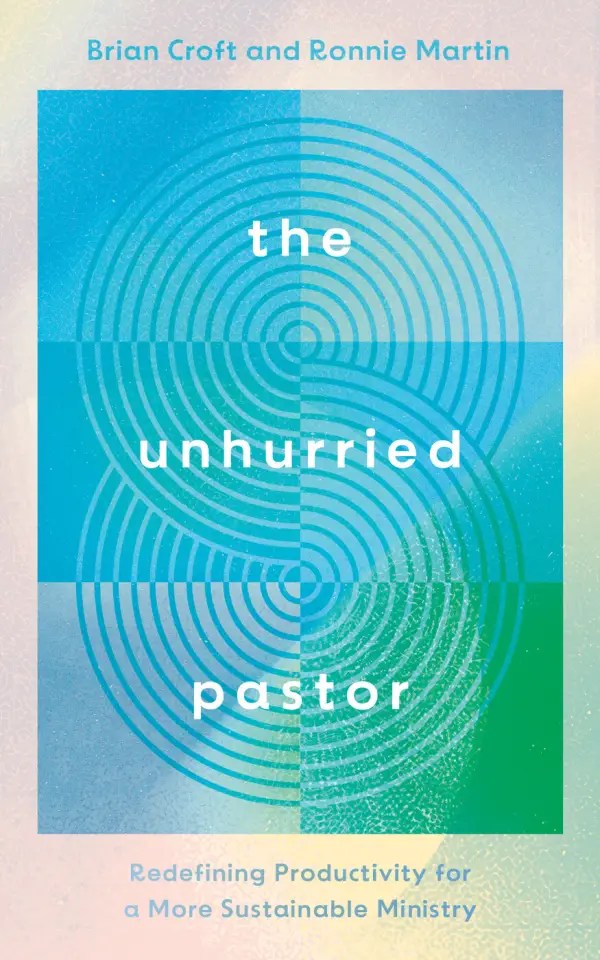
  • Book Review: The Unhurried Pastor by Brian Croft and Ronnie Martin

    Book Review: The Unhurried Pastor by Brian Croft and Ronnie Martin

    The Unhurried Pastor by Brian Croft and Ronnie Martin is an important reminder for anyone in pastoral ministry, especially those feeling the strain of constant demands. The book challenges the modern ministry mindset, which often equates busyness with success, and instead offers a call to slow down, embrace limitations, and find strength in resting in Christ. There’s lots of thoughtful insights and practical wisdom. Croft and Martin help pastors rediscover a more sustainable and spiritually enriching way to lead.

    Embracing Limitations

    One of the foundational ideas in The Unhurried Pastor is the importance of accepting our limitations. Many ministers are driven by the desire to meet everyone’s expectations—whether those of their congregation, community, or even themselves. But this endless striving only leads to burnout and frustration. Croft and Martin remind us, drawing from the words of John Calvin, that “true and sound wisdom consists in two parts: the knowledge of God and of ourselves” (p. 3). This is a important point. When we are deeply aware of both who God is and who we are, we understand that our limitations are not failures—they’re a natural part of being human.

    Embracing limitations doesn’t mean we’re less effective; it means we’re leaning into God’s design. Instead of trying to be everywhere and do everything, we can rest in the truth that God is sovereign. The weight of the world—or the church—is not on our shoulders. When pastors accept their limits, they’re able to give more genuine attention to what truly matters, letting God’s strength work through their weaknesses. I will admit, this is something that can be hard to actually put into practice and I often need to remind myself of this.

    Redefining Productivity

    In a culture that prizes productivity, it’s easy to fall into the trap of measuring ministry success by how much gets done. The more programs, meetings, and events, the better—right? Croft and Martin challenge this assumption by encouraging pastors to redefine productivity in ministry. “True productivity in ministry is about being rather than doing” (p. 14), they write, pointing to the familiar story of Mary and Martha as a guiding example.

    Martha, in her busyness, missed the opportunity to sit at Jesus’ feet, while Mary chose the “better” portion by simply being present with Him. This story resonates with those who find themselves caught in a cycle of activity, running from one task to the next. The reality is that ministry is not about how many meetings are attended or how many tasks are accomplished. Instead, it’s about nurturing a relationship with Christ and leading others to do the same. By spending time in His presence, pastors can lead from a place of spiritual depth, rather than out of a need to prove their worth through endless busyness.

    For many of us, there’s a temptation to prioritise what’s urgent over what’s important. However, Croft and Martin remind us that spiritual productivity isn’t about ticking off tasks; it’s about being deeply rooted in Christ and allowing our ministry to flow from that relationship. This shift requires a rethinking of how we approach our day-to-day and week-to-week responsibilities, but as I’ve recognised, essential for a more sustainable ministry.

    Authentic Vulnerability

    Vulnerability has become a bit of a buzzword in leadership circles (thanks Brene Brown?), with many encouraging pastors to be more open about their struggles. But as Croft and Martin point out, there is a subtle but significant difference between authentic vulnerability and a curated image of vulnerability. The authors caution against the temptation to appear vulnerable without truly being transparent: “There is a difference between presenting oneself as a vulnerable and transparent pastor, rather than a vulnerable and transparent person” (p. 21).

    True vulnerability in ministry goes beyond the occasional mention of a struggle in a sermon or casual conversation. It’s about consistently living with honesty before God and others, even when it feels risky. Authentic vulnerability builds trust, both with God and with the congregation, because it shows a pastor who is fully human—dependent on God’s grace like everyone else. Croft and Martin encourage pastors to be more “psalmist-like,” laying their true selves before God in prayer and letting go of the need to maintain an image of invulnerability. When pastors model this kind of vulnerability, they help create a culture of authenticity within their church communities, where people feel safe to bring their own struggles and burdens to God.

    Rest and Renewal

    For me, perhaps the most important message in The Unhurried Pastor is the call to rest. In a world that glorifies hustle and productivity, the idea of rest can feel like a luxury—or even a weakness. Yet Croft and Martin emphasise that rest is not optional for those in ministry; it’s essential. They draw from the biblical pattern of Sabbath, reminding us that God built rest into the very fabric of creation. “The unhurried pastor knows Jesus is the Chief Shepherd over his church… It is only when a frantic, hurried pastor actually lets go that he truly rests” (p. 128).

    This kind of rest goes beyond simply taking a day off. It’s about a deep trust in God’s sovereignty, a willingness to release control and believe that God can and will sustain the ministry. When pastors neglect rest, they’re often trying to prove their worth by staying busy, or they’re afraid of what will happen if they’re not constantly ‘doing ministry’. But true rest comes when we let go and trust that God is in control. Rest, as Croft and Martin describe, is an act of faith—faith that God is capable of shepherding His people even when we’re not present.

    For pastors, this means regularly stepping away from the demands of ministry to replenish their souls, whether through prayer, time in Scripture, or simply enjoying life outside of pastoral duties. Without this regular rhythm of rest and renewal, burnout is inevitable. But when pastors take time to rest, they return to their work with greater clarity, energy, and a renewed sense of purpose.

    Conclusion

    The Unhurried Pastor is a timely and necessary reminder for those in pastoral ministry to slow down, embrace their humanity, and rest in God’s grace. Croft and Martin offer an alternative to the relentless demands of modern ministry (and life!), reminding us that our value is not in what we accomplish, but in who we are in Christ. By accepting our limitations, prioritising our relationship with God, and leading from a place of rest, we can experience a more sustainable and impactful ministry.

    As Croft and Martin conclude, “Pastors don’t need to be perfect or have it all together. They simply need Jesus” (p. 142). This truth is what sustains ministry—not our own efforts, but God’s grace working through us. For any pastor feeling the weight of their role or the pace of their life, this book offers practical wisdom and encouragement to embrace a slower, more sustainable approach to ministry.

  • Published: Redeeming Love For Run-Down Parents

    I have tried my hand at writing a post for parents. Thankfully it was published on the Rooted Ministry Parents blog this week.

    In the post itself I focus on how the Book of Ruth helps remind us parents that we are not the saviours of our children. It is not us parents who redeem them, it is the Lord. We can rest in the knowledge that God is working in our lives, in our parenting, and in our children. We can rest in his faithfulness, his sovereignty, and his redemption.

    “Thankfully, the story of Ruth reminds us that in among all the tasks, night terrors, and tiredness, it is God who faithfully rescues our minds and hearts. Behind the daily grind of parenting there sits a God who seeks our hearts and the hearts of our children. He has his providential hand upon us, calling us into his care and comfort, and rescuing us from our own ineptitudes, sinfulness, and character flaws.”

    You can read the whole thing here.

    If you would like to read other articles I’ve had published elsewhere you can find them here.

  • Luther’s Evening Prayer

    I came across Martin Luther’s evening prayer this week, written in his Small Catechism (circa 1529). I found it a prayer that encourages rest and solid sleep, recognising God’s hand, oversight, and care for his creatures.

    “I thank You, my heavenly Father, through Jesus Christ, Your dear Son, that You have graciously kept me this day; and I pray You to forgive me all my sins where I have done wrong, and graciously keep me this night. For into Your hands I commend myself, my body and soul, and all things. Let Your holy angel be with me, that the wicked foe may have no power over me. Amen.”

    Sleep well.