Author: Jon

  • Beginning As A Youth Pastor: 11 Things I Wished I Knew

    I was asked to speak at a gathering with other Youth and Young Adult Pastors a few months ago. This was in a session on ‘Winning In The First 3 Years of Ministry’. I shared 10 points from the perspective of what I wish I had known going in to youth and young adult ministry. Here are those 10 points, plus an extra.

    beginning-as-a-youth-pastor-11-things-i-wished-i-knew

    1. I wish I knew that an active and exciting relationship with Jesus would be so hard to foster.
    It’s easy to look at the Youth Pastor when we’re in youth group, or volunteering as a leader, and think they’re really spiritual and full-on for Jesus. If they are then that’s great, but in my experience it is really hard to find a rhythm in order to foster an active and growing relationship with Jesus. Sure, I’ve grown and have made Jesus the centre of my being since I was in high school, but being surrounded by teaching materials, going through Bible College, leading Bible studies, and preaching regularly, aren’t a substitute for personal spiritual disciplines. Make sure you carve out time for Scripture, prayer, reading, music, reflection and solitude.

    2. I wish I knew that my relationship with my Senior Pastor was the most important in the church.
    I feel like I’ve had great relationships with my Senior Pastors but I’m surprised at how crucial they’ve been for the week-by-week, month-by-month, year-by-year ministry. They are the closest relationship I have in the church because of my proximity to them and the regularity in which I see them. It is the relationship that keeps me energised and willing to stick around for the long haul. When Youth Pastors leave it is most likely because their relationship with the Senior Pastor has broken down. I’ve seen it, over and over again. I don’t want it to be me.

    3. I wish I knew that the health of the youth ministry is only as healthy as the church.
    Youth and young adult ministry is not happening within a vacuum, it is set in the context of the wider church. When you are sick the whole body is sick, not simply one particular part. So it is with youth and young adult ministry. In my first year as a paid Youth Pastor there was significant disharmony in my church that saw a number of significant and influential people leave. This had a trickle down effect. The evening service went from averaging 60-70 people each week to 20-30. The loss of young adults, the loss of youth leaders, the loss of high school students. It just went bang. This highlights the importance of making sure we are aware of what is going on in the wider church. Getting to know people across all ages and stages is important. An understanding of the history of the church is also critical when thinking through the church’s health.

    4. I wish I knew that there would be friends for the road and friends for the journey.
    Some friends stick around. They stick with you through thick and thin, when you move church, and are generally lifelong friends. These are friends for the road of life. Other people will simply be friends for the journey. They’ll be with you for the time you’re at their church or in their life. But, when you move they won’t continue to catch up with you or check in with you. It’s taken time for me to realise this, more so in the last 12 months. Friends and colleagues that I thought would continue to have an interest in my life, as I do theirs, don’t. It’s important to gather around you 3-4 friends who’ll be with you for the road, ministry or not.

    5. I wish I knew that the grass was not greener in another church, in another ministry role, or in another para-church organisation.
    It’s easy to let your mind drift to the church down the road and begin to think of how good it must be there. It’s not. It’s just not. They are having the same issues as you. They are having the same struggles. They are having the same problems. The same goes with going into a different ministry role or a role at a para-church organisation. The grass isn’t greener. It’s work. It’s hard.

    6. I wish I knew that what I have done in the past doesn’t really mean much to others.
    I’m proud of what I’ve done in my life. There are of course some stupid things I’ve done, but generally, I’m pretty proud of some of the things I’ve achieved in life – relationships, study, work, ministry. Guess what? No one cares. Except perhaps for that job interview or the search committee coming up. Other than that, no one cares. I mean, most people have a decent sized ego and so we’d like to think that our achievements matter. X number of years at this church, volunteer years put in at that other church, the secular work we’ve done in the past, the degrees we’ve studied for, the service opportunities we’ve been involved in, et cetera. et cetera. You know, it all builds us up to think that we’ve got some awesome job experience to be an awesome pastor, even before we walk into the role. Nup. That parent of the 14-year-old kid who is annoying each Friday night doesn’t care, they just want to know if you can look after their kid for a couple of hours while they go on a date with their spouse. That deacon doesn’t really care either, they just want to let you know that you can’t park your car at the front of the church because that’s reserved for more significant members of your church.

    O how humbling ministry is.

    7. I wish I knew that the sin that so easily entangles will entangle you with more force in ministry.
    Yep, those things we fear, those habits we slipped into years ago, those things we listen to and watch, those temptations to click. These things will continue. The devil will attempt to strike, and strike with more and more force. I figured it would be easier to let go of those things because of the important and significant work I would be doing in the life of the church. How little did I know! You’ve had a porn habit, watch the devil seek to strike you there. You’re overly insecure, watch the devil play with you. You’re too conscious of your appearance or what people think of you, bang. You’re seeking intimacy and relationships, boom. Sin doesn’t stop. It carries on. And it’s usually coming at you with a force you’ve never seen before.

    8. I wish I knew the extent of which church politics would take up headspace and suck my emotional energy. 
    There is a lot to be said about getting to know your wider church and being involved in the high level discussions and conversations at your church. Yet, it is also the place where church politics is most clearly seen and can just suck you dry if you let it. This is closely connected to point 3 about church health, but it is surprising at how deeply it can affect us. Some, and perhaps all of it, may not be about the ministries we are involved in. It might be to do with the budget, or with the way the flowers are arranged on Sunday mornings, or how the coffee and tea is served at morning tea. It might have nothing to do with your ministry at all, yet something small and insignificant can get us down and consume the rest of the day if we let it.

    9. I wish I knew that people don’t need me to tell them what to do, they need the grace of God applied.
    I remember the first few months of going to church after I’d finished up on staff at a previous church. I took the opportunity to visit various churches and also went back to our home church. What I distinctly remember was that every time I walked out I felt like I had more burdens than when I arrived. I felt like I’d been given a good sermon and good teaching, but when it came to application I’d be lumped with more and more things to do. My week was already busy. I’m house-hunting, I’m waiting for a newborn to arrive, I’m feeling overwhelmed with my own sense of sinfulness, I’m trying to study hard, I’m looking for a new job. I don’t need application that leaves me feeling like I’ve got to do more in order to get my life back on track. No. What I need is grace. I need the grace of God shown to me. I need the grace of God to make me realise that he is the one my burdens are to go to. All those significant things in life will be before him, given to him, and dealt with by him. I would encourage you to give people grace – kid, parent, young adult, oldie, pastor, ministry volunteer, anyone. When you’re teaching, give them grace. Apply grace.

    10. I wish I knew how to work better.
    I had been in the health and fitness industry for a couple of years before I moved into ministry. A few more years and I took up my first position in a church. I am an organised and systematic person naturally, but it still took me a number of years to work out a decent workflow system. Things like getting your emails down to zero, planning your calendar, working out how long things would take, making to-do-lists, dealing with budgets, how to think through a project like a camp or one-off event. The non-people work side of stuff. What is that? Administration. For this I’d recommend Tim Challies’ “Do More Better“, which only came out a little while ago. It covers what you’d need. And I’m sure you’ll be surprised at how much administration you find yourself doing.

    ***While I shared the above there was a glaring omission from the list, one which every Youth Pastor needs to know.***

    11. I wish I knew it was such a privilege
    Not until I left my first church did I realise how much of a privilege it is to be such an influence in the lives of young people and students. The trust, affection, openness, and vulnerability people have toward you is simply amazing at times. The position you have and the places you find yourself in as you disciple young people is phenomenal. While it can be long, frustrating, and messy work there is the privilege of guiding people in life decisions, applying the Gospel to people’s lives, and celebrating their growth as people and disciples.

    What a wonderful work it is. 

  • What Building Sandcastles Teaches You About Youth Ministry

    On holidays our family has been hitting up the beach. With the beach comes sand. And while I know a number of people who aren’t big fans of such creation there are awesome sandcastles to be made with it. Yesterday was our opportunity to achieve such heights of awesomeness. 

    Our daughter was sick of the beach after only 30 minutes. Considering the effort it took to get there we weren’t leaving anytime soon. So to help entertain her we began making sandcastles together. The conditions were perfect with the right balance of dry and wet sand. And after picking our spot we created a fairly sizeable sandcastle city with roads, tunnels, bridges, hills, castles and village houses.


    Post-sandcastle fun I’ve thought about how this activity can teach those of us in youth ministry a thing or two. So, here are five ways building sandcastles can teach you (and me) about youth ministry. 

    (1) You need a team

    This was a great activity for my daughter and I to do together. The wife also joined in at times, while our young son looked on. But the experience of building this sandcastle city was made better by doing it together. I could’ve made the thing on my own but this wouldn’t have been as fun, nor would there have been as many ideas about what to build, and the shared experience of doing this together would be non-existent. 

    Youth ministry is the same. 

    Doing it by yourself can work but it won’t be nearly as good. Youth ministry is great fun together as a team, the ideas coming from each unique person involved is essential in growing faith and community. Furthermore, the shared experience of being on a youth ministry team, serving one another and the church, is something you hold dear for years and years. 

    (2) You get dirty 

    It’s sand. Sand gets in places you’d never think it could get to. It isn’t the most pleasant flooring to kneel on. It gets in your eyes with every gust of wind. And in my case, it cakes on to my thick matte of leg hair. Building sandcastles means you need to be all in and be ready to get dirty. 

    Youth ministry is the same. 

    The obvious link here is to refer to the classic youth group night of “messy games”. Of course, you’re going to get messy when playing games involving eggs, tomato sauce, and cooked spaghetti. Messy games are part of any good youth ministry repertoire. 

    At a deeper level, getting dirty refers to being involved in the lives of young people and their families. It is physically and emotionally taxing to be helping people with their mental health, sexuality, drugs, alcohol, relationships, family crisis, death, school stress, and other growing pains. It’s a dirty work in this sense. 

    (3) You need patience

    Building something from scratch, even something as small as a two square metre sandcastle, can take time. 

    Youth ministry is the same. 

    People take time to grow in life and faith. Being in a ministry that deals with young people who are 11-18 years-old means patience is required. You’re not going to see results in six months. It takes years for the seeds of youth ministry to sprout fruit. 

    It’s been said to me by a number of long-term Youth Pastors that they felt most effective after six years. Six years! It is quite rare in the Australian context to find a Youth Pastor who sticks around for more than three years in one church, let alone six. More Youth Pastors need to stay, and recognise that patience in the ministry is required. 

    This isn’t all about young Youth Pastors though. Long-term youth ministry volunteers are needed too. It’s the volunteers who more often than not have greater influence long-term than any fly-by-the-night Youth Pastor. 

    (4) You make mistakes

    At one point in our sandcastle building my daughter and I were digging tunnels under roads and castles. In a couple of areas we hadn’t evaluated the wetness of the sand and soon found the tunnels collapsing, the whole thing folding in on itself. When we tried to make a river flow, in order to create a moat, a group of village houses were taken away in a flood. We made a few mistakes as we build this little sand city. 

    Youth ministry is the same. 

    Mistakes are bound to be made when you serve in youth ministry. In fact, if you don’t make mistakes you’re probably not trying hard enough.

    But mistakes can happen at a variety of levels. Not having enough balls for a game of dodgeball is one thing, writing an angry late night email to a parent is another. Hiring an expensive bus and not having enough kids to cover the costs is one thing, undermining your senior pastor in front of others is another. Not turning up on time to meet one of the young adults is one thing, choosing a person who hasn’t got the character to join the leadership team is another. 

    The level and variety of mistakes vary in youth ministry. Some will be of little impact. Others, however, could derail an event, program or the whole ministry.

    (5) You will find delight

    There was little more satisfying than spending time with my daughter building sandcastles yesterday. It was a delight to play with her and talk with her about what we were doing. We searched for pieces of driftwood to build bridges, and joined hands in tunnels we made. It was a delightful experience. 

    Youth ministry is the same. 

    While youth ministry may have a number of challenges there is a certain delight that comes with it.

    First, seeing young people grow in faith, connecting in with a community of people who accept them, and serving others together as a group, all these bring personal delight. Looking back after a number of years and seeing how young men and women have grown always blows my mind. Being able to help them and their families as they struggle with whatever life might bring is a privilege. There is a personal satisfaction and delight in being involved in such a work. 

    Second, ultimately it is not youth ministry that needs delighting in. 

    It is Jesus. 

    It isn’t the ministry that’s important for young people, it’s the person who they follow. This person isn’t the Youth Pastor, or is it the Youth Leader, or the mentor, or the parent, or the friend. 

    The person is Jesus. 

    If young people find their delight in Christ then the inward delight will come to anyone involved in youth ministry. But may it be that they delight in their Creator as He delights in them. 

  • Spurgeon On Writing

    I came across this this quote from Charles H. Spurgeon while traversing the interwebs this morning. What a great comment about writing and preaching.

    “Long visits, long stories, long essays, long exhortations, and long prayers, seldom profit those who have to do with them. Life is short. Time is short.…Moments are precious. Learn to condense, abridge, and intensify…In making a statement, lop off branches; stick to the main facts in your case. If you pray, ask for what you believe you will receive, and get through; if you speak, tell your message and hold your peace; if you write, boil down two sentences into one, and three words into two. Always when practicable avoid lengthiness — learn to be short.”

    – CH Spurgeon (Sword & Trowel, September 1871)

  • My Blogging Year – A Retrospective

    How do you summarise a year?

    I suppose you could use a one-word expletive, which I notice a number of my Facebook friends have used to describe 2016. But, there are a number of factors that make up a year with its various highs and lows. The variables of family, friends, work, hobbies, recreation, health and fitness, and more, make up much of what we call life. Each of these areas we may be able to summarise, but to tie them all together is difficult.

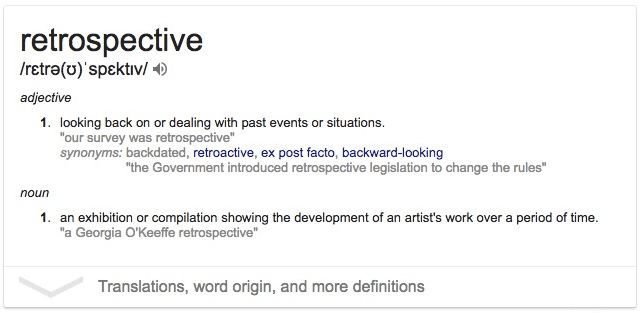
    restrospective

    Over at The Daily Post there is the challenge to summarise my blogging year. And upon reflection there are a few insights we can glean.

    First, I had six good months and six poor months of posting content. I obviously don’t like winter very much nor am I inspired during these months. I posted often in the January to March period but soon dropped off before taking up publishing again from October through December.*

    Second, the main topic I posted about was ‘youth ministry’. Of the top five most read posts three of them were on the topic of youth ministry. This isn’t too much of a surprise considering I was intentional in what I was to post about this year. Youth ministry was one area I wanted to write more about and this is clear through the posts I’ve written in 2016. The other factor would be the change of ministry role, becoming Associate Pastor for Youth and Young Adults at the start of the year. These things seem to point toward a youth ministry passion and this is being seen in what I write about.

    Here are my top five posts:

    1. The Ageing Youth Pastor
    2. Starting Fresh As A Youth Pastor
    3. Why Every Youth Pastor Should Watch ‘Spotlight’
    4. ‘N’ As A Social Media Movement
    5. I’ve Never Been To Aleppo

    Third, there was a 30% increase in traffic to the blog in the past 12 months. This has been encouraging and positive. You do expect an increase when you’re coming off such a low base though. 🙂

    Fourth, the top five countries where readers come from are: Australia, USA, Brazil, New Zealand and the UK. Four of them are not surprising. One of them is. You can probably guess which one.

    Fifth, each New Year that passes brings with it a good opportunity to reflect on the worthiness of writing and blogging. I’m one of those people who enjoy reflecting on events, conversations, experiences and time-periods. Blogging is no different. And while some people are against New Year resolutions, believing that January 1st is only another day, I do find it helpful to reflect and set goals for the next 12 months. These goals don’t need to be anything complicated, but they do need to be specific. My choice to write more about youth ministry seems to have been achieved as I’ve seen a few things here gain some traction with readers. It’s also helped me think through the topics in more depth.

    For 2017, consistency will be the key and the main goal for this blog. I seek to me more intentional about writing topics and will also aim at writing at least one decent piece per week. 

    If you’re a blogger (or perhaps there’s something in your life you need to be more intentional about) then what would be your main goal for your blog in 2017?

    *Another factor here may well be the birth of our second child. Probably can’t discount that variable either! 

  • My Top Books of 2016

    This is the week in the blogosphere where all bloggers release those awful list posts, humbly bragging about what they read this year. It’s an easy post to write, tickles the ego, and promotes faux intelligence. It also makes you feel bad for not achieving your own reading goals, and a reminder of all those other goals you failed to complete this year.

    Well, here’s another.

    0ppkxwtyh0g-clem-onojeghuo.jpg

    For me, 2016 was a horrendous reading year. I only finished 11 books. I won’t give you my excuses but will put reading back into its rightful position in 2017.

    So for the third year in a row, and in no particular order, here are my top books of 2016:

    Do More Better: A Practical Guide To Productivity by Tim Challies

    Here’s a little gem, at just over 100 pages, which helps you think through your own productivity system. Much of the advice given can be applied to the different spheres in which you find yourself – work, family, personal, recreation etc. It just helps having a good system and the one by Challies’ outlined here is a good fit for me.

    Gospel-Centered Youth Ministry: A Practical Guide by Cameron Cole and Jon Nielson

    If you want a good primer on youth ministry, giving theological grounding and practical outworking of that theology, then this is a good book. Every Senior Pastor and Youth Pastor should read this. If you’re in youth ministry as a volunteer it will give you a good idea of the foundational thinking your Youth Pastor should be thinking through, as well as providing you with excellent training in the process.

    Each chapter is about a particular topic: making disciples in youth ministry, teaching the Bible, building relationships, forming a gospel-community, partnering with parents, how to make youth ministry inter-generational, small groups, leadership training, music and worship, retreats and events, evangelism, serving the poor, and short-term missions. There’s a lot there and it’s all very solid.

    This book would now make my Top 3 Books for Youth Ministry.

    Martyn Lloyd-Jones: His Life And Relevance For The 21st Century by Christopher Catherwood

    There is something about Martyn Lloyd-Jones that draws me to read about his life and ministry. His own writings and sermons are invaluable themselves, but so are the reflections of others about his life. In this book Lloyd-Jones’s eldest grandson gives a brief precis about his life before delving into topics missed by other biographers. There are the chapters to expect, one on preaching and another on the centrality of Scripture. But, there are also chapters on home life, and how he is relevant and appealing to Millennials and the 21st century.

    It’s not a long book and is easy to digest. It’s worth the read.

    Luther on The Christian Life: Cross & Freedom by Carl R. Trueman

    The ‘On The Christian Life‘ series is a terrific series for those of us that enjoy biography and historical theology. Bringing this together with Martin Luther, one of the most significant figures in Christian history, Carl Trueman does an exceptional job. Albeit I’m a bit of a Trueman fanboy, but he does do a great job in outlining Luther’s life and theological growth, centred on his theology of the cross.

    Chapters cover Luther’s life, the Word, liturgy, baptism and mass, righteousness, and living and dying in the world.

    Growing Young: 6 Essential Strategies To Help Young People Discover And Love Your Church by Kara Powell, Jake Mulder, and Brad Griffin

    I can’t really go through this list without mentioning Growing Young. This is the book I’ve spent the most time in this year, thinking it through and reflecting upon it. To get a better idea of the book you can read all nine reflection posts on this blog if you’re so inclined!

    The main premise of this volume is what keeps young people in church. Much has been written about why young people are leaving the church, but this is a piece of research summarised into six core reasons why young people stay.

    This is a book for anyone who works with young people in churches. From senior leadership to volunteer leaders to parents and grandparents, this is a good resource to help you think through how to integrate young people in your church.


    Well, that’s the top 5 for 2016. If you’d like to read 2014 and 2015 then go ahead and do so.

    I hope you’re 2016 reading was better than mine, but if it wasn’t then why not try this awesome reading challenge for 2017?

    reading-challenge-2017

  • Hope Gone Viral – A Christmas Reflection

    In 1991 Metallica released their self-titled album, commonly known as ‘The Black Album’. On this album they released a song called “The God That Failed”. The central theme of this song being about faith and the human reliance on promises which are broken by the God of the universe. Lead singer, James Hetfield, wrote the lyrics soon after his mother’s death from cancer. She had such a strong faith she would be healed that James felt that had his mother not held to her beliefs she would not have lost her life. The lyrics read:

    Pride you took
    Pride you feel
    Pride that you felt when you’d kneel

    Not the word
    Not the love
    Not what you thought from above

    It feeds
    It grows
    It clouds all that you will know
    Deceit
    Deceive
    Decide just what you believe

    I see faith in your eyes
    Never your hear the discouraging lies
    I hear faith in your cries
    Broken is the promise, betrayal
    The healing hand held back by the deepened nail

    Follow the god that failed

    There are no doubt times in our own lives when we wonder, due to our personal situation or from observing what is happening in our society and around the world, whether God has failed.

    This week alone we can think of the atrocities continuing in Aleppo, the attack in Berlin, and the assassination of a diplomat in Turkey. To have your mind blown check out the list of terror attacks that have occurred in December to date. Crazy times.

    Yet despite all of this we can still have hope for the future.

    This hope comes from knowing that God is faithful to his promises. 

    s_s_hope

    If we go back some 2700 years we come to a time where God’s people are dealing with a similar question – has God failed?

    Through the prophet Isaiah we read of a time where God’s people were struggling for hope. Isaiah is called by God to speak to the people of Judah and Israel, bringing a message of warning and judgement with a sprinkle of hope. In one particular section, chapters 7-9, Isaiah is called to warn and encourage King Ahaz to trust in God despite what looks like very bleak circumstances.

    King Ahaz rules over the Southern Kingdom of Judah and is a terrible king who is constantly disobeying God, worshipping other gods, and following his own devices. You can read of his reign in 2 Chronicles 28. And having been warned by Isaiah not to make allegiance with the Assyrians he decides it would be a good idea to do so. He is soon run over by them and then neglects the worship of God, making other gods for himself and his people.

    So God’s people are in a bleak and dark situation. Their nation is being bombarded and they are wondering whether God is truly faithful to his people.

    They wonder whether God has failed.

    Yet in chapter 9:1-7 Isaiah brings a glimmer of hope. Like the sun poking through the clouds on an overcast day, Isaiah brings a brief message of hope in amongst the warnings and judgement to the people of God. This hope culminates in v6-7, which reads:

    For to us a child is born,
    to us a son is given;
    and the government shall be upon his shoulder,
    and his name shall be called
    Wonderful Counselor, Mighty God,
    Everlasting Father, Prince of Peace.

    Of the increase of his government and of peace
    there will be no end,
    on the throne of David and over his kingdom,
    to establish it and to uphold it
    with justice and with righteousness
    from this time forth and forevermore.
    The zeal of the Lord of hosts will do this.

    Here we find that the hope for the people of God is a child-king, a person, who will be born, who will be named, and who will rule an eternal kingdom. This passage, and these two verses in particular, give the people of God great hope for what is to come.

    For those who believe, who live 2700 years after Isaiah’s message and this side of the cross, recognise this child-king as Jesus. 

    Isaiah’s message is that there is a great king to be born. This king will not be like the current king, Ahaz. Rather he will be a king that surpasses all other kings. He will lead well and true and fair. His leadership will bring peace and his rule will be eternal.

    God had not forgotten his people, nor had he left them. His promises come to fruition through this child-king. God himself will fulfil his own promises and come as a baby, making a way for everyone to know him and bring hope for the world.

    In this Christmas season we can look back and see that Jesus was a gift of hope to people in the time of Isaiah, just as he continues to be the gift of hope for Christians around the world today. Through this child-king Jesus hope has gone viral.

    God himself fulfils that which he has promised in Isaiah by sending his Son Jesus, who rules wisely with strength, power, and holiness. Isaiah calls Ahaz to turn from his disobedience and sin and put his trust in God. In the same way God calls us to do the same. This trust is made manifest through the life and death of Jesus, through this child-king, who came and lived, and died on a cross in order for us to know our God and King.

    This Christmas, like last Christmas and the one before that, and the one before that, we celebrate our Lord’s birth; knowing that he came into this world as a baby. We also celebrate him because of what he has done for us. The gift of mercy, grace, and hope he provides us with.

    Christmas reminds us that we worship a God who has not failed.

    Christmas reminds us that we worship a God who will never fail.

    Christmas reminds us that we worship a God who is faithful.


    This post is in response to the WordPress Discover Challenge – Hope Gone Viral

  • Jesus Invites You In – A Christmas Poem

    Below is a Christmas poem written by someone who attends Rowville Baptist. It was written and shared last week at a local retirement village. I had the privilege of having it emailed to me and received permission to share it here. Enjoy.

    ii72r3gswwy-arno-smit.jpg

    Jesus Invites You In!

    Young Mary with Joseph a journey did make

    Tho’ pregnant with child, this risk she must take

    There were thieves along the way, the road was rough

    By the time they reached Bethlehem they had had enough

    They were hungry and weary, the babe was due any minute

    When they saw the inn they hurried to get in it

    They knocked on the inn’s door and asked to lodge there

    The innkeeper refused, for their plight he didn’t care.

    “No room” he said, you cannot stay,

    “Go to the stable, go sleep on the hay”

    The tills were overflowing, business was good;

    Take in these straggling strangers? Couldn’t see why he should

    But he paid a price when “No room” he cried

    He missed big time when the shepherds arrived

    He never got to hear how the heavenly host did sing

    He missed being at the birth of our Saviour and King

    We recall this story each year for a reason

    Lord, help us reach out to others this season

    As the day approaches and we are all set to rejoice

    Help us remember those who have no voice

    Lord may we not reject with a word or a glance

    And say “We have no room”, not give others a chance

    With your heart and your eyes help us to see,

    And pray for the suffering, for those who aren’t free

    We pray for ourselves to do unto others

    Remembering always they’re our sisters and brothers

    Lord we think of the many souls that are lost

    We thank you, you saved us at such a great cost

    How thankful we are that You made Yourself known

    Visited us as a babe, left behind Your own throne

    We are so thankful Lord Jesus, that you love us so much

    Others who don’t know You, they too need Your touch

    Now as Christmas approaches, You stand at the door

    Saying “Come in, come in, there’s always room for more”

    – Marlene S

  • I’ve Never Been To Aleppo

    I’ve never been to Aleppo. 

    I’ve been to Damascus.

    I’ve been to Palmyra.

    I’ve been to Homs.

    I’ve been to Bosra.

     I’ve never been to Aleppo. 

    psalm-18-6

    In 2003, as a fresh faced 20-year-old, I had the opportunity to visit Syria for the first time. With a friend I travelled by taxi from Lebanon, through the mountains that border the two countries, and arrived in Damascus for a one-night stay. It was the sights and smells that did me in.

    I was one of very few Westerners. I ate amazing chicken kebabs with garlic mayonnaise and hot chips. I drank beer at a seedy bar that supplied weird nuts on the side. I visited a hammam, a men’s bath and massage centre, and came out the cleanest I’d ever been. I took in the sights of a city that had been around for over 3000 years. I sat in the Umayyad Mosque and attempted to see the “head of John The Baptist”. I stood inside the mausoleum of Saladin. I walked the Al-Hamadiyah Souk, with its storefronts lined with gold and the shopkeepers trying to convince me to buy special silk garments their grandmothers made. I wandered the Old City taking in the history and culture. I paid a visit to the National Museum, full of artefacts from millennia ago. I made my way down the Street called Straight, where Saul turned Paul walked 2000 years ago. I visited Ananias’s House and sat in those two dark rooms thinking about the many followers of the Way who’d been through.

    When I visited Damascus I feel in love with the place.

    A city that was, and still is, my favourite city in the world.

    But I’ve never been to Aleppo. 

    In 2006 I took a road trip with another friend of mine. We crossed the border into Syria and after a few days in Damascus we took the local bus to Palmyra, in the middle of the Syrian desert. We explored the ruins and met the bedouin locals.

    But I’ve never been to Aleppo. 

    On that same trip we visited Homs. We had a brief look around a city that was off the tourist trail. We had our haircuts and made some friends. We took a taxi to a local castle and nearly got beaten up by the driver.

    But I’ve never been to Aleppo. 

    When my parents came to visit us in Lebanon I took them across the border once again. We took a mini-van to Bosra. The rain came through the rusted out roof, and water was collected in a snap-lock bag. We climbed all over the Roman Amphitheatre and took some funny photos near various Roman ruins.

    But I’ve never been to Aleppo. 

    #prayforaleppo

    O, LITTLE TOWN OF ALEPPO
    How scared we see thee lie,
    Above thy ancient, ruined streets
    Unholy stars collide.
    Yet in some backstreet shelter
    A newborn infant cries,
    The hopes and fears of all the years
    Are met in Thee tonight

    For Christ is born of Mary
    And Herod smells the blood
    Still Rachel weeps, but angels keep
    Their bitter watch of love
    O morning stars together
    Proclaim the holy birth,
    Let weeping cease, and foolish peace
    Be born again in us.

    How silently, how violently
    The wondrous gift is slain
    A mother cries and though he dies
    Her son shall rise again.
    Perceive his broken body
    Conceive his future form
    And as you grieve, yet still believe
    The birth of Isa dawns.

    Pete Greig

  • You’re More Than A Number

    Hey,

    Tomorrow you find out your VCE results.

    This is a big day.

    It’s a day where you find out where you’re academically rated amongst your peers after 15 years in the education system.

    Tomorrow is also a big day for your parents. For 18 years they’ve been encouraging you, praying for you, and helping you learn and grow into who you are today. For them it marks the final hurdle in seeing you complete your studies and the beginning of a new season – university, work, and other adult-like activities.

    As much as family, friends, and teachers have told you that your ATAR score doesn’t define you, I know it doesn’t feel that way. I’m sure you’ve been in conversations about what you’d like to get, what course you might like to apply for, and what you’d like to achieve in 2017 and beyond. People can say this moment doesn’t define you but I’m sure you can’t help but feel nervous and anxious about these results. The text message you receive tomorrow may well dictate the mood of your coming days, weeks, and months. It’s certainly not easy to be in the middle of it all, let alone have others try to convince you that it’s not as important as everyone makes it out to be. Everything from school to family to culture implies something different.

    It screams make or break.

    A friend of mine received a score lower than 30 when he went through VCE. It was disappointing for himself and his parents. Yet over the years he has held a full-time job, completed studies in Marketing, and in the world’s eyes has become ‘successful’. Another friend scored over 98. She had her pick of all the courses in Victoria but chose to continue her passion and study Psychology (a course that didn’t require such a score). A little while after completing her degree she switched to teaching and has enjoyed it ever since.

    I mention these examples because as much as their scores reflected their academic results in the year they completed year 12, they didn’t let it define who they were.

    The culture you’ve grown up in, the culture you continue to grow into, tells us that it is what we DO that defines us. It is what we achieve, what we accomplish for ourselves, what we are ‘successful’ at, that makes us who we are.

    For those of us who follow Jesus this is turned upside-down.

    Rather than having to impress God with the things we do and achieve, we are made free because of the person and work of Jesus Christ. When we have our faith in Jesus, recognising that he has taken our brokenness upon himself, and turn to follow him, we are made new. We are a new creation, a child of God, one who has been bought back to God through the death and resurrection of Jesus.

    Since the middle of the year our Sunday services have focussed on our identity in Christ. In the Letter to the Colossians the author makes clear that because of this Good News we are now considered holy and blameless in God’s sight (Col 1:21-22).

    Our identity is not defined by what we’ve done, good or bad, or by what we’ve achieved, successful or unsuccessful. We are defined as one who has been made alive in God, forgiven and free (Col 2:13-14).

    When you get that text, or make that call tomorrow, the knowledge that you are ‘in Christ’ enables you to have a different perspective.

    No longer does the result you achieve define your intelligence, your gifts and abilities, or who you are. Rather, knowing that you are ‘in Christ’ brings perspective and redefines who you are. Look at yourself. God has made you to be you. And nobody else. He’s given you unique passions, abilities, gifts, and ambitions for his good and the good of his kingdom. Therefore, high marks, low marks, bettering your friends or bombing out, do not define who you are.

    When we move away from understanding that we are ‘in Christ’, the perspective we have of ourselves becomes distorted. Our self-worth, our identity, and what we deem to be valuable turns inward. We begin to consider ourselves more important and valuable than God and soon enough those things that we DO are defining us again.

    So tomorrow, remember that you are worth incredibly more than the number you are given. You are a child of God, made in his image to reflect who he is. You are valuable, someone worth dying for. And you have been made new by the grace and freedom given through the work of Jesus on that cross.

    Whatever happens tomorrow Jesus continues to love you and seek you.

    Remember, you’re more than a number.

  • Growing Young – Growing Young In Your Context

    This is post eight in a series of reflections on the book Growing Young: Six Essential Strategies To Help Young People Discover And Love Your Church. For an introduction to the series please read part one and continue reading the reflections in part two, three , fourfivesix and seven.


    The final chapter!

    To conclude Growing Young the authors provide a chapter designed to help churches, pastors, parents, families, and anyone interested apply the research to their own context.

    Having made my way through the chapters it’s become clear that different churches will apply this in different ways. Every church I know of would agree that they seek to grow young people in faith and number. The decline in young adults continuing on in the faith has been dramatic over the past 20 years and many churches are grasping at straws, willing to try anything to hold on to the young people they have. Yet, if anyone reading this work comes to the conclusion that it’s an easy task then they haven’t understood the research or church culture. The process to reverse this trend and begin growing faithful young adults will require years of constancy and faithfulness.

    Growing-Young-Book-3D-Transparent.png

    In this final chapter Growing Young gives a broad process to help you or your church work improve its engagement of young people. There are five steps, outlined below:

    First, listen.

    Start conversations with everyone in the church. Listen. Listen to the kids, the young people, the leaders, the families, the parents, the young adults, the older people, the community, the whole congregation. Everyone. Go ask questions about how the church should or could engage with young people. You might see the problem clearly, others might not. You might understand the need and urgency, others might not. You might believe there is a massive problem, others might not. Begin with conversation.

    Second, tell stories of future hope.

    There will be no movement without a vision for the future. After listening and conversing with others the problem and challenge of growing young will appear. With this in the forefront of people’s mind it will be time to form a way forward. Begin by telling stories of what could be. Begin dreaming. Begin by white-boarding ideas. Let these dreams, ideas, and possibilities form into stories for the future. All good stories have a moment where there is a problem to overcome. Pitch the problem, pitch the solution. Tell stories of the future hope that could be.

    Third, list the challenges.

    There are going to be heaps of challenges. There is the problem that the church you’re in may not be growing young but the bigger challenges will come when you begin to move forward in seeking cultural change. The challenges that will occur will be to do with worship style, lack of interest, lack of volunteers and leaders, a large generation gap, and a lack of resources. These and more will make the task a tough one. But it is patience and persistence, all part of the journey itself, which will help to bring about change.

    Fourth, experiment at the margins.

    Someone once said, “To love is to risk not being loved in return. To hope is to risk pain. To try is to risk failure, but risk must be taken because the greatest hazard in life is to risk nothing.” Churches are often risk adverse. In order to grow young as a congregation risk will need to be taken. The place and way to start this is with those on the margins of the church. Those ministries and programs not seen as the backbone of the church is where the possibilities begin. Is there a ministry that could use a little bit of risk-taking? Is there something that young people could takeover or drive themselves? In the listening phase was there something found that the young people could be directing?

    Fifth, be patient.

    I was at an event last week with some experienced pastors and church leaders from around the state. During my conversation with one elder statesman of the Victorian church I asked how long he thought a certain cultural change might take to implement in a local church. He responded with the sides of his mouth upturned and a glint in his eye, “Oh, you’ll probably see fruit at around the 20-year mark”. And that’s what it seems to take in the church of God. It is long-haul ministry and long-term thinking that will bring about faithful expressions of discipleship and maturity of faith. Pray hard, preach hard, and be patient, realising it is God doing the growth.


    Here are the links to the series of reflections on the book:

    1. Growing Young
    2. Growing Young – Keychain Leadership
    3. Growing Young – Empathise With Today’s Young People
    4. Growing Young – Take Jesus’ Message Seriously
    5. Growing Young – Fuel A Warm Community
    6. Growing Young – Prioritise Young People (And Families) Everywhere
    7. Growing Young – Be The Best Neighbours
    8. Growing Young – Growing Young In Your Context
    9. Growing Young – Final Reflections