Category: On Scripture

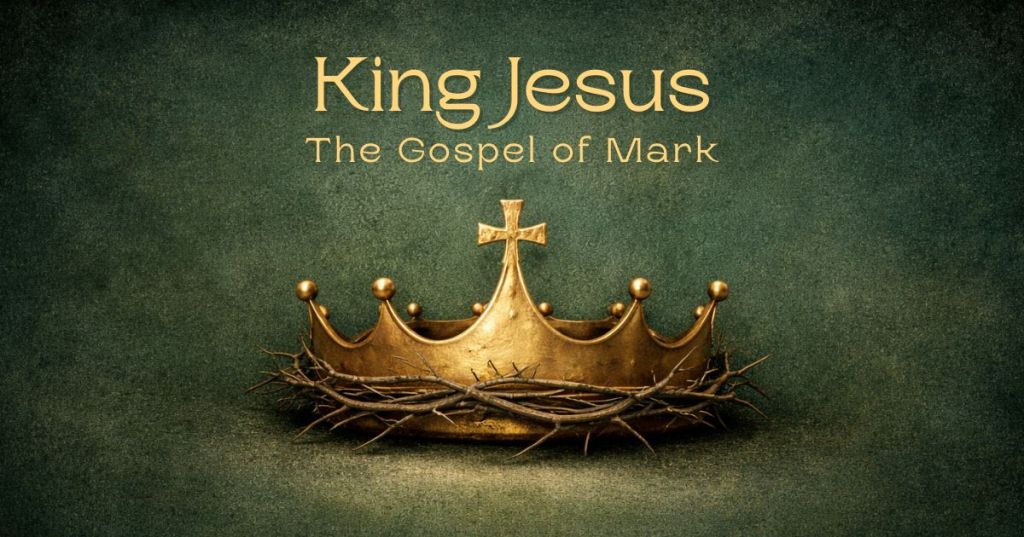
  • King Jesus: The Beginning of The Good News

    Do you like a good action movie?

    A James Bond film, Mission Impossible, or one of the Bourne movies? The kind where things are moving from the opening scene and the story carries real momentum.

    If one of the gospels were turned into action flick, Mark would be the script. It moves quickly, has lots of movement, and gets straight to the point. There is no warmup, no stretching beforehand, no long preamble. It is like the starter’s gun at the beginning of a race and we are off.

    Mark begins like this:

    “The beginning of the good news about Jesus the Messiah, the Son of God.” (Mark 1:1)

    That single line acts as both introduction and purpose statement. It tells us what the whole book is about before anything else is said. Like the opening line of a great novel, it draws us in. Except this isn’t fiction. This is the announcement of a real person and the purpose for which he came.

    Mark doesn’t include genealogies, birth stories, or any post-resurrection events. His focus is clear and deliberate. He wants to announce and show that Jesus is the Messiah and the Son of God. The book is centred on who Jesus is, what he does, and what it means to follow him.

    The word gospel (euangelion in the Greek) means good news. In the first century, good news would be publicly proclaimed when there was a military victory or a royal announcement. You can picture the town crier calling out the news of the day in the streets. In that sense, Mark is like a paper boy standing on the corner calling out the headline,

    “Good news. Jesus Christ, the Messiah, the Son of God has arrived.”

    But this good news is greater than a victory in battle or the birthday of an emperor. This is the announcement of God’s King and the fulfilment of long-awaited expectation and hope.

    The good news is not merely an event. It is a person. Jesus himself.

    Notice the titles Mark gives him. Messiah. Christ. Son of God. These are not polite honourifics. They are identity claims. They tell us that Jesus is not simply another religious teacher or prophet. He is uniquely connected with God and shares in God’s own identity.

    From the first sentence, Mark wants us to know who stands at the centre of this story. Everything else in the book hangs from this opening declaration.


    King Jesus: A Series in Mark’s Gospel
    Part 1: King Jesus: The Beginning of The Good News
    Part 2: King Jesus: The Messenger
    Part 3: King Jesus: The Love of God the Father
    Part 4: King Jesus: The Kingdom of God
    Part 5: King Jesus: The Calling of The Ordinary
    Part 6: King Jesus: Place and Purpose

  • Christmas 2025: Jesus

    JesusLuke 2:41–52

    We have citrus trees along the side of our house. Four years ago we planted them. They are still in the juvenile stage, growing taller and taller each season. It’s a slow process and will take another few years before they produce any fruit.

    Before Jesus preaches and begins His ministry of healing, teaching, miracles, and calling followers, we read of Him doing something very ordinary – learning. Here we get that picture of a student, asking questions, listening, and sitting among teachers. Even Jesus, the Son of God, takes part in that slow work of growth before going about producing anything.

    It’s quite a simple story. Jesus doesn’t perform any wonders or reveal Himself to others. What He is doing is growing in wisdom, stature, and favour with God and the people (v52). This is a time of formation for Jesus. And if Jesus required it, then perhaps we too might need to do the same.

    Growth doesn’t happen overnight, it’s often gradual, unnoticed, and uncomfortable. Yet God uses these seasons to shape us, to humble us, and provide us with wisdom and patience for the road ahead. Luke’s inclusion of this story reminds us that we are being formed through those unseen and ordinary years.

    It’s like learning a new musical instrument, having to practice and practice and practice when no one is looking. It’s like moving through adolescence, discovering who we are, what our purpose is, and where we belong. As someone once said, growth is like outgrowing old shoes; it’s awkward, slightly painful, but necessary.

    We often want instant results, instant transformation, but discipleship takes time.

    Ask God to highlight one area where He wants you to grow this season. Is it patience, courage, compassion, humility, wisdom, rest? Something else perhaps? Take one small step this week in that direction.

    Where might God be inviting you to lean into slow, steady growth this Christmas?


    This devotional series runs alongside our Songs for the Saviour sermon series this Christmas. It explores the four ‘songs’ of Luke’s Gospel, which in their historical Latin form are known as the Magnificat, Benedictus, Gloria in Excelsis, and Nunc Dimittis.

  • Christmas 2025: Simeon

    SimeonLuke 2:21–38

    Waiting is quite painful, isn’t it? It’s painful because we want answers now. We want things to happen right away. We want to know or see things happen in our own timing, not in the patient and enduring time of the Lord.

    Simeon’s life was shaped around a promise that was slow to arrive. To be fair, he’s not passive about it, he is attentive to what God might be doing. He waits with hope.

    We might know this kind of experience ourselves. Waiting stretches us, it teaches us, and in the course of waiting that which we genuinely hope for is often revealed.

    When Simeon finally sees Jesus, he is full of thankfulness and gratitude. He isn’t relieved, he doesn’t make a big scene, and there is certainly no big announcement by this old gentleman. Rather, he is worshipful. He praises and blesses God for the kindness in allowing him to see the Christ child (v29-32). This song, the Nunc Dimittis, affirms God’s timing, knowing it is never late and never rushed. Simeon shows us the kind of faith that doesn’t demand answers from God but trusts the God who knows them.

    This short story of Simeon is a great reminder that God is at work even in the seasons that feel awfully slow.

    He’s like the grandparent who has prayed for their family for decades, faithful in giving over to God what is His and trusting that in His good timing He will fulfil His word.  

    Waiting is part of our Christian life, our Christian experience. Can you think of one area in your life where you are waiting? Lift it up to God each day this week.

    How might God be shaping you through the waiting rather than simply delivering what you long for?


    This devotional series runs alongside our Songs for the Saviour sermon series this Christmas. It explores the four ‘songs’ of Luke’s Gospel, which in their historical Latin form are known as the Magnificat, Benedictus, Gloria in Excelsis, and Nunc Dimittis.

  • The Tender Mercy of God

    In the month leading up to Christmas Day I think I have been present and shared something of the Christmas story at six ‘extra’ end of year events. We all know it’s a busy time, with plenty of different activities in church, school, and other community groups we’re involved in. For me, this has probably been my most active Christmas in some time, possibly ever. And as you can imagine, I’m wanting to share the great news of Jesus’ birth, but also do so in a way that isn’t stale. I want it to be attractive and meaningful for the hearers, and also for me personally as the speaker. At some of these events I can share the same message with a tweak or two, but by the time you’ve done that 2-3 times I feel within myself that it’s time to change it up. 

    That’s why, at our Community Kitchen Christmas meal the other evening, I decided to share for five minutes on the phrase, “the tender mercy of God”, which comes from Luke 1:78.

    It’s such a great phrase. It’s beautiful really. And it is part of the Christmas story, tucked away in Zechariah’s song

    After months of silence, and the birth of his son John, Zechariah breaks into praise. His words look back and acknowledge God’s faithfulness (Luke 1:68-75), and then turn toward the future and the coming of Jesus, which lead him to say those words, “the tender mercy of God”. 

    Tender mercy. 

    This is not forceful power. 

    This is not harsh correction. 

    This is not distant authority. 

    This is tender mercy. 

    Zechariah’s song helps us understand what kind of God we are dealing with, and what kind of salvation He is bringing into the world through Jesus. 

    John, Zechariah’s son, was not to be the central character of the story. He would be the one who prepared the way. Like the opening act at a concert who warms up the crowd and gets them ready for the main artist or band, his role was important but not ultimate. He would point beyond himself to Jesus. 

    And what was he preparing people for? 

    Not a political revolution. 

    Not economic rescue.

    Not national independence. 

    John was preparing people for salvation through the forgiveness of sins. A salvation that flows from God’s tender mercy. 

    If we’re honest, we often look outward for our own salvation. We want to be saved from difficult circumstances, whether it’s pressure at work, financial stress, health challenges, and broken relationships. And God cares about all those things. 

    But Christmas reminds us that God’s deeper work for us is inward. 

    God comes to deal with the things we carry beneath the surface. Guilt. Shame. Regret. Fear. The quiet sense that things aren’t right inside of us. 

    And He doesn’t come aggressively or forcefully, He comes gently and tenderly. 

    God doesn’t approach us with a raised voice, or come to shame and humiliate. He isn’t impatient or hurried or fed up and disappointed. 

    God meets us in our brokenness with closeness. 

    He draws near. 

    Perhaps you’ve had a similar experience to me when on Christmas Day you celebrate a meal with all the special cutlery and utensils. I’m sure you know what I’m talking about. Out comes the special plates, the special bowls, the fine glassware, and the more expensive cutlery. There are decorations that only come out once a year, perhaps there are some precious ornaments displayed around the room too. And within this celebration there are kids around, excited and happy and joyful. 

    Now, imagine that one of them accidentally knocks a glass off the table. It shatters on the floor and its contents stain the carpet. The room is suddenly quiet. The child freezes. They’re waiting. 

    What are they waiting for? Most likely a parent or family member to get cross out of the stress, pressure, and frustration that a Christmas Day meal can bring. 

    But tender mercy is not snapping in frustration. 

    Tender mercy is not shaming or scolding. 

    Tender mercy is kneeling down, wrapping them in a hug, and saying, “It’s OK. No worries. I’ll sort it out.”

    This, Zechariah tells us, is what God is like. 

    Because of God’s tender mercy, Jesus comes into the world. 

    Because of God’s tender mercy, forgiveness is possible.

    Because of God’s tender mercy, light shines into dark places.

    And because of God’s tender mercy, God guides people into a path of peace.

    It isn’t about having life neatly organised. It isn’t about pretending things are fine. It isn’t about performing spiritual competence. It is about a God who draws near, who sees us as we are, and who chooses compassion over condemnation.

    Wherever this season finds you; tired, hopeful, grieving, uncertain, or desperately trying to hold things together, the message of Christmas remains the same.

    God’s mercy is tender.

    And it is for you.

  • Christmas 2025: The Shepherds

    The ShepherdsLuke 2:1–20

    Ah, the shepherds. Those who go unnoticed, seem unimportant, and are largely invisible. Their work, of course, is constant. It’s dirty work. It doesn’t win them any points on the social scale. No one would be expecting God to speak through these guys, but that’s exactly what happens.

    This announcement to the shepherds by the angels is dramatic. God chooses the last group anyone would think to invite, shepherds working the overnight shift. And in such a moment the shepherds sing Gloria in Excelsis, not to kings, or those in power, or the influencers of the day, but for the people who never made it to the temple. They sing for those who are overlooked, responding to this announcement of good news with great joy and wonder there in v14, “Glory to God in the highest and on earth peace among those with whom he is pleased”.

    Isn’t this a reminder that the gospel is meant to be received with fresh eyes and a ready heart? Doesn’t this give us a quiet correction to our assumptions about who God uses and who He seeks to draw close?

    It’s like the late-night cleaner in the large office building in the city. It’s like the nurse on night shift who cares for patients while the rest of us are asleep. It’s like that parent that wakes early, while its still dark, to prepare the school lunches. These are people we may walk past without noticing. These are the people who persevere with resilience and quiet strength. These are the people who, if announced in our day, would hear this good news first.

    Make a point this week to notice someone you usually overlook. Might it be the barista, the cleaner of the toilets at your local shopping centre, the crossing supervisor at school, or the bus driver? Offer a word of thanks, gratitude, or encouragement.

    Who around you might be waiting for the simple reminder that God sees them?


    This devotional series runs alongside our Songs for the Saviour sermon series this Christmas. It explores the four ‘songs’ of Luke’s Gospel, which in their historical Latin form are known as the Magnificat, Benedictus, Gloria in Excelsis, and Nunc Dimittis.