Tag: Book Review

  • My Top Books of 2024

    My Top Books of 2024

    It’s been two years since I wrote about the books I’ve been reading. Last year I was not in a place that enabled me to write and my dear readers will have noticed that if they were observant enough. However, books and writing about books remain a cornerstone of my personal and ministry rhythm and I’ve been back in the swing of things for a little while now. 

    I find books inspire, challenge, and shape my understanding of the world, ministry, and myself. This year reading remained constant, with numerous books being read at the same time, whether in paper, digital, or audio form. 

    The top books I read this year include those below, they are books I rated 5 stars. From biographies to practical theology to books on leadership and burnout. This year’s reading list has been somewhat diverse, except for all those crime-thriller fiction books I read. 

    Without further ado, here are my top books of 2024: 

    Zeal without Burnout by Christopher Ash

    This is a short book, and it’s full of impact. Anyone in ministry should really read this. Ash reminds us that we are finite and fragile. Through scripture and personal experiences he highlights the importance of sustainable ministry. As Ash addresses the risk of burnout he offers practical, wise, and compassionate advice that is grounded in God. I reckon I’ve read this a few times now. In different seasons it has had more impact. This year it named things I hadn’t realised I was doing or experiencing before, and it has made me more self-aware of my experience in the past 12-18 months. 

    Tiger Woods by Armen Keteyian and Jeff Benedict

    This is a great biography of such an iconic sportsman. The real highlight of this biography is actually the writing, it was such great sports and biographical writing. 

    Woods is the all-time great golfer with unbelievable talent in his profession yet, as we know, is deeply flawed. This book walks through his childhood, his relationship with his father and mother, and seemingly pseudo-friends through his life. It really is a character study on family dynamics and the influence of nurture and nature. It is a captivating read and brings together talent, pressure, and personal struggle surrounded by celebrity and sports.  

    Burnout: A Guide to Identifying Burnout and Pathways to Recovery by Gordon Parker, Gabriela Tavell, and Kerrie Eyers

    This book provides a comprehensive guide to understanding, identifying, and recovering from burnout. It offers strategies for self-care, stress management, and developing resilience to prevent future occurrences. I find this book helpful as it provided me with understanding about something I’d experienced within the year prior to reading it. It’s a clear, compassionate, and actionable book, which is also based on practical research-based approaches. Many of the case studies from various industries are helpful as they confirm that many different people in many different roles in life can hit burnout. 

    The Song of Significance: A New Manifesto for Teams by Seth Godin

    Seth Godin is always a fun read and this one is no exception. I’ve found he just thinks differently, gives great historical background and context about culture, particularly work culture, and then reframes it. In this case, Godin reframes modern work, leadership, and team-based collaboration within business and organisation. It is a call to shift out ‘success metrics’ toward meaning, dignity, and purpose. For those of us who deal in teams, there is the encouragement to collaborate around a shared vision in order to flourish. 

    Pastoral Perseverance by Brian Croft and James Carroll

    I try to read anything Brian Croft writes. He’s a grounded ministry leader who provides plenty of practical experience for pastors. In Pastoral Perseverance the books does what it says in its title, it encourages pastors and provides strategies to help persevere in the ministry. From navigating the complexities of leadership, congregational life, and personal challenges Croft and Carroll offer encouragement and biblical depth to shepherding the flock. 

    Unmasked: My Life Solving America’s Cold Cases by Paul Holes

    I listen to a few of Paul Holes’ podcasts and have followed a few that speak into the Golden State Killer. Holes was the investigator who helped crack the case of GSK after so many years of pursuing him. In this account of his life and career Holes describes the personal, emotional, and career highs and lows in the police force. I found it fascinating but also reminded of the human cost to relentlessly pursuing ones goals. 

    Sacred Rhythms: Arranging Our Lives for Spiritual Transformation by Ruth Haley Barton

    Ruth Haley Barton has been recommended to me plenty of times in the last year or so and I had never heard of her before this time. I ended up picking this one up and giving it a go, to which I am rather thankful for. This is a book for the soul. There is wisdom and helpful teaching, but also practical spiritual practices that will nurture faith and depth of relationship with God. All the usual spiritual disciples of Word, prayer, silence, solitude, and the like, but in the context of a regular rhythm to life. Again, it is another book this year that focuses on the devotional life of a disciple and also a life that seeks to avoid burnout. 

    Four Thousand Weeks: Time Management for Mortals by Oliver Burkeman

    I reckon this is one of the best time management books around. Rather than simply teaching habits and strategies Burkeman makes us realise that these ‘hacks’ won’t actually help us accomplish a life we want to live. Instead, Burkeman is realistic, and highlights that we should be embracing our limitations and constraints in life and time in order to live meaningfully within them. It’s a thought-provoking book, and he’s helpful to listen to one a few podcasts too. Instead of striving for tweaks to life so that we might hit our goals and to-do-lists every so often, it’s about thinking about life in more depth and with deeper purpose in mind. 

    Spiritual Leadership: Principles of Excellence For Every Believer by J. Oswald Sanders

    This is a classic Christian leadership book that continues to be helpful and resonate. It’s quite easy to read because of the short chapters, but each one seems to pack a punch to the gut. Sanders doesn’t sugarcoat the cost and challenges of Christian leadership but also highlights the eternal significance of the work. 

    Pastoral Leadership: For the Care of Souls by Harold L. Senkbeil

    Harold Senkbeil is another one of those authors worth reading. I first came across his book “Care of Souls”, published a few years ago and then came across this one only a few months ago. While there would be some differences between him and I, he’s Lutheran and I’m Baptist for example, the pastoral wisdom is worth the price of any of his books. This is a guide to shepherding God’s people with humility, grace, and courage. It has theological depth and a deep concern for the pastoral care of those in a congregation. Again, there is emphasis on the care of the soul for the pastor as well, which seems to have been a theme in my reading this year. 

    Leading: Learning from Life and My Years at Manchester United by Alex Ferguson

    I was fascinated by listening to Alex Ferguson’s book on leadership. It was really his biography or another way of doing a memoir, but with some leadership principles applied. Evidently, a man who leads Manchester united for so long and with such sporting success will have a few things to say in this area of life. But, it was also a great insight into his life, values, and philosophy to football and leadership. 

    Love in a Time of War: My Years with Robert Fisk by Lara Marlowe

    Robert Fisk is one of the great writers about the Middle East. Evidently he has his demons and this is something that his former wife, Lara Marlowe, speaks into throughout this book. But his work cannot be ignored, nor his continual insight into the people of the Levant and beyond. Pity the Nation was the first book I read of his, which traces lines of history and experience for those who lived in Palestine-Israel and through the Lebanese civil war. This is more a personal memoir from Marlowe, who had known his for so long and worked alongside him in the Middle East and UK. A great read. 

    Well, that’s it for my top books for 2024. I had plenty books which were 4-star rated, and some special mentions of those include: 

    • The Unhurried Pastor by Brian Croft and Ronnie Martin
    • Humility: The Joy of Self-Forgetfulness by Gavin Ortlund
    • Digital Minimalism by Cal Newport
    • The Priority of Preaching by Christopher Ash
    • The Harvard Business Review’s Guide To Beating Burnout
    • And any crime thriller novel by Daniel Silva, James Patterson, David Baldacci or Vince Flynn. Always one of these on the go. 

    I’d love to hear what books have shaped you in 2024. Drop your recommendations in the comments—I’m always looking to add to my stack for 2025!

    This now makes it 10 years where I’ve published my favourite books of the year. If you’re keen enough you can go back and have a read of previous years here: 2014, 2015, 2016, 2017, 2018, 2019, 2020, and 2021, 2022

    If you’d like to see all the books I’ve read in 2024 then head to Goodreads to see a summary.

  • J.I. Packer – An Evangelical Life by Leland Ryken

    I first came across J.I. Packer and his writings while I was at university, which was some 20 years ago. And since then Packer has been influential in my faith, particularly through numerous popular volumes that currently sit on my bookshelves. Over the years I’ve found him to be a stabilising and assuring voice on everything from scripture, to ministry, to theology, and ethics. I remember being struck the last time I read his most popular book, Knowing God, just how different his writing is to writers in this current age. Packer’s work is dense, it requires thinking, and steeped in scripture, theology, and history. While he has written for the average Christian his work is of such substance that he puts many of the current Chrsitians books to shame.  

    Due to Packer’s influence in my life I’ve always been fond of reading about the man himself. From various biographies over the years, as well as articles written about him, I’ve managed to get the main outline of his life. A few years ago Sam Storms wrote Packer on The Christian Life, which explores themes in his life from a theological angle, and is a terrific read. And over the course of the last few weeks I’ve made my way through Leland Ryken’s overview on Packer’s life and ministry, J.I Packer: An Evangelical Life

    This work by Ryken is almost three biographies in one. The three distinct parts of this volume deal with Packer’s life in a chronological order, who he is as a person in an attempt to help us understand Packer more, and then a thematic approach to Packer’s life and how they impacted him and his ministry. It is a unique way to do biography, one that is helpful in weaving a picture of his life and ministry together, and also slightly repetitive, which I’ll get to later. 

    If you’re unaware of who Packer is then just know that he has made a considerable contribution to the Christian world. He comes from a low-middle class family in England and gained his education through various scholarships, which ultimately enable him to study at Oxford. His life was all about teaching, which was evidently his calling, and he did this in various capacities. We could say his main focus has been to train people for ministry through theological colleges (or seminaries), including a 25 years tenure at Regent College in Canada. However, even before he got there in 1979 he had already spent 20 years teaching and being an evangelical voice to the broader church in the UK, particularly the Anglican tradition. And today it is through his teaching that he is most known for, culminating through the hundreds of books, articles, reviews, forewords, messages, and lectures that he has presented. His life has been one of commitment and contribution to church, academic, denominational, and broader evangelical life.

    I enjoyed reading Ryken’s take, for want of a better word, on Packer’s life. He writes in an engaging way and made good progress through the chronology of his life. For more people their teenage years and early young adulthood is formative to who they are, and this is the case for Packer as well. When read biography I find you can be overwhelmed by all the person’s accomplishments and what they’ve done – I mean, why would they have a biography written about them in the first place if they weren’t considered so worthy. And this can be the case when reflecting on Packer’s life. It seems his productivity was immense, his output and depth in all his writing and teaching was voracious. And while you or I are never going to match what he did I still found it an inspiration toward something. To do something. To commit to something. In this case, I was reminded of the commitment to teaching, reading, and writing, and spending time intentionally improving these things. In reading Packer you can’t help being inspired by his commitment to the scriptures either, to knowing them and seeking to teach them well and clearly. 

    There were a few times I felt this biography dragged a little. 

    I will concede I wasn’t particularly interested in a couple of chapters, which were focussed on his denominational work or his style of rhetoric. It seemed Ryken was trying to extract a bit too much through his unique structure. However, one particular loss to this book, which I felt was missing, was any in depth look at his married and family life. I got the impression Packer and his biographer wished to maintain that area of his life as private, but it would’ve added so much more. I know he was married to a woman called Kit, but I know nothing of how their relationship worked, whether they had children, and what Packer was like in the home. This I thought was a particular shortfall to the book, not because I wanted any juicy gossip but because there is more to a person than their ministry contribution. 

    Another cost of this unique structure to this biography was its repetitiveness. I don’t know how many times I heard about the conflict Packer had with Lloyd-Jones, how he was no longer involved in the Puritan Conference, the tension of moving from the UK to North America, or the angst evangelicals have toward Packer for his ecumenical contributions. Due to the lenses Ryken applied in the biography some topics and aspects to his ministry life are repeated. 

    Despite what I’ve just said here though I’d still recommend this biography. It was a great read. It was worth the 400+ page investment in reading, and it is an encouraging read for one’s faith and ministry. It gave great insight into Packer’s resilience to continue to uphold the Chrsitian faith through the lens of biblical authority. His interest in the Puritans, which led to the formation of who he was, can’t be understated and inspired me to get on and read a few more of them. His conflicts and relational breakdowns with others who considered him ‘not evangelical enough’ was also an interesting insight and made me reflect on how tribal we can be as believers. 

    In any case, a great read. 

  • Published: Practicing Thankfulness

    A couple of months ago I had a book review of Practicing Thankfulness: Cultivating a Thankful Heart In All Circumstances by Sam Crabtree published on The Gospel Coalition (AU) website.

    Ironically I read this while Melbourne was in its fourth lockdown, of which we’ve never really come out. So I will confess I wasn’t that impressed with the beginning of the book but as I read it more I found it did do something within me. It reminded me that there is reason for thankfulness and not simply being a grump for the situations we find ourselves in. It requires a mindset change, an attitudinal change.

    As I say in the final few paragraphs of the review:

    “So if you would like your heart to opened and exposed—perhaps even have a metal rake run over it—this book will do you a world of good.

    I will confess I didn’t like every part of it. I felt the tone lacked a certain pastoral quality, and that it was overly firm in some places where a bit more grey and grace would have been helpful. For example, Crabtree seems to write off all complaining and frustration as being ungrateful for what God has given us. He doesn’t give room for complaint and lament like many of the Psalms we read, and almost suggests we need to ignore these types of feelings, tell them to shut up, and move on. Further, there was some discussion about topics that seemed unnecessary and forced in relation to the main themes. These make moments in this book seem simplistic and reductionistic at times.”

    You can read the full review here.

  • Published: A Biblical Theology of Youth Ministry by Michael McGarry

    A friend of mine from the USA, Mike McGarry, recently published this great book, A Biblical Theology of Youth Ministry. It’s an excellent read, and a much needed contribution on the theological foundations for youth ministry.

    I reviewed the book and had the review published at TGCA. You can read the whole thing here.

    Screen Shot 2019-09-06 at 10.43.43 am

    You can find my review of A Biblical Theology of Youth Ministry here.


  • Published: The Power of Two by Danny Hunt

    My friend and colleague, Danny Hunt, recently wrote a book about being a second-chair leader. That is, a leader that has a boss.

    It’s a short book but packed with wisdom and reflection from his 30-plus years of experience in church leadership. It is aimed mainly at those who are involved in church life, but would be suitable for other industries as well.

    I was fortunate to read the book recently and have a review of it published on TGC Australia.

    You can find it here.

  • Published: Gay Girl, Good God by Jackie Hill Perry

    I recently read the book Gay Girl, Good God by Jackie Hill Perry.

    It’s a book I’d highly recommend. And it is a book I found time to write a reflection on to better process some of the content.

    As it happens, I’ve had that reflection published as a book review at The Gospel Coalition Australia site. You can read it here.

    “I couldn’t be more different from Jackie Hill Perry.

    I’m a man, she’s a woman.

    I’m white, she’s black.

    I’m from the wealthier side of Melbourne, Australia. Jackie is from a rougher area in Chicago, USA.

    I’m hetero, she’s a former lesbian.

    There’s a few differences, yet at the same time we now find ourselves brother and sister in Christ. No matter the differences of the past, or the differences now, our stories intersect as part of God’s grander story in Christ. And what a privilege that is having now read Jackie’s memoir, Gay Girl, Good God.”

    I found it to be a great memoir, exploring the intersection of God’s story upon Jackie’s story as she wrestles with her sexuality and upbringing. It’s well worth reading if you have the time.

    The full review can be found here.

    Other books I’ve read recently, and written short summaries on, can be found here.

  • Recently Read: January 2019

    Here are some books I’ve read or listened to over the summer. And for what it’s worth there are some brief comments about them too.

    1. The Secret Thoughts of an Unlikely Convert by Rosaria Butterfield

    This is the incredible story of Rosaria herself. At one point she was a tenured professor, thought of with high regard for her LGBT and feminist views. After conversion to the Christian faith she understood herself differently; giving up her lesbian lifestyle and in time marrying a Presbyterian minister. This is a great book and well worth the read. I listened to it with Rosaria narrating. An astounding and excellent memoir.

    2. Why The Reformation Still Matters by Michael Reeves

    Again, I listened to this via audio book. The final three chapters move the book up in any sort of rating. However, because the first nine chapters aren’t particularly practical, which I expected they would be, then I didn’t find this book appealing or interesting. Not really worth the read.

    3. Wisdom in Leadership by Craig Hamilton

    It may have taken me 2.5 years from opening to closing this book but it was still a good one. There is something like 78 chapters, each about five pages long. It provides great practical advice for Christian leaders. Anything from how to lead a team to how to lead a meeting to how to build trust to how to deal with conflict. There are good chapters for those who are main leaders or those who volunteer under other leadership. Again, worth the read but don’t expect to read it through in one hit. It’s also worth noting that the author is Australian.

    4. Without Warning by David Rosenfelt

    A novel based around a murderer and his son seeking to get revenge on the Chief of Police. It moves quickly, involves a good amount of mystery, and is a fun read/listen.

    5. Martin Luther by Eric Metaxas

    There are plenty of Martin Luther biographies to read. Some are dry and academic but Metaxas’ one certainly isn’t. Like all good Metaxas books it is reasonably fast-paced and with great little side stories about what is going on in wider culture. I tend to read quickly to the halfway point and then slow down when reading Metaxas and this happened here too. It could have been shorter but is still a valuable and fun read on the life of one of the more significant people in world history and church history. You’re in for a humorous treat on page 334 too.

    6. Reset: Living a Grace-paced Life in a Burnout Culture by David Murray

    Easily the best book on this list. It may have been because of the time of year I read this one, or because I was feeling tired after 2018. Whatever it was, this book gives great theology that moves into great practice for rest, sleep, work, identity, sin and temptation, eating, exercise, and numerous other factors that can cause us to deplete our energy and lead us to burnout. Again, focused on Christian leaders but really gives good wisdom for a grace-paced life for all believers. I listened by audio, I’ll make sure I pick up a hard copy in due course. I think it’ll be useful for a small group study or course too.

    7. Act of Treason by Vince Flynn

    A fast-paced novel (ironic given the last book mentioned) about the attempt to take down the President and the US government. A typical thriller involving the CIA, the Russians, terrorists, and sleazy politicians.

    8. How To Be A Christian: Your Comprehensive Growth to Flawless Spiritual Living by The Babylon Bee

    The Babylon Bee. Enough said.

    The whole book is satire. It’s mostly amusing but perhaps they do their best work in short blog posts, rather than 150-page books.

    9. The Hand of Justice by Susanna Gregory

    This is volume 10 in the Matthew Bartholomew series. I’ve grown to love the main characters of this series and the setting of medieval Cambridge is fascinating. There are always far too many murders to be anything realistic but it’s great fun when you’re into it. It is a holiday read as the writing is slow, nothing happens quickly. But, I liked this volume more than some of the recent ones I’d read.

    10. The Prophet by Gibran Kahlil

    A famous spiritualistic work by the admired Lebanese poet and writer Kahlil Gibran. I’ve known of this book since I lived in Lebanon over 10 years ago, he’s very famous and well regarded. The Prophet is about a prophet (obviously) who gives wisdom on the human condition and what it means to be human in relation to love, marriage, work, death, beauty, and other such topics. I was happy to have read this for the first time.

    I hope you’ve had a good time reading so far in 2019 too.

  • The Holiness of God by RC Sproul

    The Holiness of God by RC Sproul is a well known and highly regarded book. Like Packer’s ‘Knowing God’ and Piper’s ‘Desiring God’, my understanding is that this is Sproul’s flagship book. The one that put him on the map at least. I can see why.

    Sproul is terrific, from start to finish, in outlining the holiness of God. He starts by talking about God’s holiness in relation to his creation. He leaves us with dealing with the mystery of God’s holiness. He speaks of how the Old Testament shows so clearly that holiness is a huge factor in the way he relates to his creatures. And, by through understanding holiness more we see just how patient, gracious, and merciful he is to each one of us.

    I found his chapters in dealing the the justice of God and holiness, and also his approach to some tough passages of the Bible very helpful. For example, he deals with how Aaron’s sons die when they offer the wrong fire to God. This is because of God’s holiness. He also tackles the passage where one of the Ark bearers seems to stop the Ark of the Covenant from falling. In touching the Ark the man dies. This is again because of holiness. In each of these chapters it was highlighted to me just how holy God is and just how unholy I am. Hence, the greater appreciation for God’s patience, graciousness and mercy.

    I don’t think holiness is a theme or characteristic of God spoken of much these days. Nor is it applied very well either. Perhaps the only time we hear of holiness is when we are told to obey God’s ways, yet this is often heard as rules and regulations. There’s always a danger in trying to encourage people toward holiness and godliness because it can often be heard as works-righteousness. Sadly, this distorts the gospel and is a poor witness. While our faith may impact our lives we don’t pursue the holiness God requires of us.

    And when I say, ‘of what God requires of us’, I want to make sure that we are clear on what I mean.

    This is not saying that we need to be holy in order to attain salvation, in order to be made right with God. No, Christianity is not a works-based faith. It is a faith built on the ‘rightness’ of Jesus Christ, and the work he has done on the cross. As Sproul articulates so in the final chapters of his book,

    “That a saint [a believer] is a sinner is obvious. How then can he be just? The saint is just because he has been justified. In and of himself he is not just. He is made just in the sight of God by the righteousness of Christ. This is what justification by faith is about. When we put our personal trust for our salvation in Christ and in Him alone, then God transfers to our account all the righteousness of Jesus. His justness becomes ours when we believe in Him. It is a legal transaction. The transfer of righteousness is like an accounting transaction where no real property is exchanged. That is, God puts Jesus’ righteousness in my account while I am still a sinner.” (p212)

    The calling we have as believers is to follow Jesus and become more like him. An aspect of this, and as Sproul strongly prioritises as number one, is that of holiness. We are to become more holy as believers. We are seeking to do away with sin in our lives and continue to live lives that are transforming us into the likeness of Jesus. The likeness of God. Holiness is then sought as a sinner-saint. We continue to examine our own lives in light of God’s holiness and know we have a lot of work to do.

    Again, the trouble with talking this way is often we find ourselves slipping into a regulated or rules based faith. Yet, we must constantly remind ourselves that the heart of the holiness transformation is for the joy of being with God, knowing God, and being made right by God.

    In reading this book, and thinking about it further, I have found myself appreciating the impact it has on my heart and mind. I have particularly found myself thinking about the undeserved grace God gives to us in light of his holiness. Furthermore, it is his holiness that impacts so many areas of the biblical storyline. In fact, from Genesis 3 right through to the end of the New Testament this theme of holiness plays a significant role.

    I think this book inspires a greater understanding of God. A deeper appreciation for his grace and mercy, a real understanding of our sin and sinful nature and the impact of that on our relationship with God and this world. And then, the way God’s justice plays out because of his holiness. There are so many aspects to our faith and theology that this book speaks into. And is so helpful in our personal walk with Jesus, and our own transformation toward holiness.

    I couldn’t recommend it more.

  • Recently Read: April 2018

    Here are some brief summaries of the books I’ve finished recently. There aren’t as many as last time, but range from bible commentaries to biography to sport.

    Recently Read - April 2018

    Ruth: The King Is Coming by Daniel I. Block

    I preached through the book of Ruth in February and March. This was the main commentary I used, which was simply excellent.

    Ruth: The King Is Coming by Daniel Block is part of the Zondervan Exegetical Commentary on the Old Testament series. This particular commentary gives a good outline of all the textual, cultural, and literary issues of the book. It walks the reader through the text and its structure in a helpful way. It raises the theological issues and conclusions of the book too. It was very helpful in thinking through the book of Ruth and and a useful preaching tool.

    The Message of Ruth by David J. Atkinson

    This commentary is in the Bible Speaks Today series. It’s not a new commentary nor is it particularly academic. It raises some helpful thoughts regarding the book of Ruth, particularly focussed on applying the text to the reader. However, I found the application reasonably poor, and various theological aspects of the text are not dealt with at length or in needed depth.

    The Blueprint: LeBron Jame, Cleveland’s Deliverance, and the Making of the modern NBA by Jason Lloyd

    The writer, Jason Lloyd, has been an NBA beat journalist for years. He was the Cleveland beat writer during the time of LeBron’s coming, going, and return to the Cavs. He gives a fascinating insight into the way the club operated during this time and how the club dealt with the superstar.

    While there is biographical material of LeBron himself, the real insight of the book comes in the form of team strategy. That is, the management of an NBA team and what strategic moves the back office uses to build a winning team.

    This was a great book, worth reading, and great sports writing.

    The Prodigal God by Tim Keller

    This is one of the best modern Christian books you’ll ever read.

    I rate it highly. So highly that I’ve made it the first book in our church internship program.

    The Prodigal God is a short book that takes the reader through the parable of The Prodigal Son. Each chapter not only reveals the content of the parable in a fresh way but is powerfully mind-blowing and heart-convicting for your soul.

    If you’re looking for a great read and something that will encourage you in your Christian faith then this is well worth getting your hands on.

    Packer on The Christian Life by Sam Storms

    J.I. Packer is essential reading for any Christian and has been highly influential for millions of believers around the world. His best known work is Knowing God, one of his 25+ books written or contributed to. Now at over 90 years old he is no longer writing and teaching theology has he has done, but continues to impact many in the Christian faith because of his writings.

    Sam Storms has written a great biography of the man, which focusses more on the way he has thought about the Christian life than about his life itself. In this way The Christian Life series is a unique contribution and well worth reading.

    Storms gives one chapter to the life of the man but then spends 11 chapters on working through his Christian thought on topics like the atonement, the role of the bible, holiness, sanctification, the battle with sin, the Holy Spirit, prayer, suffering, and discerning the will of God. Each chapter is excellent and I found the chapters on the bible, sanctification, and prayer most beneficial for myself.

    One interesting element of this book was reading Sam Storms articulate and reflect upon Packer’s cessationism while being a contiunationist himself. This was helpful and encouraging to see, particularly the attempt to understand Packer’s position while disagreeing with it.

    Another book worth reading.

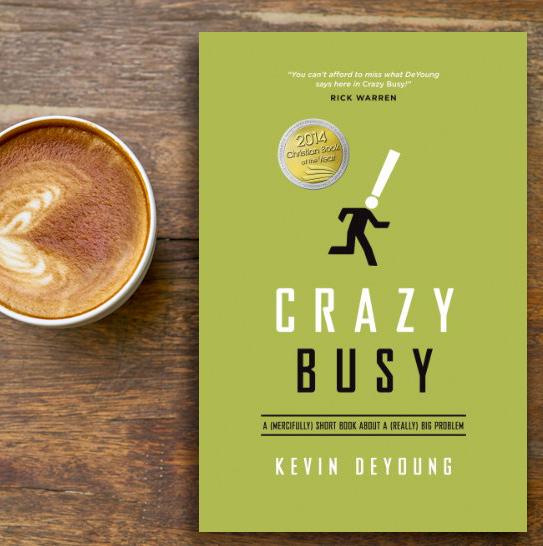
  • Crazy Busy: A (Mercifully) Short Book About A (Really) Big Problem by Kevin DeYoung

    Most people I know live busy lives.

    I live a busy life. I suspect you live a busy life.

    When people ask how I’m doing I try to avoid saying, “I’m busy”.

    Everyone is busy.

    Everyone says they’re busy.

    It’s part of life.

    I could have added ‘these days’ to the end of that last sentence but I don’t think we’re living in an especially busy era. People of every age have been busy, it’s just a different type of busy. And that’s humbling. To know we’re not alone in our busyness, either in this era or another, makes us no different to anyone else. We’re ordinary, ordinarily busy.

    In light of life’s busyness Kevin DeYoung has written another neat little book; this time describing his busyness journey while looking at this theme-at-large.

    Crazy_Busy_Kevin_DeYoung_

    In many ways he has written it for himself, and anyone else who will read it. It’s not a 10-point plan on how to get rid of busyness, but it is a 10-chapter book helping us understand more broadly why we’re busy and how to think about it.

    There was a period of time there where I’d be chasing the latest productivity tool or app that would make me more effective in life and work. I think that is similar to others I know. But really, when you consider all the time wasted in fiddling around with these tools you begin to wonder whether it’s worthwhile.

    I’ve found they’ve made me feel more busy that perhaps I really am.

    And that’s a problem.

    We sometimes believe we’re so busy when actually it is the case of having information overload and always being on the go. If we cut a couple of things out and didn’t input into our heads so much then we might find we’re not as busy as we thought.

    But it’s the things that need to be cut that are the issue.

    What do we prioritise? What’s important? What can’t go? What has to be prioritised?

    These questions, and many more, including the issue of sleep, are thought through by DeYoung.

    The final chapters really push home the point from a Christian perspective. The number one priority is our walk with the Lord.

    Using the story of Mary and Martha the author outlines the main point; resting in God and at the feet of Jesus is the priority and from there our work and busyness is to flow.

    He’s not being legalistic or prescriptive in how this is done. But, he certainly emphasises the good point that spending time with Jesus is important and has consequences now and in the future.

    I’d highly recommend this book, particularly to anyone who finds themselves feeling busy (read: everyone). Again, it’s not a book that outlines a plan for how to get out of your busyness. It gives a broad framework for thinking through and understanding the topic and some good wisdom for stepping into that. This is one of the best parts of the book, it leaves me to make my own decisions about how to avoid over-busyness.

    Here’s some quotes:

    “Busyness does not mean you are a faithful or fruitful Christian. It only means you are busy, just like everyone else.” (p32)

    “Jesus understood his mission. He was not driven by the needs of others, though he often stopped to help hurting people. He was not driven by the approval of others, though he cared deeply for the lost and the broken. Ultimately, Jesus was driven by the Spirit. He was driven by his God-given mission. He knew his priorities and did not let the many temptations of a busy life deter him from his task. For Jesus that meant itinerant preaching, with devoted times of prayer, on his way to the cross.” (p56)

    “The person who never sets priorities is the person who does not believe in his own finitude.” (p57)

    Peter Kreeft is right: “We want to complexify our lives. We don’t have to, we want to. We want to be harried and hassled and busy. Unconsciously, we want the very things we complain about. For if we had leisure, we would look at ourselves and listen to our hearts and see the great gaping hole in our hearts and be terrified, because that hole is so big that nothing but God can fill it.” (p83)

    “The antidote to busyness of soul is not sloth and indifference. The antidote is rest, rhythm, death to pride, acceptance of our own finitude, and trust in the providence of God.” (p102)