Tag: Books

  • My Top Books of 2025

    At the end of each year I provide a list of what I consider to be the best books I’ve read for the past 12 months. Here is this year’s contribution.

    I find reading a pastime that helps me focus, engage, and get away from other things in life. Whether I’m reading another Michael Connolly novel, dipping into a commentary for preaching preparation, or reading about an aspect of leadership and pastoral ministry, I find myself ticking through books throughout the year. Some of these are in audio form, but to be honest, I just find the feel of paper and taking the time to slow down with pages in front of me more relaxing and helpful.

    This year I’ve read quite solidly. I continue to have a novel on the go all the time, and have concentrated my Christian reading on things I’ve needed to prepare for at church and spiritual habits I’d like to grow in. Reading about systems, productivity, and making the most of my time has also been something that has continued this year.

    Below is a list of all the books I gave 5 stars to on Goodreads. I think everyone should read them. They are in no particular order, but I might be more enthusiastic about one or two over the rest. Enjoy.

    Prayer: Experiencing Awe and Intimacy with God by Timothy J. Keller

    Ok, so if I have to have a favourite for the year then this would be it.

    Prayer, and the inspiration to pray, and the realisation for the need to pray has been growing in me for some time. This book puts words and theology around how great prayer really is. The ability to come to God, to speak to Him, and to have an ongoing relationship with Him, is a powerful part of being a Christian. Keller gives great background to prayer, the need for it and more of it, and guidance in how we might come to God in different circumstances. A great read.

    Four Thousand Weeks: Time Management for Mortals by Oliver Burkeman

    I reckon this is one of the best time management books around. Rather than simply teaching habits and strategies Burkeman makes us realise that these ‘hacks’ won’t actually help us accomplish the kind of life we want to live. Instead, Burkeman is realistic, and highlights that we should be embracing our limitations and constraints in life and time in order to live meaningfully within them. It’s a thought-provoking book, and he’s helpful to listen to via podcast too. Instead of striving for tweaks to life so that we might hit our goals and to-do-lists every so often, it’s about thinking about life in more depth and with deeper purpose. 

    Shepherding the Shepherd: Devotions for a Pastor’s Soul by Lee Eclov

    I was handed two volumes of these devotionals a little over a year ago. I have found them so helpful. Each Sunday morning as I do my final preparations for our Sunday morning service I am usually reading a page or two of these. Eclov writes for the pastor, and each one is really encouraging as we think about the role we have to play in the body of Christ. He doesn’t miss in challenge either, reminding us of the unique, joyful, perseverance required as shepherds. Originally written during the COVID years at Christianity Today, they would be a good gift for any pastor.

    The Adventures of Sherlock Holmes by Arthur Conan Doyle

    These were fun little mystery stories from the classic hand of Arthur Conan Doyle. Old school in language, great characters and plot lines with Sherlock Holmes. Just a good classic read.

    The Work of The Pastor by William T. Still

    I’d never come across William Still before reading this book. He happens to be a 20th century minister of a church in Scotland and had a strong expository preaching ministry. Again, like Begg’s preaching book above, I found this a helpful volume as I stepped up into the senior leadership role. 

    This is part biography, part war stories, and part ministry tips. It’s not a long book, it’s full of examples that relate to anyone who has been in ministry for a while, and it provides insights to the work from a Scottish perspective. I was encouraged and inspired in parts as it reminded me of the main focus of pastoral ministry.

    Liberating Ministry from the Success Syndrome by R. Kent and Barbara Hughes

    Are you picking up a theme and what I’ve appreciated reading yet?

    This is another one of those books to help pastors. This tackles the various way our hearts and minds might deviate from what God has called us to be faithful with. It’s a relatively old book now, given the way there has been much more recent work written about sustainable ministry. However, it really is full of gold for the pastor. It’s a reminder of who we are in Christ, and what faithfulness to the task looks like. It’s biblically grounded, encouraging and challenging. Remember, it’s not about numbers it’s about faithfulness.

    Spurgeon’s Sorrows: Realistic Hope for those who Suffer from Depression by Zack Eswine

    If you are ever in a flat spot, suffer depression, or a melancholic mind, then pick up this book and be encouraged. Spurgeon, the greatest and most prolific preacher in the world suffered from depression, and no doubt anxiety and other ailments as well. It’s surprising to many. But throughout his ministry he was cast down by all sorts of pressures, worries, and depressive thoughts. Yet, God still used him so greatly, and praise God for that.

    I was taken by this book and have now read it two or three times. It was of supreme encouragement to me. And whenever I hit a depressive spot in life and ministry I go here. Eswine writes well, using plenty of Spurgeon himself to frame how we might think of discipleship and depression. It was so good I ended up turning some of the ideas of this book into a sermon and a previous book review post.

    Your Old Testament Sermon Needs to Get Saved: A Handbook for Preaching Christ from the Old Testament by David M. King

    I had never preached an Old Testament narrative series before this year. I needed help. This was one of many good books out there on how to do so. We kicked off a series on the Life of Abraham, from Genesis 12-25 around July this year. In the lead up I knew I needed to get myself acquainted with the text and also with how to preach through such stories.

    This book, as you can probably tell from the title, speaks about the Old Testament and their stories through New Testament eyes. That is, we recognise that Christ is the central character of the Bible, Old Testament and New. In three parts, the why, how and what of preaching Christ from the Old Testament, King provides some good guidance in how to approach preaching with a Christology focus. The book is now dotted with annotations and dog-ears. And, perhaps the biggest rap of all is to say that the congregation benefitted from me reading this book and others like it.

    Ancient Wisdom for the Care of Souls: Learning the Art of Pastoral Ministry from the Church Fathers by Coleman M. Ford and Shawn J. Wilhite

    This is a great book that looks at the teachings and practices of the Church Fathers in relation to pastoral ministry. It looks at the virtues and spiritual life of the pastor, the theological vision of the pastor, and the ministry of the pastor through the lens of various Fathers. Each chapter, of which there are ten, highlights one of the early church leaders, gives a short bio on them, and then their ministry focus and its application for ministry today. I found it a refreshing way to think about pastoral ministry while also doing a little church history on the way through.

    Lead Smart: How to Build and Lead Highly Productive Teams and Smart Work: How to Increase Productivity, Achieve Balance and Reduce Stress by Dermot Crowley

    Both of these books got big ticks from me. Crowley is an Irish-Australian and so easy to read and listen to. I say listen to, as well, because after reading his three book series that these two come under I hunted down all sorts of podcasts and YouTube videos where he was interviewed about his ideas.

    I began with Lead Smart, wanting to improve and gain help in leadership, particularly around leading teams. And then I moved onto his other work, which include Smart Work, and this gives a good foundation for systematic productive work. These are the kinds of books I enjoy and soak up really, so it’s not surprise these two made the list.

    Zeal without Burnout by Christopher Ash

    This is a short book, and it’s full of impact. Anyone in ministry should really read this. Ash reminds us that we are finite and fragile. Through scripture and personal experiences he highlights the importance of sustainable ministry. As Ash addresses the risk of burnout he offers practical, wise, and compassionate advice that is grounded in God. I reckon I’ve read this a few times now. In different seasons it has had more impact. In the last little while it named things I hadn’t realised I was doing or experiencing before, and it has made me more self-aware of my experiences over the two years. 


    This now makes it 11 years where I’ve published my favourite books of the year. If you’re keen enough you can go back and have a read of previous years here: 2014201520162017201820192020, and 20212022, 2024

  • Book Review: Slow Productivity by Cal Newport

    Book Review: Slow Productivity by Cal Newport

    Ask your pastor how they are going, and one of the words they’ll probably use is “busy.” Then again, ask anyone in your church that question, and the response is likely the same. We live in a fast-paced, hurried, always-on-the-go world. As has often been the case, this continues to be the pace of ministry too. If I’ve learned one thing recently, hurried ministry isn’t good ministry.

    Whether it’s preparing sermons, meeting with leaders, counselling individuals, or attending another meeting, there’s always more to do. In the middle of all this activity, it can feel impossible to slow down. But perhaps the problem isn’t the amount of work itself, but the way we approach it.

    Cal Newport’s book, Slow Productivity: The Lost Art of Accomplishment Without Burnout, offers a helpful rethink into how we organise our work and, as a consequence, our ministry. Newport writes for a general audience, fitting into the productivity and business non-fiction genres. His approach to life and work, particularly knowledge work, isn’t about squeezing more out of the day. Instead, it’s about changing the relationship we have with work. His philosophy is captured in three short phrases:

    • Do fewer things. 
    • Work at a natural pace. 
    • Obsess over quality.

    These principles seem to be common sense. We can quickly affirm them. Of course, we want to do fewer things, we want to work at a natural pace, and we want to produce good quality work. We don’t want to burnout. As a pastor, I want to live and do ministry in a way that is aligned with God’s purposes, and I can see that these principles are a helpful way of aligning with that. It’s just, in practice this is often not the case and I’d really like it to be. Wouldn’t you?

    Do Fewer Things

    Newport’s first principle is simple: do fewer things, but do them well. He writes:

    “Strive to reduce your obligations to the point where you can easily imagine accomplishing them with time to spare.” (p. 53)

    In ministry, this is easier said than done. The list of demands can feel endless. There’s always more to do, or at least more to dream about. Saying “no” often feels like letting someone down.

    It’s important to name and commit to core priorities. For me, these priorities are preaching and teaching, and leadership development and support. Everything else, whether pastoral care, communication, or administration, flows out of these two areas. They don’t come first. Clarifying these priorities has been helpful, particularly in recent times, as it refines my call and helps me work intentionally.

    Scripture speaks into this idea. Jesus himself talks about what he came to do—to redeem and reach the lost. At one point, he had the opportunity to do more healing and care for those around him, but then he departs because he wants to preach and teach elsewhere (Mark 1:38). Nehemiah is another example. While rebuilding the wall, he faces distractions but tells those trying to pull him away, “I am doing a great work and I cannot come down” (Nehemiah 6:3). Jesus and Nehemiah recognised their priorities and were focused on them. By focusing on the “great work” God has called us to, we can let go of the less essential.

    Work at a Natural Pace

    The second principle is to work at a natural, sustainable pace. Newport writes:

    “Don’t rush your most important work. Allow it instead to unfold along a sustainable timeline.” (p. 116)

    This idea resonates with the biblical rhythm of work and rest. God designed us for cycles of activity and renewal, a truth woven into creation itself. We see this in the establishment of the seventh day, where God rests from all the work he has done (Genesis 2:2-3). He didn’t need to rest, but he does so to enjoy what he has created. Psalm 127:2 reminds us,

    “It is in vain that you rise up early and go late to rest, eating the bread of anxious toil; for he gives to his beloved sleep.”

    The pressure to hurry is constant. Whether in ministry or not, it is always present. Whether it’s the regular emails, the technology in our hands, or the feeling of needing to be across things that can probably wait, we seem to drive ourselves to hurry.

    In recent times, I’ve committed to being unhurried—to walking rather than running. To doing things at a pace that is sustainable over the long haul. This doesn’t mean there won’t be seasons of hurriedness, but it is a decision to take things, as Newport says, at a natural pace.

    This pace doesn’t mean laziness. It means being intentional. For example, I’ve learned to protect my mornings for sermon preparation. This is when my energy level is highest. I’ve set boundaries around how many meetings I have, how long they go for, and how spaced out they might be. Sure, I sometimes break these ‘rules,’ but they are in my mind as I plan and schedule my weeks and months. It allows me to give my best at different times of the week and with different people.

    Part of achieving this more natural pace is accepting that we will never be able to do everything. Life leaves behind numerous unfinished tasks. And that’s OK.

    Obsess Over Quality

    The final principle, “obsess over quality,” is about deep work on what matters most. Newport writes:

    “Obsess over the quality of what you produce, even if this means missing opportunities in the short term.” (p. 173)

    I’m not sure I entirely agree with this. Sometimes it’s better to do things at 85% than spend another 20 hours moving the needle up a few percentage points. This could feed into perfectionism and not being happy to say something is done. However, Newport’s point isn’t about striving for perfection but valuing what matters most and giving our attention to it.

    Scripture reminds us, “Whatever you do, work heartily, as for the Lord and not for people” (Colossians 3:23). Striving for quality honours God and serves others well. It’s also a call to prioritise—to focus on what is essential. It might mean doing fewer things so that the right amount of attention is given to a particular activity, creative pursuit, or project. It might also mean seeking feedback from others about quality. At the end of the day, we want to serve God and others—our families, colleagues, and friends. Remembering this is helpful.

    Sustainable Ministry

    At its core, Slow Productivity is about more than work; it’s about life. Newport writes:

    “My goal is to offer a more humane and sustainable way to integrate professional efforts into a life well lived.” (p. 41)

    This resonates with all of us, whether in pastoral ministry or not. Life isn’t a sprint, it’s a marathon. To serve people well in all aspects of life requires a sustainable rhythm. Newport’s principles remind us that doing fewer things, working at a natural pace, and focusing on quality isn’t just practical—it’s biblical wisdom in action. It may even lead us to affirm Paul’s words to Timothy, “I have fought the good fight, I have finished the race, I have kept the faith” (2 Timothy 4:7). To finish well, we must steward our time, energy, and calling wisely.

    Should You Read This Book?

    If you’re feeling overwhelmed by the demands of ministry or work, Slow Productivity is worth reading. Newport’s insights are practical, thought-provoking, and relevant for anyone seeking to live and serve intentionally. His podcast is also worth checking out if that appeals to you.

    These principles are also helpful for the church. Slow ministry or slow discipleship may not be ideas we think about often. But given the way life and culture push us, even putting the word slow in front of something might help us reflect on why our response to someone is so often, “busy.”

    This book isn’t about doing less for the sake of doing less. It’s about making space for the work that truly matters—work that honours God, serves others, and leads to a life well lived.

  • The Autograph Book

    The Autograph Book

    Describe an item you were incredibly attached to as a youth. What became of it?

    I still have it.

    It’s tucked away in a box now. In some ways, I’m still attached to it. Logic says there’s no reason to hold onto it, but it’s not the item itself—it’s the memories it carries. It’s the way it triggers snapshots of my youth, moments spent in anticipation and excitement.

    I spent hours with this item. It came with me everywhere. It was always in my bag, ready for the next opportunity. Whenever I had a chance, I’d pull it out and add to it.

    Some people I knew even contributed to it, leaving their mark on its pages. I’ll admit, a few entries were made up—copied from somewhere else just to fill the gaps. But most of it was real, collected during hours of waiting, sometimes long into the night.

    These entries weren’t just ink on paper. They were people—heroes of mine. People I admired and tried to imitate as I practiced their craft. They weren’t just my heroes, either. They were legends for so many others, drawing crowds of thousands who came to watch them do what they did best.

    I’d stand around the boundary, waiting. Outside the changing rooms, I’d wait. I’d write letters with pre-stamped, self-addressed envelopes, hoping for a response. I was determined to get another entry—an autograph I didn’t yet have.

    This item, if you haven’t guessed by now, was my autograph book. A small, colourful book filled with the signatures of sporting heroes. Cricket captains, Australian players, touring sides—anyone who took to the pitch to play.

    Whether it was a Test match or a one-day game, I’d wait after play had finished, hoping to catch a glimpse of the players as they headed to their cars. And if I was lucky, I’d get their signature.

    It’s more than just a book. It’s a collection of memories, a connection to the joy of my youth. And now, as I pull it out to show my kids or take it to a game we’re going to, I’m instilling in them the same excitement and appreciation for heroes, patience, and the moments that stay with you forever.

    When I think about that autograph book, I’m reminded of how much time and effort I put into collecting those signatures. It’s a small picture of the kind of dedication and patience we’re called to in our faith.

    Hebrews 12:1-2 (CSB) says,

    “Let us run with endurance the race that lies before us, keeping our eyes on Jesus, the pioneer and perfecter of our faith.”

    Just as I stood waiting for hours to catch a glimpse of my heroes, we’re called to fix our eyes on Jesus, who is infinitely greater. The effort, time, and love we pour into following Him shape who we are, just as those hours around the boundary shaped my childhood.

  • My Top Books of 2024

    My Top Books of 2024

    It’s been two years since I wrote about the books I’ve been reading. Last year I was not in a place that enabled me to write and my dear readers will have noticed that if they were observant enough. However, books and writing about books remain a cornerstone of my personal and ministry rhythm and I’ve been back in the swing of things for a little while now. 

    I find books inspire, challenge, and shape my understanding of the world, ministry, and myself. This year reading remained constant, with numerous books being read at the same time, whether in paper, digital, or audio form. 

    The top books I read this year include those below, they are books I rated 5 stars. From biographies to practical theology to books on leadership and burnout. This year’s reading list has been somewhat diverse, except for all those crime-thriller fiction books I read. 

    Without further ado, here are my top books of 2024: 

    Zeal without Burnout by Christopher Ash

    This is a short book, and it’s full of impact. Anyone in ministry should really read this. Ash reminds us that we are finite and fragile. Through scripture and personal experiences he highlights the importance of sustainable ministry. As Ash addresses the risk of burnout he offers practical, wise, and compassionate advice that is grounded in God. I reckon I’ve read this a few times now. In different seasons it has had more impact. This year it named things I hadn’t realised I was doing or experiencing before, and it has made me more self-aware of my experience in the past 12-18 months. 

    Tiger Woods by Armen Keteyian and Jeff Benedict

    This is a great biography of such an iconic sportsman. The real highlight of this biography is actually the writing, it was such great sports and biographical writing. 

    Woods is the all-time great golfer with unbelievable talent in his profession yet, as we know, is deeply flawed. This book walks through his childhood, his relationship with his father and mother, and seemingly pseudo-friends through his life. It really is a character study on family dynamics and the influence of nurture and nature. It is a captivating read and brings together talent, pressure, and personal struggle surrounded by celebrity and sports.  

    Burnout: A Guide to Identifying Burnout and Pathways to Recovery by Gordon Parker, Gabriela Tavell, and Kerrie Eyers

    This book provides a comprehensive guide to understanding, identifying, and recovering from burnout. It offers strategies for self-care, stress management, and developing resilience to prevent future occurrences. I find this book helpful as it provided me with understanding about something I’d experienced within the year prior to reading it. It’s a clear, compassionate, and actionable book, which is also based on practical research-based approaches. Many of the case studies from various industries are helpful as they confirm that many different people in many different roles in life can hit burnout. 

    The Song of Significance: A New Manifesto for Teams by Seth Godin

    Seth Godin is always a fun read and this one is no exception. I’ve found he just thinks differently, gives great historical background and context about culture, particularly work culture, and then reframes it. In this case, Godin reframes modern work, leadership, and team-based collaboration within business and organisation. It is a call to shift out ‘success metrics’ toward meaning, dignity, and purpose. For those of us who deal in teams, there is the encouragement to collaborate around a shared vision in order to flourish. 

    Pastoral Perseverance by Brian Croft and James Carroll

    I try to read anything Brian Croft writes. He’s a grounded ministry leader who provides plenty of practical experience for pastors. In Pastoral Perseverance the books does what it says in its title, it encourages pastors and provides strategies to help persevere in the ministry. From navigating the complexities of leadership, congregational life, and personal challenges Croft and Carroll offer encouragement and biblical depth to shepherding the flock. 

    Unmasked: My Life Solving America’s Cold Cases by Paul Holes

    I listen to a few of Paul Holes’ podcasts and have followed a few that speak into the Golden State Killer. Holes was the investigator who helped crack the case of GSK after so many years of pursuing him. In this account of his life and career Holes describes the personal, emotional, and career highs and lows in the police force. I found it fascinating but also reminded of the human cost to relentlessly pursuing ones goals. 

    Sacred Rhythms: Arranging Our Lives for Spiritual Transformation by Ruth Haley Barton

    Ruth Haley Barton has been recommended to me plenty of times in the last year or so and I had never heard of her before this time. I ended up picking this one up and giving it a go, to which I am rather thankful for. This is a book for the soul. There is wisdom and helpful teaching, but also practical spiritual practices that will nurture faith and depth of relationship with God. All the usual spiritual disciples of Word, prayer, silence, solitude, and the like, but in the context of a regular rhythm to life. Again, it is another book this year that focuses on the devotional life of a disciple and also a life that seeks to avoid burnout. 

    Four Thousand Weeks: Time Management for Mortals by Oliver Burkeman

    I reckon this is one of the best time management books around. Rather than simply teaching habits and strategies Burkeman makes us realise that these ‘hacks’ won’t actually help us accomplish a life we want to live. Instead, Burkeman is realistic, and highlights that we should be embracing our limitations and constraints in life and time in order to live meaningfully within them. It’s a thought-provoking book, and he’s helpful to listen to one a few podcasts too. Instead of striving for tweaks to life so that we might hit our goals and to-do-lists every so often, it’s about thinking about life in more depth and with deeper purpose in mind. 

    Spiritual Leadership: Principles of Excellence For Every Believer by J. Oswald Sanders

    This is a classic Christian leadership book that continues to be helpful and resonate. It’s quite easy to read because of the short chapters, but each one seems to pack a punch to the gut. Sanders doesn’t sugarcoat the cost and challenges of Christian leadership but also highlights the eternal significance of the work. 

    Pastoral Leadership: For the Care of Souls by Harold L. Senkbeil

    Harold Senkbeil is another one of those authors worth reading. I first came across his book “Care of Souls”, published a few years ago and then came across this one only a few months ago. While there would be some differences between him and I, he’s Lutheran and I’m Baptist for example, the pastoral wisdom is worth the price of any of his books. This is a guide to shepherding God’s people with humility, grace, and courage. It has theological depth and a deep concern for the pastoral care of those in a congregation. Again, there is emphasis on the care of the soul for the pastor as well, which seems to have been a theme in my reading this year. 

    Leading: Learning from Life and My Years at Manchester United by Alex Ferguson

    I was fascinated by listening to Alex Ferguson’s book on leadership. It was really his biography or another way of doing a memoir, but with some leadership principles applied. Evidently, a man who leads Manchester united for so long and with such sporting success will have a few things to say in this area of life. But, it was also a great insight into his life, values, and philosophy to football and leadership. 

    Love in a Time of War: My Years with Robert Fisk by Lara Marlowe

    Robert Fisk is one of the great writers about the Middle East. Evidently he has his demons and this is something that his former wife, Lara Marlowe, speaks into throughout this book. But his work cannot be ignored, nor his continual insight into the people of the Levant and beyond. Pity the Nation was the first book I read of his, which traces lines of history and experience for those who lived in Palestine-Israel and through the Lebanese civil war. This is more a personal memoir from Marlowe, who had known his for so long and worked alongside him in the Middle East and UK. A great read. 

    Well, that’s it for my top books for 2024. I had plenty books which were 4-star rated, and some special mentions of those include: 

    • The Unhurried Pastor by Brian Croft and Ronnie Martin
    • Humility: The Joy of Self-Forgetfulness by Gavin Ortlund
    • Digital Minimalism by Cal Newport
    • The Priority of Preaching by Christopher Ash
    • The Harvard Business Review’s Guide To Beating Burnout
    • And any crime thriller novel by Daniel Silva, James Patterson, David Baldacci or Vince Flynn. Always one of these on the go. 

    I’d love to hear what books have shaped you in 2024. Drop your recommendations in the comments—I’m always looking to add to my stack for 2025!

    This now makes it 10 years where I’ve published my favourite books of the year. If you’re keen enough you can go back and have a read of previous years here: 2014, 2015, 2016, 2017, 2018, 2019, 2020, and 2021, 2022

    If you’d like to see all the books I’ve read in 2024 then head to Goodreads to see a summary.

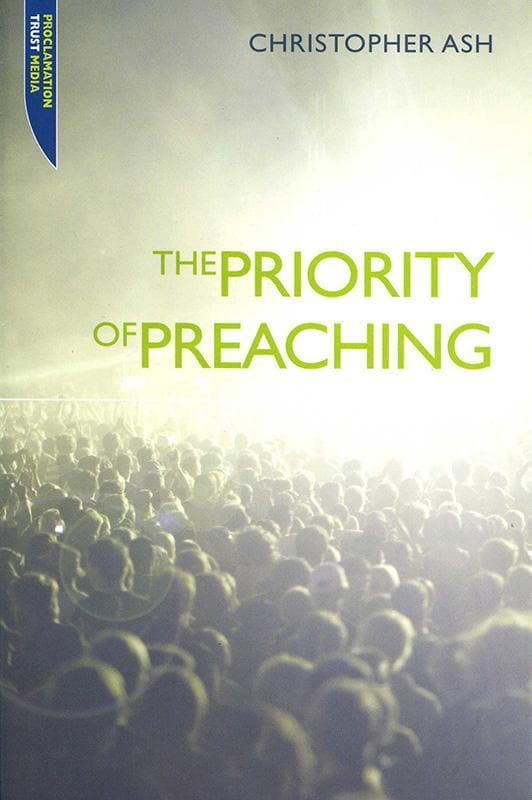
  • The Priority of Preaching by Christopher Ash

    The Priority of Preaching by Christopher Ash

    In The Priority of Preaching, Christopher Ash argues that preaching is not just another church activity but the foundation upon which the church is formed, sustained, and strengthened. Ash presents preaching as the central means by which God calls His people together, aligning the church under His Word to shape their lives, faith, and identity. While the book is a bit academic in parts, Ash’s use of memorable illustrations and his practical advice on the task of preaching make it worth the read.

    Ash builds his case around Deuteronomy, which he describes as less a “law book” and more a “preaching book.” He points out that in Deuteronomy, Israel gathers under Moses to hear God’s Word, binding them together as His people (Deuteronomy 31:11-13). This gathering isn’t about individuals gaining private insight; rather, it’s a communal moment where the people are shaped under the authority of God’s spoken Word. For Ash, this dynamic continues today. Preaching is a way for the church to gather, listen, and respond together to God.

    A major theme in this book is grace, which Ash argues must be central to preaching. He points out that without regular, grace-centred teaching, churches risk becoming exclusive clubs rather than communities of believers bound by Christ. He writes, “only the word of grace knocks down our pride,” reminding us that the gospel keeps believers grounded in humility and dependent on God (Ephesians 2:8-9). This recurring call to grace is a practical one, as it reinforces that the church’s unity and health are not built on shared interests or human qualities, but on the common need for God’s saving grace. Ash’s emphasis here brings to mind Paul’s words to the Galatians, that we are “one in Christ Jesus” (Galatians 3:28), a unity that only grace can sustain.

    Ash insists on the urgency of preaching. He uses an illustration of three apprentice devils who each try a different strategy to prevent people from responding to God’s Word. The final one whispers, “Tell them there’s no hurry.” This tactic succeeds, as people assume they can respond later, just “not today.” For Ash, preaching must challenge this mindset, delivering the message with urgency to avoid spiritual complacency. “The urgency of faith means we need to preach with urgent passionate clarity,” he writes, stressing that preaching should move people to a point of decision. This is a reminder that preaching isn’t just informative; it’s intended to encourage people toward repentance and faith, and “spur one another on toward love and good deeds” (Hebrews 10:24).

    Another key insight is the way Ash views preaching and community as closely connected. He argues that preaching isn’t just for individual growth but for binding the church together as a people. “The church is not a collection of individuals who sometimes assemble; it is an assembly whose members may sometimes be dispersed,” he says. This means that the assembly under the Word reflects Paul’s description of the church as “one body with many members” (1 Corinthians 12:12). It is a reminder that the church is not simply a place to receive spiritual insight but is a gathering that God shapes and grows collectively through His Word.

    In terms of the role of the pastor, Ash sees the pastor as a shepherd whose primary task is to “feed the flock” through preaching (John 21:17). Drawing on theologians like John Owen, Ash describes preaching as the pastor’s core responsibility, one that must be done with diligence and humility. The pastor’s role is not about personal authority but about humbly stewarding God’s Word to guide the church. 

    The Priority of Preaching is a book that reinforces the essential role of preaching for the church. The book has an academic tone that can make it a slower read in parts, but uses illustrations to enliven the chapters and make it more accessible. Although some sections may be dense, the book’s core ideas around grace, urgency, community, and pastoral responsibility make it a helpful resource for those who preach or lead within the church. With its combination of practical insights and vivid examples, The Priority of Preaching is a four out of five stars book, bringing practical depth and encouragement for the Church and the preacher. 

  • J.I. Packer – An Evangelical Life by Leland Ryken

    I first came across J.I. Packer and his writings while I was at university, which was some 20 years ago. And since then Packer has been influential in my faith, particularly through numerous popular volumes that currently sit on my bookshelves. Over the years I’ve found him to be a stabilising and assuring voice on everything from scripture, to ministry, to theology, and ethics. I remember being struck the last time I read his most popular book, Knowing God, just how different his writing is to writers in this current age. Packer’s work is dense, it requires thinking, and steeped in scripture, theology, and history. While he has written for the average Christian his work is of such substance that he puts many of the current Chrsitians books to shame.  

    Due to Packer’s influence in my life I’ve always been fond of reading about the man himself. From various biographies over the years, as well as articles written about him, I’ve managed to get the main outline of his life. A few years ago Sam Storms wrote Packer on The Christian Life, which explores themes in his life from a theological angle, and is a terrific read. And over the course of the last few weeks I’ve made my way through Leland Ryken’s overview on Packer’s life and ministry, J.I Packer: An Evangelical Life

    This work by Ryken is almost three biographies in one. The three distinct parts of this volume deal with Packer’s life in a chronological order, who he is as a person in an attempt to help us understand Packer more, and then a thematic approach to Packer’s life and how they impacted him and his ministry. It is a unique way to do biography, one that is helpful in weaving a picture of his life and ministry together, and also slightly repetitive, which I’ll get to later. 

    If you’re unaware of who Packer is then just know that he has made a considerable contribution to the Christian world. He comes from a low-middle class family in England and gained his education through various scholarships, which ultimately enable him to study at Oxford. His life was all about teaching, which was evidently his calling, and he did this in various capacities. We could say his main focus has been to train people for ministry through theological colleges (or seminaries), including a 25 years tenure at Regent College in Canada. However, even before he got there in 1979 he had already spent 20 years teaching and being an evangelical voice to the broader church in the UK, particularly the Anglican tradition. And today it is through his teaching that he is most known for, culminating through the hundreds of books, articles, reviews, forewords, messages, and lectures that he has presented. His life has been one of commitment and contribution to church, academic, denominational, and broader evangelical life.

    I enjoyed reading Ryken’s take, for want of a better word, on Packer’s life. He writes in an engaging way and made good progress through the chronology of his life. For more people their teenage years and early young adulthood is formative to who they are, and this is the case for Packer as well. When read biography I find you can be overwhelmed by all the person’s accomplishments and what they’ve done – I mean, why would they have a biography written about them in the first place if they weren’t considered so worthy. And this can be the case when reflecting on Packer’s life. It seems his productivity was immense, his output and depth in all his writing and teaching was voracious. And while you or I are never going to match what he did I still found it an inspiration toward something. To do something. To commit to something. In this case, I was reminded of the commitment to teaching, reading, and writing, and spending time intentionally improving these things. In reading Packer you can’t help being inspired by his commitment to the scriptures either, to knowing them and seeking to teach them well and clearly. 

    There were a few times I felt this biography dragged a little. 

    I will concede I wasn’t particularly interested in a couple of chapters, which were focussed on his denominational work or his style of rhetoric. It seemed Ryken was trying to extract a bit too much through his unique structure. However, one particular loss to this book, which I felt was missing, was any in depth look at his married and family life. I got the impression Packer and his biographer wished to maintain that area of his life as private, but it would’ve added so much more. I know he was married to a woman called Kit, but I know nothing of how their relationship worked, whether they had children, and what Packer was like in the home. This I thought was a particular shortfall to the book, not because I wanted any juicy gossip but because there is more to a person than their ministry contribution. 

    Another cost of this unique structure to this biography was its repetitiveness. I don’t know how many times I heard about the conflict Packer had with Lloyd-Jones, how he was no longer involved in the Puritan Conference, the tension of moving from the UK to North America, or the angst evangelicals have toward Packer for his ecumenical contributions. Due to the lenses Ryken applied in the biography some topics and aspects to his ministry life are repeated. 

    Despite what I’ve just said here though I’d still recommend this biography. It was a great read. It was worth the 400+ page investment in reading, and it is an encouraging read for one’s faith and ministry. It gave great insight into Packer’s resilience to continue to uphold the Chrsitian faith through the lens of biblical authority. His interest in the Puritans, which led to the formation of who he was, can’t be understated and inspired me to get on and read a few more of them. His conflicts and relational breakdowns with others who considered him ‘not evangelical enough’ was also an interesting insight and made me reflect on how tribal we can be as believers. 

    In any case, a great read. 

  • My Top Books of 2022

    If you’re a regular reader of this blog then you’ll know books play a key role in my weekly, monthly, and yearly rhythm. I have numerous books going at once. I am surrounded by books in my office. If I’m not reading then I don’t think I’m living a particularly healthy or helpful life. And when it comes to holiday periods I’m usually struggling to decide which books to leave behind and not take with me. 

    This year has involved a few changes in life circumstances but it has also included a strong desire to keep reading, even though there have been times where it has lapsed for weeks on end. In any case, this year I’ve managed to work through 36 books, ranging from biography to practical theology to trashy crime novels. And, as usual, I have a few here to recommend to the interested reader.

    Bonhoeffer on the Christian Life: From the Cross, for the World by Stephen J. Nichols

    I can’t recommend ‘The Christian Life’ series enough, so much so that there are two on this list. 

    If you’re unfamiliar with Dietrich Bonhoeffer then this is a good introduction to him. He is considered a friend to both liberal and conservative theologians with much written about his days as a pastor-theologian in Germany during the 1930-40s. It is clear Bonhoeffer was a very smart and clever man, someone with an exceptional intellect who could interact with scholarship. However he is also known for his mentorship and community-driven focus on what it means to be the church together. This book highlights Bonhoffer’s life in Nazi Germany and the tension of being a disciple in such a regime, his heart as a pastor, and the various theological themes that helped guide his life and understanding of God.

    The Life of Martyn Lloyd-Jones – 1899-1981 by Iain H. Murray

    I think this is the best biography I have ever read. Murray condenses his large two-volume set on Lloyd-Jones into one, and I think he makes it better, sharper, and more poignant. 

    Martyn Lloyd-Jones was a significant Welsh evangelical pastor of the 20th century, sensing a call to the ministry while entering the echelons of the medical fraternity in London, England. Lloyd-Jones’ upbringing wasn’t easy, with his father making some unwise decisions for the family unit that meant they struggled financially. However, given his aptitude and some help along the way Lloyd-Jones studied and was mentored in medicine by the top doctors in Harley St, London. However, in his late-20s he sensed a call to preach and with his wife moved back to Wales to serve in a local church. After 7 years he then moved to London again and was involved as assistant or senior minister at Westminster Chapel. 

    This biography gives a terrific outline of his life and the major turning points in his faith. It works through his childhood and some tragedies that occurred during that time that may have shaped him further in life. The book I have now has oodles of underlines in it and it is an encouraging and inspiring read, particularly for anyone considering or in ministry. Those seeking to know more about a minister-preacher a generation or two behind us will also find it enjoyable. 

    Church Elders: How to Shepherd God’s People Like Jesus by Jeramie Rinne

    I found this a helpful book to consider what the criteria for elders is and also how to think through their role in the local church. It gives a clear understanding of biblical eldership, although some will debate the complementarianism that is explicit throughout. Nevertheless, this is a book worth working through with leadership groups or other pastoral staff. It is worth talking through the chapters presented with elders themselves. This book isn’t everyone’s cup of tea, but if you’re in church leadership or at a church that has people considered ‘elders’ then this would be a helpful volume. 

    Teach Us to Pray: The Lord’s Prayer in the Early Church and Today by Justo L. González

    I read a number of books on prayer in the lead up and during a series I preached through the Lord’s Prayer. I found this work to be the most fascinating as it works through each line of the prayer through a historical theology lens. That is, it talks about the meaning of the text as it has been understood by the great theologians and pastors of church history, working from the early church fathers, through the middle ages, into the reformation and then more recently. I just found this so helpful and it provided more insight into the text. It was also comforting to know how powerfully this prayer has been through the ages and that we continue to be part of that today. 

    The Lion, the Witch and the Wardrobe by C.S. Lewis

    The Narnia series is almost an annual read for me and in this year’s read through I was struck by the classic story of The Lion, the Witch and the Wardrobe. Perhaps part of the joy in reading this again was that I read it with my daughter too, but it again highlighted those Christian themes of discipleship, love, sacrifice, and the whole good versus evil things as well. If you’ve never read it then you’ve got to grab a copy. If you have and it’s been a while then I’d recommend returning to it. 

    Preaching for God’s Glory by Alistair Begg

    Preaching has gone up a step for me this year. In becoming a senior pastor the majority of the years preaching has now fallen to me. This being the case I thought this short book on preaching was a helpful reminder in the task. While I may have read plenty of books on preaching there is always more to learn, think through, and be reminded of. I found this book does all of these things. Plus, Alistair Begg is my favourite preacher of this era so I knew I was going to like it. 

    Philippians: An Introduction and Commentary by Jeannine K. Brown

    Next year our church will spend a significant amount of time in the Letter to the Philippians. As part of my preparation I read through this commentary on the book. It’s a reasonable length, published in 2022, and an update in the Tyndale New Testament Commentary series. 

    I found Brown engaging in her writing of this work and it gave me good insight into the issues that modern scholars are thinking through about the letter. Because it has been so recently released I feel like it has given me good oversight of things commentaries in the past may not have been thinking about. If you’re leading a Bible study on the book, preaching through the letter yourself, or just want some further depth to personal study then you won’t find much better. 

    The Work of The Pastor by William T. Still

    I’d never come across William Still before reading this book. He happens to be a 20th century minister of a church in Scotland and had a strong expository preaching ministry. Again, like Begg’s preaching book above, I found this a helpful volume as I stepped up into the senior leadership role. 

    This is part biography, part war stories, and part ministry tips. It’s not a long book, it’s full of examples that relate to anyone who has been in ministry for a while, and it provides insights to the work from a Scottish perspective. I was encouraged and inspired in parts as it reminded me of the main focus of pastoral ministry.

    Lloyd-Jones on the Christian Life: Doctrine and Life as Fuel and Fire by Jason C. Meyer

    Yep, you read that right, another Lloyd-Jones book, this time in ‘the Christian Life’ series. Flowing on from the Murray biography is a dense volume that not only dips into aspects of his life but gives a greater focus on the theology Lloyd-Jones taught and lived. From a theology of God the Father and God the Son through to the work of the Spirit to a theology of prayer and preaching this isn’t an easy read but a worthwhile one in thinking through such themes. I took a few turns in getting through it but found it helpful in my understanding of God and living the Christian life with solid foundations. 

    Well, this now makes it nine years in a row where I’ve published my favourite books of the year. If you’re game enough you can go back and have a read of previous years here: 2014, 2015, 2016, 2017, 2018, 2019, 2020, and 2021

    If you’re that keen to know all the books I’ve read in 2022 then head to Goodreads to see a summary.

  • 3 Specific Reading Reflections

    Reading is an important building block in my life. It’s part of my relaxation and leisure time, it’s part of my role as a pastor, it’s part of my development both personally and professionally. Reading, forever and a day, has always been part of my life and I can’t really think of a time when I haven’t read. Maybe late high school and into university, but that’s about it.

    Each year I have a certain number of books I seek to read. This number of 26 (equivalent to one per fortnight) hasn’t changed since I was 24 years old. Some years I don’t make this target, most years I exceed it. And I don’t say this for boasting sake, but I say it for goal-setting purposes. I know I won’t be able to finish a book each week. I know I won’t be able to retain as much information as I would like if I read more non-fiction than I already do. I know I prefer to read physical books over audiobooks and ebooks. I know certain things about my reading habits, now having analysed my last 15 years of reading.

    However, over the years I have learnt certain aspects to reading that has helped me know myself more. This includes these three tips below. Perhaps they’ll be helpful for you as you think about your reading too.

    1. Choose Books You’re Interested In

    If you’re not interested in the topic or theme of a book don’t waste your time. There are too many books out there to waste time on ones you’re not interested in. For example, I’m not particularly interested in reading about military battles, so I don’t really read anything military related. I’m interested in sport biographies, particularly cricket and basketball. I’m interested in Christian history. I’m interested in junk-time crime thrillers. None of them may interest you, you may think they’d be so boring. Stay away then. Pick books you’ll be interested in, it makes reading easier.

    2. Stop Reading The Book If It’s Terrible

    There is no need to finish a book if it’s not happening for you. If you are finding a book isn’t meeting your expectations then just stop and leave it. You don’t have to finish every book you pick up. Last year I tried to read a very popular leadership book by one very famous and highly recommended leader. I got about 60-80 pages in and pulled the pin. I found the writing terrible, the examples used were lacking depth, and it just didn’t seem like a book worth the expectations. It was time to finish up.

    3. Use A Pencil, Mark-up the Margins, and Dog-ear the Pages

    A book is to be read, and to be used. Show me a book in perfect condition and I’ll show you a book that either hasn’t been read, thought about, or digested.

    A book is one of the cheapest development tools, particularly if we’re thinking non-fiction, and so we should mine the gold as much as possible. What other lifelong development tool is available for $15-$25?!

    When reading non-fiction I like to use a pencil to underline important sentences and paragraphs. I’ll also dog-ear the page so that I know there’s something important in the book that I can go back to and make reference to or re-read later. I also make notes or comments in the margins that spark thoughts or memories or questions. Sometimes I even write short notes at then of chapters. Doing this slows my reading down, but it also allows me to think through the various issues and helps me learn more from the book. At the end of every read I usually copy those underlines and dog-eared paragraphs into a searchable digital format.

    I get it. I enjoy reading. I enjoy learning. I think it has a place and priority in life. You may not. I get it. However, if you want to get more into reading or would like to improve in it then that’s a few random reading reflections for you. Any you would add?

  • My Top Books of 2021

    I’ll be honest. I’m not particularly satisfied with the balance of my reading this year. Sure, I well and truly went over my goal of 26 books for the year, but the balance of authors and topics just wasn’t right. If I was to analyse it I would say that I didn’t have enough ‘old’ books, ones which might have helped my understanding of the present world from the perspective of a different time and place. Perhaps this might change as I begin to think about next year’s books.

    Nevertheless, there were some great books I did read this year, many of which I would strongly recommend to others and, in fact, have purchased as Christmas presents to fellow pastoral staff members. The books below are all books I gave 5 out of 5. In my opinion they were excellent.

    The Care of Souls by Harold L. Senkbeil
    It was no surprise this book won a 2020 Christianity Today Book Award. While Senkbeil is not of my denominational persuasion, it is clear that he has a great grasp on what it is to minister to people in a congregation. The book walks through aspects of pastoral ministry, highlighting the need to pastor souls within the system of the whole. What I found most helpful was the reminder to focus on people over programs, and the encouragement to give thought to helpful ways in which to care for people in life and death.

    Gentle and Lowly by Dane Ortlund
    This book has also won many plaudits and has been promoted heavily in certain circles. I loved the reminder of Jesus’ own description of himself as ‘gentle and lowly.’ I found the first half of the book the most compelling—so compelling that I used Ortlund’s angle in a sermon I preached on Matthew 11:28-30. In a time of busyness, change and added pressure, this book helped to remind me of how Jesus is the one in whom we can rest.

    Spirit and Sacrament by Andrew Wilson
    Our young-adults group did a four-week series on spiritual gifts earlier this year. I read plenty about the topic but found this book most helpful. While the Baptist in me had a few quibbles, the understanding of the Spirit’s work through the gifts today helped solidify my continuationist position. This is not a long book, but it is profound and gets straight to the core issues surrounding spiritual gifts and ordinances.

    Congregational Leadership in Anxious Times by Peter L. Steinke
    What other book does one need to read in the times we live when everyone seems anxious, weary, and stressed by the pressures of the day. Despite being written a little while ago, it is still helpful and helps the reader understand the ‘system’ of our churches. It can help us appreciate, not only understand, the levels of anxiety within our communities, and also how best to lead a congregation in these times. An excellent read for anyone in pastoral ministry

    Visit the Sick: Shepherding the Afflicted and Dying in Your Congregation by Brian Croft
    This is a short practical guide to help pastors and pastoral carers help those who are sick. Brian Croft uses his years of expertise in ministry to provide practical suggestions in how to care for those who are locked-in due to their health, or who need visiting in hospital or at home, or who need to be cared for because loved ones are dying. A perfect book to work through with a group of people and apply it to your local church community.

    Read to Lead by Jeff Brown
    I jumped on one of those pre-release deals to gain a whole lot of other resources alongside this book. I suspect that any of us who have written at TGCA or in these ‘Year in Books’ series would agree that our leadership has been helped by our reading. This book offers both anecdotal and research-based insight into the value of reading. It is a personal growth book with the sole purpose of encouraging leaders to read more and make time for it. I was inspired by the reminder of how the accumulation of reading helps widen and mould my leadership. The importance of reading can’t be underestimated.

    The Looming Tower: Al-Qaeda and the Road to 9/11 by Lawrence Wright
    With the 20th year anniversary of 9/11 this year, there were plenty of books, podcasts, and documentaries reflecting on its impact. I found myself listening to this in-depth audiobook, covering everything from the beginnings of Al-Qaeda, the political climate of the 1970s through to 2001, and the formation of those participants involved in the event itself. It was a compelling 15-hour listen, and I’d recommend it.

    Expositional Preaching by David R. Helm
    Again, this book isn’t a long one but is a great reminder of the importance and place of expositional preaching in the life of the church. While there is a brief case made for the priority of this preaching in the church, I found the practical aspects formational. Topics such as the importance of systematic theology; the balance of contextualisation; the arrangement of material in the sermon; effectiveness through understanding your audience, make this book a great gift for your pastoral team or a book to work through together.

    Leadership is Language: The Hidden Power of What You Say – and What You Don’t by L. David Marquet
    Leadership has evidently been a theme in my reading this year, and this was probably the best of the secular leadership books I read. Marquet is known for his TED talk and first book, Turn The Ship Around, which focusses on how, as the commander of a poor performing submarine, he made it the best performer by enabling others to make decisions. Leadership is Language focusses further by highlighting the need to not only ask others to collaborate but also to give people time to pause and reflect on what might help make the work more effective.

    I found this book helpful in providing me with better questions to ask. Marquet provides great examples of when and how to put intentional leadership into practice through the language we use, rather than stifling collaboration through directive and authoritarian questions. This is certainly a worthwhile read for those of us leading teams of people.

    This is now the eighth year in a row I’ve published a post that outlines my favourites books for the year. You can go back and have a read of previous years here: 201420152016201720182019, 2020.

    This post was also published at The Gospel Coalition Australia as part of their ‘My Year In Books’ series.

    If you’re that keen to know all the books I’ve read in 2021 then head to Goodreads to see a summary.

  • My Top Books for 2020

    I’m getting in early this year by releasing my list of top reads a few weeks before we see the back of 2020. For the last six years I’ve posted about what I’ve read each year and I might as well continue the tradition into a seventh. 

    I’m not sure whether it was because of what 2020 became but I have smashed any reading goals I had this year. Each year I aim to read, on average, one book per fortnight, that’s 26 books per year. By the end of May I had reached that goal. What this meant was that I had plenty of time to read more over the coming months, and as it stands today I’ve read 53 books for the year. This is really pleasing and definitely my best reading year ever. 

    Throughout I’ve read a range of genres – sport biography, missions history, theology, politics, church leadership, fiction, biblical theology and commentaries, a couple of books my daughter is into, and more. There is a sense my reading this year was a bit more balanced than other years, which was also pleasing. 

    So, without any further ado, I present below a list of books I thought were 5 out of 5 stars. And if you’re interested in reading my top reads from previous years you can do so here too: 20142015201620172018, 2019). 

    Enjoy. 

    The Ruthless Elimination of Hurry by John Mark Comer

    I started off the year wishing for more rest, space, and slowness in my life. This book articulated the importance of rhythms and rest and Sabbath, and many other spiritual practices that help ground us in life in God. I found this an excellent book, and it’s probably time to read it again. As I look at my bookshelves I do notice it missing so it evidently was kept by someone who borrowed it! Good books always disappear. In any case, this is a helpful book that gives rise to habits and systems in life that contribute to sustaining a life-long, well-paced, Christian life.

    Along Came A Spider by James Patterson

    The best fiction book I’ve read, this year at least and possibly ever; although who can top The Partner by John Grisham–I digress. This is a serial killer crime thriller, one of Patterson’s first ever novels published in 1983. The suspense and the build up is terrific, and there’s a great twist at the end which gets you. It’s violent and disturbing, but what do you expect from this kind of genre? Top shelf fiction. 

    On Being A Pastor by Derek Prime and Alistair Begg

    Improving in my vocation and my particular role as pastor is always high on the priority list each year. And this book was certainly a big help in doing so this year. I really appreciate everything Alistair Begg shares, his sermons, conference messages, and witings. Here he partners up with his former mentor-pastor Derek Prime and they take you through the theological and practical of operating as a pastor. I found this immensely helpful to think about in my role and in developing others in the ministry. It also provided many tips to help in areas of preaching, pastoral care, time management, and the like. This along with some broader chapters dealing with calling and vocation as a whole were useful. 

    The Chronicles of Narnia by CS Lewis

    Once we got into lockdown for a second time I became obsessed about re-reading the Chronicles of Narnia. Since finishing the series again I have been listening to the theatrical audio series produced by the BBC and others. I’ve been listening to them as audiobooks while in the car and doing chores, and they were easily found on YouTube. They’re so good. Anyway, a particular shout out to The Horse and His Boy and also The Voyage of the Dawn Treader (my favourite of the series). If you’ve never read this series of seven short books that detail the story of Narnia then do yourself a favour. Lewis is such a good writer and his illusions to the Christian life are throughout. 

    The Liturgy of the Ordinary by Tish Harrison Warren

    I’ll admit, there was a theme in my reading regarding spiritual practices. This was another of at least 3-4 I read overall this year. Warren really writes in an engaging way, she’s so good. And here in The Liturgy of the Ordinary she writes in the intersection of ordinary life and the Christian faith. She takes big theological understandings and helps us see their relevance in the mundane everyday practices and rhythms of life. Whether it is waking up and making your bed, to preparing food and eating with others, or doing the dishes after a meal, each has relevance to the Christian life and at times it’s a mindblow. I highly recommend getting your hands on this, I even borrowed it from the local library! 

    Owen on The Christian Life by Matthew Barrett and Michael Haykin

    Each year I usually read a few biographies and this year I landed on John Owen. Owen is a Puritan from the 17th century, and extremely influential in the Reformed and Presbyterian church. This book details his life alongside the theological contributions he has made to the faith. Owen is well-known for his writings and sermons, particularly around the doctrines of the Trinity, communion with God, and sin and sanctification. For example, when writing about communion with God he says:

    “When the believer has a taste of this communion with his Savior, sin is bitter on the tongue. Furthermore, says Owen, the believer is on guard against sin, lest it should interrupt and disrupt this sweet communion he enjoys so much with his Savior. Owen writes: When once the soul of a believer hath obtained sweet and real communion with Christ, it looks about him, watcheth all temptations, all ways whereby sin might approach, to disturb him in his enjoyment of his dear Lord and Saviour, his rest and desire. How doth it charge itself not to omit any thing, nor to do any thing that may interrupt the communion obtained!”

    Great book. Have a read. 

    The Sermon on the Mount by DA Carson

    I hung out reading the Sermon on The Mount for most of the year. It goes hand in hand with the themes of spiritual disciplines and grounding faith in action, among other things. And so to help understand the various sections of the sermon I read Carson’s commentary on it alongside. Carson is always clear, concise, and compelling. He’s one of the best commentators in the world and is highly regarded. This was originally a series of lectures turned into a brief commentary. Whether devotionally like me, or for preaching and teaching, I’d recommend dipping into this one. 

    Anyway, there’s my list for this year. Let me know what you read and enjoyed this year, I’ll add it to my list!