Tag: Church

  • Billy Graham And Gramps

    With the passing of Billy Graham overnight there is much to thank God for in terms of his ministry and impact, not only within Christianity in the twentieth century but the world at large. Billy had an impact in over 180 countries and is said to have a major influence in seeing over 200 million people come to know Jesus for themselves.

    He is quite possibly the greatest evangelist ever, in the same ilk as Whitefield, Wesley, and Spurgeon.

    During the 1950s and 60s my grandfather, Gordon Coombs, was the pastor of Opawa Baptist Church in Christchurch, New Zealand. A few months ago, I had a brief conversation about what pastoral ministry was like in those days, trying to mine as much gold as possible. Part of that conversation, I remembered this morning, was about the 1959 Billy Graham crusade in Christchurch. In light of Billy’s passing I thought I’d give him a call and see whether he would be willing to reflect a little more about that time.

    Here are some of those memories and reflections.
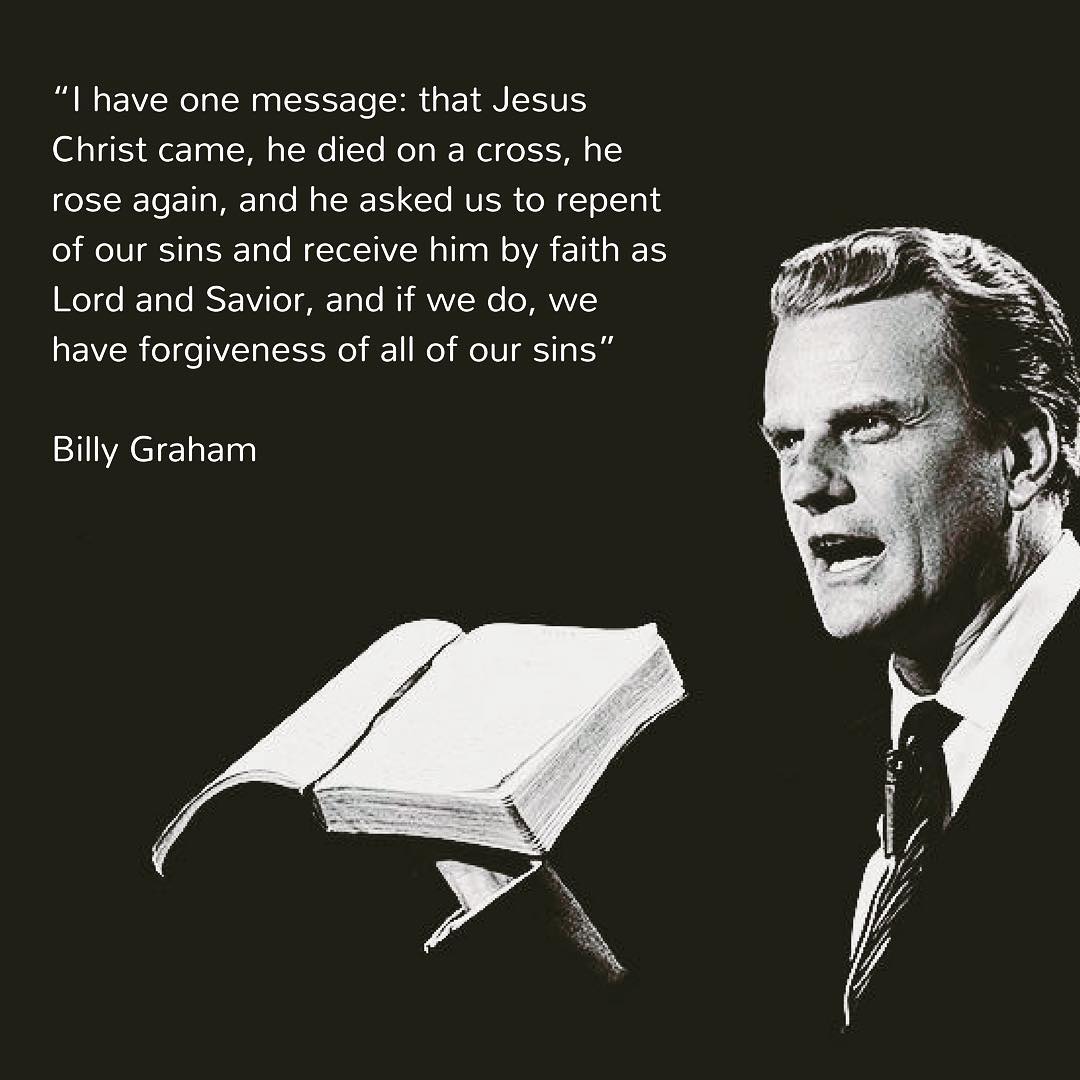
    Billy Graham Quote

    The 1959 crusade was held just down the road from Opawa Baptist Church (OBC), at Lancaster Park. Literally, they are on the same street. Being the pastor of the most local church to the stadium there was clearly going to be some involvement.

    As Gordon remembers there were three main areas he was involved in.

    The first was to be on the organising committee for the eight-day long crusade. This involved preparation meetings and co-ordination with other churches in the city to stage such a large event.

    The second main task he had, with the help or many other volunteers from other churches, was to be the host church for the follow-up of the crusade. This involved the use of OBC’s large hall where all the response cards would be collected, sorted, and distributed to the various churches across the city. After each night meeting, and once the counselling had been completed, this follow-up process would begin in the OBC hall and involve many volunteers late into the night and early morning.

    And the third task, of vital importance, was to allow the crusade to borrow the brand new OBC organ for the entire eight days. This organ was expensive, it was new, and it was seen as a highly prised possession of OBC. And it would be sitting out in the middle of Lancaster Park day and night. However, after one of the Sunday morning services had been completed Gordon proceeded to announce the situation to the congregation. He asked for their thoughts, even though he didn’t know whether they would allow it. And as he said,

    “There were some of the older people who put up their hands in opposition to this idea, but I told them that if we did this I am sure the Lord would bless us for it. And in doing so we had 40 new conversions out of the crusade.”

    And it was these 40 new conversions that increased the size of the congregation by a third. For the churches there were new people joining congregations all over the city. There was an increased vigour in evangelism and almost a mini-revival.

    “Some of the older people thankfully got their noses out of joint because they couldn’t sit in their same seat at church anymore, but there were some marvellous people who joined OBC in those days through the influence of the crusade”.

    And it wasn’t only the churches that felt the impact.  It seems that a by-product of this crusade, particularly in the community, was a freedom to speak about Christianity; “for a short period of time Billy Graham and his crusades were on everyone’s lips”. And this allowed for people to speak freely to their friends and neighbours about the Christian faith.

    Being on the committee Gordon did get to meet the man himself, meeting him as he arrived at the airport in Christchurch. Apparently, his eldest son (not even five at the time) was keen to go and meet him too but had a serious fever at the time. This meant he could only go as far as the airport window and look out in envy. But what Gordon does remember of him and his ministry was that of a humble man, committed to preaching the biblical gospel to everyone he could.

    It is interesting to note that his arrival and ministry through the crusade also bought with it challenges. Some of the ministers in the city were not in favour of his coming because “they wouldn’t go along with his biblical emphasis”. And this is nothing new to those of us who have read a little about his ministry and methods. But he did,

    “…bring renewal in the life of many ministers and because of his emphasis on the bible there came an increase in biblical preaching and the restoration of the authority of God’s word; it’s importance and centrality.”

    If nothing else, I had a great conversation with my grandfather and was again reminded of how God continues to be at work in times and places and with people we will never know.

    RIP Billy Graham.

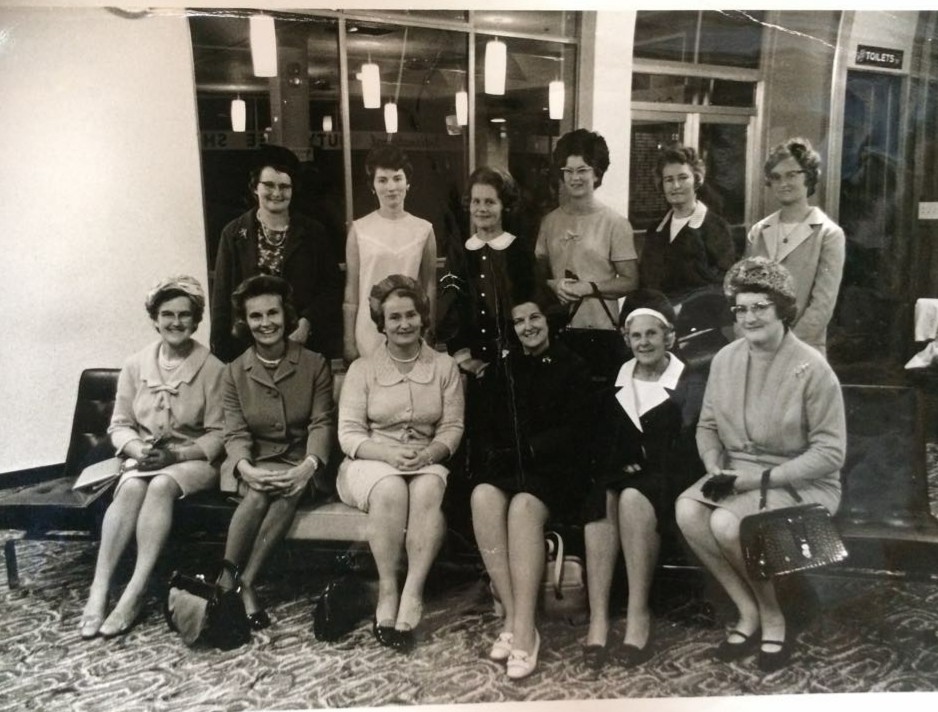
    Below are a couple of photos from the time of the crusade, various people meeting Mr and Mrs Graham.
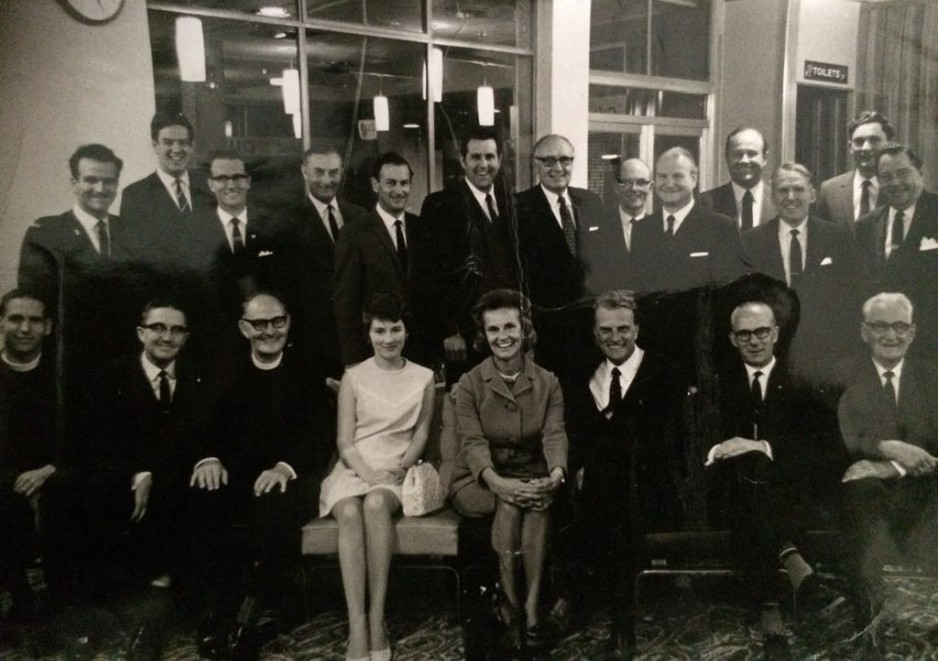
    Billy Graham Crusade 1959 - Men

    Billy Graham Crusade 1959 - Ladies.jpg

  • On Planning Your Youth Ministry

    I have to admit that I often enjoy the planning process of youth ministry. There is something about the start of the year, when the calendar is fresh and empty, that inspires creativity and excitement about the ministry year ahead.

    Over time I’d like to think I’ve grown in my understanding of how to plan a youth ministry year. This growth has helped in solidifying my process and systems in preparing an event, a curriculum, or even gaining a grasp on the coming 12-months. It’s not always easy taking the ideas and inspiration for youth ministry and making them fit into an already busy year. However, I’ve found it helpful to put my planning in perspective as I look ahead to the year.

    On Planning Your Youth Ministry.png


    (1) Make A Plan To Plan

    There needs to be some time set out in your calendar to actually plan.

    This will require planning itself.

    But as the saying goes, “failing to plan is planning to fail”. With this in mind I’d encourage you to look at your calendar over the next couple of weeks and block out a whole afternoon to plan the coming months (or more). First and foremost, there needs to be time set apart for planning our youth ministries.

    Go.

    Do it now.

    (2) Put Planning In Perspective

    When I haven’t planned well I can get into an anxious and stressful state.

    But when I have planned an event or a meeting to the best of my ability I am considerably less anxious. Even when my planning fails, knowing that I’ve done all I could have in the lead-up allows me to reconcile the failure. It puts me in a better position to evaluate what is happening while things are going wrong and also gives me the metrics to learn what I could’ve done better.

    It’s also helpful to be reminded of the words in the book of Proverbs, that while

    “…the hearts of humans plan their course, the Lord establishes their steps” (Proverbs 16:9).

    With this kind of thinking my planning is put into perspective.

    I can do as much as I can, as well as I can, but at the end of the day I need to recognise God’s hand in these plans too.

    Keeping this in mind helps me from relying on my own skills, abilities, and self and turns my heart to praise as I know I’m part of God’s wider, global, mission in youth ministry.

    (3) Move Those Plans To Action

    We could spend a lot of time planning and little time actually implementing those plans.

    Remember to make sure you have the time and energy to put these plans into practice. Each year that goes by I always find an adjustment is needed in my schedule to move the youth ministry forward.

    At the end of the day I am hoping to implement the plans I make, having a heart for the Lord to use them in whatever capacity he chooses.

    May it be so for me, just as it may be for you as you serve God and his people.

  • Idea: Multiple Churches, One Youth Pastor

    An enjoyable part of working within the #youthmin world is connecting with other youth pastors and youth ministry practitioners from across the globe. For a number of years I’ve been following a guy called James in the UK. He regularly blogs about youth work and ministry from a British perspective. I often find his posts helpful, and it really is just him vomiting his thoughts onto the page (or screen as it may be).

    As it happens, James and I are reading the same book at the same time. Andrew Root’s latest work, “Faith Formation In A Secular Age: Responding To The Church’s Obsession With Youthfulness”. Yesterday, James had a few reflections on the beginnings of the book and I found it useful to engage with. You can read it here. In this post I’d simply like to engage with what he has written and add my two cents too.

    Basically, James asks the question, after reading a chapter or two of the book, “Has the church embraced youthfulness – but given up on young people?”

    James then outlines a few thoughts on how the church in the UK has been focussed on young people, and a lot of the time only young people, perhaps to the neglect of other generations. But, one of the key lines in this reflection from James is, “…I imagine that in the UK the drive to attract young people has less to do with authenticity, and more to do with survival.”

    This is a key comment.

    It is a key issue the church battles with today, and one that youth pastors and other church leaders know, feel, write about, and talk about a lot.

    The first part of Andrew Root’s book is a fascinating look into the rise of youth culture in society, particularly American culture, and the effect this has had on our thinking. His contention, better argued than I will articulate here, is that the West, since the 1960’s, has had an obsession with ‘youth’, which filters into everything we see around us. So much so that whenever we think of something to do with ‘youth’ we believe it is authentic and cool. That which is authentic is generally that which is young, yip, and youthful.

    In our churches we’ve seen this occur over the last 40-50 years through the strong rise in the youth ministry movement. Prior to the 1960’s, and the beginnings of student and youth orientated para-church organisations, the sole youth pastor within a local church community was not even a thing. Now, almost every church’s second staff appointment would be a youth pastor. To look after the ‘young people’ of course.

    Furthermore, there has been a sharp rise in considering ‘youthfulness’ as being the epitome of church and church life. For a church to be authentic, happening, and growing, it needs to have the vibe that it is young, cool, and hip. When you look around Christendom currently, this sort of vibe is especially evident.

    James talks about how many of the youth workers and pastors in his region have been given the flick because of financial restraints and the like. He talks about the decrease in specialist youth workers in his region regularly, it seems to be a major concern.

    But this got me thinking about how many churches I know who have full-time youth and young adult pastors. Generally, it is only the ones who are large, perhaps with a Sunday morning attendance of 250+, that can afford such an expense. I am also aware that there are plenty of smaller churches who seek to employ a youth pastor (or similar) but can only afford to days per week at the most.

    My question is, is the church of the future willing to work together in order to pay someone a full-time wage but have their youth work cross local church boundaries?

    In other words, would two or three smaller churches in a particular area be willing to pay for one person to cover youth ministry in their region? 

    I think this would be an interesting experiment for local churches to grapple with.

    This would provide someone with full employment, paid through two or more churches, while giving broader scope for the churches than their own little patch. Some might call it kingdom thinking I suppose.

    And this links back to the key comment James was making when he said, “…I imagine that in the UK the drive to attract young people has less to do with authenticity, and more to do with survival.”

    Rather than actually think about survival (which I understand is a massive issue when the finances are barely paying the overheads), wouldn’t it be better to think more strategically and out-of-the-box in regard to youth ministry? When we’re solely thinking in terms of survival, looking to ‘attract young people’, then we’ve lost the plot.

    What we need is a vision that understands the realities of what it is to work in faith-based youth ministry, but have that aligned with a larger vision of God being at work through his people, the Church. And, along the way it would be worth experimenting and working together with other churches for the spread of the gospel and work of his kingdom.

  • Chair of Deacons Postpones Meeting To Confirm Identity of Youth Pastor

    The monthly deacons meeting of Eastbourne Baptist Church was temporarily postponed 45 minutes on Tuesday night as the identity of the youth pastor was confirmed.

    It is understood that Chairman Nigel Andrews was unsure of the identity of the man sitting to his left; needing confirmation it was indeed the church’s youth pastor, Jason Jackson.

    Chairman Andrews chose not to start the formal proceedings of the meeting until the man’s identity was proven. Only after conversation with other members of the diaconate, and a phone call with the young man’s mother, did Mr Andrews finally begin the meeting.

    The alleged reason for Mr Andrews’ confusion was that he had never seen Youth Pastor Jason in a collared shirt.

    Chair of Deacons Postpones Meeting To Confirm Identity of Youth Pastor

    After gathering the thoughts of those on the committee he then asked Pastor Jason to produce his driver’s licence. Still unconvinced Chairman Andrews had a brief conversation with Mr Jackson’s mother, confirming his choice of apparel for the evening. It is believed there was a 25 minute delay in getting through to Pastor Jason’s mother, she was apparently outside hanging up his hoodies on the washing line.

    The meeting finally got underway 45 minutes after its scheduled start.

    After the meeting Deaconess Jennifer commented that she too was unsure who was sitting next to the Chairman. She thought he might have been the consultant to help the church in the next stage of their building program. But she was pleasantly surprised to find that it was indeed Youth Pastor Jason and has encouraged him to dress in similar fashion more regularly. Jennifer is quoted as saying, “Usually I see him wearing t-shirts and hoodies. In fact, I’ve never seen a youth pastor of EBC wear a collared shirt. It’s a new level of professionalism. If this continues then a number of parents may actually believe Jason to be an actual pastor”.

    Despite the confusion Youth Pastor Jason said that he understood the reason for the confusion. He said, “No one is more surprised as I am in finding myself wearing a collared shirt. I saw it in my wardrobe and realised I hadn’t worn it since I graduated high school. Now that we’ve gotten over this speed bump I look forward to coming to these meetings in similar attire”.

    Likewise, Chairman Andrews agreed that the collared shirt is a good move for Mr Jackson. He said, “Despite the hiccup at the start of the meeting I was impressed by Youth Pastor Brad’s attention to detail for such important meetings”.

    In coming days Chairman Andrews will encourage Eastbourne’s Senior Pastor, Daniel Hooper, to have a word with Jason, suggesting he buy a new shirt for the next meeting.

    Late last week Mr Jackson’s mother was seen lining up at Target with a couple of new collared shirts ready for purchase.


    I submitted this satirical post to The Babylon Bee. It wasn’t accepted. I thought it worth publishing here. I hope you enjoyed it as much as enjoyed writing it. 

  • Day 14 – You Are Relational

    “They devoted themselves to the apostles’ teaching, to the fellowship, to the breaking of bread, and to prayer. Everyone was filled with awe, and many wonders and signs were being performed through the apostles. Now all the believers were together and held all things in common. They sold their possessions and property and distributed the proceeds to all, as any had need. Every day they devoted themselves to meeting together in the temple, and broke bread from house to house. They ate their food with joyful and sincere hearts, praising God and enjoying the favour of all the people. Every day the Lord added to their number those who were being saved.” (Acts 2:42-47)

    The God we worship is a relational God.

    He could’ve done anything he liked and what he chose to do was create humanity in order to have a relationship with him. We see in the first book of the Bible that he not only creates the world and everything in it, but there is a particular emphasis on him creating humanity as the pinnacle of his creation. We as his creatures reflect the image of God. We carry within us, and possibly outside of us, aspects of God himself. In recognising this we find we are image bearers of God. We bear the image of God as we walk and talk, as we connect and commune with others.

    God, being a relational God and creating us to be in relationship with him, therefore, puts into us something of that relational characteristic that he has.

    We reflect God’s relational character in our lives.

    Therefore, we find we have a yearning for relationships.

    We seek after relationships with others, we seek their company, friendship, acceptance and love.

    You're More Than A Number - You Are Relational

    The explosion of social media in recent years highlights the fact that we want to tell others about ourselves, and probably highlights our voyeuristic tendency to want to see what others are up to as well. But, it seems that we want to be in relationship with others, and seek that relationship in a variety of places. Whether it is face-to-face or online there is a yearning and desire for relationship in our lives. Some find these fulfilling relationships in positive places, others fall into the arms of harm and pain, suffering as they seek to find the relationship they desire.

    This creation narrative in the opening chapter of the bible (Genesis 1:26-28) reminds us we are not accidents and that we are made for one-another. Not all relationships need to be physical or sexual, but they do need to be person to person, seeking to love one-another because that is what we are created to so. This kind of relationship is not simply between one person to another either. It is relationship with groups of people, with a community.

    Thankfully, God in his infinite wisdom provides a community for believers that is to meet aspects of this relational need.

    God has designed a community in the form of his people, the Church.

    When we think of church we may not have great things to say about it. We may think of it as only a meeting place for singing songs, praying prayers, and hearing someone speak to us. Church is meant to be much more than a place to gather for 90 minutes on a Sunday. The church is to be a place where we find God-fashioned community.

    In Acts 2:42-47 we see the early church, those who had contact with Jesus in his lifetime and witnessed his presence in physical form, came together with other believers in community. As part of that coming together they had meals together, prayed together, heard teaching together, and simply hung out with one-another. This was the germinating church, the church in its infancy as believers came together, bonded together, and were in community.

    This is God’s people living together as God’s people.

    In today’s Western society we can look around and see that our churches and communities of faith are not expressing themselves in the same way. Due to cultural and societal factors this doesn’t occur as it did in first-century Palestine. But as God has designed it we are made to commune with one-another on a regular basis, as an expression of our love for God and love for one-another.

    In the book of Hebrews 10:24-25 we are encouraged to not stop meeting together but continue to do so in love and worship.

    “…let us watch out for one another to provoke love and good works, not neglecting to gather together, as some are in the habit of doing, but encouraging each other…”

    This is not only an expression of church but an expression of worship through community.

    Just as we are made for relationship with God and with each other we are also made to express our relationships through community. Together with a group of people we play an important role in helping people know they are loved by God and others.

    FOR REFLECTION

    • What relationships are most important to you?
    • How does knowing you were made for relationship and community affect your view of others?
    • In what ways can you contribute to a local church so that others know the love of God?

    This is part of a devotional series called You’re More Than A Number. To understand the purpose of these posts then please read the series introduction. If you’d like these delivered to your inbox, please sign up to follow this blog or my FB page.

    1. You Are Created
    2. You Are Sinful
    3. You Are Forgiven
    4. You Are Called
    5. You Are Redeemed
    6. You Are Loved
    7. You Are Saved
    8. You Are Free
    9. You Are Chosen
    10. You Are A Child of God
    11. You Are A Slave
    12. You Are Made For Good Works
    13. You Are A Follower