Tag: Devotional

  • Christmas 2025: The Shepherds

    The ShepherdsLuke 2:1–20

    Ah, the shepherds. Those who go unnoticed, seem unimportant, and are largely invisible. Their work, of course, is constant. It’s dirty work. It doesn’t win them any points on the social scale. No one would be expecting God to speak through these guys, but that’s exactly what happens.

    This announcement to the shepherds by the angels is dramatic. God chooses the last group anyone would think to invite, shepherds working the overnight shift. And in such a moment the shepherds sing Gloria in Excelsis, not to kings, or those in power, or the influencers of the day, but for the people who never made it to the temple. They sing for those who are overlooked, responding to this announcement of good news with great joy and wonder there in v14, “Glory to God in the highest and on earth peace among those with whom he is pleased”.

    Isn’t this a reminder that the gospel is meant to be received with fresh eyes and a ready heart? Doesn’t this give us a quiet correction to our assumptions about who God uses and who He seeks to draw close?

    It’s like the late-night cleaner in the large office building in the city. It’s like the nurse on night shift who cares for patients while the rest of us are asleep. It’s like that parent that wakes early, while its still dark, to prepare the school lunches. These are people we may walk past without noticing. These are the people who persevere with resilience and quiet strength. These are the people who, if announced in our day, would hear this good news first.

    Make a point this week to notice someone you usually overlook. Might it be the barista, the cleaner of the toilets at your local shopping centre, the crossing supervisor at school, or the bus driver? Offer a word of thanks, gratitude, or encouragement.

    Who around you might be waiting for the simple reminder that God sees them?


    This devotional series runs alongside our Songs for the Saviour sermon series this Christmas. It explores the four ‘songs’ of Luke’s Gospel, which in their historical Latin form are known as the Magnificat, Benedictus, Gloria in Excelsis, and Nunc Dimittis.

  • Christmas 2025: Zechariah

    ZechariahLuke 1:56–80

    No matter how long you’ve been a follower of Jesus there seems to always be a way for doubt to sneak in. Here in the story of Zechariah we read about a sliver of doubt that that brings change. Zechariah is not a faithless character, he’s a man who has spent years praying, serving, waiting, and longing for God. Perhaps life had taken a toll by this point, perhaps hope was wearing a little thin for him. We don’t know, but what we do know is that when the angel appears with this unbelievable news, he doesn’t fully trust it. There is a quiet doubt that sits there.

    In response to this doubt God does not dismiss him. He doesn’t replace him with someone else full of faith and life. No, His response is to put him into silence. Nine months of silence. Unable to speak. Can you imagine?

    This isn’t punishment though; it is more about formation. It gives Zechariah the chance to reset. It gives him a chance to listen to God again. When Zechariah’s voice returns it isn’t a soft, fragile, or timid voice. It is now strong, full of praise from the resultant faithfulness he has seen in God. His song, in v68-79, is clear, full of conviction and hope. He has a new vision of God that brings worship and praise.

    This is an encouragement to anyone who has a spiritual flat tyre. This is a message for those of us who continually wake spiritually tired even though we’ve been getting enough sleep. It’s like the car that goes and goes but eventually runs out of petrol and can’t go anymore. The key is to fill up, to reset, to rest in God and allow Him to speak into our well-worn heart.

    Take five minutes of silence today. No words. No lists. No phone. No expectations. Just be still in God’s presence. Allow Him to speak to you. Just be in Him.

    Where might God be using frustration, fatigue, or doubt to draw you into greater trust?


    This devotional series runs alongside our Songs for the Saviour sermon series this Christmas. It explores the four ‘songs’ of Luke’s Gospel, which in their historical Latin form are known as the Magnificat, Benedictus, Gloria in Excelsis, and Nunc Dimittis.

  • Christmas 2025: Mary

    Christmas often arrives with equal parts excitement and pressure. We’re surrounded by familiar songs, familiar expectations, and familiar busyness, yet underneath it all sits an invitation from God.

    This devotional series runs alongside our Songs for the Saviour sermon series this Christmas. It explores the four ‘songs’ of Luke’s Gospel, which in their historical Latin form are known as the Magnificat, Benedictus, Gloria in Excelsis, and Nunc Dimittis.

    During our services we will explore each passage more fully, but in these devotionals, I hope we will see how our story intersects with each of the characters of the narrative. They remind us that God doesn’t wait for perfect conditions or give much thought to impressive resumes or extraordinary strength and power. Instead, God works through ordinary, unvarnished, and fragile human lives.

    These devotionals are an invitation for us to pace ourselves this Christmas and remind us that the same grace that shaped those in the Christmas story is the same grace that continues to shape us.

    MaryLuke 1:39–55

    When we least expect it, we often find God at work. Mary is a very ordinary girl, living in a very ordinary town, one that’s never made the travel bucket list of anyone, ever. But God arrives at her doorstep, with a calling that would change the rest of history. She doesn’t feel ready, she hasn’t been rehearsing for this moment, yet her response is remarkable. A response that shows courage and trust in the confusion.

    Mary’s song is a song from the heart, with evident joy and wonder from what she has just been told. She praises God’s power, mercy, and faithfulness, stepping into a future that is unknown and will make life complicated for her. Any plans Mary had are now disrupted, with more questions than answers at this point.

    Mary’s faith is an honest faith though. There is uncertainty, but she is still able to say in v38, “May your word to me be fulfilled.” What faith! And what an approach to take as disciples of God in Christ. Mary surrenders not knowing how everything will turn out, but she is trusting in the One who does.

    Mary’s place in Scripture reminds us that God doesn’t outsource His plans to the impressive. He gives His kingdom work to people who feel small and unimposing. People like her. People like us.

    Mary’s experience is certainly unique, but she is like the new mother who realises they are now responsible for far more than they imagined. She’s like the graduate teacher who is given a class she’s not sure she can handle. It’s that moment when responsibility arrives and confidence needs to catch up.

    It is in this space where God often does His finest shaping.

    This week, begin each day using Mary’s words as a basis for prayer, “Lord, let your word shape my life today”. This isn’t a task to get done, it’s a way of opening our day to God’s leading.

    Where might God be inviting you to offer Him a hesitant but faithful ‘Yes’ this Christmas?

  • The Resurrection: The Power of the Gospel

    Scripture: Mark 16:1-8

    He is risen! He is risen indeed!

    As Easter Week concludes today, we go out on an incredible high. For today we are reminded of the power of the gospel, of the power of God in restoring His people to Himself. This restoration achieving its completion through the resurrection of Jesus Christ.

    The resurrection of Jesus is not simply a historical event, but a transformative reality that has the power to change our lives. It is a declaration of the power of God to bring new life out of death, to restore and renew all that has been broken. Just as Jesus’ body was raised to new life, so too can we be transformed by the power of the Holy Spirit and made new in Him.

    I’m no runner but I’ve known plenty of people competing in marathons or triathlons where they push their bodies to the limits. When they cross the finish line, they are exhausted but full of excitement and accomplishment as they have the satisfaction of knowing they have completed the race. Like crossing the finish line after a race brings a sense of satisfaction, the resurrection reminds us of the victory we have in Jesus, giving us a reason to hope and to trust in a loving and powerful God. The resurrection of Jesus represents for us the victory over sin and death, and in so doing restores us to God. In this restoration we find we can have a relationship with Him, and a satisfaction in life and death because of His work for us.

    The resurrection is another tangible demonstration of God’s great love and grace for all who believe. In amongst the sin, the suffering, and the hopelessness that can often pervade our news and social media streams, we can know that the resurrection gives us a reason to hope, a reason to trust, and a reason to love.

    Through the power of the gospel our lives are impacted, they are transformed. And this impact is not just for us but for the entire world. Through the resurrection Jesus’ victory over sin and death has the power to bring about healing and restoration throughout our world. It is a message of hope for all people.

    While today marks the end of this series and the end of the Easter events it is only the beginning of living in the power of the gospel. As we have worked through these passages from the Gospel of Mark we see the ways in which Jesus fulfils God’s plan for humanity, fulfils that which was written long ago, and fulfils the hole in our soul with the satisfying love, hope, and peace we have with God.


    This is a devotional series I’ve written for my church for Easter Week 2023. It follows the Passion narrative in the Gospel of Mark. This is day 8 of 8.

    If you’d like them to hit your inbox each morning then please subscribe here.

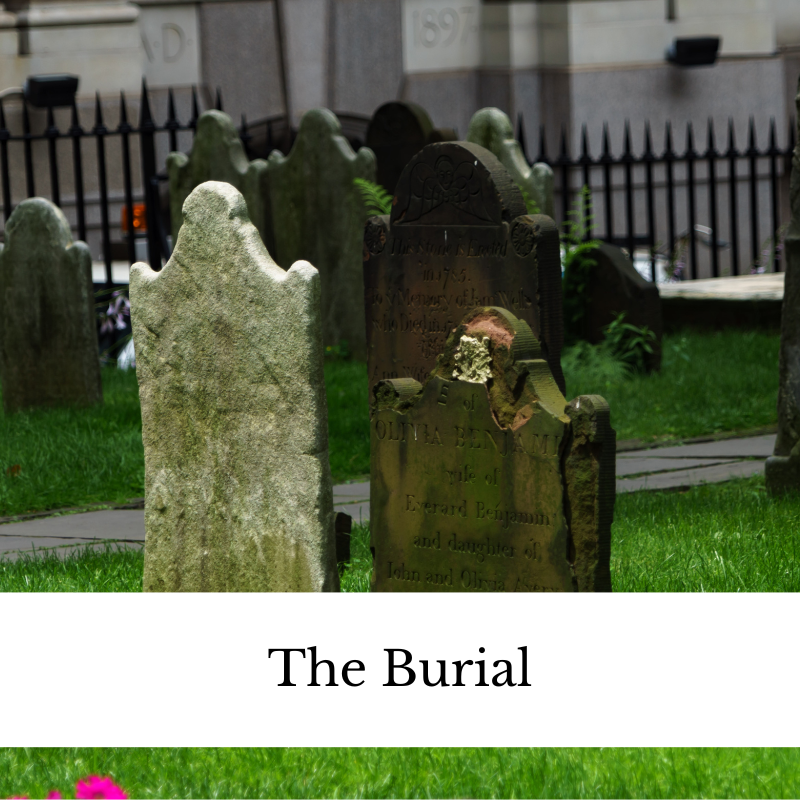
  • The Burial: A Final Act of Love

    Scripture: Mark 15:42-47

    In Mark 15:42-47, Joseph of Arimathea, a member of the Jewish council, asks Pilate for permission to take Jesus’ body and give him a proper burial. In doing so he shows a final act of love and respect toward Jesus.

    This act of love by Joseph would have been costly for him, most likely resulting in him losing his position and influence in the community. However, he chose to prioritise the honouring of Jesus, recognising His significance, and giving Him a dignified burial over his own reputation.

    In our own lives we show love and respect to others in a wide variety of ways, some large acts of love like a wedding ceremony to small everyday actions like writing someone a text to show we are thinking of them. It could be taking the time to listen or offering a kind word to someone struggling. It could mean forgiving someone that has hurt us or being compassionate towards those who are often overlooked.

    Those who work in hospice, aged, or palliative care are great examples of people providing comfort and support to people who are at the end of their lives. They offer compassion and dignity to patients and their families, helping them to navigate difficult times with grace and love. In so doing they are imitating that which Joseph does here for Jesus’ body, recognising the need for dignity and honour, and in turn bringing glory to God.

    Furthermore, alongside being a costly exercise for Joseph it also highlights the risk he took in honouring Jesus. Mark’s description of Joseph in verse 43 highlights his spiritual perspective as he waited for the Kingdom of God to come, indicating that he recognized there was more to life than just the present one.

    Joseph’s status as a “secret disciple of Jesus” (John 19:38) was also noted by Matthew, who referred to him as someone “who had become a follower of Jesus” (Matthew 27:57). While Joseph had previously kept his faith quiet, this risk he was taking would bring it from private to public.

    As a follower of Jesus it is possible to keep your faith private for a period of time, but eventually God may call you to go public with it. This can be risky, but it is a necessary step in our growth as believers. In so doing it helps us own our faith for ourselves, deepens our reliance on God, and encourages the faith of others around us. For Joseph he got to care for his Saviour in a personal way and was blessed in being part of honouring Jesus in His death.

    I wonder, is there a step of faith, a possibly costly or risky step, that God is calling you to take this Easter?


    This is a devotional series I’ve written for my church for Easter Week 2023. It follows the Passion narrative in the Gospel of Mark. This is day 7 of 8.

    If you’d like them to hit your inbox each morning then please subscribe here.

  • The Crucifixion: The Atonement for Sin

    Scripture: Mark 15:16-41

    The defining moment of our faith occurs today. As recorded here in Mark 15:16-41, we read that defining moment of human history. The moment that marks Jesus, the Messiah and Saviour of the world, becoming the atonement for sin. Here we find the ultimate demonstration of God’s love and sacrifice for us, as Jesus takes upon Himself the sin of humanity and pays the price for our salvation.

    I have heard, a couple of times now, about people who are at the supermarket buying their groceries but they can’t afford the total, and so a person behind them simply pays for them.

    A group of friends and I were once at a café enjoying a breakfast and we noticed others we knew come in and eat as well. There were only two of them though, so they finished a lot earlier than us and paid and left. When our table got up to go pay the bill, we were highly surprised to find that the whole thing had been paid for! The price we had to pay for our meal and coffee was nothing. These other friends of ours had paid it for us.

    This speaks to their generosity, of course. But I also use this example as an illustration of what Jesus has done with our sin. He has generously paid the price for our sin so that we don’t have to. He has sacrificed Himself, a sacrifice that includes His painful death, in order to atone for our sin. 

    God Himself, through His Son Jesus Christ, has paid the price for our sins and makes it possible for us to be reconciled to God.

    This is what we remember today.

    The crucifixion was not just a random event, but rather it was the fulfilment of God’s plan of reconciliation for His people. In the Old Testament, the prophet Isaiah wrote, “But he was pierced for our transgressions; he was crushed for our iniquities; upon him was the chastisement that brought us peace, and with his wounds we are healed” (Isaiah 53:5). And through the crucifixion this prophecy is fulfilled as Jesus’ death provided the means for our salvation and the forgiveness of our sins. As we reflect on the events of the crucifixion during this Easter Week, may we remember this incredible act of generosity from God. And in response, may we be a people who live generously for others in response to what He has done for us.


    This is a devotional series I’ve written for my church for Easter Week 2023. It follows the Passion narrative in the Gospel of Mark. This is day 6 of 8.

    If you’d like them to hit your inbox each morning then please subscribe here.

  • The Trial of Jesus: A Fulfilment of Prophecy

    Scripture: Mark 14:53-65

    I listen to several true crime podcasts and often find some of the details and events surrounding these crimes quite incredible. Some, of course, are harrowing and can cause me anguish because of the content and what happens to people regularly around our world. Some of the most distressing though are about people who have been accused and found guilty of crimes they didn’t commit. Within me I find myself angry at the system, angry at the injustice for the people who spend decades incarcerated for something they didn’t do. 

    Here in Mark 14:53-65 is the beginning of the injustice of Jesus surrounding His death. For a while the religious leaders have been seeking to grab Him and now through the help of Judas Jesus is placed into their hands. However, despite this being the beginning of Jesus’ unjust suffering which leads to His crucifixion this event is also a fulfilment of Old Testament prophecy, demonstrating that Jesus was indeed the promised Messiah.

    In the passage, Jesus is brought before the religious authorities for questioning, and despite the lack of evidence against him, He is ultimately sentenced to death. This event was foretold in the Old Testament, as the prophet Isaiah wrote, “He was oppressed and afflicted, yet he did not open his mouth; he was led like a lamb to the slaughter, and as a sheep before its shearers is silent, so he did not open his mouth” (Isaiah 53:7). This prophecy was fulfilled through the events leading up to the trial of Jesus, as He remained silent and submitted Himself to the will of God, even in the face of persecution.

    The trial of Jesus also points to the fulfillment of God’s plan for salvation. Jesus’ death and resurrection make it possible for us to receive those gifts of forgiveness, eternal life, hope, and peace with God. For the restoration of humanity Jesus has to die for the sin of the world. Knowing this, Jesus is able to reply to the high priest’s question of whether or not He is the Messiah in the affirmative (Mark 14:62). Not only this, but He makes sure they know well who He is by saying, “…you will see the Son of Man seated at the right hand of Power and coming with the clouds of heaven.”

    There could be more said about this trial, but as we come to the cross tomorrow, what a confidence it is for us as believers to know that our Saviour fulfils that which was written long ago and fulfils that which we need now – restoration with God.


    This is a devotional series I’ve written for my church for Easter Week 2023. It follows the Passion narrative in the Gospel of Mark. This is day 5 of 8.

    If you’d like them to hit your inbox each morning then please subscribe here.

  • The Garden of Gethsemane: Jesus’ Submission to God’s Will

    Scripture: Mark 14:32-42

    It is hard to put ourselves in Jesus’ shoes in this moment. In this passage Jesus takes His disciples to the garden to pray and will later be arrested by the religious authorities. But in the moment in the Garden of Gethsemane, here in Mark 14:32-42, Jesus knows what is to come. His death is imminent. He knows He will go through suffering.

    We know people ourselves who have gone through tremendous suffering. We may have experienced it ourselves. Facing the reality of an imminent death is something hard to imagine even when we are ill, suffering, or in poor health. Jesus Himself speaks of being downcast, of being deeply grieved to the point of death, but He recognises the need to come to the Father and pray. And in that prayer He places Himself under the will of God, saying, “Not my will, but yours be done.”

    This act of submission sets a powerful example for us as believers. It reminds us of the importance of surrendering ourselves to God’s will, despite the cost before us. As we are called to follow in the footsteps of Jesus, we are called to submit ourselves to His will, trusting in His plan for our lives. This can be a difficult path, especially when we are facing suffering, hardship, and challenges because of it. Yet through these times we are able to grow in our faith and deepen our relationship with God.

    Like a soldier faced with a difficult mission, one that they know will put their life on the line, they submit to their superior officers, trusting in their training and the mission’s purpose. In a similar way, Jesus knows the mission before Him and submits himself to God’s will in amongst the suffering He will face.

    As the apostle Paul reminds us in Romans 12:2, “Do not conform to the pattern of this world but be transformed by the renewing of your mind. Then you will be able to test and approve what God’s will is—his good, pleasing and perfect will.” Let us renew our minds and submit ourselves to God’s will, just as Jesus did in the Garden of Gethsemane.


    This is a devotional series I’ve written for my church for Easter Week 2023. It follows the Passion narrative in the Gospel of Mark. This is day 4 of 8.

    If you’d like them to hit your inbox each morning then please subscribe here.

  • The Last Supper: Commemorating the New Covenant

    Scripture: Mark 14:12-25

    The Lord’s Supper is something we celebrate every month. It is a symbolic activity that we do as part of our services. In some traditions this is celebrated each week, for us we do it once per month. And it is of such significance that we highlight this meal in our church documents. In our constitution we understand that,

    “The Lord’s Supper is a service of spiritual fellowship whereby, through remembrance of Christ’s Life and Death, believers may experience in supreme degree the reality and influence of His Presence. It is an opportunity of entering into close fellowship with the Lord with a consequent rekindling of love and a reconsecration of life to His service.”

    The idea, the establishment, of this traditional act of worship is given to the Church through the Last Supper event in the lead up to Jesus’ death. As recorded in Mark 14:12-25 we read of this new promise of God established through this final meal of Jesus. It is in this final supper with His disciples that Jesus shares with them not only His final meal with them, but establishes the new covenant, the new promise of God in Christ.

    During the meal, Jesus broke bread and gave it to His disciples, saying, “This is my body given for you. Do this in remembrance of me.” He then poured wine and gave it to his disciples, saying, “This cup is the new covenant in my blood, which is poured out for you.” In this way He highlights the meaning of what He is about to go and do, give Himself up as a sacrifice of love for humanity. As we partake in communion ourselves, we remember that sacrifice of love, that new covenant promise that He established, by eating and drinking the elements that symbolise and remind us of this sacrificial love of God. As we walk through this Easter Week, remembering these events in the lead up to Jesus’ death and resurrection, we are reminded of what He continues to teach despite where He was heading. Here He continues to fulfil the promises of God in the Old Testament and makes new promises in the New Testament. This is a time where we can commemorate the love of God, the promises God gives us, which point toward the cross and are fulfilled in Jesus Christ.


    This is a devotional series I’ve written for my church for Easter Week 2023. It follows the Passion narrative in the Gospel of Mark. This is day 3 of 8.

    If you’d like them to hit your inbox each morning then please subscribe here.

  • The Cleansing of the Temple: Jesus Challenges the Religious Establishment

    Scripture: Mark 11:15-19

    The cleansing of the temple serves as a powerful example of Jesus challenging the religious establishment and pointing to a change in peoples understanding of God.

    In this event, in Mark 11:15-19, Jesus enters the temple and becomes angry at what He sees. He sees merchants selling animals for sacrifice and money changers exchanging currency for special temple coins. In both these cases He sees people not only making profit from religious duty, but they are also turning the purpose of the temple into ‘a den of robbers.’ Rather than be a place of worship, a house of prayer and devotion to God, this temple has become a place of material and worldly profit.

    It is no wonder that Jesus becomes angry. That He reacts in such a way as to destroy these tables, set the animals free, and cracks the whip on the animals’ hides. This description in the gospels of Jesus’ ‘righteous anger’ shows how much Jesus cares for the temple, cares for the proper worship of God, and cares for any defilement and injustice of such worship.

    However, alongside the reality of Jesus coming into the temple and turning its tables over, so too Jesus turns our understanding of worship upside down. With Jesus entering the world, coming as the King, and being divine Himself, we find that true worship is no longer centred on a place but in a person.

    This is the new understanding of the worship of God.

    Rather than a centre for sacrifice and cleansing, Jesus Himself becomes the sacrifice, Jesus does the cleansing of sin through the cross and resurrection.

    As we reflect on the Easter event this week, and as we make our way through this narrative toward the cross and resurrection, may we understand more fully the true worship of God in light of the true sacrifice and cleansing that Jesus has done for us.

    Perhaps a way to think about this is through the lens of what occurred at the temple and then how Jesus changes everything for us.

    We can be cluttered with anxiety, long to-do-lists, and life stressors but Jesus comes in and helps us find the peace that surpasses understanding.

    We seek after profit or pleasure, but Jesus comes to give eternal life and enduring joy.

    We expect to pay our own way to worship God and be accepted by Him, but Jesus comes to pay it all.

    We judge ourselves by the rules we make up, but Jesus comes to help us understand it is by faith and a matter of the heart.

    The temple had lost its true purpose, but Jesus understood that He was the true purpose for the temple.

    May He be the true worship of our lives.


    This is a devotional series I’ve written for my church for Easter Week 2023. It follows the Passion narrative in the Gospel of Mark. This is day 2 of 8.

    If you’d like them to hit your inbox each morning then please subscribe here.