Tag: Jesus

  • Are You Walking WITH God?

    The book, With: Reimagining The Way You Relate To God by Skye Jethani, was probably the best book I read last year. It was just brilliant. It was challenging and helpful in thinking about what it is to relate and commune with God. It’s a book I’ve made our interns at church read. And more recently, it’s a book I’ve quoted in one of my sermons when talking about what it is to grow as a follower of Jesus.

    Are You Walking WITH God_

    One of the helpful ways Jethani frames this idea of walking WITH Jesus is by highlighting how we perceive our relationship with God. In doing this he talks of four postures:

    First – Life from God

    These are people seeking blessing and gifts from God, but aren’t particularly interested in God himself. God is seen as a combination of a “divine butler and a cosmic therapist”.

    Second – Life over God

    Here people have lost the wonder and mystery of God and his world. Instead they seek to earn God’s favour through formulas and proven controllables. Those who believe God operates this way will seek to put the right techniques in place for faith, church, and life so a relationship with God can occur.

    Third – Life for God

    This is the posture of being concerned with serving God and expending all energy in doing something for God. Whether it be service or mission this posture highlights those who believe a relationship with God is founded on the things done. Identity is wrapped up in doing and service for God.

    Fourth – Life under God

    People who have a posture of life under God sees God in cause and effect terms. Through obedience to his commands God will bless life, family, and the nation. In this posture the believer is to determine what God approves and make sure they remain within those boundaries in order for God to uphold his part of the deal.

    I find that these postures are fairly accurate in terms of how people think about their faith and relationship with God. But as Jethani rightly outlines, our relationship with God is exactly that, WITH God. It is a relationship, not a religious exercise with rules and rituals. And so, when speaking about being with God Jethani says,

    “The life with God posture is predicated on the view that relationship is at the core of the cosmos: God the Father with God the Son with God the Holy Spirit. And so we should not be surprised to discover that when God desired to restore his broken relationship with people, he sent his Son to dwell with us. His plan to restore his creation was not to send a list of rules and rituals to follow, nor was it the implementation of useful principles. He did not send a genie to grant us our desires, nor did he give us a task to accomplish. Instead God himself came to be with us–to walk with us once again as he had done in Eden in the beginning. Jesus entered into our dark existence to share our broken world and to illuminate a different way forward. His coming was a sudden and glorious catastrophe of good.”

    How about you, do you walk WITH God? Or, do you find your relationship with God is depicted through another posture? 


  • Billy Graham And Gramps

    With the passing of Billy Graham overnight there is much to thank God for in terms of his ministry and impact, not only within Christianity in the twentieth century but the world at large. Billy had an impact in over 180 countries and is said to have a major influence in seeing over 200 million people come to know Jesus for themselves.

    He is quite possibly the greatest evangelist ever, in the same ilk as Whitefield, Wesley, and Spurgeon.

    During the 1950s and 60s my grandfather, Gordon Coombs, was the pastor of Opawa Baptist Church in Christchurch, New Zealand. A few months ago, I had a brief conversation about what pastoral ministry was like in those days, trying to mine as much gold as possible. Part of that conversation, I remembered this morning, was about the 1959 Billy Graham crusade in Christchurch. In light of Billy’s passing I thought I’d give him a call and see whether he would be willing to reflect a little more about that time.

    Here are some of those memories and reflections.

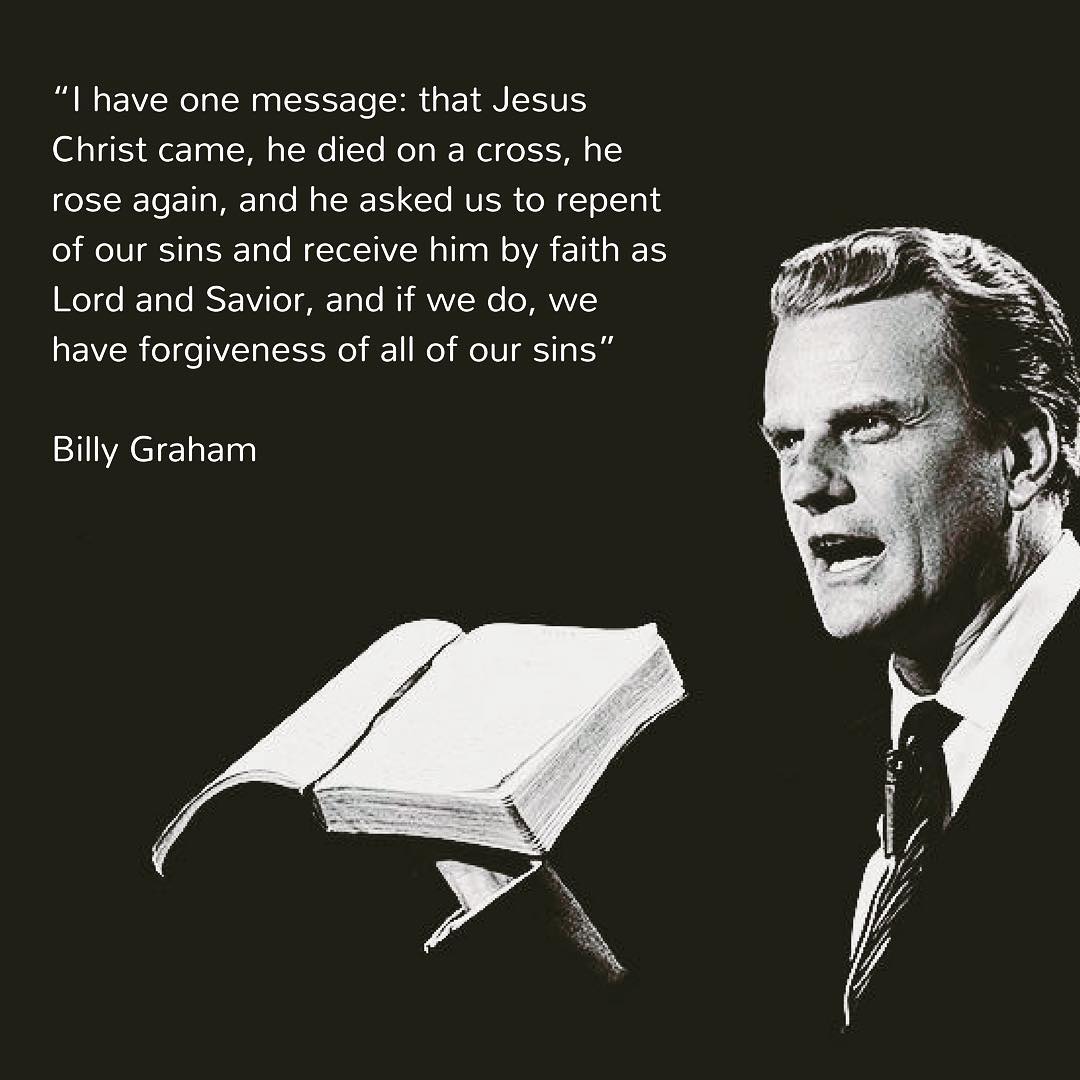
    Billy Graham Quote

    The 1959 crusade was held just down the road from Opawa Baptist Church (OBC), at Lancaster Park. Literally, they are on the same street. Being the pastor of the most local church to the stadium there was clearly going to be some involvement.

    As Gordon remembers there were three main areas he was involved in.

    The first was to be on the organising committee for the eight-day long crusade. This involved preparation meetings and co-ordination with other churches in the city to stage such a large event.

    The second main task he had, with the help or many other volunteers from other churches, was to be the host church for the follow-up of the crusade. This involved the use of OBC’s large hall where all the response cards would be collected, sorted, and distributed to the various churches across the city. After each night meeting, and once the counselling had been completed, this follow-up process would begin in the OBC hall and involve many volunteers late into the night and early morning.

    And the third task, of vital importance, was to allow the crusade to borrow the brand new OBC organ for the entire eight days. This organ was expensive, it was new, and it was seen as a highly prised possession of OBC. And it would be sitting out in the middle of Lancaster Park day and night. However, after one of the Sunday morning services had been completed Gordon proceeded to announce the situation to the congregation. He asked for their thoughts, even though he didn’t know whether they would allow it. And as he said,

    “There were some of the older people who put up their hands in opposition to this idea, but I told them that if we did this I am sure the Lord would bless us for it. And in doing so we had 40 new conversions out of the crusade.”

    And it was these 40 new conversions that increased the size of the congregation by a third. For the churches there were new people joining congregations all over the city. There was an increased vigour in evangelism and almost a mini-revival.

    “Some of the older people thankfully got their noses out of joint because they couldn’t sit in their same seat at church anymore, but there were some marvellous people who joined OBC in those days through the influence of the crusade”.

    And it wasn’t only the churches that felt the impact.  It seems that a by-product of this crusade, particularly in the community, was a freedom to speak about Christianity; “for a short period of time Billy Graham and his crusades were on everyone’s lips”. And this allowed for people to speak freely to their friends and neighbours about the Christian faith.

    Being on the committee Gordon did get to meet the man himself, meeting him as he arrived at the airport in Christchurch. Apparently, his eldest son (not even five at the time) was keen to go and meet him too but had a serious fever at the time. This meant he could only go as far as the airport window and look out in envy. But what Gordon does remember of him and his ministry was that of a humble man, committed to preaching the biblical gospel to everyone he could.

    It is interesting to note that his arrival and ministry through the crusade also bought with it challenges. Some of the ministers in the city were not in favour of his coming because “they wouldn’t go along with his biblical emphasis”. And this is nothing new to those of us who have read a little about his ministry and methods. But he did,

    “…bring renewal in the life of many ministers and because of his emphasis on the bible there came an increase in biblical preaching and the restoration of the authority of God’s word; it’s importance and centrality.”

    If nothing else, I had a great conversation with my grandfather and was again reminded of how God continues to be at work in times and places and with people we will never know.

    RIP Billy Graham.

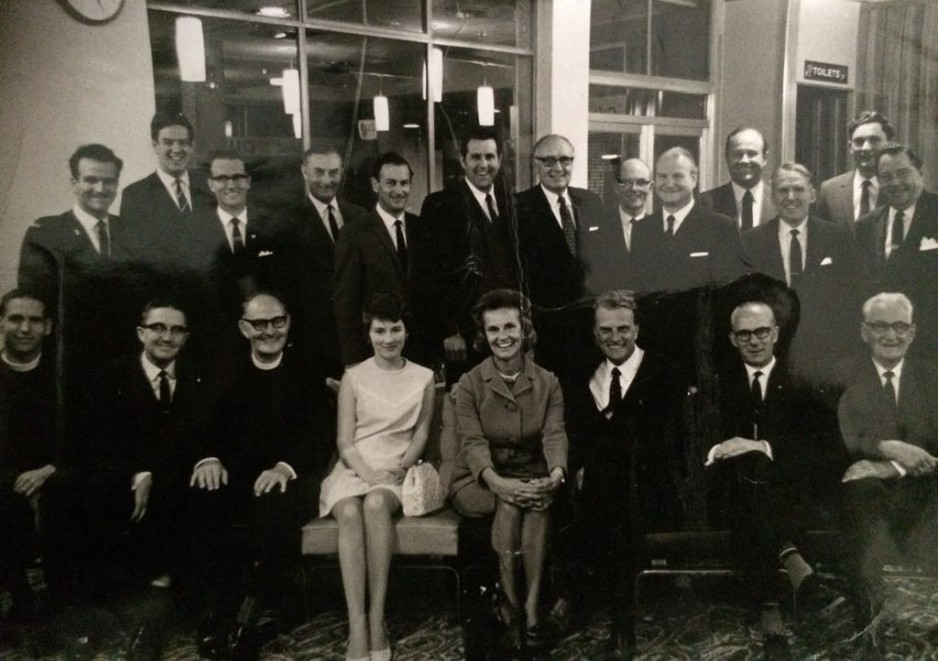
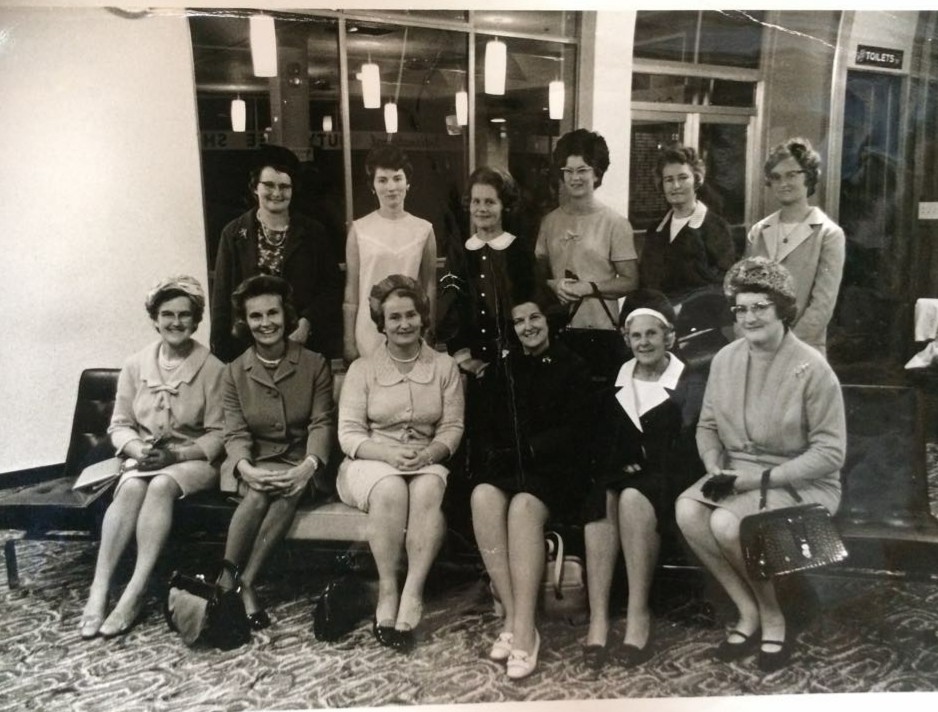
    Below are a couple of photos from the time of the crusade, various people meeting Mr and Mrs Graham.

    Billy Graham Crusade 1959 - Men

    Billy Graham Crusade 1959 - Ladies.jpg

  • Day 13 – You Are A Follower

    “Come, follow me…” (Matthew 4:19)

    A disciple is someone who follows another.

    When Jesus was hanging around earth in human form he collected 12 disciples. Each one he called to follow him, and as they travelled with him they got to know him more and more. This was typical of the day. Rabbi’s, Jewish teachers of the Law and Prophets, would have a group of followers, a group of disciples, who they would teach. In the case of Jesus, he choose people who weren’t typically considered disciple material. Lacking in education, and not well versed in the scriptures, Jesus’s disciples would not be people normally associated with a Rabbi. Yet, Jesus doesn’t do things that people would expect, does he?

    Today, we are expected to lead from the front. You may even hear the term ‘self-leadership’. This means that we are to take responsibility for our own learning, growth, and decisions, and lead ourselves. We’re not people who are to follow others but are to follow our own dreams, passions, and feelings.

    You're More Than A Number - You Are A Follower

    From a young age we’re told we can do whatever we want. We can do anything in life, whether that be career, study, or sport. We’re constantly told that the most central and important person in the world is us. And with that comes the expectation we are to forge our own path in life.

    For some this comes in the form of not following the advice and desire of parents. The rebellious nature of adolescence, pressures of school and family too, can bring about feelings of resentment. Instead, some decide to follow their own path out of spite, in direct opposition to what their parents would believe is the best for them or approve of.

    Others recognise they have a particular passion and gifting in an area and seek to pursue that until they have reached a level of success others around them will never attain. The pressure of popularity, being better than others, and comparison, can drive people to work hard at following their passions and desires.

    And then, of course, there is the chase of wealth. The pursuit of money and riches is easily one of the defining pressures of our day. Wealth and perceived success is a certain driver for many decisions and career choices.

    When we look at Jesus we see he chose people who were ordinary. He didn’t choose those who were the best at their craft or artistry. He didn’t choose them because of their wealth or potential success. No, Jesus chose some average and ordinary men to come and follow him.

    In Melbourne we support our football teams with passion. We’ve all seen those supporters who go the extra mile. They buy the membership and all the gear–the jumper, the scarf, the hat, the badges. They have their seat at the ground. And they follow the players and team constantly.

    In some ways these kinds of supporters put many believers to shame. Why don’t we follow Jesus with the same passion and support as these football supporters? Often we find ourselves dragged down by what life throws at us. But considering we know what Jesus has done for us through the cross shouldn’t we be the ones who are passionately and actively following him?

    Following Jesus isn’t always easy. That was never the deal when we committed our lives to following Jesus. Following Jesus may bring with it a fair bit of struggle. People may not like us, we may not be popular, we may have to sacrifice wealthy opportunities, but within all that surely we should be passionate about following the one true and almighty God!

    As Dietrich Bonhoeffer says in his book, The Cost of Discipleship,

    “When Christ calls a man, he bids him come and die.”

    This means that he calls us to follow him with our all. He calls us to follow him with everything. He calls us to follow him with our lives. Not just part of our lives, or on a particular day of the week. All.

    It’s a gripping and scary thought.

    But for those of us who believe it resonates and resonates strongly – That we are followers of a great and holy God who through his Son has enabled us to have hope now and for the future.

    When we say “yes” to God we are saying we are willing to become a follower.

    FOR REFLECTION

    • Do you consider yourself a follower of Jesus?
    • Are there areas in your life that you aren’t following Jesus in?
    • That quote by Bonhoeffer, how do you react to that? Are you letting Jesus lead in your life?

    This is part of a devotional series called You’re More Than A Number. To understand the purpose of these posts then please read the series introduction. If you’d like these delivered to your inbox, please sign up to follow this blog or my FB page.

    1. You Are Created
    2. You Are Sinful
    3. You Are Forgiven
    4. You Are Called
    5. You Are Redeemed
    6. You Are Loved
    7. You Are Saved
    8. You Are Free
    9. You Are Chosen
    10. You Are A Child of God
    11. You Are A Slave
    12. You Are Made For Good Works
  • 3 Ways The Beach Helps Youth Ministry

    The beach is great.

    If it was a choice between a warm beach location or say a cold snowy type location, the beach wins every time.

    And so with summer holidays and hot days comes the annual visit to the beach. A few days spent relaxing, reading, and having a rollicking time with the family. Last year I spent hours making an awesome sandcastle with my daughter, this year it seems we’re more adventurous and have ventured into the cooler waters and waves.

    Oddly enough, the beach had me thinking about youth ministry. Perhaps it was the salt water, the days off, or too much cricket watching (can that ever be the case?). Nevertheless, using the beach as an illustration for youth ministry it reminded me of three things we youth leaders need to have in mind coming into the 2018 youthmin year.

    First, we need perspective. 

    Sitting on the beach gives you a view of the large expanse of water in front of you. It gives you a view of stretches of sand, to your left and right. It reminds you that there is something bigger than your small self going on in this world. As one person sitting on a small patch of sand, millions of grains within arms reach, you are given perspective on life, faith, and ministry.

    As Psalm 139:7-10 reminds us, God is huge. He is everywhere.

    “Where shall I go from your Spirit? Or where shall I flee from your presence? If I ascend to heaven, you are there! If I make my bed in Sheol, you are there! If I take the wings of the morning and dwell in the uttermost parts of the sea, even there your hand shall lead me, and your right hand shall hold me.”

    In youth ministry we often need perspective. It’s not about the next event, the next catch-up, the next Bible study, the next service, the next hard conversation. It is about God, and declaring that he has come, and is with us through his Son and his Spirit. He will lead and hold us, as the Psalmist has written.

    Second, we need grit. 

    Generally sand is quite gritty. On some beaches it really does give your feet a good workout.

    Youth ministry is the same. It is a hard work. It is constant work. It requires grit. It is the type of work that will give you a good workout, physically, emotionally, and spiritually.

    Paul knows this from experience and writes in 2 Corinthians 6:3-10:

    “We are not giving anyone an occasion for offense, so that the ministry will not be blamed. Instead, as God’s ministers, we commend ourselves in everything: by great endurance, by afflictions, by hardships, by difficulties, by beatings, by imprisonments, by riots, by labors, by sleepless nights, by times of hunger, by purity, by knowledge, by patience, by kindness, by the Holy Spirit, by sincere love, by the word of truth, by the power of God; through weapons of righteousness for the right hand and the left, through glory and dishonor, through slander and good report; regarded as deceivers, yet true; as unknown, yet recognized; as dying, yet see—we live; as being disciplined, yet not killed; as grieving, yet always rejoicing; as poor, yet enriching many; as having nothing, yet possessing everything.”

    It might be a different context but Paul’s words speak of the kind of grit needed for ministry. The physical persecution is not generally associated with Western youth ministry, but that doesn’t discount the challenges it brings.

    All this requires grit. It’s goes without saying that this grit will come more easily when we are walking closely with Jesus. As we work with students and their families we seek to serve them and the church out of our enjoyment of God.

    Third, we need to be fluid. 

    At the beach you can sit on the sand and watch the waves come time and time again. You can also go for a swim and enjoy the cool water on a hot day. Stating the obvious, the water is fluid and can cope with what is going on in it and around it.

    When working with students (and adults too) we need to be flexible, fluid. Often things won’t go to plan, people won’t turn up, or the weather might not be what we’d hoped for our program. In working with people, and in youth ministry, we need to be flexible in our plans and ideas. It’s helpful to know and be sure in what we think is the best way to operate, but sometimes others might actually provide better ways.

    So whether it’s events or people, holding things losely, having planned to our best ability is something worth evaluating for ourselves coming into the new youthmin year.

    At any time, not just at the start of the year, it is worth taking a few moments to gain perspective, grow in grit, and assess what we hold tightly. I can recommend the beach as a good place to do that.

  • Day 11 – You Are A Slave

    “…and whoever wants to be first among you must be your slave; just as the Son of Man did not come to be served, but to serve, and to give his life as a ransom for many.” (Matthew 20:27-28)

    The bible pictures being a servant of Jesus in extremely strong language.

    In the New Testament the use of the word servant can often be translated as the word slave. You can see the two uses of the word in the verses above.

    One writer has talked about the distinction of a servant and slave in this way,

    “While it is true that the duties of slave and servant may overlap to some degree, there is a key distinction between the two: servants are hired; slaves are owned. Servants have an element of freedom in choosing whom they work for and what they do. The idea of servanthood maintains some level of self-autonomy and personal rights. Slaves, on the other hand, have no freedom, autonomy, or rights. In the Greco-Roman world, slaves were considered property, to the point that in the eyes of the law they were regarded as things rather than persons.  To be someone’s slave was to be his possession, bound to obey his will without hesitation or argument…” (MacArthur, Slave, 16-17)

    To our modern ears the use of the word slave sounds harsh, ugly, and distasteful.

    You're More Than A Number - You Are A Slave

    When we think of a slave or slavery we think of someone who is being used and abused for the profit of another. We think of sex slavery, the slavery of Africans for the promulgation of the United States, the slavery of young girls and women for the pleasure of ISIS fighters in the Middle East.

    Slavery is not seen as a good thing. Nor has slavery ever been thought of as a good thing. It has constant negative connotations associated with it.

    Yet, the word servant, as in being a servant of Christ, can also mean being a slave, being a slave for Christ.

    And while we aren’t being used and abused by our perfect Heavenly Father there is a sense of the commitment and identity we now have when we are follower of Jesus.

    When we are called and chose to follow Christ we are all in.

    To be a believer in Christ is to not just assent to being a Christian of some description. No, to be a follower of Jesus means we sacrifice our whole lives to follow him.

    Our all.

    Our everything.

    Our entire being and soul and purposes are committed to follow Jesus.

    There is no turning back.

    When Jesus calls his first disciples we read in many of the gospels, Matthew, Mark, and Luke particularly, of how he instructed them to “come, follow me”.

    The call to follow Jesus is not simply a call to come with me to the shops, or let’s go for a drive, or “c’mon, let’s go to the footy match”. The call to follow me is a costly call.

    It is a call to slavery.

    This slavery is not the slavery depicted above. This call to slavery is one that recognises that we are now servants to the Most High God. That we are at the beck and call of the Son of God, Jesus Christ. Yet, while this slavery is all that and more, it is really a freedom-giving, redemption-purchasing, forgiveness-finding kind of slavery. It is a kind of slavery that places us in a better position than we find our self otherwise. We find ourselves loved, adopted, and saved through being slaves of Jesus Christ.

    In this way, our identity has changed from being about self to being about service.

    Our identity is not defined by who we are in any way but by who he is.

    Our identity is not determined by the failures we have but by the faithfulness of God.

    Jesus calls us to follow him and in doing so calls us to a life of service. A life of slavery for the cause of Christ.

    FOR REFLECTION

    • What kind of thoughts come to mind when thinking about slavery?
    • Have you thought about the cost of what it is to follow Jesus? What do you think that means for you?
    • How can knowing being a slave for Jesus inspire you to greater works and commitment to follow him?

    This is part of a devotional series called You’re More Than A Number. To understand the purpose of these posts then please read the series introduction. If you’d like these delivered to your inbox, please sign up to follow this blog or my FB page.

    1. You Are Created
    2. You Are Sinful
    3. You Are Forgiven
    4. You Are Called
    5. You Are Redeemed
    6. You Are Loved
    7. You Are Saved
    8. You Are Free
    9. You Are Chosen
    10. You Are A Child of God