Tag: Reading

  • Growing Young – Be The Best Neighbours

    This is post seven in a series of reflections on the book Growing Young: Six Essential Strategies To Help Young People Discover And Love Your Church. For an introduction to the series please read part one and continue reading the reflections in part two, three , fourfive and six.


    In these first few months of being involved in the life and ministry of Rowville Baptist Church I’ve been blown away at the commitment to the local community. Part of the culture of the church is to serve the local community through its time, money, facilities, and people resources. The more I’ve seen the various programs and people in action the more I’ve seen the body of Christ neighbouring well.

    So far I’ve seen a fortnightly dinner put on for those in the community that need a feed, a week-long school holiday program, a drop-in centre for those who need to chat and some pantry supplies, and a twice weekly breakfast served at a local school. In coming months there will be a Christmas Day lunch held at the church for those with no place to go and a nearly weeklong service ‘camp’ that sees young people lead and serve the local community in practical ways.

    This culture, this DNA, is what the final chapter summarising the Growing Young findings is all about.

    It seems that those churches who are good neighbours to their local community are more likely to ‘grow young’ than those who aren’t. 

    photo-1472653816316-3ad6f10a6592.jpeg

    Growing Young suggests it is this kind of culture that keeps young people at church. On one hand there is the good teaching that comes from taking Jesus’ message seriously. On the other hand there is the fact that young people seek to be involved in practically serving others together.

    “…churches that grow young recognize the careful dance that values both fidelity to Scripture’s commands for holiness and knowing and graciously loving their neighbors. This dance affects how they serve, pursue social justice, help teenagers and emerging adults find their calling, interact with popular culture, and respond to heated cultural issues. Much more than developing detailed policies or releasing theological position papers, these churches train and infuse their young people with an integrated discipleship that enables them to thrive in our complex world.”

    Reading this chapter didn’t feel like I had to take sides in some kind of evangelism versus social justice debate. No, this chapter brought together the first and second commandments – to love God and love others – in a way that upheld the proclamation of the Gospel and good works. Yet, it did highlight the fact that young people are attracted to that which deals with the physical and practical needs of people and communities.

    A second area this chapter highlighted was the ability for growing young churches to converse well with the tough topics. You know, sexuality and gender, refugees and immigration, alcohol and drugs, marriage, relationships and divorce, suicide and mental health, death and grieving, calling and vocation. These topics can be challenging for any person to converse about, let alone a church. But what Growing Young has found is that those churches willing to converse about such topics go a long way in helping young people grow and stick at faith. It is often the process and the discussion about these topics that is more helpful than the answers themselves.

    How then does this chapter help in thinking through youth and young adult ministry? 

    First, recognise young people are action-orientated and want to be part of something that helps the local community and beyond.

    Second, provide time and people to walk alongside young people as they explore answers to the deeper questions of life and society.

    Third, ask questions of the young people already connected to your church and of the local community to understand their culture and passions.

    Fourth, teach and show a gospel-ethic providing a balanced diet of Biblical teaching and good works.

    Fifth, spend a period of time actually serving your neighbours well, meeting some needs they have.

    May your light shine before others so that they see your good deeds and glorify your Father in heaven (Matt 5:16).


    Here are the links to the series of reflections on the book:

    1. Growing Young
    2. Growing Young – Keychain Leadership
    3. Growing Young – Empathise With Today’s Young People
    4. Growing Young – Take Jesus’ Message Seriously
    5. Growing Young – Fuel A Warm Community
    6. Growing Young – Prioritise Young People (And Families) Everywhere
    7. Growing Young – Be The Best Neighbours
    8. Growing Young – Growing Young In Your Context
    9. Growing Young – Final Reflections
  • Growing Young – Fuel A Warm Community

    This is post five in a series of reflections on the book Growing Young: Six Essential Strategies To Help Young People Discover And Love Your Church. For an introduction to the series please read part one and continue reading the reflections in part two and three and four.


    I’m not sure what comes to mind when you think about church but I suspect one of the presumptions you would make is that it’s a warm place to meet other people. I don’t mean it in the sense of the ducted-heating being set at the right temperature. I mean it in the sense of people being welcoming, open, hospitable and the like.

    If a church is too hot then it is hard to find your place and penetrate the cliques, groups and family members within the church. If the church is too cold then it can be jarring and uncomfortable. But a church which is open to newcomers and gives a warm welcome, well, that might be a church worth heading along to, possibily even belonging to.

    In its research Growing Young found a number of words like welcoming, accepting, belonging, authentic, hospitable, and caring to be commonplace in churches that retained young people. A warm church is a church that keeps young people.

    warmsunset.jpeg

    One of the chief ways churches were warm is through something pretty obvious.

    Relationships. 

    Yet, Growing Young also points out that these relationships are built naturally and in a way that provides long-term support. In other words, in the messiness of life there is the need for other messy people to walk with young people and keep walking with them.

    As the authors put it:

    “The warmth young people seek isn’t usually clean and tidy. That’s just fine, because family isn’t neat. It’s messy. And messy is a good word to describe what young people want from a congregation. They desire not only to share their own messiness but also to walk alongside the authentic messiness of others.”

    Due to this need churches are moving away from the programmatic and systematic structure of congregational life to help foster relationships. With intentionality the structure of the church changes in order to give people more time to socialise and meet together during the week rather than be locked up in church programs. This provides opportunity for people to have relationships with those outside of anything formal or structured.

    As one church pictured in the book commented:

    “We see our job as creating the environment where relationships can happen. We have programs, yes, but more importantly, we build the platforms where people connect. Our strategy has been to create an environment that screams, ‘Stay here!’ after worship. Every week we have food, things for kids to do (all within eyesight of parents), and a football or baseball game on a big screen nearby. We see the time after the service as just as important as the service itself.”

    With this chapter focussing on helping people belong to their local church how do you incorporate it into youth and young adult ministry?

    • What does it look like for young people to be connected within a local church?
    • How do young people gain a sense of belonging within the whole congregation?
    • How do young people get to know others in an authentic way?

    In many ways it comes down to getting back to the basics.

    Welcome well, connect people with others, and have something, in hardcopy if possible, that explains who you are as a church or youth ministry.

    At youth group I’ve always been one to make sure everyone gets a good welcome when they arrive. Be outside and give a clear ‘hello’ to everyone that walks past, meet their parents, and link them to another leader. Find others in the group to connect with the newbie and give out a welcome pack at the end to say thanks for coming. Some of these things are currently in place and in other areas there is always need for improvement.

    In small groups it is ideal to have food. Have dinner, which allows for socialising and belonging, before getting underway with the Bible study and prayer time. That’s a pretty simple and straightforward idea but it will still take 18 months before the the group really starts humming along, and that’s meeting every week.

    And so at church it’s again important to connect people with others, same age-group or not. Growing Young suggests a mixture of age groups is probably ideal. I theoretically agree with this and know that it is a growing area. It’s one thing to link a young adult to a group of other young adults, it’s another to link them to others out of their generational bracket.

    So, is there a downside to all this intentional warmth?

    Well, yes, one.

    It’s a slow work. It’s a work that requires time, and quite often a very long time, in order for people to feel connected within the church and with others who are there.

    In the end the Growing Young team suggest looking at it like a family. With a family there is messy stuff going on but there is also much to appreciate and enjoy.

    Different and unique people bring different and unique personalities to the wider church community but through it all God continues to do His work in life and faith.

    “Rather than lean into the allure of viewing the worship service like a trip to the theater, imagine it as a gathering in the family room. Whether you meet in a sanctuary filled with pews, a contemporary auditorium, a high school gymnasium, or an actual house, envision your worship experience like a family room.”


    Here are the links to the series of reflections on the book:

    1. Growing Young
    2. Growing Young – Keychain Leadership
    3. Growing Young – Empathise With Today’s Young People
    4. Growing Young – Take Jesus’ Message Seriously
    5. Growing Young – Fuel A Warm Community
    6. Growing Young – Prioritise Young People (And Families) Everywhere
    7. Growing Young – Be The Best Neighbours
    8. Growing Young – Growing Young In Your Context
    9. Growing Young – Final Reflections
  • Growing Young – Take Jesus’ Message Seriously

    This is post four in a series of reflections on the book Growing Young: Six Essential Strategies To Help Young People Discover And Love Your Church. For an introduction to the series please read part one and continue reading the reflections in part two and three.


    As the title of the chapter states, another reason for seeing ‘young people’ actually stay in church is through churches taking the message of Jesus seriously.

    This is pleasing to know.

    It means that instead of softening the message of the Gospel and the teachings of the Bible, as many kids and youth ministries are assumed to have done over the years, it is better to increase the temperature of what it means to follow Jesus.

    In providing a place for young people to discover and discuss the hard questions of faith, receive a challenging vision of what it is to follow Jesus, and see how this faith becomes counter-cultural in its application is what is keeping those in their teens and twenties at churches.

    It’s not surprising that the research highlights how those under 30 are more focussed on Jesus than the Bible or Christianity. In recent years there have been plenty of YouTube vids, posts, and other articles and papers highlighting how Millennials are following Jesus and doing away with institutionalised religion. Reading this reminded me of when I signed up for Facebook and entered my religious views as “A Jesus Guy”. It was something I thought was a bit different, but evidently not. It also speaks of how those my age and below (Millennials/Gen Y) are more prone to say they follow Jesus rather than say they are “a Christian”.

    Growing-Young-3D.jpg

    Chapter 4 of Growing Young outlines a variety of reasons why taking Jesus’ message seriously actually keeps young people in the local church. Anecdotally I can see in my own experience, and with a number of my friends, that throughout our emerging adult years we craved serious Bible teaching and looked up to people who took Jesus and the Bible seriously.

    One particular section of this chapter outlines a phenomenon known as Moralistic Therapeutic Deism. This is the idea that young people in the West are generally following a philosophy of thinking that is (1) moralistic, where faith is equated to being a good moral person. It is (2) therapeutic, because it is this faith that makes them feel better about themselves. And it is (3) deistic, meaning that God does exist but this god is not involved in human affairs.

    MTD a curse upon the youth and young adult conscience and has been helped to solidify itself in those who’ve had a little church background because of the super-mega-hype youth ministries of the last 20-30 years. To be a nice person, believe in a God you think is going to help you and bring favour upon you, but not be too close to you in your daily life is a distortion of the reality of the Christian faith and what it truly means to follow Jesus. Sadly, the rise of individualistic Christianity, a sprinkle of post-modern thinking and the dumbing down of Jesus through youth ministries have no doubt contributed to this.

    Yet all is not lost.

    As young people seek a faith that is authentic and in line with the reality of who Jesus is churches are beginning to realise that teaching the costly and sacrificial side of faith might actually be important. Growing Young puts it this way:

    “Following Jesus is costly, requires sacrifice, and invites us to actively participate in God’s kingdom. In fact, the church by its very nature is participatory, which means everyone shares the work. It’s a body (Rom. 12:5–8; 1 Cor. 12:1–31; Eph. 4:1–16), and every part needs to play its role in order to build up the whole. As indicated by Jesus’ command to both “follow me” and “take up your cross daily” (Luke 9:23), pursuing Jesus requires no less than everything, every day (Rom. 12:1). There’s nothing therapeutic about that call…In short, teenagers and emerging adults in churches growing young aren’t running from a gospel that requires hard things of them. They are running toward it.”

    In what ways can your church help young people run toward faith, a genuine faith, that takes the message, actions, and words of Jesus seriously?

    One of the critical experiences in my time as a Youth & Young Adult Pastor is small groups. That is, groups of around 10 people who gather together to eat, read the Bible together, and then pray for one-another. In one group I’ve been involved in we had a couple who had just joined the church. Both were reasonably new to faith but one of them wasn’t a Christian. Over a period of time, by simply looking at the Bible, passage by passage, she became a Christian. It showed me how instrumental it is to simply read through books of the Bible week by week and then seek to communally apply it to peoples lives. Through doing so we take the Bible seriously, but more so, we take the person, work and message of Jesus seriously too.

    How this taking-Jesus-seriously thing applies further in our churches might be to consider the application we teach in children’s and youth ministry. The classic example for people teaching Sunday School, particularly the ‘famous’ stories of the Old Testament, is to make the application moralistic. Through the story of Abraham, Moses, Joseph, David, and Jonah we somehow come to suggesting that our hearers should change behaviour and because of that change in behaviour God will be happy with us. In the end we get the reading of the passages incorrect by making them all about ourselves and then say all we need to so is be a nice person and through this we’ll be made right with God.

    Sound familiar?

    Moralistic Therapeutic Deism perhaps?

    Rather than this let’s teach the Old and New Testaments in line with the overarching redemptive storyline. This is where we see the main person of the story is not actually us but it is about God and his work in this world, culminating in Jesus Christ. A good example of this type of teaching is The Bible Project and The Gospel Project.

    Growing Young itself gives a good outline in how to teach the storyline of the Bible in this way through a Good-Guilt-Grace-God’s People-Gratitude-God’s Vision framework:

    • Good (Gen. 1:26–27): God created us good, in God’s image.
    • Guilt (Rom. 3:10–12): We then chose to disobey God, leaving us with the guilt of sin. All of us carry this mark and it impacts us every day.
    • Grace (Rom. 3:23–24; Eph. 2:6–10): Through the life, death, and resurrection of Jesus, God has extended grace to us to make things right and restore us to relationship with God and one another.
    • God’s People (Eph. 2:19–22): As we experience grace, we are adopted into the body of Christ, enacting God’s reign in the world. We join the mission of God, participating in the work of God happening in and through God’s people today.
    • Gratitude (Col. 2:6–7): Out of this gift of grace, we respond in gratitude toward God. This is the well out of which our obedience—which includes moral behaviours—flows. In other words, the gospel doesn’t begin with behaviours nor is it dependent on behaviours. The behaviours are an act of thanksgiving to God in response to grace. As we grow in trust, we naturally grow in obedience.
    • God’s Vision (Rev. 21:1–5): We are living in between Christ’s first coming and his return.

    Other areas where churches can increase the temperature of their teaching regarding Jesus is in one-on-one meetings, youth leadership meetings, youth group itself, and in other gatherings where there is a discipleship purpose. But wherever that may be for you, your church or ministry may you be encouraged, as I was, knowing that teaching the hard things of Jesus and the Bible isn’t something to be scared of.


    Another good article reflecting on the book, and mainly on this chapter, has been written by Trevin Wax at The Gospel Coalition.


    Here are the links to the series of reflections on the book:

    1. Growing Young
    2. Growing Young – Keychain Leadership
    3. Growing Young – Empathise With Today’s Young People
    4. Growing Young – Take Jesus’ Message Seriously
    5. Growing Young – Fuel A Warm Community
    6. Growing Young – Prioritise Young People (And Families) Everywhere
    7. Growing Young – Be The Best Neighbours
    8. Growing Young – Growing Young In Your Context
    9. Growing Young – Final Reflections
  • Growing Young – Keychain Leadership

    This is post two in a series of reflections on the book Growing Young: Six Essential Strategies To Help Young People Discover And Love Your Church. For an introduction to the series please read part one


    When I was 16 I was given my first chance to preach.

    When I was 17 I was put in charge of a youth service held each term.

    When I was 18 our Youth Pastor left and I was given the opportunity to be the ‘Youth Coordinator’ by the church leadership. I still have the letter of recommendation from the Chairman of the Diaconate at the time.

    These three experiences are examples of keychain leadership in action.

    lotsofkeys.jpeg

    Keychain leadership is the term used in Growing Young to describe the type of leadership framework churches ‘growing young’ operate with. This type of leadership attracts and keeps ‘young people’ by walking alongside them and handing over access, influence, and responsibility in the various ministries of the church.

    Growing Young uses the illustration of handing over keys to youth and young adults, which gives them access and influence in certain segments of the church. For example, when growing up in a home there comes a time where you get your own house key. Then once you’ve got your license there is a time when you get your own car key. When you begin to work there may be a time when you get your own office key or swipe card. These are examples of physical keys being handed over but they are also symbolic of access, influence, and responsibility.

    In the local church it is similar. There are different people in the church who hold different keys. Some of these keys might be physical. The key to the church building, to the church office, to the children’s ministry cupboard et cetera. At other times the illustration of a key may simply be symbolic and so it becomes the access, influence and responsibility you have to decision-makers, meetings, and committees.

    As Growing Young says:

    “Keys provide access to physical rooms and spaces as well as strategic meetings, significant decisions and central roles or places of authority. The more power you have the more keys you tend to possess…If you are willing to entrust your keys to young people they will trust you with their hearts, their energy, their creativity and even their friends.”

    Generally the more keys you hold the more influence and power you have within the church. Sometimes this influence and power is kept close and can become an idol. You may have seen people in churches, as I have, use this power and influence for their own doing and the position and keys become something of an ego trip. But when used wisely and in a godly manner those who hold these keys can be of great help to the local church and the kingdom of God.

    For me, the main encouragement and challenge within this chapter and research was the following comment:

    “Keychain leaders model a posture of giving away access and authority. This posture not only empowers others but also meaningfully links them to the life of the congregation…The more transparent the leader is personally and the church is organisationally the better positioned the church seems to be to grow young.”

    This simple idea of keychain leadership was something modelled to me so doesn’t take me long to get my head around. Perhaps it was a key factor in me sticking around at church? Yet, it also raises some questions. Here are four particular areas I thought this chapter spoke in to.

    1. My Leadership

    What of my leadership? How do I seek to include, encourage, and grow others in ministry? Am I able to replicate what I’ve been taught and release control of the the things the control-freak within me wants to keep to myself?

    2. Leading Volunteers

    Those of us in ministry always seem to be talking about how we don’t have enough people involved and active in the life of our churches. This chapter made me think this ‘issue’ is probably more of a reflection on our own leadership than the congregation we’re involved in.

    3. Side-by-Side Leadership

    Keychain leadership, as described in Growing Young, is not a give-the-key-and-run type mentality. It is a leadership style that is side-by-side. It requires a mentor-mentee relationship. There is freedom and guidance operating at the same time. There is opportunity for people to grow and lead and have influence while providing a place for feedback and correction. This kind of setup seems to make sense to me and has worked within my life, as I know it has with others. It is certainly a posture I’d like to foster in my own ministry.

    4. Intergenerational Leadership

    One of the key issues for churches to begin thinking like this, however, is whether those who hold the keys now are willing to pass the baton? Generally, those who have the keys now are older, sometimes a lot older. Are they willing to show leadership and begin giving over authority, influence, and access to ‘young people’ in their church?

    Is it time to hand over a certain key to a young person and walk with them as they put their own stamp on the ministry? 


    Here are the links to the series of reflections on the book:

    1. Growing Young
    2. Growing Young – Keychain Leadership
    3. Growing Young – Empathise With Today’s Young People
    4. Growing Young – Take Jesus’ Message Seriously
    5. Growing Young – Fuel A Warm Community
    6. Growing Young – Prioritise Young People (And Families) Everywhere
    7. Growing Young – Be The Best Neighbours
    8. Growing Young – Growing Young In Your Context
    9. Growing Young – Final Reflections
  • Bonhoeffer On Sin And Grace

    I’ve recently been reading The Ragamuffin Gospel by Brennan Manning. I came across this paragraph from Dietrich Bonhoeffer, who Manning quotes while describing how many churchgoers aren’t honest with themselves but believe they’re more righteous than they really are.

    He who is alone with his sin is utterly alone. It may be that Christians, notwithstanding corporate worship, common prayer, and all their fellowship in service, may still be left to their loneliness. The final break-through to fellowship does not occur, because, though they have fellowship with one another as believers and as devout people, they do not have fellowship as the undevout, as sinners. The pious fellowship permits no one to be a sinner. So everybody must conceal his sin from himself and from the fellowship. We dare not be sinners. Many Christians are unthinkably horrified when a real sinner is suddenly discovered among the righteous.  So we remain alone with our sin, living in lies and hypocrisy. The fact is that we are sinners!

    (The Ragamuffin Gospel, p136)

    While searching for more details about the above quote I found the paragraph that actually follows this. It’s taken from chapter 5 in Bonhoeffer’s work “Life Together”. It provides the answer to the above problem and brings it back to the hope through the Gospel.

    But it is the grace of the Gospel, which is so hard for the pious to understand, that it confronts us with the truth and says: You are a sinner, a great, desperate sinner; now come, as the sinner that you are, to God who loves you. He wants you as you are; He does not want anything from you, a sacrifice, a work; He wants you alone. “My son, give me thine heart” (Prov. 23.26). God has come to you to save the sinner. Be glad! This message is liberation through truth. You can hide nothing from God. The mask you wear before men will do you no good before Him.

  • The Presence of God

    I’m once again attempting to read the whole Bible through in a year as part of my daily devotions. It’s a yearly goal. Sometimes it gets done, sometimes it doesn’t. This year I’ve been inspired by Melissa Kruger to take on this program which allows for the weekends off. If you’d like to join in it’s not too late!

    Today’s reading was from Genesis 28-29 and Mark 11. I found it interesting how they dovetailed each other.

    In Genesis 28 Jacob, on his way to find a wife, has a vision from the Lord while he is sleeping. This vision is essentially God promising Jacob that he will continue the line of Abraham. After this vision Jacob wakes up and realises that God is present. He wakes and says:

    “Surely the Lord is in this place, and I was not aware of it.” He was afraid and said, “How awesome is this place! This is none other than the house of God; this is the gate of heaven.”

    As a result Jacob builds a pillar of stone in honour of the Lord and makes a vow to Him.

    In Mark 11 Jesus enters Jerusalem with much fanfare. He is praised and honoured and arrives on the back of a donkey. He makes his way around the city and heads to the Temple, the place where God is supposedly residing. Here he comes upon business activities that are unbecoming for a place of worship. He clears the Temple Courts and curses them.

    jesus-cleansing-temple.jpg

    As I read these two passages side by side this afternoon I was struck by the reality of God’s presence in the world. In one God comes through a vision to Jacob and by the time the first century rolls around there is a temple representing the presence of God among the people.

    But with the arrival of Jesus these things become redundant.

    We may still have visions and we may still have places of worship representing God’s presence but it is the presence of Jesus that brings the presence of God to us. For it is Jesus who is the True Presence, he is the one who is the reality of God in the world.

    We celebrate this every Christmas when we remember how God entered the world as a baby. We remember every Easter the sacrifice of Jesus on the cross so that we may know the presence of God in our lives. And we live each day knowing God is present with us through His Spirit.

    What a wonderful encouragement for us to know that the very presence of God is with us wherever we are in the world!

  • My Top Books of 2015

    At the start of each year I set out to read, on average, one book per fortnight. By the end of the year I’ve usually achieved this goal. What can I say? I enjoy reading. There’s usually a mix of fiction (40%) and non-fiction (60%), this year is no different. The list of books I read don’t include those I simply dip into here and there. These are the ones I read right through. If you’d like to see every book I’ve read this year then head here. Otherwise, below is a list of the top books I read. These all achieved 5-stars in my subjective rating system. 🙂

    old books

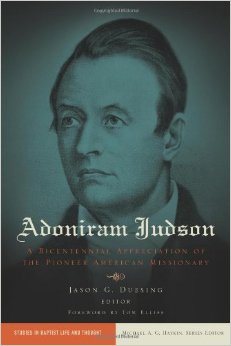
    Adoniram Judson by Jason G. Duesing

    Few books I read significantly shape me. The last would’ve been around a decade ago. Yet, in January one more was added to that elite list, this biographical account of the life of Adoniram Judson. Perhaps it was the timing, just before our miscarriage and a rather painful time for us as a family. It was helpful for that period but also for deeper reflection in what it means to live a life following Jesus and making him known to others.

    The book was so good I had to review it. The review gives you a better outline and idea of the book than I can give here. I also quoted him a little in some previous posts. It’s a great read and was significant to me at the time and as I’ve continued to reflect on it.

    In brief Judson was the first American Baptist missionary sent out, ever. He had a great impact on current day Burma/Myanmar, fruit which continues to be seen today. He endured so much personal and ministerial hardship, including the deaths of many of his children and two of three wives. He seems like an amazing man and very much worth the read.

    Michael Jordan: The Life by Ronald Lazenby

    Michael Jordan was the most iconic sportsman while I was growing up. Probably still is. He’d certainly be the best basketballer the world has ever seen. This biography is a comprehensive outline of his life and family. Lazenby begins generations before MJ was born and makes his way through the family tree before spending much of the 720 pages talking about his career. The Life outlines Jordan’s relationship with his father, family, coaches and team mates. It is a great read and even more so if you remember the glory days of Jordan and his Bulls.

    Bonhoeffer: Pastor, Martyr, Prophet, Spy by Eric Metaxas

    Another biography makes the list here too. Can you tell the stories of others interest me?

    Bonhoeffer was a pastor during the time of Hitler-led Germany and into World War II. He was one of few who saw Hitler for what he was and went against the traditional German church at the time. This leads him to be a main player in seeking to assassinate Hitler during the war, which he is consequently imprisoned for. Metaxas is a great writer and gives a detailed account of Bonhoeffer’s life. It took longer than I would’ve liked reading this on Kindle but it was still worth the 5-stars.

    When Helping Hurts: How to Alleviate poverty Without Hurting the Poor…and Yourself by Steven Corbett and Brian Fikkert

    As part of my role with Global Interaction I have had the privilege of facilitating and leading short-term mission or exposure teams. This involves preparing people to engage in missions in another culture and with other religions. At the same time questions are often raised as to the validity and method of these trips, quite often seen as a waste of money with little help to others. I have my own thoughts on this of course but this book helps put many of these things in perspective.

    This is a good primer on poverty and dealing with people who are impoverished. It also has some good chapters on what non-profits can do to safe guard themselves in dealing with the poor, whether that be processes or programs or finances etc. I was particularly interested in how they approached short-term teams and there is a whole chapter dedicated to that. Consequently they have elaborated that chapter into and entire book now too. In any case, this one was excellent and gave me a real insight into dealing with things regarding the poor and social justice.

    Leading from the Second Chair: Serving Your Church, Fulfilling Your Role, and Realizing Your Dreams by Mike Bonem and Roger Patterson

    So in January I become an Associate Pastor. I thought it worthwhile to read up on what some of this may entail. This book was rightly recommended to me and very much worth the read. It is written by two guys with much experience in associate roles and delves into three particular tensions those who lead from the second chair may face. It gives a good picture of the realities of this role, whether it be in a church or other place of work.

    Knowing God by J.I. Packer

    Knowing God is a Christian classic and remains so today. This is a re-read for me but it had been 10 years since I last picked it up. Packer outlines the Christian faith and the central aspects of it. As the title suggests, it helps us in getting to know God, who he is and what he is like. As I read this it reminded me of how ‘lite’ the Christian Living books are today. If you’d like something of substance to read this coming year then give this one a go.

    This time of year often produces ‘best of’ type lists on various websites. I mainly stick with books and you can read 2014’s list too if you like.

  • Book Review: Adoniram Judson by Jason G. Duesing

    Judson bookThe last book I can remember reading that had such an impact on me was in my later university years. I read a young adult version of the biography of Jim Elliot, a missionary martyr to Ecuador. His life and faith were an inspiration as I worked out my faith during my university years and spurred me into the world of missions.

    That was over 10 years ago now.

    So it seems very few books I read spur me into greater action and reflection. Most books invite me into the story and may give good information about a particular person or period. But I can’t think of more than a handful of books I’ve read that spur me into action and greater obedience to God.

    But the book Adoniram Judson: A Bicentennial Appreciation of The Pioneer American Missionary by Jason G. Duesing, is one of those books.

    This book isn’t written by one author. We could say it’s a collection of essays combined to give an excellent picture of Judson’s life and ministry. The book goes deep into his early life, his Christian life, his missionary life, his married life, and the influential life he led.

    It is a wonder as to why I hadn’t previously read a book about Judson. He is highly esteemed, particularly by those in America and the missions world. He is recognised as the father of American missions. The little I previously knew was from John Piper’s biographical message on the man from 2003. Yet in this written volume, with references to his and his wives’ journals and letters, there is a terrific account of this “mighty man”.

    Three main areas I saw highlighted in the book were Judson’s faith in the sovereignty of God, endurance through suffering, and commitment to long-term missions service.

    Sovereignty
    The faith Judson and his wives’ had in God is simply an inspiration.

    I say wives because Judson ended up having three. Ann and Sarah, his first two, died during his lifetime and Emily passed away only a few years after Judson himself died. I feel this needs to be clarified so there is no miscommunication. 🙂

    But all four individuals were wholeheartedly followers of Jesus Christ and sought to be obedient to His call, wherever that led. This begins with the conversion of Adoniram Judson soon after hearing one of his good friends from university die in the room next to him. He literally heard this man passing away during the night and upon finding out who it was the next morning was thrown into turmoil about his own soul.

    Judson sees the light and the graciousness of God through his Son and clings to the cross for forgiveness and salvation. He realises that it is only the cross that can bring true salvation. The trust he has in God at this early stage is evident. The way God’s hand guided him from being the son of a Congregationalist minister into atheism through university and then into a living, vibrant, and heartfelt faith when he was 20 years old is clearly seen. God’s sovereignty is at work.

    With this as the banner of his life he pursues a life that will count. He seeks to see others come to know God through his Son, so that they too may see salvation through the cross.

    He trusts God in his studies, as he heads to theological college without an active faith. Over the course of his studies he converts and has an unrivaled desire to be a missionary is Asia. He trusts God as he seeks a wife and proposes to Ann Hasseltine, loving her and trusting she will be willing to come with him to Burma and the East. In a letter to her parents, seeking to begin a relationship with her, he very early on describes his intentions for life and what that will mean for them and their daughter. In July, 1810, he writes,

    I have now to ask, whether you can consent to part with your daughter early next Spring, to see her no more in this world; whether you can consent to her departure, and her subjection to the hardships and sufferings of missionary life; whether you can consent to her exposure to the dangers of the ocean; to the fatal influence of the climate of India; to every kind of want and distress; to degradation, insult, persecution, and perhaps a violent death. Can you consent to all this, for the sake of him who left his heavenly home and died for fer and for you; for the sake of perishing immortal souls; for the sake of Zion, and the glory of God?

    As they travel he trusts God’s plans as they make the controversial but convicted decision to become Baptists after studying the scriptures. In the four months from leaving the American shores he and his wife Ann see the truth in Believer’s Baptism and are baptised themselves by colleagues of William Carey in India.

    In his first marriage with Ann, and consequently the ones following, the sovereignty of God is central to their faith and obedience.

    Suffering
    Judson and his wives’ suffered immensely. He saw the death of two wives, the death of over five children, and the death of colleagues in the mission work. He was imprisoned for nearly two years by the brutal regime in Burma at the time. When he lost his firstborn son he wrote:

    Our little Roger died last Saturday morning. We looked at him through the day, and on the approach of night we laid him in the grave. This is the fourth day, and we just begin [sic] to think, What can we do for the heathen? But yet it seems hard to forget little Roger so soon, to force off our thoughts from the attractive, painful subject, and to return to our usual employments. O may we not suffer in vain! May this bereavement be sanctified to our souls! and for this I hope we have your prayers. (p88)

    Ann experienced the same difficulty. In a letter to her parents, she expressed her confidence in God’s sovereign goodness, even in the death of her child:

    We do not feel a disposition to murmur, or inquire of our Sovereign why he has done this. We wish rather to sit down submissively under the rod and bear the smart, till the end for which the affliction was sent shall be accomplished. Our hearts were bound up in this child; we felt he was our earthly all, our only source of innocent recreation in this heathen land. But God saw it was necessary to remind us of our error and strip us of our little all. Oh may it not be in vain that he has done it. May we so improve that he will stay his hand and say, ‘It is enough’. (p88)

    What inspiration and trust in the Lord!

    Added to this is the ridicule he received from the local Burmese. It took seven years into the work before the Judson’s saw a convert. The constant health issues and lack of ‘success’ in the conversion of the people he sought to reach, and the death and disease he saw drove him to leave the main town he was living in and live by himself, in the jungle, sitting and staring into a shallow grave he had dug.

    Thankfully it was the years after this that Judson saw the fruit of his work but the suffering had an effect, as one could expect.

    Service
    The commitment of Judson and his wives’ have had a lasting impact on the lives and ministry of those who have gone after him. Their service of nearly 40 years, with one furlough back to America, is something to behold in the modern day. I understand that this was a different era, but the long lasting commitment of Judson and his wives attest to the fruit from long-term service.

    As mentioned, they didn’t see a convert for seven years. They experienced great suffering in their own lives and also saw it among the people they served. Yet, they continued to work in building relationships and translating the Bible into the native tongue of the Burmese. To this end Judson had a commitment to being contextual in everything and learn the culture well.

    The Judson’s immediately set about learning the Burmese language. Understanding Burmese was crucial for personal evangelism and Bible translation, both of which were necessary if the gospel was to gain a foothold in Burma. It was not enough to learn the language; the Judsons also had to learn how to live and minister in a Burmese context. Phyllis Rodgerson Pleasants describes the centrality of this learning for the Judsons’ mission:

    “The Judsons recognised that they had to be learners before they would be able to teach anything. They were persistent in learning from the Burmese [sic], their entire lives in order to communicate the gospel authentically in ways natural to the Burmese instead of trying to make the Burmese American so they could understand the gospel. More than learning the language from their teachers, the Judsons learned what it meant to be Burmese.”

    Learning the Burmese language and being immersed in Burman culture were critical components in providing a contextually appropriate Christian witness. The Judsons eventually excelled at both. (p81)

    This led Judson to be a communicator in word and deed. Alongside the work of translation was the contextual approach to being a witness for Christ.

    We agree in the opinion that our sole object on earth is to introduce the Religion of Jesus Christ into the empire of Burmah; and that the means by which we hope to effect this are translating, printing, and distributing the Holy Scriptures, preaching the Gospel, circulating religious tracts, and promoting the instruction of native children.

    Cross-cultural communication of the gospel was the Judsons’ heartbeat.

    Jusdon understood that translation work could commence more quickly in Burma that in some settings because, as Wayland surmised from Judson’s letters, “The Burmans are reading people. They have their religious books, and possess the teachings of Gaudama in their own language.’ However, Judson prioritised proclamation, “The press can never supplant the pulpit’.

    Language acquisition came gradually with parallel cultural knowledge, giving them the ability to interpret nuanced Burmese meanings, and worldview complexes of belief and practice. One of Judson’s first forays in adapting his technique to the culture was to stop building a zayat, a speaking point at the end of his house where passersby would stop to inquire this foreigner and his teaching. Eventually it became a place to hold public worship. Even though he borrowed the zayat idea from Buddhist priests, he clearly distinguished his zayat from theirs. His diary described the design and function of the building and recorded that it ‘is whitewashed, to distinguish it from the other zayats around us’. (p139)

    Conclusion

    Much more could be said. The book is well worth a read and some days spent in reflection of it. It was an inspiring read and one that made me think about my commitment to Christ and the way in which missions is currently done.

  • Judson The Baptist

    I’m currently reading through Adoniram Judson – A Bicentennial Appreciation of The Pioneer American Missionary by Jason G. Duesling. It’s a terrific read, giving good historical context to Judson’s decision in becoming a missionary and outline of his work and family.

    He began his faith as a Congregationalist, coming from the house of a Congregationalist minister. But after working through the intricacies of being the first missionary with the denomination he became a Baptist while travelling from America to Burma. This certainly caused a bit of a stir at the time, as you could imagine.

    In the 1913 issue of the Foreign Mission Journal there is mention of the presentation of the Judson Centennial fundraising movement at the Southern Baptist Convention’s annual meeting. One statement recorded from the evening summarised the guidance Judson received from the Spirit and the Word.

    The mighty significance of the Judson spirit is not the fact that when a missionary is left alone with his Bible he becomes a Baptist, but the significant thing is that when a Baptist is left alone with his Bible he becomes a missionary.

    This is one of the great mission quotes, let alone one that inspires those who call themselves ‘Baptist’.

  • A DIY Discipleship Plan

    We are in the fortunate position of living in a Christian resource-rich period of time. No other generation has had such access to the teaching of the Bible and other resources that come with it. Only a few years ago it was impossible to hear any sermon other than the one you heard while attending your local church. Now, I can listen to one sermon on the way to work and another on the way home. That’s crazy.

    The amount of books, podcasts, music, articles and blog posts, devotionals, and different versions of the Bible give a plethora of options in helping us to understand and know God better. But, it can also cause a tremendous amount of confusion because there is so much choice.

    discipleship

    Therefore, I find it helpful to think about how I’m going to grow in my understanding of God and develop as a follower of Jesus by having a plan. In previous years I’ve attempted to read the Bible through in a year. There are many good plans to help with this and I find committing to reading four chapters a day the most consistent method. Having said this, I haven’t been overly successful lately.

    Because I enjoy learning, particularly through reading and listening, I’ve decided to approach my discipleship development in a different way for 2015. Rather than have broad goals of reading the Bible through in a year and praying regularly I’ve sought to make them a bit more specific.

    In structuring this plan I’ve broken my development into four areas; biblical theology, historical theology, systematic theology, and practical theology. Within these four areas I then have specific resources I’d like to read or listen to at different times throughout the year. See below as an example:

    Biblical Theology

    • Read the book of Jeremiah 5 times
    • Read a commentary on Jeremiah
    • Reach the book of Hebrews 5 times
    • Read a commentary on Hebrews

    Historical Theology

    Systematic Theology

    • Read 3-4 books on the topic of ‘Salvation’ (Do you have anything to recommend in this area?)

    Practical Theology

    There are many resources to read, watch, and listen to. There are conferences to go to and church to attend. There are small groups to join and other community activities to be part of. There is no doubt that discipleship is communal. I don’t want to negate this. But on a personal level I also want to continue to grow in my knowledge of God through his Word, what He’s done in history, through the teaching of others and then seek to apply it.

    It’s at least a plan, and I like plans, even if they don’t always get achieved the way I think they should be. So next year I’m going in with a plan to develop as a disciple. What about you?