Tag: Youthmin

  • The Glue by Mike Stevens

    Mike Stevens recently self-published a youth ministry book for youth pastors and youth ministry leaders. “The Glue: Relationship As The Connection For Effective Youth Ministry” is a helpful volume in thinking through the practicalities of youth ministry. It is a good addition to the youth ministry literature, and terrific to have another youth ministry resource produced here in Australia. Here are a few of my reflections on the book after reading it recently.
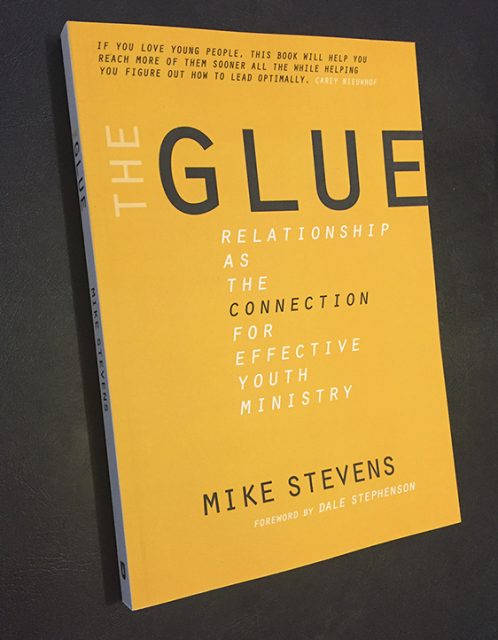
    thegluemikestevens

    In this book, Mike seeks to put his ideas about youth ministry leadership onto paper. He gives us a view into the way he thinks about youth ministry and its leadership, suggesting what might be most useful for us as youth pastors, leaders, and churches.

    What I found most beneficial in this book was to be reminded again of the importance of relationship in leadership, and in the developing of leaders. The relational element of the leadership development process is what stood out to me the most. While there is much to think through practically, which Mike outlines throughout, it is relationships that make youth ministry an actual ministry. Relationship is central to any youth ministry, both relationship with God and with one-another. And so, the main aim of this book is to remind us that youth ministry is relational ministry. This is front and centre throughout, and is the core of each chapter (or section).

    Clearly the book is focussed on being practical. There are sections and sub-sections on being a disciple, personal development, developing others, youth ministry foundations and the like. But within each chapter there are also short and sharp tips for anyone in youth ministry. This includes, how to communicate with leaders and parents, why camps are important, what questions to ask in beginning at a new church, how to finish a role well etc. The book aims at being practical and it does just that. This is opposed to being more theological in nature. There is brief mention of theological principles and foundations, which is quite common in youth ministry literature, and 99% of the word count is spent on application and concrete youth work. It’s clearly a practical youth ministry book.

    A unique aspect to this book is the reflection section at the end of each chapter. These reflection pieces enable the reader to dig deeper into the content and see how it applies to their context. I found these reflection sections a worthwhile addition to this book, with good questions asked of the reader. I think is particularly useful for youth leadership teams who may work through this book together and make the content specific to their ministry or church.

    I liked the reminder about relationship being central to youth ministry. Often we can quickly lose sight of the relationships we are building as we plan and prepare for the upcoming youth group event or small group. But, I also appreciated the sub-section on “The Four Big Asks of Youth Leadership” (p87-100). Here Mike outlines the clarity in which we need to communicate to our youth leaders. After all, what exactly are we asking them to do, say, on a Friday night? Mike summarises his answer to this in four parts: (1) Lead from your growing relationship with Jesus, (2) Follow up young people, (3) Prepare for Game Time (i.e. a youth group night or event), and (4) Deliver on Game Time (i.e. be punctual, present, willing to serve, and take initiative). This is not only an example of the practical nature of this book but also highlights the thinking and clarity we should be seeking to lead from.

    The Glue is a very easy read and is written like a series of blog posts, which I believe some of these chapters were originally. As I mentioned earlier, I think this is a good addition to the numerous books on youth ministry, particularly for us here in Australia. It is more for youth pastors and youth ministry leaders, but would be helpful for parents and the wider church too. Unless you’re already across the basics of a theology of youth ministry then I’d recommend reading this alongside “Gospel-Centred Youth Ministry” or Andrew Root’s “Taking Theology to Youth Ministry” series.


    It would be worth me disclosing that I do in fact know Mike! We have been colleagues for a few years now within the wider Baptist movement here in Australia. But even though I do know him, alas, I was not paid or given any sort of favour for this reflection! If you’re considering buying this book I’d recommend you get it directly from his website, as that’ll help him cover his self-publishing costs. Enjoy.

  • 5 Reasons To Meet With Older Saints

    Often, as Youth Pastors, we can be so consumed with the tasks and programs in front of us that the only people we meet with during the week are those between 12 and 25 years of age.

    In between all those set times of involvement–Sunday services, youth group, small groups, and other meetings–we often have limited time to meet up with others. Students usually end up getting priority as we seek to follow up any pastoral concerns, or continue to disciple them in a one-on-one context. Online we’re chatting to students constantly, answering questions, checking-in, and generally being accessible. Often, it can be a week or two before we’ve had a decent conversation with someone over 35.

    Having grown up in the church, as a Pastor’s kid, I’ve always found it beneficial to sit with those who are older than me. Part of that might have been because there weren’t many others my age, but it was also something that happened at church dinners, Sunday lunches, and after services.

    5 Reasons To Meet With Older Saints

    Over the last few years I’ve found it incredibly helpful to meet up with older saints. Whether they are part of my church, retired ministers, or my grandparents, I always walk away encouraged and feeling privileged to hear the stories of those closer to ‘home’ than I. So, as a Youth Pastor I’ve come to observe five reasons why it’s a good idea to have a cup of tea with ‘the olds’:

    (1) Older saints enable a greater perspective on what it means to follow Jesus through the whole of life.

    When meeting with an 83-year-old who began following Jesus long before you were born you suddenly realise the commitment required. You realise the faith, wisdom, and commitment that comes from one who has walked the path for so long. And you hear what’s involved in growing and walking with Jesus year after year, decade after decade.

    Through hearing the story of an older saint you learn that life is not easy, that the hardships along the way are real and painful and take years to grow through. Yet, they continue to say with the Psalmist, “The Lord is my strength and my shield, my heart trusts in him, and he helps me. My heart leaps for joy, and with my song I praise him” (Psalm 28:7).

    (2) Older saints give historical context to your church and ministry.

    Unless you’re serving in a church plant that has only recently launched it is more than likely your ministry as Youth Pastor begins at a certain season in the life of the church. The church may have been around for decades before you got there, and I suspect it will be around long after you leave.

    Meeting with those who’ve been in the church for many decades provides a greater understanding of the church, its culture, and how it has got to where it is today. There are stories, significant events, ministers, and people who’ve served faithfully across the life of the church. These things aren’t known when you begin at a church, but over time you can gain a better picture of the church’s culture and history by meeting with older saints in the congregation. This can help you understand why the church operates the way it does.

    (3) Older saints provide encouragement and inspiration to help you keep going.

    If we constantly surround ourselves with young voices then we miss out on a wealth of encouragement and perspective. Hanging only with those who have particular ownership and understanding of the youth ministry will simply add more pressure. We will begin to focus on the short-term and forget the long-term.

    Meeting with older saints helps give a long-term perspective, and in doing so they provide encouragement to keep going. There have been Youth Pastors before you, and it’s more than likely there will be others to come after you. The older saints have seen people in the church longer than you. And, more importantly, it is likely they themselves were once the youth leaders and Sunday School teachers in the church. They have a rich history of teaching the Bible and seeking to grow young people, albeit in another time. They know what it’s like to serve and serve and serve and wonder whether they are achieving anything for the Kingdom.

    (4) Older saints will pray for you and the youth ministry even more because they now have a better understanding of you and what you’re doing.

    I’m not sure about you but I always look up to those older saints who are constantly praying. Meeting with those that are older provides an opportunity for us to learn and get to know the saints of our church. Furthermore, they also get to know us and understand more about what we’re trying to do.

    It’s an example of inter-generational ministry.

    Out of these conversations these older saints can take more specific prayers to our God. They will be helping in sustaining us personally, and the wider ministry of the youth, young adults, and church.

    And hey, I suspect they’ll come up and ask you after a Sunday service how this issue or that problem is going. Suddenly you have an advocate for the youth ministry!

    (5) Older saints help you realise what a privileged position you find yourself in.  

    Hearing anyone’s story is a privilege.

    To have someone open up and tell you their life story, their walk with God, and what is joyful and painful for them is a privilege. And meeting up with an older congregational member is just that, a privilege.

    It helps us realise that the role we have in discipling others is a privilege. It helps us realise that hearing the story of one person’s life is a privilege. But more than that, the week-to-week, month-to-month ministry of being involved in someone’s life, old or young, is a privilege that we often don’t realise.

    And perhaps, as we walk from the cafe to the car, post-conversation we ourselves will begin to realise what a privilege it is to spend an hour or two in front of one of those older saints.

  • On Youth Pastor Position Descriptions

    About a week ago I wrote a short Facebook post out of frustration:

    “Another day, another horrible position description for a youth and young adults pastor.

    Sorry churches, Superman/woman can’t even run a youth ministry, facilitate the young adult ministry and lead an evening congregation on 12 hours a week. #wecandobetter #rantover.”

    I don’t like to complain too often in public, as it seems most social posts these days are that way inclined. However, this comment did receive a little traction, including some private messages from people hoping I wasn’t referring to their church’s search for a Youth Pastor!

    But I did write out of frustration.

    The particular position description I came across was horrible for its expectations on the Youth Pastor, its lack of time allocated to do a good job, and its focus in outlining specific tasks. And, it is not uncommon to see horrible job descriptions for Youth Pastors like this. Expectations and responsibilities stated on paper, in black and white, often far exceed the capabilities of the possible employee, particularly if the position is part-time.

    But rather than just write a frustrated Facebook post, here are some further reflections and suggestions on youth ministry job descriptions.

    notasuperhero

    (1) It is positive churches want a youth ministry practitioner.

    Having a church willing to give time and money and resource to help their young people and families is extremely positive. Whether it is 1-day per week or full-time, we must acknowledge that the willingness of a congregation to do this is a positive one.

    (2) Budgets, more often than not, drive the time allocation. 

    It’s worth naming that the church’s budget is a huge determining factor in the time allocation of Youth Pastors. It is obvious that the church has to have a certain level of income in order to pay their staff. However, this can also skew the thinking of leadership teams when they are driven to fill a role rather than use it as a vehicle to help the church’s vision in ministering to young people and families.

    Just because the money is there does not mean you should automatically search for a Youth Pastor. And just because the money isn’t there doesn’t mean you can’t have a vision for youth ministry in your church.

    (3) The time allocation for the role will determine the quality and experience of applicants. 

    A person with over 10 years experience, a theological degree, and a young, growing family isn’t going to be looking for a Youth Pastor job that’s 2 days per week. A newbie to youth ministry in their first year of Bible College, with an internship under their belt, is unlikely to be the person for a full-time role.

    The allocation of days per week will have a factor on who applies for the role. The number of days the church puts into a role will determine the quality and experience of applicants. This should determine the expectations, development, and breadth of responsibility put upon the YP.

    (4) Understand how long tasks, events, and projects actually take. 

    From reading a number of position descriptions over time there seems to be little understanding of how long things actually take. It may surprise some that it actually takes time to prepare a bible study, to run a youth group program, and to develop leaders. In any week a variety of things can pop up that mean the ability to complete some tasks will take longer or be pushed out.

    That’s what happens when working in the people business.

    It would be worth churches talking to other Youth Pastors to gain a realistic understanding of how much time certain tasks and events take so they are done well.

    (4a) Include every commitment necessary into the time allocation.

    If there is a mid-week bible study, a Friday night youth group, and a Sunday morning and evening service then by my reckoning there is around 10 hours of actual program time. This neglects to include the time for preparation of said programs and the time for setup, pack-up and debrief. If they’re included then it balloons to around 16-20 hours depending on the length of the programs.

    That’s already 2-days per week for a Youth Pastor to do some very standard, line-and-length youth ministry.

    This doesn’t include the 1:1 meet-ups, pastoral team meetings, administration, follow-up of young people and families, the development of leaders, church or committee meetings, professional development, and any space for visioning, thinking and brainstorming of what is to come.

    It’s important to include everything. Churches should be just and fair workplaces, if not better.

    (5) Understand that people are at the core of the Youth Pastor role.

    While the tasks, events, and projects are important the Youth Pastor views the role in terms of people. As I’ve said, the church is in the people business.

    When the position description simply states all the programs the applicant is responsible for then it doesn’t inspire much. But, if the PD states the vision for the ministry, the goal of helping people understand and grow in faith, help families and children grow closer to Jesus, and provide care of the youth and families in the church, then there is something more appealing.

    All the programs and activities that happen in a church are simply vehicles for ministry. The ongoing check-ins, catch-ups, dinners, and the like are what help, grow and care people.

    Sometimes a vehicle can get too old or the needs for a particular vehicle change. Going from a couple to having a family often means the change of car. The needs change. The same can happen in churches and their youth ministries. Understand it revolves around people.

    (6) Provide time for growth and development. 

    It is not easy to find a position description for a Youth Pastor that specifically states they will grow and develop the person. I haven’t found churches overly great in professional development. Sure, we all grow in the job, that’s definitely the case. However, if funds and time are allocated for conferences, further training, and study then this will help the person, and will more than likely keep them in the role longer.

    (7) Be specific about what your church is hoping to achieve, be broad in how that will happen.

    It’s all well and good to want a Youth Pastor, but why do you want one?

    Is it because the families in your church are wanting their kids to be looked after at certain times of the week, given a bit of Jesus, and a sprinkle of fun? Or, is it because there is the recognition that young families, young people and young adults are a priority for the church going forward?

    Is it because you need to fill particular tasks and so hiring a YP will mean Friday nights and bible studies will happen? Or, is it because there is a vision to develop lifelong faith in children, young people and young adults?

    Be big on vision. Give a sense of what you’d like to achieve. But don’t dictate the path. Allow the congregation and potential YP to capture the vision and then let them fulfil it using the appropriate vehicles. A dictatorial position description shows a lack of trust. A vision-orientated one doesn’t.

    (8) Have confidence in knowing the Youth Pastor will be putting more pressure on themselves than anyone in the church. 

    It’s true. The YP will be tougher on themselves than anyone else. They will be more willing and more driven to see people come to faith and grow in that faith. Trust that. Believe in them.

    I think that will do for now.

    More could be said around support from superiors and the church’s leadership, which I have mentioned previously.

    Hope this helps.

  • Published: Grace In Relationships – The Youth Minister And The Volunteer

    A few days ago I had a post published at Rooted Ministry. This is part of a series about ‘Grace In Relationships’. I focussed on what it means to extend grace as a Youth Pastor to those who are committed volunteer leaders in your church.

    “Often, relationships can be made complicated in unhealthy ways. However, when grace is the marker in a relationship – youth ministry volunteer or otherwise – that which seems complicated becomes easier. Truth is eventually able to be spoken, forgiveness is able to be given and received, and love and kindness shines through. If you’re sceptical, look no further than the grace given to us through Christ Jesus. I encourage you to seek to make grace the centre of your relationship with your volunteers, as I believe it will not only transform the culture of your youth ministry to another level, but also transform your own heart.”

    You can read the whole post here.

  • 11 Things: The Privilege Of Youth Ministry

    When finishing up in any youth ministry role, paid or volunteer, I’ve always been struck by the privilege it’s been to have such a position.

    There’s something ironic about finishing up in a role and then being overwhelmed with the sense of satisfaction and privilege for being in it in the first place. While doing the tasks and duties associated with the position we are often unaware of the the privileges. We feel the grind and experience the drag, but hindsight, as they say, is a wonderful thing.

    I distinctly remember the feeling of concluding our time in Lebanon. The relationships built, the friendships formed. I remember saying goodbye and realising that it is unlikely I will ever see these people again. It was simply a privilege to meet them and be involved in their lives.

    I remember how it felt leaving Canterbury Baptist. We’d been there nearly 10 years and I had made a contribution as a volunteer leader right through to being on staff. There was, and still is, joy, satisfaction, and a large spoonful of pride in what had been accomplished. And of course, there were challenges along the way. Some unbelievably hard. But the privilege of being in such a position is what I remember most.

    When in the middle of it all it is easy to get bogged down in the day-to-day, week-to-week tasks that need to be done. The challenges are at the forefront of the mind, not the privileges. But with intentionality I believe fostering a sense of privilege during your time in youth ministry is vital for self-care, sustainability, and perspective.

    The realisation of such a privileged position doesn’t have to happen once it’s all gone.

    I have small children. And for nearly five years now I am often told by older and wiser parents, “It goes so fast, make sure you treasure every moment”. In the midst of parenting small children hearing the ‘treasure every moment’ thing can get on your nerves. But what these kindhearted people are saying is true. It goes fast, and there are numerous moments to treasure.

    The same could be said for youth ministry.

    Youth ministry is a privilege.


    When you’re in it no one is telling you how much of a privilege it is. Conversations with other youth ministry practitioners usually centre around the challenges and the problems. But let me tell you that youth ministry is a privilege, you should treasure every moment (OK, almost every moment).

    This is the final part in the ‘11 Things’ series. It’s been a journey, and we’ve touched on a number of subjects. Each post has explored an aspect of youth ministry that I wish I had known more of before entering this gig. I’ve mused on these topics, and gained clarity for myself, as I’ve thought through what would have been helpful to me over 15 years ago.

    To finish this series, and capture the essence of what youth ministry is about, I think it is important to be reminded of the privilege it is to be in such a role.

    With that said, here are five privileges I believe are important to recognise in youth ministry.

    (1) The Privilege of Influence

    A leader is someone who influences others. This can be done with a title, but in most cases this influence occurs through the giving and receiving of trust. In any form of youth ministry role, paid or volunteer, trust is given to you and it is a privilege to receive it.

    Even more unbelievable is the fact that you have the opportunity to influence people for good. You become a voice in a young person’s life. A voice they respect and seek when making decisions or dealing with challenges in their life. You become someone they look up to, someone they seek to imitate.

    Furthermore, the influence that those in youth ministry carry helps frame how students think about their faith–how they think about God. Youth ministry research suggests that a young person needs connection with five older adults to help make faith ‘stick’. These days it can be hard for a student to find that many older adults interested in intentionally investing in them. This is where youth ministry leaders are so vital, and where inter-generational ministry is a must. The more people in youth ministry the greater the likelihood of teenagers continuing in faith.

    Here lies great responsibility and great privilege.   

    (2) The Privilege of Partnership

    Youth ministry isn’t done in a bubble, solely interacting with students.

    Well, it shouldn’t be.

    One amazing aspect to youth ministry is the ability to not only be part of a teenagers life but also the life of their family. Connecting with parents, siblings, and the extended family is a privilege.

    The opportunity to celebrate with families as they pass certain milestones is a unique aspect to a youth ministry role. Whether it is entering high school, getting L-plates and P-plates, turning 18 or 21, graduation ceremonies or celebrating sporting, art, or music successes, the involvement in family life is a special benefit.  

    And then once you hang around long enough you begin to take a more pastoral role with the parents as their kids move out, get engaged and married, and have children themselves.

    What a privilege.

    (3) The Privilege of Care

    This is a massive one for me.

    This week alone I could tell you story after story of the significant challenges young people have to face. Everything from the death of a grandparent, to a mental health diagnosis, to the separation of a family member, to the trauma of bullying, to the parent diagnosed with cancer, to the family member involved in a car crash, to the unhealthy home life, to the poor results at school.

    Young people are dealing with a lot. Sometimes too much. But it is such a privilege to be one of the first people they message when things aren’t going well. To be someone whom they seek out and lean on when challenging times are upon them. To be a person who they trust enough to share their struggles in faith, home, and life.

    The privilege of being there, of being present, is something that cannot be taken for granted.

    (4) The Privilege of Teaching

    Each week there are times for the opportunity to open the bible and pray with students.

    For someone, young or old, willing to sit down for an hour or two and read the bible and pray with you is a phenomenal privilege. They could be doing something else with their time. Instead, they purposefully choose to meet and spend time learning and growing in their faith. The want to make connections between the bible and their lives and pray with others. 

    This should blow our minds.

    The opportunity to do this keeps you sharp in teaching faith. It makes you think through how to make the scriptures relevant and applicable to teenagers. It brings with it the responsibility to teach the truths of God and allow space for them to explore it themselves.

    Having this chance to shape how people think about God and his Word in a deep and lifelong way is a privilege that makes me wonder how we actually get to do this.

    (5) The Privilege of Ministry

    The fact that churches employ people to help grow and lead their young people staggers me.

    It has become normative in churches for the second staff appointment to be that of a Youth Pastor. For a church to do that is quite a statement. It speaks of their intention to invest and disciple young people. It speaks of the priority they have in students. It speaks of the high regard they have for the ministry to teenagers.

    Most youth ministry leaders I know would be doing what they do even if they didn’t get paid for it. It’s the passion and heart they have for seeing those in high school come to faith and grow in faith that drives them. This, like anything, can be used and abused. Unfortunately, there are plenty of stories of this happening in churches around Victoria and Australia as we speak. But on the whole, it is a privilege to even have the opportunity to work in this sphere.

    Having the opportunity to be employed in Christian youth work, to connect and disciple young people, is such a privilege. To see them grow and mature as people and people of faith is something money can’t buy.

    I’m sure there are many other privileges to add to this as well. Some internal, some external. Perhaps you have more you could add to the list yourself. But if you’re involved in youth ministry in any form, whether it’s officially as a ‘Youth Leader’ or whether you happen to play in the church band with a 17-year-old and speak to them every so often, be reminded that it is a privilege to do so.

    In all the ministry, in all the challenges, in all the things we do within the sphere of youth work we need to remember that it is a privilege to do what we do.


    A while ago I wrote a post about what I wished I knew when entering youth ministry. This is part eleven of a series dedicated to elaborating each of those points. You can read part onepart twopart threepart fourpart five, part six, part seven, part eight, part nine, and part ten here.

  • 11 Things: Working Better

    ‘Adulting’ according to Urban Dictionary, is:

    “…to do grown up things and hold responsibilities, such as, a 9-5 job, a mortgage or rent, a car payment, or anything else that makes one think of grown-ups.”

    When entering youth ministry it is not uncommon to be in our early to mid-20s. In all reality, there is little of life lived and much more of life to come. Some things we aren’t taught in school and one of those things is adulting.

    Part of adulting is having a system to deal with all the adulting things we need to do in life and work. Having a system to deal with these things can be learnt and is important in any job, relationship, or area of responsibility you might find yourself in.

    With this in mind, I wish I had a better idea of organising my workflow and system when entering youth ministry. I have always considered myself someone who is pretty decent at organising and planning. For example, I have colour-coded calendars that tell me what’s coming up in church and family life. I have a spreadsheet that details every book I’ve read since 2005. I keep my books in categories. I keep notes of conversations I’ve had with people. I used to rename individual photos according to date and place. So, yeah, I think I’m OK at this organising thing…sometimes a bit too much.

    But starting out life in my twenties I had no idea. It took me a number of years, through working as a Personal Trainer and Gym Manager, and into missions and ministry, before I felt I had a good system.

    This system refers to how one handles their to-do-list and what you do with all the life administration you end up doing. This can include how to deal with email, reminding yourself of the improvements you need to make when running that camp again next year, setting a date to write a report, trying to remember the contact details of a new person at youth group. And so on.

    There is a lot to deal with in youth ministry, and in life, so a system to deal with this is always helpful.

    If I had my time over again I would begin thinking through this stuff earlier than I did. In many ways this is a learned process but there are plenty of resources to help young Youth Pastors think through the skills they need to improve as part of the job. In youth ministry there can be plenty of things going on in church life and it is hard to keep all the balls in the air at once. If starting out again, I’d think about how to structure my week, how to get my emails down to zero, how to plan the next 12 months and the next 3 years, how to understand the rhythm of the church’s year, how to deal with budgets, and how to plan one-off events.

    All this non-people work makes our world turn on its axis.

    What’s it called?

    That’s right, administration.

    The death of many a good Youth Pastor.

    In every job there are things that people don’t really wish to do. Some can be delegated but others need to done. This is one of them.

    So really, I’d simply encourage you to read two books.

    First, Do More Better by Tim Challies, outlines briefly how to approach a working system that is adaptable to your needs and scaleable to your work and life context.

    Second, What’s Best Next by Matt Perman is also an excellent resource on how to think about personal productivity and then how to apply it.

    Administration, it’s not the sexiest topic. But it’s important if you’re wanting to learn more about how to actually do the job of youth ministry in amongst all the caring and events.

    It’s something I wish I knew when I started out.


    A while ago I wrote a post about what I wished I knew when entering youth ministry. This is part ten of a series dedicated to elaborating each of those eleven points. You can read part onepart twopart threepart fourpart five, part six, part seven, part eight and part nine here.

  • The Relevance Of Jim Elliot For Youth Ministry

    Let me tell you about Jim.

    Jim was an active young man who enjoyed sharing his faith with others. He was a social kind of guy. He liked people and people liked him.

    He grew up in the United States and was an excellent student in high school and university. During these years he became a Christian, and from that point sought to share his faith with everyone he knew. In university he led a bible study and was the editor of the college newspaper. He studied hard, and received good grades.

    At one point he became interested in a girl. This interest occurred as he was exploring options to serve God in a mission capacity overseas.

    jim_elliot_by_gregchapin-d6jqcxv

    He married Elisabeth and they moved to Ecuador as missionaries. They first learnt the language before moving out near the jungle. Jim had a passion to reach a group of people who had never heard the name Jesus before. He wanted to share Jesus with them and had a few friends wanting to do the same.

    After a couple of years Jim and four other friends began to search for a tribe that had never heard about Jesus. They did a number of flyovers of the jungle looking for a particular tribe, their huts and living arrangements. After a number of months they found the tribe they’d been looking for. They began to gently make contact with them through giving them gifts; gifts of food and other packages useful to their tribe were lowered out of the plane they were in.

    On one particular day they decided to make closer contact with the tribe by flying to an open area near the village, landing on some hard sand next to a river. The whole day the team chatted with a couple of people from the tribe the best way they knew how. They were encouraged, believing they had made a good impression.

    Unbeknownst to the group the rest of the tribe had surrounded them as they had been talking throughout the day. In the thick of the trees and scrubs of the jungle were the men of the village. After dark these tribesmen came out of hiding and killed them, putting an end to their mission task.

    Once the guys didn’t arrive home the wives and children soon realised what had happened. In the weeks and months following many, understandably, left Ecuador for home.

    But this isn’t the end of the story.

    Jim’s wife, Elisabeth, and their daughter, ended up making contact with the tribe. Elisabeth and her daughter became friends with this tribe and ended up living with them for a number of years.

    They lived with the people who had killed their husband and father.

    Over the course of time the tribe turned to Jesus and from its violent ways into a loving people who cherished the Good News.

    The story of Jim Elliot and his wife Elisabeth is a famous story in mission circles. It is a story that has inspired many people to take the leap into cross-cultural mission, and I’d have to be included with them.

    However, this isn’t simply a story worth limiting to global missions. It can also be a story relevant to us in youth ministry. Here’s how:

    First, Jim’s story reminds us of the concern for sharing the Good News. 

    This Good News is the story of what God has done through Jesus. It is the story of God creating and calling a people to himself. It is a story that understands each individual student, parent, family, church member, and member of society, as a loved, cared for, and important person to God himself.

    In youth ministry we seek to connect God’s story with the stories of those who we come into contact with. We seek to connect the Good News with the story of each individual connected with our youth ministry. Jim’s story is a reminder that sharing God’s story is to be at the forefront of what we do. It is what we are to be passionate about and committed to. It is a reminder that our youth ministries are to be mission-shaped.

    Second, Jim’s story reminds us to be strategic. 

    There is strategy behind the plans Jim and his friends had to achieve their mission. This strategy was thought out as they tried to show their love and care for the tribe in a respectful and meaningful way.

    In youth ministry it’s important to have a strategy in determining how you go about what you do. Sometimes this might be in your head, but eventually it is worth having something written out in order to explain what you’re doing and why you’re doing it. A youth ministry without a strategy is like going on a car ride without a map. It helps keep you focussed and helps you know when you’re heading off track.

    Third, Jim’s story reminds us of the need for passion and commitment.

    No one will deny Jim had passion and commitment. Jim realised the need to be involved in the long-term mission task. He had a passion to share the Good News and to make it known to people who wouldn’t have known otherwise. He also committed himself to this task, commitment even to death.

    If you’re in youth ministry and don’t have the passion for it, nor the commitment to it, then why do you even #youthmin?

    Passion doesn’t need to be loud and proud, it might be through an inner sense of satisfaction. Commitment will be shown through your presence, your people interactions, and your punctuality to name a few character traits. Encourage those traits and stoke that passion…or find someone to take over.

    What inspires me about Jim’s story is his willingness to share the gospel with people and to also share his life with them. He not only gave his live for the cause of Christ but was seeking to share his life with people he didn’t know. He was one of five young men to be martyred that day in 1956, all striving to share their faith with this unreached tribe who had never heard the Good News before. Yet, it took their death for the sharing of the Good News to this tribe to occur.

    I doubt you’re putting yourself on the line like Jim Elliot and this mates did when rocking up to youth group on a Friday night. That’s OK. But, whatever your youth ministry looks like remember that it is like double-sided sticky-tape, its about sharing the Good News and about sharing your life.

    “…because we loved you so much, we were delighted to share with you not only the gospel of God but our lives as well.” – 1 Thessalonians 2:8. 

  • 11 Things: Fixing People vs God’s Grace

    I walk into church.

    I know what to expect. I’ve been to plenty of churches and services before.

    I’ve been a Pastor’s kid. I’ve been a volunteer. I’ve spoken up the front. I’ve been on staff. I’ve been part of committees and organising groups.

    I know church culture like I know how to drive a car. I know what the people are doing up the front.

    I know most of the songs. I know the typical Baptist liturgy, the three-song sandwich.

    I’ve sat through plenty of prayers. I’ve let the bowl pass plenty of times. I’ve taken the bread and the juice regularly. I’ve listened to plenty of people’s stories. I’ve heard sermon after sermon after sermon.

    I know what to expect on a Sunday morning.

    But what I didn’t expect was that feeling of being more burdened when I walked out of the service than when I walked in.

    That surprised me.

    For a few months, having recently finished up my position as Youth and Young Adults Pastor, I found myself confused.

    I thought going to church would now be easier. There’d be no pressure, there’d be no one watching, there’d be no one expecting anything of me. I could sit, I could listen, I could let it all wash over me as I reflected and worshipped God.

    But, there I sat. I sat hearing those prayers, listening to the songs, concentrating on the sermon, and participating in the gathering. Yet, the more I did this the worse I felt, the more the burdens piled up on my already heavy shoulders.

    As I’ve reflected on this experience there are no doubt plenty of reasons for feeling like this. The loss of previous identity, the over-cynical nature of my mind, the attitude of my heart toward church. I also realised that what I was looking for was grace, hope, and a sense of God’s love for me personally.

    Instead, I was given proof-texted lifehacks for a healthy life. I was being fed fast-food that seemed to taste nice at the time but became ugly as time went on.

    For a season, I sensed layers and layers of guilt being added to me when walking out of a church service. I was guilty about my relationship with Jesus. I was guilty about my actions and attitudes toward those around me. I was guilty about my parenting. I was guilty about my spending habits. I was guilty about my responsibilities.

    I came out feeling like I wasn’t doing enough. That all I needed to do to be living the Christian life was to do more of whatever was taught that particular week. Rather than finding the alleviation of guilt, shame, and sin that the worship of God through the Spirit brings I was finding my already full to-do-list was being added to.

    As I look back on my own brief ministry and church experience I realise that little time is spent providing opportunities of being fed God’s grace.

    The church service is often a place where people come once a week, if you’re lucky, and seek to hear God through his Word with his people. Yet, I know I have been guilty of things, of just giving fast-food topped with ice-cream for dessert. Often we give a short-term fix to long-term problems. We give little balm for their hurts and pain, providing cheap Band-Aids that soon lose their stick.

    In youth ministry we often plough ahead with the program. We outline what’s coming up and hit the main topics of relationships, sex, social media, and other ‘youth culture’ issues. We often bring the fun, the excitement and the loud. But it is also about time we as Youth Pastors thought about bringing the grace.

    How do we provide spaces for young people, and those in our church, to understand that God is a God of grace?

    We’re all very good at giving advice and providing correction if something doesn’t go the way we think is right.

    We’re all very quick to help with the practical but often unwilling to sit with the pained.

    The disruptive kid at youth group. The youth leader who always brings the negative. The parent who is always on your back. Each needs grace.

    People are not only sinners but they are sufferers too. They are enduring life and busyness and all that comes with the daily tasks of living. It’s a wonder so many make it into church on a Sunday, or to youth group on a Friday as it is!

    Let’s not attempt to fix people. Let’s provide spaces where God can work his grace.


    A while ago I wrote a post about what I wished I knew when entering youth ministry. This is part nine of a series dedicated to elaborating each of those eleven points. You can read part onepart twopart threepart fourpart five, part six, part seven and part eight here.

  • 11 Things: Church Culture And Politics

    Depending on what kind of day I’m having I might be able to brush off the niggle that is church politics or I might get really cynical and let my frustration out to those around me.

    Unfortunately, like any workplace, organisation, or business (for profit or not), churches have politics. As a Youth Pastor it is important to be aware of this reality and be able to deal with it in a healthy manner.

    When you start as a Youth Pastor you walk in pretty blind to what the higher echelons of church management deal with. Whether it be a pastoral team, the leadership team (elders and deacons), or even a ministry area (youth, families, childrens, mens, womens etc.) it takes time to grow in understanding of the culture of the church and its leadership.

    Before we unpack the main areas of church politics a Youth Pastor needs to deal with there are three important caveats worth mentioning:

    (1) There are many good and well-meaning people who do not seek to be involved in church politics but because of the church’s culture they can’t help it. With leadership and responsibility comes with it certain parameters and a certain culture. Even a new person to a leadership role can be swept along without realising they’re in the middle of some sort of politicking. I don’t believe most church members seek to be part of a team that is dysfunctional or unhealthy in this way.

    (2) Talking about the topic of church politics brings with it a negative tinge. Not all politics in a church is bad, sometimes it is necessary. But even using the term ‘politics’ in the church setting conjures up ugly and dysfunctional images.

    (3) I, like everyone else, bring my own set of assumptions and experience to church and its leadership. I recognise that growing up as a Pastor’s Kid, where church was all-consuming, has impacted me more than I probably realise. Seeing, hearing, and knowing what churches are like at every level and observing how they operate from a young age provides a unique insight, for better or worse.

    With that said, it is worth outlining a few points about what to be aware of when settling into the Youth Pastor role, particularly as a ‘newbie’ or in a new church.

    First, you are being watched by everyone.

    The Youth Pastor role is an unbelievably important and strategic role in the church. I believe this to be the case. But it is also a role where you are being watched – your character, your interactions with people, your words, and your actions. Everything. Even before you step into the congregation for your first Sunday people already know of you and have certain expectations about what you will bring to the church. They will watch you from day one and will continue to do so throughout your tenure.

    Second, people will talk about you.

    Just realise that people will talk about you without you there. They will talk about your personality, about the actions in leadership you take, about what you wear on a Sunday, about how you relate to the ‘young people’, about how you make conversation with them, and what your family is like (if you have one). Hopefully, when they do speak of you they will speak kindly and positively, but don’t be surprised if there are some negative critiques too.

    Third, many people believe they can do your job.

    While you have been brought in for the Youth Pastor role there will be plenty of people who believe they can do your job. So, you will find people coming up and suggesting the best way forward in various ministries you’re responsible for. This could be anyone from the 15-year-old in the youth group, the new leader on the team, the parent who isn’t happy with what’s going on, or even the Senior Pastor who was a Youth Pastor 20 years ago and doesn’t believe things have changed that much. This is not to say that input from others is not valid, it most certainly is! But, that feedback and word of input needs to be sifted and thrown back and forth with other leaders in the ministry area. This is why it’s important to have a team of leaders.

    Furthermore, this is why it is also important to work out what you believe is the best strategy for reaching young people, what you’re focussing on, and what that looks like in the week-to-week. Discerning this occurs through your relationship with Jesus, prayer, reading about youth ministry, experience, conversations with other pastors, and with the volunteer leadership team.

    Fourth, you will not please everyone.

    The quicker you come to terms with this realisation the better for your own emotional health. While those first 12-18 months will generally be quite ‘honeymoonish’ there will come a time where you will begin to hear what people are really thinking. This is where the fun begins. This is where people believe they know you, you’ve been around long enough to build some trust (hopefully), you may have implemented a few little changes here and there, and now feedback on what is actually happening begins to rear its head. In this stage you will find people have strong ideas (refer to my third point) but will also want to see the success of what you’re wanting to achieve too. At this point change may be easier but negative feedback will also come. Being clear on where the youth ministry is headed will make this easier.

    Fifth, your ministry is not solely about teenagers.

    You’d think that the term ‘Youth Pastor’ would sum up what you do, working with teenagers. This isn’t the case. In reality you are the pastor to the youth but also have working relationships with many of parts of the body. While the youth ministry and the young people is one aspect to your role other important relationships include the Senior Pastor and other colleagues, parents, the church leadership team, other ministry leaders, young adults and other volunteer leaders, just to name a few. With the role comes the actual task of delivering a youth ministry but this all occurs within the context of the wider church. For example, this means when seeking to set dates for the youth ministry you need to take into mind the rhythm of the church and important dates for other ministries of the church. An example that comes to mind for me is setting a Youth Leaders Retreat at the end of the year. I could just put a date down and run with it but I am conscious of where the church meetings are, what the lead up to Christmas means for various church activities, when people are on the music team for Sunday mornings, and the like. The ministry you’re responsible for works within the context of the rest of the church.

    Church culture and church politics are something to be aware of when you’re a Youth Pastor. I wish I had known more about his when I first stepped into a paid gig. It can be hard stepping into a church leadership position believing you must get on with everyone, being their best friend. At the end of the day you can’t be, but you can be a leader who takes the responsibility of their position seriously and show others how to ‘do’ youth ministry in a healthy manner.

    It is important to do the work God has called you to as you lead the youth ministry. Keep your head down, fight the battle worth fighting for, and pray about the church constantly. Don’t go about injecting yourself into things that you don’t have any influence over but help those around you lead well. Make sure you keep your heart and conscience clear, don’t let any relationship breakdown or uncomfortable church politics fester so you become bitter. And fix your eyes on Jesus, be generous in grace, and hold firm to the Gospel for yourself and those around you.


    A while ago I wrote a post about what I wished I knew when entering youth ministry. This is part eight of a series dedicated to elaborating each of those eleven points. You can read part onepart twopart threepart fourpart five, part six and part seven here.

  • Recently Read: June 2017

    I’ve been holiday and managed to finish a couple of books. Here’s some thoughts about them.

    anastasia-zhenina-65700

    Killing Calvinism: How To Kill A Perfectly Good Theology From The Inside by Greg Dutcher

    Now here is a book for Calvinists.

    If you’re wanting to explore what Calvinism is then go elsewhere, just as the author says in his introduction. But, if you’re a Calvinist who doesn’t want to be a tool then please read this book. It will be very beneficial for you.

    It’s a short book, around 100 pages. There are 8 chapters, each outlining how to ruin Calvinism and its appeal. Implied in each chapter is a call to gracious humility, calling Calvinists to be more generous and winsome in communicating and teaching biblical doctrine. At the end of each chapter there is an appropriate prayer to pray as well.

    It’s part biographical, which adds to its readability.

    I thought is was worth the read.

    “The sovereignty of God is truly awesome in its power to put new life into the sinner’s soul. But God saved us to “see and savor” much more than just his sovereignty. While relishing the sovereignty of God in salvation is good and healthy, relishing only God’s sovereignty is unhealthy and lopsided…This world desperately needs to see a robust, healthy Calvinism that celebrates the fullness of God’s ways and works – not a lopsided Christian who cannot get off the hobbyhorse of God’s sovereignty.” (p42-43)

    Changing The World: Through Effective Youth Ministry by Ken Moser

    I was gifted this book at Christmas off the back of a fellow Youth Minister’s recommendation. I finally got around to reading it and I would recommend it to others.

    This is really a foundational youth ministry textbook. You could use it in the classroom, with an intern, or with a group of youth leaders.

    There’s 15 chapters, making up 150-odd pages.

    The author’s contention is that all youth ministry should be focussed on discipleship. The focus of any church-based youth ministry should be targeting those who are part of the church, such as teenagers of church families. This begins with developing a group, no matter how large or small, that grows through the teaching of God’s Word and community together. From this foundation the youth ministry grows organically through the evangelism and mission of those within the youth ministry itself.

    I tend to agree with the majority of what Ken Moser, the author, writes. He goes hard against an entertainment model of youth ministry that essentially means the church is running a baby-sitting club on Friday nights. However, he goes so hard against it that at times it feels like this model of youth ministry would be the most boring thing ever. I’m not convinced that youth ministry is solely bible studies with light refreshments and the odd social tacked on once every few months.

    In case I’m being too unfair, I do think it lays out a good foundation for discipleship and rightly highlights the need for strategic youth ministry. There are also a few resources provided in the latter chapters to help someone fresh in running a youth ministry.

    It would make my top 5 books on youth ministry.

    “As I reflect on youth ministry, I am absolutely convinced that ministry to young people is about grabbing hold of this world with the gospel of Christ, shaking it alive and placing it on the road toward eternal life. In short, youth ministry is about changing the world for Christ. Nothing more, nothing less. There is an urgency to our job, be clear on this.” (pXII)

    Generous Justice: How God’s Grace Makes Us Just by Tim Keller

    I’m blown away by this book and I haven’t even finished it yet. In fact, I don’t think I’m even a third of the way through it.

    This book is simply making the case that speaking and acting for justice in our world is a natural part of what it means to be a Christian. Whether it is an international cause or simply caring for your neighbour, the bible speaks constantly of the need to care for others and help meet their needs.

    Already I am heavily convicted by this book. It is deeply biblical and provides an excellent case for compassion ministry, particularly through the church.

    I look forward to finishing this one and seeing what happens in my own life in response to it.

    “A lack of justice is a sign that the worshippers’ hearts are not right with God at all, that their prayers and all their religious observance are just filled with self and pride.” (p50)

    “The disposition of one’s possessions signifies the disposition of one’s heart.” (p51)

    “Anyone who has truly been touched by the grace of God will be vigorous in helping the poor.” (p54)

    “The Biblical perspective sees sexual immorality and material selfishness as both flowing from self-centredness rather than God-centredness.” (p55)

    This has now gone on longer than I had hoped. Anyway, I also attempted to read The Messiah Code, a novel written by Michael Cordy. I tried. I really did. I made it to page 80 and gave it back to the op shop. It wasn’t great.

    Have you read anything interesting lately?