Category: On Life

  • Jesus Invites You In – A Christmas Poem

    Below is a Christmas poem written by someone who attends Rowville Baptist. It was written and shared last week at a local retirement village. I had the privilege of having it emailed to me and received permission to share it here. Enjoy.

    ii72r3gswwy-arno-smit.jpg

    Jesus Invites You In!

    Young Mary with Joseph a journey did make

    Tho’ pregnant with child, this risk she must take

    There were thieves along the way, the road was rough

    By the time they reached Bethlehem they had had enough

    They were hungry and weary, the babe was due any minute

    When they saw the inn they hurried to get in it

    They knocked on the inn’s door and asked to lodge there

    The innkeeper refused, for their plight he didn’t care.

    “No room” he said, you cannot stay,

    “Go to the stable, go sleep on the hay”

    The tills were overflowing, business was good;

    Take in these straggling strangers? Couldn’t see why he should

    But he paid a price when “No room” he cried

    He missed big time when the shepherds arrived

    He never got to hear how the heavenly host did sing

    He missed being at the birth of our Saviour and King

    We recall this story each year for a reason

    Lord, help us reach out to others this season

    As the day approaches and we are all set to rejoice

    Help us remember those who have no voice

    Lord may we not reject with a word or a glance

    And say “We have no room”, not give others a chance

    With your heart and your eyes help us to see,

    And pray for the suffering, for those who aren’t free

    We pray for ourselves to do unto others

    Remembering always they’re our sisters and brothers

    Lord we think of the many souls that are lost

    We thank you, you saved us at such a great cost

    How thankful we are that You made Yourself known

    Visited us as a babe, left behind Your own throne

    We are so thankful Lord Jesus, that you love us so much

    Others who don’t know You, they too need Your touch

    Now as Christmas approaches, You stand at the door

    Saying “Come in, come in, there’s always room for more”

    – Marlene S

  • I’ve Never Been To Aleppo

    I’ve never been to Aleppo. 

    I’ve been to Damascus.

    I’ve been to Palmyra.

    I’ve been to Homs.

    I’ve been to Bosra.

     I’ve never been to Aleppo. 

    psalm-18-6

    In 2003, as a fresh faced 20-year-old, I had the opportunity to visit Syria for the first time. With a friend I travelled by taxi from Lebanon, through the mountains that border the two countries, and arrived in Damascus for a one-night stay. It was the sights and smells that did me in.

    I was one of very few Westerners. I ate amazing chicken kebabs with garlic mayonnaise and hot chips. I drank beer at a seedy bar that supplied weird nuts on the side. I visited a hammam, a men’s bath and massage centre, and came out the cleanest I’d ever been. I took in the sights of a city that had been around for over 3000 years. I sat in the Umayyad Mosque and attempted to see the “head of John The Baptist”. I stood inside the mausoleum of Saladin. I walked the Al-Hamadiyah Souk, with its storefronts lined with gold and the shopkeepers trying to convince me to buy special silk garments their grandmothers made. I wandered the Old City taking in the history and culture. I paid a visit to the National Museum, full of artefacts from millennia ago. I made my way down the Street called Straight, where Saul turned Paul walked 2000 years ago. I visited Ananias’s House and sat in those two dark rooms thinking about the many followers of the Way who’d been through.

    When I visited Damascus I feel in love with the place.

    A city that was, and still is, my favourite city in the world.

    But I’ve never been to Aleppo. 

    In 2006 I took a road trip with another friend of mine. We crossed the border into Syria and after a few days in Damascus we took the local bus to Palmyra, in the middle of the Syrian desert. We explored the ruins and met the bedouin locals.

    But I’ve never been to Aleppo. 

    On that same trip we visited Homs. We had a brief look around a city that was off the tourist trail. We had our haircuts and made some friends. We took a taxi to a local castle and nearly got beaten up by the driver.

    But I’ve never been to Aleppo. 

    When my parents came to visit us in Lebanon I took them across the border once again. We took a mini-van to Bosra. The rain came through the rusted out roof, and water was collected in a snap-lock bag. We climbed all over the Roman Amphitheatre and took some funny photos near various Roman ruins.

    But I’ve never been to Aleppo. 

    #prayforaleppo

    O, LITTLE TOWN OF ALEPPO
    How scared we see thee lie,
    Above thy ancient, ruined streets
    Unholy stars collide.
    Yet in some backstreet shelter
    A newborn infant cries,
    The hopes and fears of all the years
    Are met in Thee tonight

    For Christ is born of Mary
    And Herod smells the blood
    Still Rachel weeps, but angels keep
    Their bitter watch of love
    O morning stars together
    Proclaim the holy birth,
    Let weeping cease, and foolish peace
    Be born again in us.

    How silently, how violently
    The wondrous gift is slain
    A mother cries and though he dies
    Her son shall rise again.
    Perceive his broken body
    Conceive his future form
    And as you grieve, yet still believe
    The birth of Isa dawns.

    Pete Greig

  • You’re More Than A Number

    Hey,

    Tomorrow you find out your VCE results.

    This is a big day.

    It’s a day where you find out where you’re academically rated amongst your peers after 15 years in the education system.

    Tomorrow is also a big day for your parents. For 18 years they’ve been encouraging you, praying for you, and helping you learn and grow into who you are today. For them it marks the final hurdle in seeing you complete your studies and the beginning of a new season – university, work, and other adult-like activities.

    As much as family, friends, and teachers have told you that your ATAR score doesn’t define you, I know it doesn’t feel that way. I’m sure you’ve been in conversations about what you’d like to get, what course you might like to apply for, and what you’d like to achieve in 2017 and beyond. People can say this moment doesn’t define you but I’m sure you can’t help but feel nervous and anxious about these results. The text message you receive tomorrow may well dictate the mood of your coming days, weeks, and months. It’s certainly not easy to be in the middle of it all, let alone have others try to convince you that it’s not as important as everyone makes it out to be. Everything from school to family to culture implies something different.

    It screams make or break.

    A friend of mine received a score lower than 30 when he went through VCE. It was disappointing for himself and his parents. Yet over the years he has held a full-time job, completed studies in Marketing, and in the world’s eyes has become ‘successful’. Another friend scored over 98. She had her pick of all the courses in Victoria but chose to continue her passion and study Psychology (a course that didn’t require such a score). A little while after completing her degree she switched to teaching and has enjoyed it ever since.

    I mention these examples because as much as their scores reflected their academic results in the year they completed year 12, they didn’t let it define who they were.

    The culture you’ve grown up in, the culture you continue to grow into, tells us that it is what we DO that defines us. It is what we achieve, what we accomplish for ourselves, what we are ‘successful’ at, that makes us who we are.

    For those of us who follow Jesus this is turned upside-down.

    Rather than having to impress God with the things we do and achieve, we are made free because of the person and work of Jesus Christ. When we have our faith in Jesus, recognising that he has taken our brokenness upon himself, and turn to follow him, we are made new. We are a new creation, a child of God, one who has been bought back to God through the death and resurrection of Jesus.

    Since the middle of the year our Sunday services have focussed on our identity in Christ. In the Letter to the Colossians the author makes clear that because of this Good News we are now considered holy and blameless in God’s sight (Col 1:21-22).

    Our identity is not defined by what we’ve done, good or bad, or by what we’ve achieved, successful or unsuccessful. We are defined as one who has been made alive in God, forgiven and free (Col 2:13-14).

    When you get that text, or make that call tomorrow, the knowledge that you are ‘in Christ’ enables you to have a different perspective.

    No longer does the result you achieve define your intelligence, your gifts and abilities, or who you are. Rather, knowing that you are ‘in Christ’ brings perspective and redefines who you are. Look at yourself. God has made you to be you. And nobody else. He’s given you unique passions, abilities, gifts, and ambitions for his good and the good of his kingdom. Therefore, high marks, low marks, bettering your friends or bombing out, do not define who you are.

    When we move away from understanding that we are ‘in Christ’, the perspective we have of ourselves becomes distorted. Our self-worth, our identity, and what we deem to be valuable turns inward. We begin to consider ourselves more important and valuable than God and soon enough those things that we DO are defining us again.

    So tomorrow, remember that you are worth incredibly more than the number you are given. You are a child of God, made in his image to reflect who he is. You are valuable, someone worth dying for. And you have been made new by the grace and freedom given through the work of Jesus on that cross.

    Whatever happens tomorrow Jesus continues to love you and seek you.

    Remember, you’re more than a number.

  • Of Masks and Men

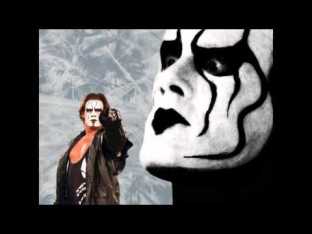
    stingProfessional wrestling seemed to peak in the late 90s, while I was finishing up high school. I remember nicking off from school to go watch Main Event: WrestleMania at a mate’s house, hoping to get a glimpse of Sting come down from the rafters and scare the hell out of everyone in the ring. Ah, fun times.

    Sting was one of those wrestlers that wore a mask. He wouldn’t wear a corny one that looks like a piece of lycra with some holes in it. No, Sting’s mask was painted on, a white paint with some black flowing stripes. It showed enough of his face to know who it was but also hid something behind it, enough to leave some mystery.

    Like entertaining wrestlers we too live behind masks. Probably more than one.

    A wrestler does it for entertainment, for their work, to become someone they’re not in real life. Much like an actor playing their role in a biopic. We, on the other hand, seem to hide behind masks because we’re fearful of what others might think of us.

    I wonder what masks you wear?

    In Matthew 23:25-26 Jesus rebukes the Pharisees for wearing masks. He says,

    Woe to you, scribes and Pharisees, hypocrites! For you clean the outside of the cup and the plate, but inside they are full of greed and self-indulgence. You blind Pharisee! First clean the inside of the cup and the plate, that the outside also may be clean.

    Jesus condemns the Pharisees and scribes for their two-faced hypocritical lives. They elevate the law and commandments and self-made rules above loving God and neighbour. They wear masks as they walk around pontificating about their own righteousness, shown by their outward signs and condemnation of other ‘sinners’. Yet on the inside these Pharisees and scribes are as unrighteous, sinful and dirty as the prostitute, tax collector, and leper.

    It is hard to take our masks off. Like a woman taking off her make-up, scrubbing hard to get the foundation and blush and lippy off her face so too it is hard for us to scrub our masks off and reveal our true self to the world. If we expose our blemishes to the world we fear what people will think, we fear we will be judged, we fear we will be rejected.

    Thankfully we have one that knows our true self. Thankfully we are known by Him who accepts us, blemishes and all. As much as we turn away, hide and put Him aside, God sees all of us and accepts all of us. Despite our faults and imperfections God stands with open arms accepting us just the way we are.


    This post is a free writing exercise in response to The Daily Post topic ‘Mask‘. 

  • The Presence of God

    I’m once again attempting to read the whole Bible through in a year as part of my daily devotions. It’s a yearly goal. Sometimes it gets done, sometimes it doesn’t. This year I’ve been inspired by Melissa Kruger to take on this program which allows for the weekends off. If you’d like to join in it’s not too late!

    Today’s reading was from Genesis 28-29 and Mark 11. I found it interesting how they dovetailed each other.

    In Genesis 28 Jacob, on his way to find a wife, has a vision from the Lord while he is sleeping. This vision is essentially God promising Jacob that he will continue the line of Abraham. After this vision Jacob wakes up and realises that God is present. He wakes and says:

    “Surely the Lord is in this place, and I was not aware of it.” He was afraid and said, “How awesome is this place! This is none other than the house of God; this is the gate of heaven.”

    As a result Jacob builds a pillar of stone in honour of the Lord and makes a vow to Him.

    In Mark 11 Jesus enters Jerusalem with much fanfare. He is praised and honoured and arrives on the back of a donkey. He makes his way around the city and heads to the Temple, the place where God is supposedly residing. Here he comes upon business activities that are unbecoming for a place of worship. He clears the Temple Courts and curses them.

    jesus-cleansing-temple.jpg

    As I read these two passages side by side this afternoon I was struck by the reality of God’s presence in the world. In one God comes through a vision to Jacob and by the time the first century rolls around there is a temple representing the presence of God among the people.

    But with the arrival of Jesus these things become redundant.

    We may still have visions and we may still have places of worship representing God’s presence but it is the presence of Jesus that brings the presence of God to us. For it is Jesus who is the True Presence, he is the one who is the reality of God in the world.

    We celebrate this every Christmas when we remember how God entered the world as a baby. We remember every Easter the sacrifice of Jesus on the cross so that we may know the presence of God in our lives. And we live each day knowing God is present with us through His Spirit.

    What a wonderful encouragement for us to know that the very presence of God is with us wherever we are in the world!

  • Our Miscarriage, Our Marriage, and Our Master

    Dear Babis,

    I know today is a tough day for you darling.

    It’s a tough day for both of us really.

    I know today is really a reminder of what could’ve been. It’s a day that should be filled with love, joy and happiness. Instead it’s become a day of sadness, possibilities and tears.

    I’m sorry it hasn’t turned out the way we would’ve hoped.

    I will say of the Lord, ‘He is my refuge (1)

    I remember we were so excited when we found out you were pregnant again. It was a fun few weeks knowing what we knew, all on our own. Our little secret was something we talked about each night, thinking of what the future might hold for the little creature being created inside of you. For me, I was really looking forward to telling the family, and very excited for our first becoming a big sister.

    But that week in early February kind of changed everything, didn’t it?

    That happy week, where we were going to tell the family, turned sour after the scan and multiple visits to the hospital.

    When it all went down, so to speak, it was a devastating time for both of us. I know you felt it and continue to feel it more deeply than I. I just hope I can continue to love and support you in the way that you need.

    Today especially.

    I reckon the miscarriage is probably one of the tougher things we’ve been through together. It’s been a painful and difficult experience for us, but one that has helped us grow stronger and closer together. I mean, the marriage course this year has also helped us, but this really did bring things into focus.

    Having been through this I’m so thankful that the Lord provided a few glimmers of hope and encouragement in the lead up to the miscarriage, and which continue to sustain us at times.

    Surely that Sunday sermon has to be the most relevant sermon we’ve ever listened to together. I truly believe the Lord provided sustaining grace for us when we needed it most, particularly through Psalm 91:1-2, “He who dwells in the shelter of the Most high will abide in the shadow of the Almighty. I will say of the Lord, ‘He is my refuge and my fortress, my God, in whom I trust’.” I know this passage, and the preaching of it, continues to give us a sense of His sovereign hand holding us, and a peace despite the hurt.

    I pray it gives you that grace and peace today.

    I know we feel the loss of possibility, the loss of opportunity, the loss of what would have been. I know it still hurts, and will continue to hurt, no matter how many more kids we may have. But I’m thankful that despite whatever circumstances we find ourselves in the Lord is with us and is giving us joy and comfort.

    So darling, I love you. And I’m thankful that we’ve been able to grow closer since this happened.

    I’m thankful that we’ve been able to walk through this together, and will keep walking despite its challenges.

    I know its been one of the more rotten years because of this, but despite this brokenness we cling to God, praying with more clarity and regularity for the brokenness throughout the world.

    I know you would like to know what that little creature would have turned out to be but unfortunately we can’t know that. But darl, I’m thankful we can continue to talk openly about the miscarriage and remind ourselves that despite our brokenness Jesus is the one who makes us whole and the who will bring us the comfort, peace, and healing to our situation. He did that in the first week of February and he’ll do it again today, as we remember the one that got away.

    Love,
    Jonny.

  • A DIY Discipleship Plan

    We are in the fortunate position of living in a Christian resource-rich period of time. No other generation has had such access to the teaching of the Bible and other resources that come with it. Only a few years ago it was impossible to hear any sermon other than the one you heard while attending your local church. Now, I can listen to one sermon on the way to work and another on the way home. That’s crazy.

    The amount of books, podcasts, music, articles and blog posts, devotionals, and different versions of the Bible give a plethora of options in helping us to understand and know God better. But, it can also cause a tremendous amount of confusion because there is so much choice.

    discipleship

    Therefore, I find it helpful to think about how I’m going to grow in my understanding of God and develop as a follower of Jesus by having a plan. In previous years I’ve attempted to read the Bible through in a year. There are many good plans to help with this and I find committing to reading four chapters a day the most consistent method. Having said this, I haven’t been overly successful lately.

    Because I enjoy learning, particularly through reading and listening, I’ve decided to approach my discipleship development in a different way for 2015. Rather than have broad goals of reading the Bible through in a year and praying regularly I’ve sought to make them a bit more specific.

    In structuring this plan I’ve broken my development into four areas; biblical theology, historical theology, systematic theology, and practical theology. Within these four areas I then have specific resources I’d like to read or listen to at different times throughout the year. See below as an example:

    Biblical Theology

    • Read the book of Jeremiah 5 times
    • Read a commentary on Jeremiah
    • Reach the book of Hebrews 5 times
    • Read a commentary on Hebrews

    Historical Theology

    Systematic Theology

    • Read 3-4 books on the topic of ‘Salvation’ (Do you have anything to recommend in this area?)

    Practical Theology

    There are many resources to read, watch, and listen to. There are conferences to go to and church to attend. There are small groups to join and other community activities to be part of. There is no doubt that discipleship is communal. I don’t want to negate this. But on a personal level I also want to continue to grow in my knowledge of God through his Word, what He’s done in history, through the teaching of others and then seek to apply it.

    It’s at least a plan, and I like plans, even if they don’t always get achieved the way I think they should be. So next year I’m going in with a plan to develop as a disciple. What about you?

  • John Wesley On Love

    John Wesley, in his sermon On Love from 1 Corinthians 8:3, “Though I bestow all my goods to feed the poor, and give my body to be burned, and have not love, it profiteth me nothing”, articulates a love that must be rooted in a love for God for any of our works to be considered good. This is a good reminder of how we are to have a deep deep love for God grounding us in our love for others. An insight into the kind of love, and attitude of love, we should strive for when serving others.

    Though I should give all substance of my house to feed the poor, though I should do so upon mature choice and deliberation; though I should spend my life in dealing it out to them with my own hands, yea, and that from a principle of obedience; though I should suffer from the same view, not only reproach and shame, not only bonds and imprisonment, and all this by my own continued act and deed, not accepting deliverance; but, moreover, death itself; yea, death inflicted in a manner the most terrible to nature: yet all this, if I have not love, [“the love of God, and the love of all mankind shed abroad in my heart by the Holy Ghost given unto me”] it profiteth me nothing.

  • A Radically Ordinary Faith

    There is much written about the radical nature of following Jesus.

    The call to come and follow Him.

    The call to take up your cross.

    The call to be a radical disciple.

    Whatever way you put it Christianity can be portrayed as some type of hyper-enthusiastic, always active, and amazingly awesome life.

    And then you have to clean the dishes currently lying in the sink, change the babies nappy, make your bed, or put the rubbish out.

    That’s not amazing.

    That’s mundane.

    That’s ordinary.

    A Radically Ordinary Faith

    And what do you do with a verse like 1 Thessalonians 4:11, “…make it your ambition to lead a quiet life: You should mind your own business and work with your hands, just as we told you…”?

    Sounds pretty ordinary to me.

    There can be a tendency to believe we’re not ‘radical’ enough in our faith,  that we’re not doing enough radical stuff with our lives. The implication of this is that we’re not being obedient. We’re not living up to the kind of discipleship required of us as followers of Jesus.

    But when we think this way we begin to diminish the life God has given us.

    If God has created us, made us who we are, and has us in the place we currently find ourselves in, then perhaps we can trust that our faith is ‘radical’ enough.

    This isn’t to be used as an excuse for laziness, a reason to neglect serving others, and avoiding any form of growth in our faith. But, our faith must be something that relates to and be relevant to our daily lives.

    I always find it inspiring to hear of the adventures and opportunities missionaries have as they serve God overseas. It’s inspiring to see people get involved in missions, church planting, and other evangelism initiatives. Every now and then I get an email from a university worker working with international students. The stories that are shared are quite incredible, hearing of the way people are attracted to hearing more about faith and understanding the Bible for themselves. Some of these stories are very encouraging.

    And so it’s inspiring to see the work people are doing, and even more exciting to see people become interested in knowing more about Jesus. But I’m not sure they’d tell you they’re being radical in their faith because of the work they’re doing, and neither will a missionary or a pastor. The work is often very ordinary.

    And so what does a radical faith look like for freshly minted teaching graduate who is in the middle of a long first year, struggling to find time to read their Bible because the nightly preparation takes so long. Or the plumber who has been dealing with crap all day, trying to spend time with the family among the household chores. Or the mum who looks after the children, who is waiting for her partner to arrive home from work in order to help her out.

    What does ‘radical’ faith mean for them?

    It may be me in my most cynical moments, where I totally turn deaf to this call to be radical, but I’m not sure whether telling people to be more radical is helpful. To me, it adds another burden, another layer of guilt, where I end up feeling my faith isn’t good enough and I need to do more. I see the need to make the call for people to be more radical in their faith, many of us aren’t. But at the same time, what does it mean for my faith to be relevant in the mundane?

    What do you think?

  • The Eighth Sin: Apathy

    I’m inspired by today’s The Dailypost topic “The Eighth Sin”.

    image

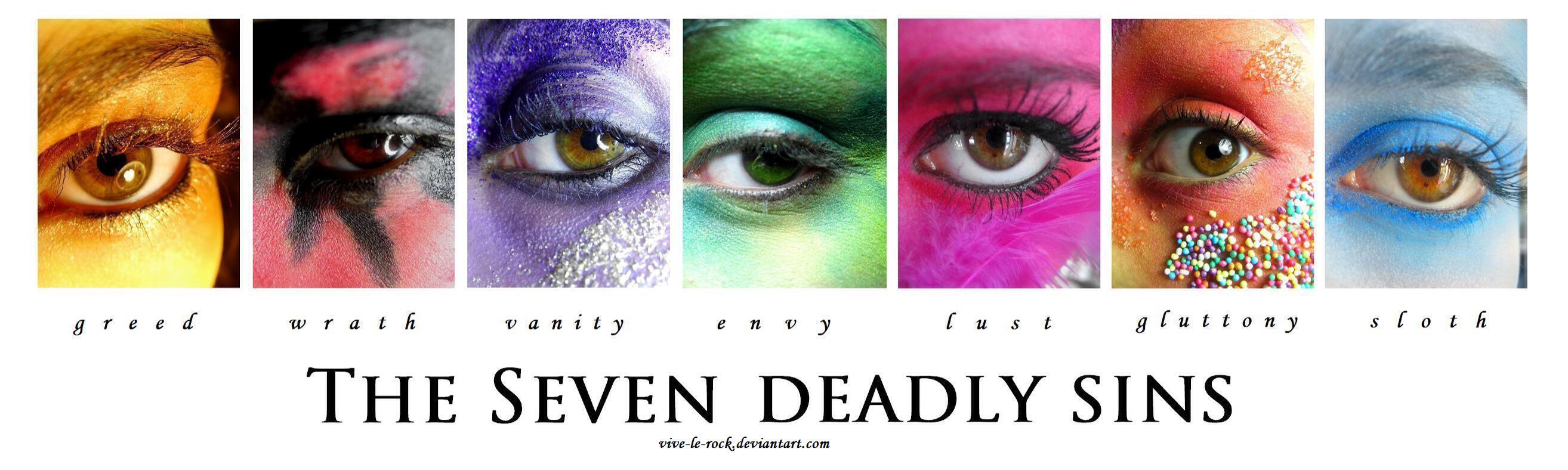
    First, I’m intrigued that sin is still talked about. Outside of the church I don’t hear too many people talking about sin. It should be talked about more. I’m glad to see it on the radar here in this little exercise.

    Second, what came to mind when thinking about what might be the eighth cardinal sin was apathy.

    When reflecting on the past couple of weeks I can’t help but think we’re an apathetic people.

    This is an apathy that is best wrapped up in the saying, ‘Out of sight, out of mind’. But because of the information age we’re in there is no real excuse for being out of sight. My social media feeds are filled with people sharing articles and posts written about the persecution of Christians in Iraq and the terrible conflict in Gaza. Yet, as I reflect further I notice that it’s only a handful of people that are talking about this, or commenting or liking.

    I don’t expect everyone to have their say. For some it’s not a forum where people wish to discuss or even mention their views on anything. Yet, that is one of the main reasons we are so apathetic.

    Apathy allows us some emotional distance from what is going on for others. Apathy means we don’t make a stand when we should. Apathy means we don’t give a voice to the voiceless. We let injustice run its course.

    To be apathetic means we don’t care. And that’s sad.

    Not everyone can care about everything. That’s impossible in such a complex and issue-ridden world. But on things that aren’t ‘issues’ but are to do with the life and death of human beings, then perhaps we do need to care. Perhaps we need to shake off the comfort and ease of apathy. Perhaps we need to confess we are sinners and one sin that affects us is our apathetic nature.

    Thankfully sin is forgiven, even our apathy. Yet this doesn’t mean we don’t have to change. Just as the sin of apathy is forgiven through the person and work of Jesus Christ, the ability to change and work toward a more just world, a world where the voiceless are heard, is achieved through the continual trust in Him and His rule.