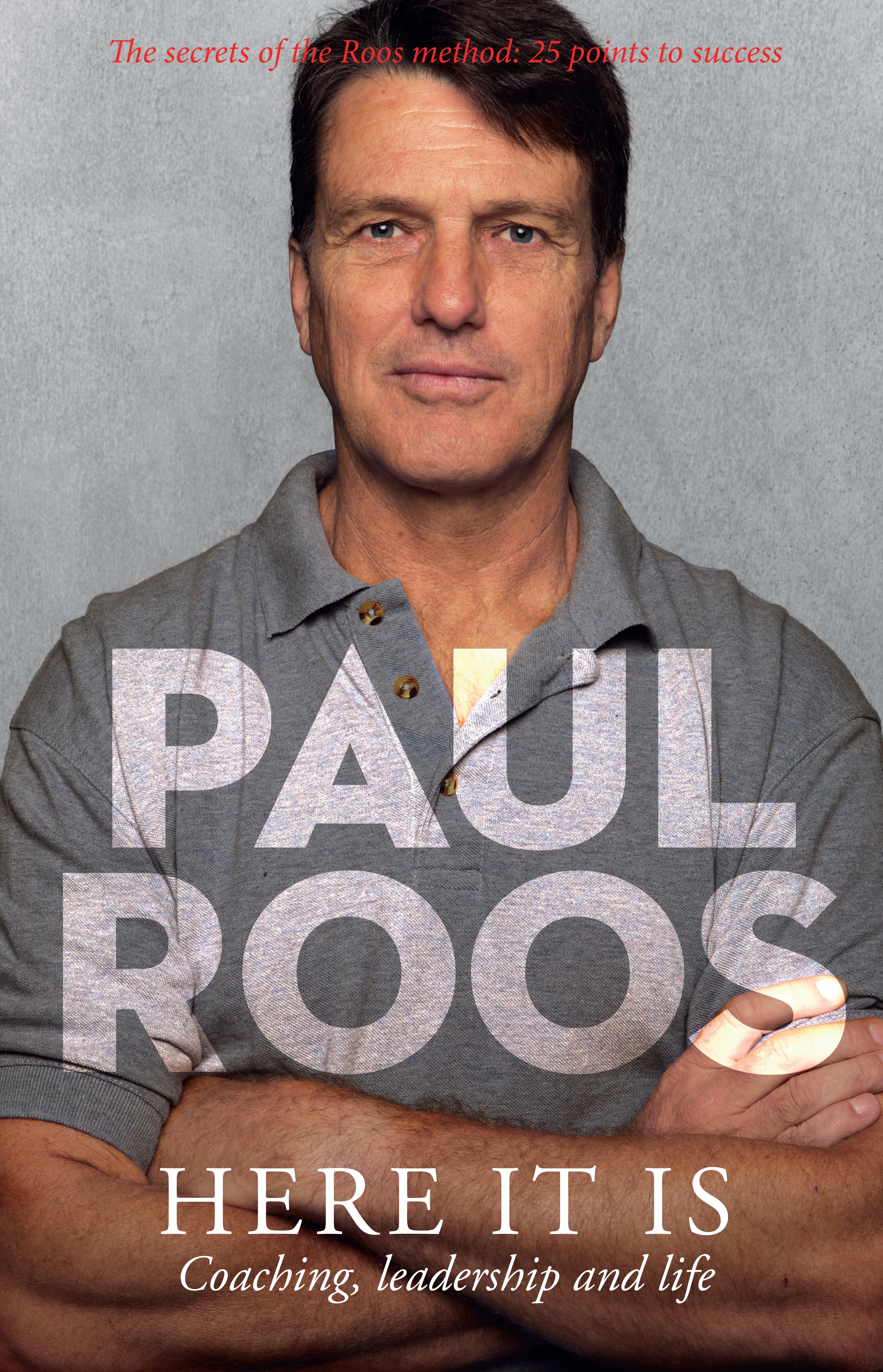
I recently finished reading the latest book by Paul Roos, “Here It Is: Coaching, Leadership and Life.” Paul Roos is a very successful AFL coach and highly sought after for his man-management and leadership coaching. This year I’ve enjoyed listening to him in the commentary box and was intrigued to read how he approached coaching and working with teams.
I often wonder how closely coaching an elite sporting team and being involved in Christian ministry align. Obviously, there are significant differences, and the markers of success are worlds apart. However, leadership is still leadership and so part of reading this book was to gain insights for youth ministry. As I read the book I was constantly thinking how his principles for leadership applied to youth ministry. I found much of what he talked about helpful because (1) I enjoy sport and AFL, and (2) I could see his approach being similar to other things I’ve read or heard regarding ministry.
Below are 10 ideas I found helpful. I wonder if they impact the way we approach youth ministry ourselves?
(1) The Importance Of Relationships
Roos emphasises relationships as the key to success at a football club. He played at a time where it was ‘old school’ football. A time where the players would simply train, turn up to play, and do whatever the coach would ask. Often there was little relationship between players, coach, and other staff. After observing this as a player he decided to approach things differently and have a focus on positive inter-club relationships.
In youth ministry (and church ministry) it’s all about relationships. I’ve been reminded by this in other ways recently, and will hopefully elaborate on that in coming posts. But, needless to say, everything in youth ministry is about relationships. It’s about relationship with God and relationship between people. It’s about relationship with pastoral staff, it’s about relationship with leaders, and between leaders. It’s about relationship with young people and the relationships they have between themselves. It’s about relationship with everyone. Youth ministry is about relationships.
(2) The 25-points
Within a month of finishing up as a player Roos wrote down 25-points that were essentially values and standards he would articulate and live out as a coach. These 25-points include the majority of the points I am drawing out here, but the point is he actually wrote down the values he wanted to keep to and they helped guide him in his coaching.
I wonder whether we as youth ministry write down standards and values that guide us in our leadership? It is worth considering what is most important to you, and where you believe leadership in youth ministry should be focussed on. When being interviewed for the role I currently have I took with me a sheet of paper that had some key scriptures for the way I approached ministry and also seven, what I called, ‘Pastoral Pillars’ that would be my guide as a Youth Pastor. The headings for each of these were: (1) Relational, (2) Disciple Development, (3) De-Program, (4) Leader Development, (5) Mission Posture, (6) Framed Risk, (7) Grey OK. This helped me articulate where I was at and also informed the committee who they were getting. I found it helpful. I think they did too. Do you have something similar?
(3) The Calm Leader
Roos played in an era where coaches going off their head was common practice. Giving a good dressing down, dragging the players off the field and onto the bench when they made a mistake, and generally trying to motivate players through yelling and shame. Roos saw this wasn’t benefiting anyone, particularly in keeping morale up, developing players, and providing motivation. His response was to make sure he kept himself calm. He made sure he was emotionally stable in his leadership and provided confidence in doing so. He didn’t want to react in an emotionally volatile way when winning or losing.
In youth ministry, are you a stable and calm leader? A big influence on me has been the idea of being a ‘non-anxious presence’. That is, someone who is calm, not anxious, and emotionally stable during times of upset, crisis, and conflict. I have wondered whether this can be detrimental when certain situations call for passion, enthusiasm, and excitement. But, in general, a person who leads in youth ministry needs to be calm and in doing so inspire confidence and trust in their leadership.
When a kid has fall and breaks their foot at a youth camp, be calm and deal with it appropriately. When a leader seems to be going through some sort of crisis and requires some extra attention, be calm and deal with it appropriately. When a parent doesn’t like an action that has been taken and let’s fly with their complaint, be calm and deal with it appropriately. In youth ministry, we need calm, non-anxious, leaders who in doing so help inspire, motivate, and build trust with people around them.
(4) The Time It Takes To Develop People
Roos understood that it takes time to develop players. He comments that the age of great learning for a footballer is 18-22 years old. They get drafted, and then take years to develop in their skills, learning about the game, and general aptitude for elite AFL football. Recognising this, Roos seemed to do a few things. First, he made sure the players understood his game plan, their role in the team, and the skills required for top level football. Second, he took time in bringing them into the elite league of the game, often keeping them in second tier competitions for longer than other coaches would. There is the implication that it takes a number of years to develop as a player, helping this development from a young age was his goal. This was clear within his chapters on leading the Sydney football academy for talented teenagers.
In youth ministry, it takes time to develop faith and to develop in leadership. I think faith could be explored separately to this, but leadership and learning the ropes of youth ministry can begin to be taught while students are still going through youth group and the youth ‘programs’. The youth programs can be tools for discipleship, leadership development, and possibly even church leadership too. But even if we’re intentional it will take time. As hard as it sounds, not all people will have the character or aptitude for youth ministry leadership, I don’t think God has made everyone equal in this regard. However, there are plenty of people who one may not think as ‘youth ministry potential’ who are able to learn and grow in their leadership skills. This simply takes time.
(5) Everyone Has A Role
Following on from development is also the question of role. Roos outlined clearly how everyone in the team had a role. Sometimes this was different to what the player had always known. The player may have believed that getting 30 possessions a match was his role, but actually, his role was part of a larger system, the team system, to which they all played a vital part. If that player only had 20 possessions but played their role as they were supposed to then the team had better success than if they went it alone, believing they had to win the game for the team. Roos believes that everyone at the football club has a role and it needs to be defined. Everyone from the President, CEO, Senior Coach, Assistant Coaches, and the players. In some ways, this aligns with another of his values, which was to deal with every player individually, knowing their personal strengths and weaknesses. This avoids lumping everyone into the same box. It is about getting the most out of each person.
I wonder how we view our youth ministries? Do we do that for our students? For our leaders? For our wider church? The Youth Pastor has a role, that seems to be more defined than others in the church. But, I would argue that just as Paul in 1 Corinthians 12:12-27 writes about the body of Christ, so too, everyone in the church has a role in regard to youth ministry. It’s just not defined or communicated. Therefore, rather than getting every youth leader to be involved in everything on a Friday night perhaps some people are better at talks and should those gifts more often. Perhaps others are good at social media and should look at being communication co-ordinators. Perhaps others are good at running games, explaining them well and getting the group involved. Perhaps others are good at administration and should be looking at the database and helping people in that way. This would help with leadership development, understanding of the various facets of youth ministry, and also help with delegation.
(6) Team Formed Standards And Values
A key aspect to Roos’s approach with coaching was to involve every one of the players in determining what the team stood for. The team would have a pre-season camp and flesh out what their values and standards were. This would include values like honesty, hard work, and a never give up attitude. As these values made their way through the team the players themselves would be the ones enforcing the standards. In this way, everyone is invested in the performance of everyone else. Not only on the field, but also off it.
Could this be a way forward for youth leadership teams? I know I’ve done this a little with my youth leadership teams. We’ve created some leadership commitment guidelines to help guide what it means to be a leader in the youth ministry. I’m sure this could be enforced more, and with each other helping to lift their game in various areas. As an example, one of these guidelines is child safety. If a leader goes outside the bounds, say, initiates a hug with a student, and another leader sees this, they would then pull them up for it. If there is feedback given in terms of the talk or a game, then another leader can do that – encouraging them and also helping them to improve. I see big advantages when the leadership team is invested in creating the standards and values of the ministry.
(7) A Yearly Review
Each year Roos would sit down with each individual player and work through strengths and growth areas.
In youth ministry this would be worth doing also, not only together as a team but individually. As a Youth Pastor I would expect to catch up with my leaders reasonably regularly anyway. But, there could be an intentional one-on-one at the end of the year. This could touch on topics such as discipleship growth, spiritual disciplines, church involvement, and an area to grow in next year.
(8) The Attitude That Rubs Off
Roos knew that his attitude would rub off on the players. As the central leader of the club his attitude meant everything. He made sure he was positive and had a positive outlook on the club, the players, and what they could achieve. This doesn’t mean he never made critical judgements about what was going on or was disappointed in players actions. He simply wanted to be positive in his attitude no matter the result.
Youth ministry isn’t in the win-loss premiership game, but we still have indicators that mean we are satisfied or dissatisfied with the way things are going. At the end of youth group leaders can be up and about because they believe the night went well. Or, they can be flat and a bit disappointed. A process for assessing each youth event and program is vital. But, even more so, the positive attitude of the main leader keeps the big picture in mind and helps other leaders assess correctly. The attitude of the Youth Pastor or key leader has a big impact.
(9) The Game Plan
Once all his big blocks of values and standards, attitude and roles were in place Roos also had a game plan to win each match. This game plan seemed to be the same from year one to year ten. It didn’t seem to change much. However, there was a plan. As it has been said, “If you fail to plan, you are planning to fail”.
It is important to plan in youth ministry. Not just planning a few months out but also having a plan for each event, small group, or youth group night. It is important that everyone on the team knows that plan. I am one who prefers to have those plans early in the week. Others prefer to bring the plan to the night an hour before we start. In any case, a basic plan for us on a Friday night is (1) Welcome, (2) Games, (3) Talk, (4) Discussion Groups. We may also include a time for snacks or for making sure a couple of leaders are at the door when parents arrive for pick-up. After the night is done and things are packed up we as leaders gather and chat through the highlights and lowlights of the evening. It is important to have a plan for youth ministry, one that is broad and one that is specific.
(10) Communicate, Communicate
With his commitment to relationships Roos had an emphasis on communication. He kept it simple and constant. Communication between everyone was vital is sustaining relationships and also reinforcing the values and standards of the football club.
If there is little communication the youth ministry will not go well. There is communication needed between many different parties and in a variety of ways. Communication between Youth Pastor and leadership team and pastoral team. Communication between youth group leaders and parents and students. Communication between youth ministry and wider church. Any relationship you can think of relating to youth ministry requires some form of communication. It is an important part of the gig. And at the end of the day, it is another key aspect to building relationships.