Tag: Youth Ministry

  • 3 Ways The Beach Helps Youth Ministry

    The beach is great.

    If it was a choice between a warm beach location or say a cold snowy type location, the beach wins every time.

    And so with summer holidays and hot days comes the annual visit to the beach. A few days spent relaxing, reading, and having a rollicking time with the family. Last year I spent hours making an awesome sandcastle with my daughter, this year it seems we’re more adventurous and have ventured into the cooler waters and waves.

    Oddly enough, the beach had me thinking about youth ministry. Perhaps it was the salt water, the days off, or too much cricket watching (can that ever be the case?). Nevertheless, using the beach as an illustration for youth ministry it reminded me of three things we youth leaders need to have in mind coming into the 2018 youthmin year.

    First, we need perspective. 

    Sitting on the beach gives you a view of the large expanse of water in front of you. It gives you a view of stretches of sand, to your left and right. It reminds you that there is something bigger than your small self going on in this world. As one person sitting on a small patch of sand, millions of grains within arms reach, you are given perspective on life, faith, and ministry.

    As Psalm 139:7-10 reminds us, God is huge. He is everywhere.

    “Where shall I go from your Spirit? Or where shall I flee from your presence? If I ascend to heaven, you are there! If I make my bed in Sheol, you are there! If I take the wings of the morning and dwell in the uttermost parts of the sea, even there your hand shall lead me, and your right hand shall hold me.”

    In youth ministry we often need perspective. It’s not about the next event, the next catch-up, the next Bible study, the next service, the next hard conversation. It is about God, and declaring that he has come, and is with us through his Son and his Spirit. He will lead and hold us, as the Psalmist has written.

    Second, we need grit. 

    Generally sand is quite gritty. On some beaches it really does give your feet a good workout.

    Youth ministry is the same. It is a hard work. It is constant work. It requires grit. It is the type of work that will give you a good workout, physically, emotionally, and spiritually.

    Paul knows this from experience and writes in 2 Corinthians 6:3-10:

    “We are not giving anyone an occasion for offense, so that the ministry will not be blamed. Instead, as God’s ministers, we commend ourselves in everything: by great endurance, by afflictions, by hardships, by difficulties, by beatings, by imprisonments, by riots, by labors, by sleepless nights, by times of hunger, by purity, by knowledge, by patience, by kindness, by the Holy Spirit, by sincere love, by the word of truth, by the power of God; through weapons of righteousness for the right hand and the left, through glory and dishonor, through slander and good report; regarded as deceivers, yet true; as unknown, yet recognized; as dying, yet see—we live; as being disciplined, yet not killed; as grieving, yet always rejoicing; as poor, yet enriching many; as having nothing, yet possessing everything.”

    It might be a different context but Paul’s words speak of the kind of grit needed for ministry. The physical persecution is not generally associated with Western youth ministry, but that doesn’t discount the challenges it brings.

    All this requires grit. It’s goes without saying that this grit will come more easily when we are walking closely with Jesus. As we work with students and their families we seek to serve them and the church out of our enjoyment of God.

    Third, we need to be fluid. 

    At the beach you can sit on the sand and watch the waves come time and time again. You can also go for a swim and enjoy the cool water on a hot day. Stating the obvious, the water is fluid and can cope with what is going on in it and around it.

    When working with students (and adults too) we need to be flexible, fluid. Often things won’t go to plan, people won’t turn up, or the weather might not be what we’d hoped for our program. In working with people, and in youth ministry, we need to be flexible in our plans and ideas. It’s helpful to know and be sure in what we think is the best way to operate, but sometimes others might actually provide better ways.

    So whether it’s events or people, holding things losely, having planned to our best ability is something worth evaluating for ourselves coming into the new youthmin year.

    At any time, not just at the start of the year, it is worth taking a few moments to gain perspective, grow in grit, and assess what we hold tightly. I can recommend the beach as a good place to do that.

  • My Top Posts of 2017

    Earlier this month I wrote briefly about how I’ve managed to achieve a couple of blogging goals this year. I wanted to write more regularly in 2017, and as a result I’ve averaged a published post per week on this site and a few guest posts on others. The second goal was to increase the amount of views from last year. I aimed to double last years result and achieved this too. Happy days.

    Top Posts of 2017

    But, there are a few things that continue to get read reasonably regularly so here’s a list of the five most popular posts viewed this year (2016 and 2015).

    One, 11 Things: The Senior Pastor-Youth Pastor Relationship

    It seems there’s a few people out there wanting some tips on how to deal with the Senior Pastor-Youth Pastor dynamic. It’s not surprising, it’s probably the number one reason Youth Pastors move on from their job.

    Two, Growing Young – Keychain Leadership

    I wrote this over twelve months ago. I was working through the book Growing Young. This post talks about how churches need to be willing to pass the baton of leadership to young people. It is a key chapter in the book and worth reading entirely.

    Three, Growing Young

    Here I begin the Growing Young series, which I wrote over a period of three months. I write about each chapter, but this one gives a general summary of the whole. Again, it’s a book for those in youth ministry and church leadership (and others if they’re interested).

    Four, Beginning As A Youth Pastor: 11 Things I Wished I Knew

    I wrote this in preparation for a presentation. It describes what I wished I knew when I started out as a Youth Pastor. As it turns out I had 11 points, and those 11 points were then made into a blog post each. This series has already been mentioned with the number one most popular post on the site. This one covers them all.

    Five, On Youth Pastor Position Descriptions

    I saw a really poorly written position description for a youth ministry position and I got annoyed. This resulted in further articulation of my thoughts in this post. It seems it was reasonably well read and rather relevant to people. Not really many surprises there if you’re a Youth Pastor.

    Some other random bits of information about this blog:

    • The top five countries where readers are from are Australia, the USA, the UK, Canada and New Zealand. Australia and the US bring in the most by far.
    • Facebook and search engines are the digital spaces people come from to read.
    • I currently have over 200 posts available for people to read.

    If you’re a regular reader, thanks very much for coming by. I am always in two minds as whether or not keeping this up is worth it. When I get to the end of the year and begin to re-evaluate my goals there is something about giving this up that I would find painful. I hope the words written here are worthy of being read, fun and humourous at times, and most of all bringing glory to God as I write about youth ministry.

    Thanks again.

  • My Top Books of 2017

    The end of another year is the perfect time for pretentious bloggers to write their list of top reads for the year. Armed with the arrogance of knowing they’ve read more books than most of their friends, and willing to share that information publicly, puts them in a category everyone despises. Nevertheless, I’ve done it for the last three years (2014, 2015, 2016) so why not continue to reveal my own pride and let you all know what I’ve read and how much.

    Here goes.

    My Top Books of 2017

    Because any reader worth their salt is signed up to Goodreads, which enables readers to reveal and recommend books to their friends, there is an automatic graphic created to show just what I’ve read. If you’re interested in that then feel free to have a look. The following is a list of books I’ve rated 5 out of 5 from the 27 I’ve read this year. They are in no particular order.

    I couldn’t have kicked off the year with a better book. It was all about how we relate to God. Since reading the book I have found it hard to explain his idea of being ‘with’ God but it was very true and very life giving. It’s pretty much the idea that we aren’t relating to God through Christ in a way which means we are ‘over’ God, or ‘under’ God, per se. It is really trying to say that through our lives we are walking with Jesus, we are WITH God and God is WITH us. There’s a relationship thing going on. It’s a brilliant book and I’d highly recommend it. It’s become a main text for my apprenticeship program next year, it’s that good.

    Peterson writes really well. Everything I’ve read of his has been great. This is no exception. Here Peterson articulates the story of his life and ministry. He doesn’t do it all in a chronological and normative fashion. However, there is much in here to listen to and chew on.

    I’ve written previously about this book and have found it very stimulating. It’s mainly about how the church can be the church in a post-modern, post-Christian, post-everything culture. And, how Christians can be Christians in a post-everything culture. From the other books I’ve read of his I’ve found this to be his best one. This books has also made it into the hands of a few at church, which is pleasing. But as I’ve commented to them, it’s constantly full of ideas and points one wants to discuss with others. It’s really good.

    I took my time reading this but was very impressed with how Keller holds social justice and his evangelical convictions so well. I’m not sure why I’m surprised through, evangelical Christians have been doing good works for centuries. Anyway, Keller articulates the biblical mandate of justice and uses the odd example to show how this might work out in a church context. He elevates this well and by the end you know this is a no-brainer. Big tick.

    Just as the Australia plebiscite was in full swing I read this book. It was brilliant. I’m not even sure it matters that the writer is gay. He articulates a terrific theology of friendship, elevating the need for friendship into a status close to marriage. There is the thought of commitment ceremonies for friends, and not in a gay marriage kind of way, but in a way that highlights the need for friends to commit to one-another. It is a book that makes you think about how your church helps singles, couples, and marrieds be better friends to one-another. It’s certainly worth the read. I wrote a few more words about it here.

    This is a small yet powerful book. For Christians it should be obvious that discipling others is part of what it is to be a believer. Here Dever outlines a terrific way in how to do that in the Western church and is something I believe strongly in. As I’ve written previously:

    “The obvious case for making disciples is made and then the ‘how-to’s’ are provided. Because I’ve read a lot of Dever, and this kind of discipleship, then I understand how to go about it. For those who are unsure this is a good primer and will provide the foundations and the practical. It’s really as easy as meeting with someone, opening the bible with them, and simply talking and listening to one-another. This should really be a standard text for anyone wishing to disciple/mentor/coach or whatever you want to call it. If I was running an internship or ministry apprenticeship this would be on my reading list.”

    I wrote a review of this book separately and outlined how many of Roos’ leadership principles relate to youth ministry. Read that for more worthwhile content.

    This book follows Paul Roos’ playing days, and particularly his successful coaching career. It’s a great read if you like sports biography, AFL, or leadership.

    • Lion by Saroo Brierley

    This is the true story of Saroo, who at the age of five is separated from his family in India. After jumping on a train, believing it will take him back to his family, he is lost in one of the largest and busiest cities in the world. The story is amazing, and I won’t spoil the ending. But, it’s the book made into a movie a couple of years ago. Great story. Inspiring stuff.

    I finished this book a couple of weeks ago and there is much to recommend about it. It’s all about youth ministry, which isn’t a surprise given its title. But, it goes into depth about the ins and out of what youth ministry is about. It talks about the culture of youth ministries and how churches are always looking for the short-term, quick fix. Instead, the author is advocating for long-term, strategic and sustainable youth ministries focussed with intention and structure. DeVries has had many years of experience in youth ministry, mainly at one church but then with an organisation that consults to other youth ministries and churches. I found it one of the better youth ministry books I’ve read. It probably makes my top 5 (youth ministry books). I have some quotes from this book in a previous post. Excellent.

  • Sustainable Youth Ministry, Quotes

    I’m currently reading Sustainable Youth Ministry by Mark DeVries. It’s a book published in 2008 and I can’t actually believe I haven’t read it yet. Anyway, while it’s been resting on my shelf since last Christmas I thought it worth bringing it out at years end. At the 70 page mark I can certainly tell it’s a zinger, with a number of challenging quotes and comments. Here are three that have stood out to me thus far.

    From page 13:

    “The short-term, high-number, razzle-dazzle, success of your current youth ministry might blind you to the fact that success in youth ministry is measured in decades, not in year-to-date comparisons with last year’s mediocre youth staffer who, quite honestly, just didn’t have your gifts.”

    From Thomas G. Bandy quoted on page 16:

    “The declining church always assumes that the solution to youth ministry is programmatic. If only they could get a good leader! If only they could find a great curriculum! If only they could renovate a room in the building for youth meetings! They fail to recognise that the solutions to youth ministry, like the solution to decline in general, is systematic.”

    Quoting Roland Martinson on page 29:

    “The history of primary calling inexperienced and inadequately trained young people to do youth ministry reflects the myth that youth ministry is a beginner’s job that doesn’t require much education, experience or skill. Nothing could be farther from the truth. Youth ministry is one of the most demanding ministries–so demanding and frustrating that many pastors and congregational leaders don’t know what to do.”

  • Published: What are the Top 5 Books of The Bible You Want Your Students to Read?

    So, I’m in a few Facebook groups full of youth pastors and youth ministry practitioners. Someone asked this question of the group and numerous responses came through. I thought about it for a few minutes and jumped in myself. I then made a blog post out of it. It was then published on Rooted Ministry.

    “Keep in mind, these aren’t necessarily my five favourite books of the bible. These are what I see as the most helpful pieces of scripture for my students, when it comes to communicating the gospel. It’s an interesting question. You may love Jeremiah, and Amos, and Revelation. Great. Are they in the top five for helping your students understand more of the grace of God and seeking to love and follow Him? Maybe they are.

    Of course, no answer is a right answer, but let me outline why I think these are the top five for my students.”

    You can read the whole post here.

  • The Sparkle of a Youth Ministry First-timer

    To help transition grade six students into youth ministry I find it helpful to invite them along to our Term 4 program.

    I don’t think this is an earth-shattering idea.

    But behind this idea is intentionality. There is intention in inviting graduating primary students and their parents to begin attending the youth ministry prior high school beginning.

    In the life of the family the graduation of primary school is significant, particularly if it is their first child. It’s an exciting time for the family as they celebrate all that their child has achieved throughout their primary school life. It is also a daunting time, because in a couple of months their child will enter high school, where they start on the bottom rung of the school ladder and desire to find new friends and community.

    So, while celebrating the final term of primary school and transitioning to high school, it becomes a good idea to transition students earlier than later. The amount of change going on in the family unit at the start of a new year, particularly when high school is a new step, doesn’t need to be heightened by throwing youth group into the mix. Instead, allowing students to attend early and get an idea of what it means to be part of the youth ministry helps alleviate stress come the new year.

    I also believe this helps the parents of the student. Finishing off primary school can be stressful, and this is mixed with various information nights and transition days for high school. With all this going on parents seem pleased for their child to be invited to youth group, and it helps them get a taste for what could be part of the family calendar the following year. Being able to meet leaders, see the program themselves, and watch how their child is adapting to a group of high school students helps in their parenting, and the expectations for their child when they begin high school.

    And finally, it is always great to have new people come along to any youth ministry. Inviting new people in Term 4 brings an energy to finish off the year. It lifts everyone to be intentional about their leadership, welcoming, and community-building. And, it’s always terrific to see the sparkle in the eyes of a first-timer.

    Perhaps you haven’t thought much about transitioning students between primary and high school? It is worth doing so, and putting into place at least some invitation and communication about this.

    Because of this, I have copied my welcome letter to grade six students and their parents, which is sent to them at the end of Term 3. Feel free to use as you like. I trust it will be helpful.

    170830 Letter to Parents - G6 Invite Letter - Blog Example

  • Recently Read: October 2017

    I’ve ploughed through a few books recently. I was hoping to write more detailed reflections on them, but alas, I’ll have to do with these summaries for the moment.

    Recently Read - Oct 2017

    Spiritual Friendship: Finding Love In The Church As A Celibate Gay Christian by Wesley Hill

    This is an excellent book. It really outlines a clear and attractive theology of Christian friendship. Friendship, true Christian friendship, and what that means and looks like, is not often talked about in church. This book does a great job describing a vision for friendship that is separate to small talk and serving together in some form of ministry. It is about hospitality, love for the other, and the elevating of friendship to a similar level as we evangelicals enjoy elevating marriage. It really is a profound book with plenty of ideas about how we can be better friends and provide opportunities for friendship in the life of the Christian. Unfortunately, some readers will be put off by the author being gay, celibate, or Christian. In some respects it doesn’t matter how he labels himself, he gives a good treatise on friendship and is a valuable read.

    Here I would love to include a couple of quotes, as I underlined heaps of the book, but it was so good that I gave the book away to a close friend. Ironic.

    Disappearing Church by Mark Sayers

    This seems to be the best I’ve read from Sayers. He pinpoints culture, analyses the way churches have sought to be relevant to culture, and then calls for a coming back to Word and prayer for the Christian and the Christian church. It is excellent in its cultural analysis and provides plenty of food for thought in how to live in a post-Christian, secular society. His main point is that we should be seeking to have a resilient faith, built upon understanding the Word and seeking God in prayer. You can read a more detailed reflection on Disappearing Church here.

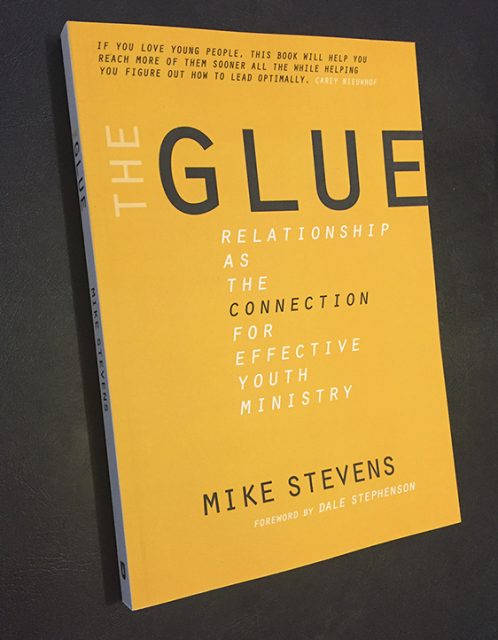
    The Glue: Relationship As The Connection For Effective Youth Ministry by Mike Stevens

    Read this post for a fuller reflection on the book.

    As I wrote in an endorsement for the book:

    “Whether you are leading a youth ministry in a small or large church The Glue is worth reading and reflecting on. Mike helps you understand the bigger picture of relational discipleship as well as providing detailed ideas to help your youth ministry move forward. This balance is fleshed out further through focussed questions at the end of each chapter, which were certainly helpful for me in processing what I was reading. The Glue is definitely worth reading.”

    Discipleship by Mark Dever

    Here’s a little book that helps anyone wishing to improve their discipling of others. The obvious case for making disciples is made and then the ‘how-to’s’ are provided. Because I’ve read a lot of Dever, and this kind of discipleship, then I understand how to go about it. For those who are unsure this is a good primer and will provide the foundations and the practical. It’s really as easy as meeting with someone, opening the bible with them, and simply talking and listening to one-another. This should really be a standard text for anyone wishing to disciple/mentor/coach or whatever you want to call it. If I was running an internship or ministry apprenticeship this would be on my reading list.

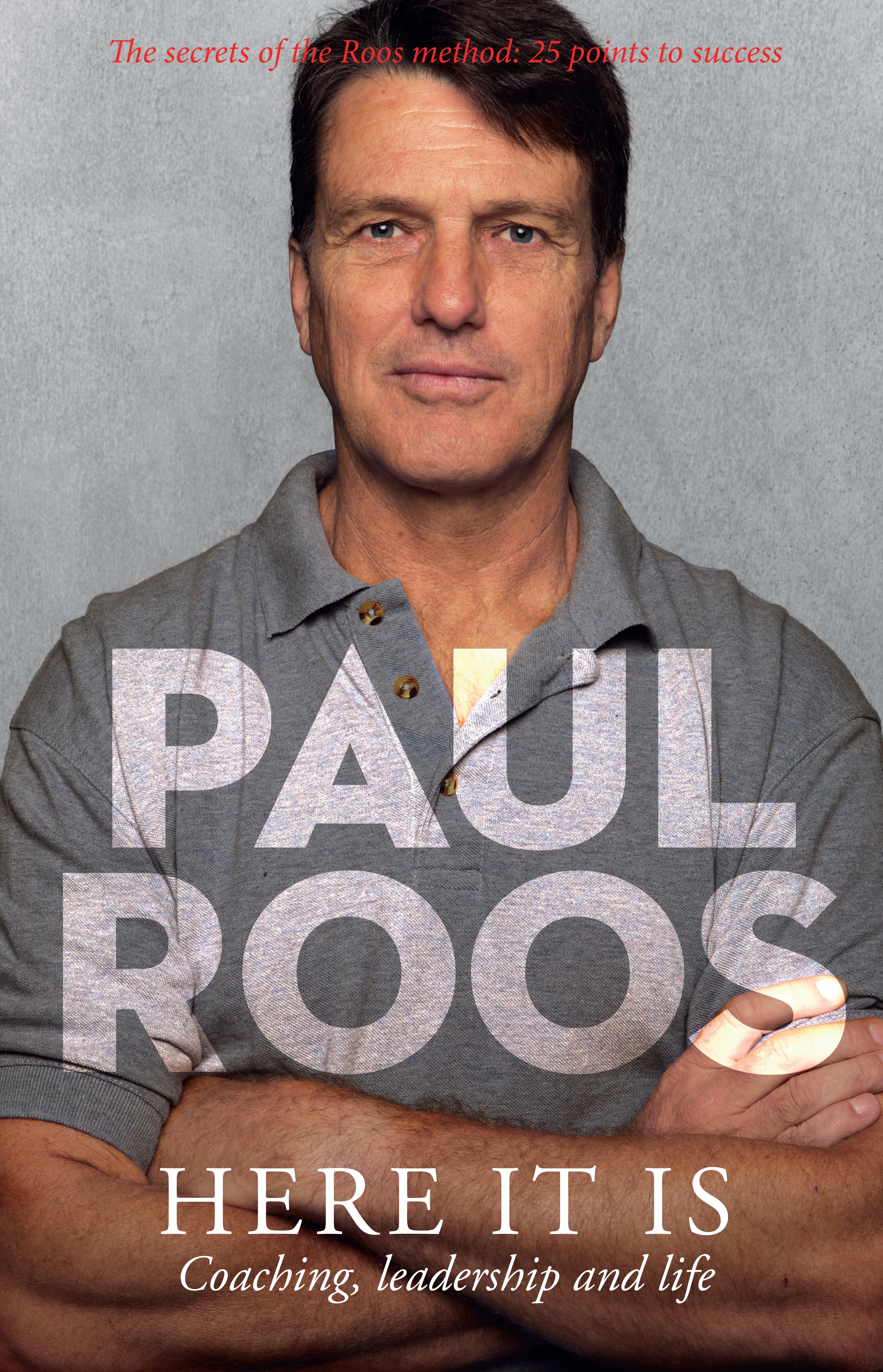
    Here It Is: Coaching, Leadership and Life by Paul Roos

    This was a fantastic biography by Paul Roos and gives insight into his coaching and leadership principles as an AFL coach. The fact that I enjoy sport and listening to Roosy on the radio helped me to buy the book in the first place. I kept seeing clear applications to youth ministry in much of his approach so I wrote a little something on that too. Go there for further details about the book.

    The Hate Race by Maxine Beneba Clarke

    I made it through to the 100 page mark and called it quits. It is a well regarded memoir, highlighting the racism and casual racism of Australians in the 1980s to today. I’ve got no criticism of the book, I just didn’t enjoy it and wondered where it was heading.

    Strange Days: Life In The Spirit by Mark Sayers

    This was full of cultural analysis, as per usual from Sayers. Strange Days is more about living in the tension of the world but seeking to be set apart from the world as a believer. The book examines the biblical text of what it means to live in exile, what it looks like to live in the world today, and then how to think as a Christian in these tension-heightened days. Like Disappearing Church, which I preferred, it is full of ideas, analysis, and application.

    Lion by Saroo Brierley

    What a memoir! This is the story of Saroo, who became separated from his mother at five years of age. He became lost in Calcutta and was eventually adopted by an Australia couple in Hobart. The story is just phenomenal. It’s an emotional rollercoaster at times, but written in a very positive and encouraging way. It’s a must read. You may have already seen the movie. I haven’t.

    What have you read recently?

  • The Glue by Mike Stevens

    Mike Stevens recently self-published a youth ministry book for youth pastors and youth ministry leaders. “The Glue: Relationship As The Connection For Effective Youth Ministry” is a helpful volume in thinking through the practicalities of youth ministry. It is a good addition to the youth ministry literature, and terrific to have another youth ministry resource produced here in Australia. Here are a few of my reflections on the book after reading it recently.

    thegluemikestevens

    In this book, Mike seeks to put his ideas about youth ministry leadership onto paper. He gives us a view into the way he thinks about youth ministry and its leadership, suggesting what might be most useful for us as youth pastors, leaders, and churches.

    What I found most beneficial in this book was to be reminded again of the importance of relationship in leadership, and in the developing of leaders. The relational element of the leadership development process is what stood out to me the most. While there is much to think through practically, which Mike outlines throughout, it is relationships that make youth ministry an actual ministry. Relationship is central to any youth ministry, both relationship with God and with one-another. And so, the main aim of this book is to remind us that youth ministry is relational ministry. This is front and centre throughout, and is the core of each chapter (or section).

    Clearly the book is focussed on being practical. There are sections and sub-sections on being a disciple, personal development, developing others, youth ministry foundations and the like. But within each chapter there are also short and sharp tips for anyone in youth ministry. This includes, how to communicate with leaders and parents, why camps are important, what questions to ask in beginning at a new church, how to finish a role well etc. The book aims at being practical and it does just that. This is opposed to being more theological in nature. There is brief mention of theological principles and foundations, which is quite common in youth ministry literature, and 99% of the word count is spent on application and concrete youth work. It’s clearly a practical youth ministry book.

    A unique aspect to this book is the reflection section at the end of each chapter. These reflection pieces enable the reader to dig deeper into the content and see how it applies to their context. I found these reflection sections a worthwhile addition to this book, with good questions asked of the reader. I think is particularly useful for youth leadership teams who may work through this book together and make the content specific to their ministry or church.

    I liked the reminder about relationship being central to youth ministry. Often we can quickly lose sight of the relationships we are building as we plan and prepare for the upcoming youth group event or small group. But, I also appreciated the sub-section on “The Four Big Asks of Youth Leadership” (p87-100). Here Mike outlines the clarity in which we need to communicate to our youth leaders. After all, what exactly are we asking them to do, say, on a Friday night? Mike summarises his answer to this in four parts: (1) Lead from your growing relationship with Jesus, (2) Follow up young people, (3) Prepare for Game Time (i.e. a youth group night or event), and (4) Deliver on Game Time (i.e. be punctual, present, willing to serve, and take initiative). This is not only an example of the practical nature of this book but also highlights the thinking and clarity we should be seeking to lead from.

    The Glue is a very easy read and is written like a series of blog posts, which I believe some of these chapters were originally. As I mentioned earlier, I think this is a good addition to the numerous books on youth ministry, particularly for us here in Australia. It is more for youth pastors and youth ministry leaders, but would be helpful for parents and the wider church too. Unless you’re already across the basics of a theology of youth ministry then I’d recommend reading this alongside “Gospel-Centred Youth Ministry” or Andrew Root’s “Taking Theology to Youth Ministry” series.


    It would be worth me disclosing that I do in fact know Mike! We have been colleagues for a few years now within the wider Baptist movement here in Australia. But even though I do know him, alas, I was not paid or given any sort of favour for this reflection! If you’re considering buying this book I’d recommend you get it directly from his website, as that’ll help him cover his self-publishing costs. Enjoy.

  • Here It Is: Paul Roos, Leadership, And Youth Ministry

    I recently finished reading the latest book by Paul Roos, “Here It Is: Coaching, Leadership and Life.” Paul Roos is a very successful AFL coach and highly sought after for his man-management and leadership coaching. This year I’ve enjoyed listening to him in the commentary box and was intrigued to read how he approached coaching and working with teams.

    I often wonder how closely coaching an elite sporting team and being involved in Christian ministry align. Obviously, there are significant differences, and the markers of success are worlds apart. However, leadership is still leadership and so part of reading this book was to gain insights for youth ministry. As I read the book I was constantly thinking how his principles for leadership applied to youth ministry. I found much of what he talked about helpful because (1) I enjoy sport and AFL, and (2) I could see his approach being similar to other things I’ve read or heard regarding ministry.

    Below are 10 ideas I found helpful. I wonder if they impact the way we approach youth ministry ourselves?
    Here it is

    (1) The Importance Of Relationships

    Roos emphasises relationships as the key to success at a football club. He played at a time where it was ‘old school’ football. A time where the players would simply train, turn up to play, and do whatever the coach would ask. Often there was little relationship between players, coach, and other staff. After observing this as a player he decided to approach things differently and have a focus on positive inter-club relationships.

    In youth ministry (and church ministry) it’s all about relationships. I’ve been reminded by this in other ways recently, and will hopefully elaborate on that in coming posts. But, needless to say, everything in youth ministry is about relationships. It’s about relationship with God and relationship between people. It’s about relationship with pastoral staff, it’s about relationship with leaders, and between leaders. It’s about relationship with young people and the relationships they have between themselves. It’s about relationship with everyone. Youth ministry is about relationships.

    (2) The 25-points

    Within a month of finishing up as a player Roos wrote down 25-points that were essentially values and standards he would articulate and live out as a coach. These 25-points include the majority of the points I am drawing out here, but the point is he actually wrote down the values he wanted to keep to and they helped guide him in his coaching.

    I wonder whether we as youth ministry write down standards and values that guide us in our leadership? It is worth considering what is most important to you, and where you believe leadership in youth ministry should be focussed on. When being interviewed for the role I currently have I took with me a sheet of paper that had some key scriptures for the way I approached ministry and also seven, what I called, ‘Pastoral Pillars’ that would be my guide as a Youth Pastor. The headings for each of these were: (1) Relational, (2) Disciple Development, (3) De-Program, (4) Leader Development, (5) Mission Posture, (6) Framed Risk, (7) Grey OK. This helped me articulate where I was at and also informed the committee who they were getting. I found it helpful. I think they did too. Do you have something similar?

    (3) The Calm Leader

    Roos played in an era where coaches going off their head was common practice. Giving a good dressing down, dragging the players off the field and onto the bench when they made a mistake, and generally trying to motivate players through yelling and shame. Roos saw this wasn’t benefiting anyone, particularly in keeping morale up, developing players, and providing motivation. His response was to make sure he kept himself calm. He made sure he was emotionally stable in his leadership and provided confidence in doing so. He didn’t want to react in an emotionally volatile way when winning or losing.

    In youth ministry, are you a stable and calm leader? A big influence on me has been the idea of being a ‘non-anxious presence’. That is, someone who is calm, not anxious, and emotionally stable during times of upset, crisis, and conflict. I have wondered whether this can be detrimental when certain situations call for passion, enthusiasm, and excitement. But, in general, a person who leads in youth ministry needs to be calm and in doing so inspire confidence and trust in their leadership.

    When a kid has fall and breaks their foot at a youth camp, be calm and deal with it appropriately. When a leader seems to be going through some sort of crisis and requires some extra attention, be calm and deal with it appropriately. When a parent doesn’t like an action that has been taken and let’s fly with their complaint, be calm and deal with it appropriately. In youth ministry, we need calm, non-anxious, leaders who in doing so help inspire, motivate, and build trust with people around them.

    (4) The Time It Takes To Develop People

    Roos understood that it takes time to develop players. He comments that the age of great learning for a footballer is 18-22 years old. They get drafted, and then take years to develop in their skills, learning about the game, and general aptitude for elite AFL football. Recognising this, Roos seemed to do a few things. First, he made sure the players understood his game plan, their role in the team, and the skills required for top level football. Second, he took time in bringing them into the elite league of the game, often keeping them in second tier competitions for longer than other coaches would. There is the implication that it takes a number of years to develop as a player, helping this development from a young age was his goal. This was clear within his chapters on leading the Sydney football academy for talented teenagers.

    In youth ministry, it takes time to develop faith and to develop in leadership. I think faith could be explored separately to this, but leadership and learning the ropes of youth ministry can begin to be taught while students are still going through youth group and the youth ‘programs’. The youth programs can be tools for discipleship, leadership development, and possibly even church leadership too. But even if we’re intentional it will take time. As hard as it sounds, not all people will have the character or aptitude for youth ministry leadership, I don’t think God has made everyone equal in this regard. However, there are plenty of people who one may not think as ‘youth ministry potential’ who are able to learn and grow in their leadership skills. This simply takes time.

    (5) Everyone Has A Role

    Following on from development is also the question of role. Roos outlined clearly how everyone in the team had a role. Sometimes this was different to what the player had always known. The player may have believed that getting 30 possessions a match was his role, but actually, his role was part of a larger system, the team system, to which they all played a vital part. If that player only had 20 possessions but played their role as they were supposed to then the team had better success than if they went it alone, believing they had to win the game for the team. Roos believes that everyone at the football club has a role and it needs to be defined. Everyone from the President, CEO, Senior Coach, Assistant Coaches, and the players. In some ways, this aligns with another of his values, which was to deal with every player individually, knowing their personal strengths and weaknesses. This avoids lumping everyone into the same box. It is about getting the most out of each person.

    I wonder how we view our youth ministries? Do we do that for our students? For our leaders? For our wider church? The Youth Pastor has a role, that seems to be more defined than others in the church. But, I would argue that just as Paul in 1 Corinthians 12:12-27 writes about the body of Christ, so too, everyone in the church has a role in regard to youth ministry. It’s just not defined or communicated. Therefore, rather than getting every youth leader to be involved in everything on a Friday night perhaps some people are better at talks and should those gifts more often. Perhaps others are good at social media and should look at being communication co-ordinators. Perhaps others are good at running games, explaining them well and getting the group involved. Perhaps others are good at administration and should be looking at the database and helping people in that way. This would help with leadership development, understanding of the various facets of youth ministry, and also help with delegation.

    (6) Team Formed Standards And Values

    A key aspect to Roos’s approach with coaching was to involve every one of the players in determining what the team stood for. The team would have a pre-season camp and flesh out what their values and standards were. This would include values like honesty, hard work, and a never give up attitude. As these values made their way through the team the players themselves would be the ones enforcing the standards. In this way, everyone is invested in the performance of everyone else. Not only on the field, but also off it.

    Could this be a way forward for youth leadership teams? I know I’ve done this a little with my youth leadership teams. We’ve created some leadership commitment guidelines to help guide what it means to be a leader in the youth ministry. I’m sure this could be enforced more, and with each other helping to lift their game in various areas. As an example, one of these guidelines is child safety. If a leader goes outside the bounds, say, initiates a hug with a student, and another leader sees this, they would then pull them up for it. If there is feedback given in terms of the talk or a game, then another leader can do that – encouraging them and also helping them to improve. I see big advantages when the leadership team is invested in creating the standards and values of the ministry.

    (7) A Yearly Review

    Each year Roos would sit down with each individual player and work through strengths and growth areas.

    In youth ministry this would be worth doing also, not only together as a team but individually. As a Youth Pastor I would expect to catch up with my leaders reasonably regularly anyway. But, there could be an intentional one-on-one at the end of the year. This could touch on topics such as discipleship growth, spiritual disciplines, church involvement, and an area to grow in next year.

    (8) The Attitude That Rubs Off

    Roos knew that his attitude would rub off on the players. As the central leader of the club his attitude meant everything. He made sure he was positive and had a positive outlook on the club, the players, and what they could achieve. This doesn’t mean he never made critical judgements about what was going on or was disappointed in players actions. He simply wanted to be positive in his attitude no matter the result.

    Youth ministry isn’t in the win-loss premiership game, but we still have indicators that mean we are satisfied or dissatisfied with the way things are going. At the end of youth group leaders can be up and about because they believe the night went well. Or, they can be flat and a bit disappointed. A process for assessing each youth event and program is vital. But, even more so, the positive attitude of the main leader keeps the big picture in mind and helps other leaders assess correctly. The attitude of the Youth Pastor or key leader has a big impact.

    (9) The Game Plan

    Once all his big blocks of values and standards, attitude and roles were in place Roos also had a game plan to win each match. This game plan seemed to be the same from year one to year ten. It didn’t seem to change much. However, there was a plan. As it has been said, “If you fail to plan, you are planning to fail”.

    It is important to plan in youth ministry. Not just planning a few months out but also having a plan for each event, small group, or youth group night. It is important that everyone on the team knows that plan. I am one who prefers to have those plans early in the week. Others prefer to bring the plan to the night an hour before we start. In any case, a basic plan for us on a Friday night is (1) Welcome, (2) Games, (3) Talk, (4) Discussion Groups. We may also include a time for snacks or for making sure a couple of leaders are at the door when parents arrive for pick-up. After the night is done and things are packed up we as leaders gather and chat through the highlights and lowlights of the evening. It is important to have a plan for youth ministry, one that is broad and one that is specific.

    (10) Communicate, Communicate

    With his commitment to relationships Roos had an emphasis on communication. He kept it simple and constant. Communication between everyone was vital is sustaining relationships and also reinforcing the values and standards of the football club.

    If there is little communication the youth ministry will not go well. There is communication needed between many different parties and in a variety of ways. Communication between Youth Pastor and leadership team and pastoral team. Communication between youth group leaders and parents and students. Communication between youth ministry and wider church. Any relationship you can think of relating to youth ministry requires some form of communication. It is an important part of the gig. And at the end of the day, it is another key aspect to building relationships.

  • 5 Reasons To Meet With Older Saints

    Often, as Youth Pastors, we can be so consumed with the tasks and programs in front of us that the only people we meet with during the week are those between 12 and 25 years of age.

    In between all those set times of involvement–Sunday services, youth group, small groups, and other meetings–we often have limited time to meet up with others. Students usually end up getting priority as we seek to follow up any pastoral concerns, or continue to disciple them in a one-on-one context. Online we’re chatting to students constantly, answering questions, checking-in, and generally being accessible. Often, it can be a week or two before we’ve had a decent conversation with someone over 35.

    Having grown up in the church, as a Pastor’s kid, I’ve always found it beneficial to sit with those who are older than me. Part of that might have been because there weren’t many others my age, but it was also something that happened at church dinners, Sunday lunches, and after services.

    5 Reasons To Meet With Older Saints

    Over the last few years I’ve found it incredibly helpful to meet up with older saints. Whether they are part of my church, retired ministers, or my grandparents, I always walk away encouraged and feeling privileged to hear the stories of those closer to ‘home’ than I. So, as a Youth Pastor I’ve come to observe five reasons why it’s a good idea to have a cup of tea with ‘the olds’:

    (1) Older saints enable a greater perspective on what it means to follow Jesus through the whole of life.

    When meeting with an 83-year-old who began following Jesus long before you were born you suddenly realise the commitment required. You realise the faith, wisdom, and commitment that comes from one who has walked the path for so long. And you hear what’s involved in growing and walking with Jesus year after year, decade after decade.

    Through hearing the story of an older saint you learn that life is not easy, that the hardships along the way are real and painful and take years to grow through. Yet, they continue to say with the Psalmist, “The Lord is my strength and my shield, my heart trusts in him, and he helps me. My heart leaps for joy, and with my song I praise him” (Psalm 28:7).

    (2) Older saints give historical context to your church and ministry.

    Unless you’re serving in a church plant that has only recently launched it is more than likely your ministry as Youth Pastor begins at a certain season in the life of the church. The church may have been around for decades before you got there, and I suspect it will be around long after you leave.

    Meeting with those who’ve been in the church for many decades provides a greater understanding of the church, its culture, and how it has got to where it is today. There are stories, significant events, ministers, and people who’ve served faithfully across the life of the church. These things aren’t known when you begin at a church, but over time you can gain a better picture of the church’s culture and history by meeting with older saints in the congregation. This can help you understand why the church operates the way it does.

    (3) Older saints provide encouragement and inspiration to help you keep going.

    If we constantly surround ourselves with young voices then we miss out on a wealth of encouragement and perspective. Hanging only with those who have particular ownership and understanding of the youth ministry will simply add more pressure. We will begin to focus on the short-term and forget the long-term.

    Meeting with older saints helps give a long-term perspective, and in doing so they provide encouragement to keep going. There have been Youth Pastors before you, and it’s more than likely there will be others to come after you. The older saints have seen people in the church longer than you. And, more importantly, it is likely they themselves were once the youth leaders and Sunday School teachers in the church. They have a rich history of teaching the Bible and seeking to grow young people, albeit in another time. They know what it’s like to serve and serve and serve and wonder whether they are achieving anything for the Kingdom.

    (4) Older saints will pray for you and the youth ministry even more because they now have a better understanding of you and what you’re doing.

    I’m not sure about you but I always look up to those older saints who are constantly praying. Meeting with those that are older provides an opportunity for us to learn and get to know the saints of our church. Furthermore, they also get to know us and understand more about what we’re trying to do.

    It’s an example of inter-generational ministry.

    Out of these conversations these older saints can take more specific prayers to our God. They will be helping in sustaining us personally, and the wider ministry of the youth, young adults, and church.

    And hey, I suspect they’ll come up and ask you after a Sunday service how this issue or that problem is going. Suddenly you have an advocate for the youth ministry!

    (5) Older saints help you realise what a privileged position you find yourself in.  

    Hearing anyone’s story is a privilege.

    To have someone open up and tell you their life story, their walk with God, and what is joyful and painful for them is a privilege. And meeting up with an older congregational member is just that, a privilege.

    It helps us realise that the role we have in discipling others is a privilege. It helps us realise that hearing the story of one person’s life is a privilege. But more than that, the week-to-week, month-to-month ministry of being involved in someone’s life, old or young, is a privilege that we often don’t realise.

    And perhaps, as we walk from the cafe to the car, post-conversation we ourselves will begin to realise what a privilege it is to spend an hour or two in front of one of those older saints.