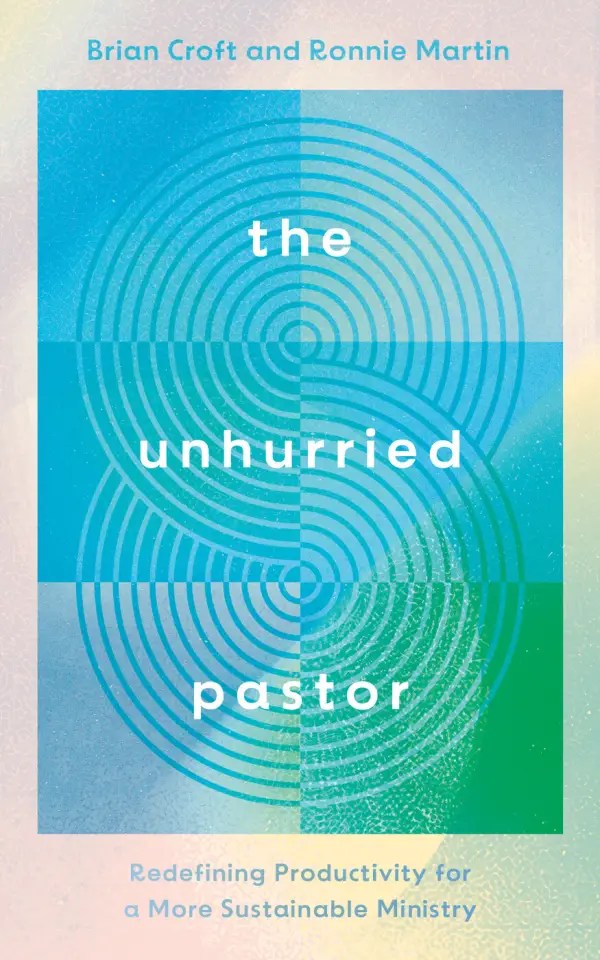
The Unhurried Pastor by Brian Croft and Ronnie Martin is an important reminder for anyone in pastoral ministry, especially those feeling the strain of constant demands. The book challenges the modern ministry mindset, which often equates busyness with success, and instead offers a call to slow down, embrace limitations, and find strength in resting in Christ. There’s lots of thoughtful insights and practical wisdom. Croft and Martin help pastors rediscover a more sustainable and spiritually enriching way to lead.

Embracing Limitations
One of the foundational ideas in The Unhurried Pastor is the importance of accepting our limitations. Many ministers are driven by the desire to meet everyone’s expectations—whether those of their congregation, community, or even themselves. But this endless striving only leads to burnout and frustration. Croft and Martin remind us, drawing from the words of John Calvin, that “true and sound wisdom consists in two parts: the knowledge of God and of ourselves” (p. 3). This is a important point. When we are deeply aware of both who God is and who we are, we understand that our limitations are not failures—they’re a natural part of being human.
Embracing limitations doesn’t mean we’re less effective; it means we’re leaning into God’s design. Instead of trying to be everywhere and do everything, we can rest in the truth that God is sovereign. The weight of the world—or the church—is not on our shoulders. When pastors accept their limits, they’re able to give more genuine attention to what truly matters, letting God’s strength work through their weaknesses. I will admit, this is something that can be hard to actually put into practice and I often need to remind myself of this.
Redefining Productivity
In a culture that prizes productivity, it’s easy to fall into the trap of measuring ministry success by how much gets done. The more programs, meetings, and events, the better—right? Croft and Martin challenge this assumption by encouraging pastors to redefine productivity in ministry. “True productivity in ministry is about being rather than doing” (p. 14), they write, pointing to the familiar story of Mary and Martha as a guiding example.
Martha, in her busyness, missed the opportunity to sit at Jesus’ feet, while Mary chose the “better” portion by simply being present with Him. This story resonates with those who find themselves caught in a cycle of activity, running from one task to the next. The reality is that ministry is not about how many meetings are attended or how many tasks are accomplished. Instead, it’s about nurturing a relationship with Christ and leading others to do the same. By spending time in His presence, pastors can lead from a place of spiritual depth, rather than out of a need to prove their worth through endless busyness.
For many of us, there’s a temptation to prioritise what’s urgent over what’s important. However, Croft and Martin remind us that spiritual productivity isn’t about ticking off tasks; it’s about being deeply rooted in Christ and allowing our ministry to flow from that relationship. This shift requires a rethinking of how we approach our day-to-day and week-to-week responsibilities, but as I’ve recognised, essential for a more sustainable ministry.
Authentic Vulnerability
Vulnerability has become a bit of a buzzword in leadership circles (thanks Brene Brown?), with many encouraging pastors to be more open about their struggles. But as Croft and Martin point out, there is a subtle but significant difference between authentic vulnerability and a curated image of vulnerability. The authors caution against the temptation to appear vulnerable without truly being transparent: “There is a difference between presenting oneself as a vulnerable and transparent pastor, rather than a vulnerable and transparent person” (p. 21).
True vulnerability in ministry goes beyond the occasional mention of a struggle in a sermon or casual conversation. It’s about consistently living with honesty before God and others, even when it feels risky. Authentic vulnerability builds trust, both with God and with the congregation, because it shows a pastor who is fully human—dependent on God’s grace like everyone else. Croft and Martin encourage pastors to be more “psalmist-like,” laying their true selves before God in prayer and letting go of the need to maintain an image of invulnerability. When pastors model this kind of vulnerability, they help create a culture of authenticity within their church communities, where people feel safe to bring their own struggles and burdens to God.
Rest and Renewal
For me, perhaps the most important message in The Unhurried Pastor is the call to rest. In a world that glorifies hustle and productivity, the idea of rest can feel like a luxury—or even a weakness. Yet Croft and Martin emphasise that rest is not optional for those in ministry; it’s essential. They draw from the biblical pattern of Sabbath, reminding us that God built rest into the very fabric of creation. “The unhurried pastor knows Jesus is the Chief Shepherd over his church… It is only when a frantic, hurried pastor actually lets go that he truly rests” (p. 128).
This kind of rest goes beyond simply taking a day off. It’s about a deep trust in God’s sovereignty, a willingness to release control and believe that God can and will sustain the ministry. When pastors neglect rest, they’re often trying to prove their worth by staying busy, or they’re afraid of what will happen if they’re not constantly ‘doing ministry’. But true rest comes when we let go and trust that God is in control. Rest, as Croft and Martin describe, is an act of faith—faith that God is capable of shepherding His people even when we’re not present.
For pastors, this means regularly stepping away from the demands of ministry to replenish their souls, whether through prayer, time in Scripture, or simply enjoying life outside of pastoral duties. Without this regular rhythm of rest and renewal, burnout is inevitable. But when pastors take time to rest, they return to their work with greater clarity, energy, and a renewed sense of purpose.
Conclusion
The Unhurried Pastor is a timely and necessary reminder for those in pastoral ministry to slow down, embrace their humanity, and rest in God’s grace. Croft and Martin offer an alternative to the relentless demands of modern ministry (and life!), reminding us that our value is not in what we accomplish, but in who we are in Christ. By accepting our limitations, prioritising our relationship with God, and leading from a place of rest, we can experience a more sustainable and impactful ministry.
As Croft and Martin conclude, “Pastors don’t need to be perfect or have it all together. They simply need Jesus” (p. 142). This truth is what sustains ministry—not our own efforts, but God’s grace working through us. For any pastor feeling the weight of their role or the pace of their life, this book offers practical wisdom and encouragement to embrace a slower, more sustainable approach to ministry.
 Life + Faith – joncoombs.com
Comments
One response to “Book Review: The Unhurried Pastor by Brian Croft and Ronnie Martin”
[…] Book Review: The Unhurried Pastor by Brian Croft and Ronnie Martin […]
LikeLike