Tag: Books

  • My Top Books of 2015

    At the start of each year I set out to read, on average, one book per fortnight. By the end of the year I’ve usually achieved this goal. What can I say? I enjoy reading. There’s usually a mix of fiction (40%) and non-fiction (60%), this year is no different. The list of books I read don’t include those I simply dip into here and there. These are the ones I read right through. If you’d like to see every book I’ve read this year then head here. Otherwise, below is a list of the top books I read. These all achieved 5-stars in my subjective rating system. 🙂

    old books

    Adoniram Judson by Jason G. Duesing

    Few books I read significantly shape me. The last would’ve been around a decade ago. Yet, in January one more was added to that elite list, this biographical account of the life of Adoniram Judson. Perhaps it was the timing, just before our miscarriage and a rather painful time for us as a family. It was helpful for that period but also for deeper reflection in what it means to live a life following Jesus and making him known to others.

    The book was so good I had to review it. The review gives you a better outline and idea of the book than I can give here. I also quoted him a little in some previous posts. It’s a great read and was significant to me at the time and as I’ve continued to reflect on it.

    In brief Judson was the first American Baptist missionary sent out, ever. He had a great impact on current day Burma/Myanmar, fruit which continues to be seen today. He endured so much personal and ministerial hardship, including the deaths of many of his children and two of three wives. He seems like an amazing man and very much worth the read.

    Michael Jordan: The Life by Ronald Lazenby

    Michael Jordan was the most iconic sportsman while I was growing up. Probably still is. He’d certainly be the best basketballer the world has ever seen. This biography is a comprehensive outline of his life and family. Lazenby begins generations before MJ was born and makes his way through the family tree before spending much of the 720 pages talking about his career. The Life outlines Jordan’s relationship with his father, family, coaches and team mates. It is a great read and even more so if you remember the glory days of Jordan and his Bulls.

    Bonhoeffer: Pastor, Martyr, Prophet, Spy by Eric Metaxas

    Another biography makes the list here too. Can you tell the stories of others interest me?

    Bonhoeffer was a pastor during the time of Hitler-led Germany and into World War II. He was one of few who saw Hitler for what he was and went against the traditional German church at the time. This leads him to be a main player in seeking to assassinate Hitler during the war, which he is consequently imprisoned for. Metaxas is a great writer and gives a detailed account of Bonhoeffer’s life. It took longer than I would’ve liked reading this on Kindle but it was still worth the 5-stars.

    When Helping Hurts: How to Alleviate poverty Without Hurting the Poor…and Yourself by Steven Corbett and Brian Fikkert

    As part of my role with Global Interaction I have had the privilege of facilitating and leading short-term mission or exposure teams. This involves preparing people to engage in missions in another culture and with other religions. At the same time questions are often raised as to the validity and method of these trips, quite often seen as a waste of money with little help to others. I have my own thoughts on this of course but this book helps put many of these things in perspective.

    This is a good primer on poverty and dealing with people who are impoverished. It also has some good chapters on what non-profits can do to safe guard themselves in dealing with the poor, whether that be processes or programs or finances etc. I was particularly interested in how they approached short-term teams and there is a whole chapter dedicated to that. Consequently they have elaborated that chapter into and entire book now too. In any case, this one was excellent and gave me a real insight into dealing with things regarding the poor and social justice.

    Leading from the Second Chair: Serving Your Church, Fulfilling Your Role, and Realizing Your Dreams by Mike Bonem and Roger Patterson

    So in January I become an Associate Pastor. I thought it worthwhile to read up on what some of this may entail. This book was rightly recommended to me and very much worth the read. It is written by two guys with much experience in associate roles and delves into three particular tensions those who lead from the second chair may face. It gives a good picture of the realities of this role, whether it be in a church or other place of work.

    Knowing God by J.I. Packer

    Knowing God is a Christian classic and remains so today. This is a re-read for me but it had been 10 years since I last picked it up. Packer outlines the Christian faith and the central aspects of it. As the title suggests, it helps us in getting to know God, who he is and what he is like. As I read this it reminded me of how ‘lite’ the Christian Living books are today. If you’d like something of substance to read this coming year then give this one a go.

    This time of year often produces ‘best of’ type lists on various websites. I mainly stick with books and you can read 2014’s list too if you like.

  • My Top Books of 2014

    At the start of each year I set out to read, on average, a book a fortnight. By the end of the year I’ve usually done that. What can I say, I enjoy reading. It’s usually a mix of fiction (30%) and non-fiction (70%). The list of books I read don’t include the ones I dip into here and there but are the ones I read right through. If you’d like to see every book I read this year then head here, otherwise, below is a list of the top books I read, the ones I gave 5-stars to.

    books old

    One Day by David Nicholls

    I found this a great novel and it moved me in ways I didn’t suspect. I can understand why it won the 2010 Galaxy Book of the Year Award. It’s the story of two people who circle each other their whole lives and each chapter is written as if it’s a journal note from the same day each year. Worth a holiday read.

    You Lost Me. by David Kinnaman

    A detailed analysis of why Millennials/Gen Yers are leaving the church. This is an excellent read for anyone concerned about the future of the church and particularly if you are a Pastor or Youth Pastor. Kinnaman bases much of the book on research done by The Barna Group. Much of the information wasn’t too much of a surprise to me as this is my world but it was a good reminder to continue to think hard about engaging and growing young people in the faith.

    Calico Joe by John Grisham

    Just a classic piece of work by Grisham here. Not a long book but it will keep you reading.

    What’s Best Next by Matt Perman

    Can you believe that there is actually a theology of productivity? No, either could I until I read through Perman’s book. I’ve been following his blog for a few years now and love much of what he says. I found this volume really well structured to ensure solid theory and practical solutions. If you’d like to be more effective in life and work then read this book. Perman has got great thoughts on productivity and leadership and this book is well worth the time to read. It will take time to implement some of the suggestions he gives but when done I imagine a much easier way of life.

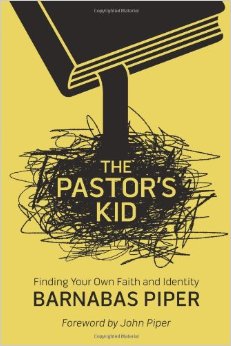
    The Pastor’s Kid by Barnabas Piper

    Such a good book. So good I had to review it. This book is for anyone in the church because it is helpful for Pastors, Pastor’s kids, and the general church member. It names everything a PK will go through and senses while in the church with their parent being a Pastor. It helps naming those things but also helps others understand what and why the PK is going through what they’re going through.

    A special mention must go to In My Place Condemned He Stood by JI Packer and Mark Dever. It’s mainly a collection of essays written by Packer and one by Dever. They are all based upon the penal substitutionary atonement of Christ, its meaning, purpose, and result. Each essay is comprehensive and will help grow your faith. Terrific read.

  • Inspirational Books

    Inspirational books can shape and change you. They can stay with you for years and years and influence what you do and the way you live.

    The other day I was asked on Facebook to list the top 10 books that “have stayed with me” in some form. While that phrase is open to interpretation I listed the following 10 books as having an impact and influence in my life thus far.

    1. The Bible by God
    2. Jim Elliot by Barbour Publishing
    3. Charles Spurgeon by Arnold Dallimore
    4. Just Do Something by Kevin DeYoung
    5. The Trellis & The a Vine by Tony Payne & Colin Marshall
    6. The Chronicles of Narnia by CS Lewis
    7. On Writing Well by William Zinsser
    8. Pity the Nation by Robert Fisk
    9. D. Martin Lloyd-Jones (2 Vols.) by Iain Murray
    10. Knowing God by JI Packer

    What books would you list?

  • Book Review: The Pastor’s Kid

    the pastors kid bookMy father is a Pastor.

    My grandfather was a Pastor.

    My great grandfather was a Pastor too.

    When I was a boy I lay on top of my bed one night balling my eyes out.

    The reason?

    I didn’t want to be a Pastor.

    Because of the heritage of my family I thought that to be a ‘Coombs’ meant you had to be a Pastor. I looked down the generations and saw that the first born son turned out to be a Pastor. Something at the age of twelve I didn’t want to be.

    This was one of many unique challenges I can remember growing up as a Pastor’s kid (PK). Granted, this was more a phenomenon of our family’s rich Christian tradition. Yet, there are other challenges of living with the forever abbreviated title of ‘PK’ that others don’t face. And these challenges are the reason I find the book, ‘The Pastor’s Kid’ by Barnabas Piper an excellent book.

    Piper has recently published this book about PKs for PKs, Pastors and churches. A book that “describes the unique challenges PKs have faced being the children of ministers”.

    Throughout the book Piper seeks to serve individuals and churches by highlighting the challenges that come from being a child with a Pastor as parent. Through his own experience as a PK, and conversations with others, Piper gives insight into these challenges. As he puts it,

    “The constant pressure to be something, do something, and believe something creates enormous confusion for PKs. And one of the main confusions is about who we are…”

    After all, nobody chooses to be a PK, you’re either born into it or brought into it through the calling of your parents.

    On one hand it is a privilege. The constant meeting of new people from different parts of the world. The hearing of what God is doing in different countries and places. The unconscious absorption of biblical teaching. And the community of people that you’re surrounded by. All these things provide the PK with tremendous opportunity to hear about God, what He has done, and what He continues to do.

    On the other hand, it is a situation where the fishbowl of the local church can strangle the life out of you. Where there is an ambivalence to the truth because you’ve heard the stories so often. Church becomes a place where everyone knows of you, but no one actually knows you. Where expectations are laid on thick, from parents to congregation. And, of course, where you get to see the ugliness of sinners dealing with sinners from the front row.

    Therefore, PKs turn out differently as they seek to find themselves within the life of the church and the world around them. Some stay within the faith, following in the steps of their parents. Others rebel, leaving the church behind for a life apart from God. And others end up finding God and their place in the world in a way that is their own.

    Piper rightly highlights the need for grace for the PK, as they seek to grow from within the all-encompassing nature of church ministry. Grace that is experienced and shown, not just told. Grace that recognises that legalism and rules won’t help. Grace that recognises the PK has their own journey of faith-discovery and self-discovery. Grace that is therefore holistic, unassuming, respectful and full of hope for the PK as a person. Grace that comes from Jesus Christ, shown through the Pastor and the church.

    A PK isn’t anyone special. They are as special as everyone else. But they do have unique challenges.

    This book is a great conversation starter for you and your family. I’d strongly recommend you buy this book – read it and talk about it. It’ll help you as a PK. It’ll help you as a Pastor. And it’ll help you as a church member.


    This book review was also posted on the Baptist Union of Victoria’s ‘Witness Blog’ on the 22/09/2014. 

  • What I Learnt From Steve Jobs

    The other day I finished the biography of Steve Jobs by Walter Isaacson. Incredible.

    20130826-082146.jpg

    This book excels in portraying a man who defined much of this generation. I know he’s certainly transformed the way I interact with the world through the iPhone and iPad, I suspect it’s the same for you.

    There is something about reading a biography that provides insight into people you otherwise wouldn’t know. Isaacson’s masterful job of putting together the components of Jobs’ life is a perfect example. A deeper and fuller understanding of Jobs and his character gives cause to reflect on what can be learnt from him. Here then, are my thoughts on what I learnt from Steve Jobs:

    1. I learnt Steve Jobs is a douche – There is no doubting it. He was a douche. His personality and the way he acted and behaved were terribly stupid and degrading to others at times. This wasn’t just one-off events every few years, ripping people apart in front of others occurred for sustained periods and made the guy a ripe proper douche. He even admits it himself.

    2. I learnt Steve Jobs had a tremendous appreciation for quality – Everything he sought to do, whether it be his eating practices or the products he sought to produce, was to be of high quality. If they weren’t of the highest and best then they were crap. His push for quality products is what made Apple and Pixar. It’s a shame this wasn’t reflected in his relationships with others, including his parents, his daughters and his wife. Nevertheless, he pursued the best – products and employees. He wouldn’t settle for second.

    3. I learnt Steve Jobs didn’t care about money – That’s always easy to say for someone who actually has millions already. But, I think that truly was the case. He didn’t seem fussed about money, it was the product, the A-class quality of a product, that mattered. If he made money by doing this then all the better.

    4. I learnt Steve Jobs embodied Apple and Apple embodied him – After leading an organisation for so many years, even with a rather long period of exile, his personality shone through the company. There is no mistaking Jobs’ influence because he was the founder of the company but there is something that happens when you’ve been involved for 30 years. The company reflects your personality, and so it is with Apple. This desire for perfection, for high quality design and products, for pushing the boundaries in what people believe they can do, all comes from Steve Jobs.

    5. I learnt that Steve Jobs is an inspiration – There is no doubting it, he’s one of a kind. There won’t be another Steve Jobs and the effect he’s had on Western society is very hard to measure, but needless to say it’s been enormous. His leadership and determination are inspiring. His passion for his industry and product is inspiring. He’s inspired me, through this book, to be a person who is more focussed, passionate, and determined in their work and life. I’ll skip the douche bit but have to say the other character traits are inspiring.

    A sixth point would be that Walter Isaacson is an amazing writer. He inspires me to be a better writer and has made this book flow so well I didn’t want to put it down at times. If you happen to get the chance to read this book, I’d highly recommend it.

  • Book Review: The Road Trip by Mark Sayers

    theroadtripHere is a travel book with a difference.

    Most travel books give information about a certain place. The good and bad hotels, the best restaurants, the sites to see. In The Road Trip Mark Sayers travels through the last 50 years of culture enlightening us on what’s happened to the West. Following the travels of Jack Kerouac, writer and experiential junkie of the 1950s, Sayers shows how Kerouac’s journey across America is now mainstream for the life of a Western young adult.

    The book is in two parts. The first, offers a critique of young adult life in the 21st Century. The themes, illustrations, and connections between the journey of Kerouac and journey of today’s millennials resonates strongly. The second, turns toward the cross and gives broad examples of what the church must do to re-engage with young adults today. Following the journey of Abraham and centred of the cross Sayers describes how young adults can find true meaning for their lives.

    Here’s what I liked about the book:

    (1) The Cultural Analysis

    In many ways Sayers depicts young adult culture; its aims, its experiences, its lack of meaning, its search for something better, its hopelessness, with compelling accuracy.

    (2) The Writing

    Sayers pulls you along with him. It’s hard to put the book down. There are illustrations, quotes, stories, and his own ideas, which keep you reading and reading. It’s a very well written book that enables you to travel the cultural contours with him.

    (3) The Gospel

    In part-two Sayers turns to how Christianity is to deal with this “culture of the road” that young adults seek to travel. The central answer to this ‘issue’ is the Gospel, which “reconciles us to God, others, and creation”. It is only through Christ’s death on the cross that gives meaning to this world and to this life. Therefore, it is this reality that provides the necessary answer to this “culture of the road”. It is an encouragement to see the explicitness of the Gospel within this book, and how it is the basis for further application.

    (4) Morality and Covenant

    These are two themes, among others, are tackled by Sayers toward the end of the book. They are themes put on the agenda for Christians and wider Western society to think through. Morality and covenant have both been thrown out the metaphorical window in recent time and so it is a good reminder to again reflect on these issues.

    Here’s what could be improved:

    I should say that I liked everything in the book. It was very good. There is much to take away and dwell on, particularly for those in youth and young adult ministry. It’s hard to come up with much in terms of critique or growth areas. However, when I put the book down I did feel there was something missing.

    A couple of caveats:

    First, I opened the book expecting big things. Maybe bigger than Sayers could deliver. I’ll name that.

    Second, I recognise I’m involved in young adult ministry. I get to see the culture first-hand and affirm almost everything Sayers said about it. I believe these two factors affect my thoughts here.

    However, toward the end I was wanting to know more. I was wanting to know what was next. I was wanting to know how to connect the young adult world of experience, journey, and meaninglessness to the worldview of the Bible.

    I know I was offered suggestions; to bring back the transcendent, to bring back covenant, to bring back sacredness, to bring back commitment. In other words, to show that living the Christian life actually means giving up what the world offers and travelling the journey of God into full discipleship and devotion. This was made clear, I don’t want to deny that. Yet, this still leaves me hanging for more as I try to connect and apply these themes back to culture.

    Since finishing the book I’ve worked out what I’m really asking. It’s the “How?” question.

    How do we bring these themes back in a way that enables young adults to have a big vision of God and involved in His mission in the whole of life?

    Maybe that’s not Sayer’s task here but mine as the practitioner. In any case, it’s left me pondering that task and something all of us should be pondering as we reach out to the young adults of today.


    After writing this review Mark was kind enough to go back and forth on some of my thoughts. Below is an excerpt from our conversation and a reply to the “how” question. Many thanks to Mark Sayers for his time and willingness for this.

    Mark’s response:

    “…As I get around across the evangelical/charismatic/pente scene I notice that there is no one programmatic thing that is reaching young adults. Rather, it is the simple stuff in the book which I think is important e.g. covenant, living at the foot of the cross etc. I think because western young adult culture at the beginning of 21st Century seems so shiny and powerful we expect the answer to be so as well, but again I think that the answer is simple, humble obedience to Christ, simple non-sexy stuff that we already know. I have positioned our whole Church around this idea – no show, just less of us, and excitingly over time it is incredibly transformational…

    …The other thing is that I often notice after workshops and talks that I do, describing western cultures journey to secularism and now post-secularism, that people become overwhelmed and want quick and easy answers. However, how do you reverse 500 years of this stuff in some simple ministry tips? I don’t think you can, it is going to take generations to turn things around in my opinion. No one likes to think of it this way but the questions of today’s young adults are essentially Hamlet’s questions at the dawn of the modern. We have a lot of work to do.”

  • Top 3 Books For Youth Ministry

    Late last night I was texted asking for what my top 3 book recommendations were on the topic of Youth Ministry. I thought I’d share them here for interest sake:

    1. Your First Two Years in Youth Ministry by Doug Fields
    2. Fruit That Will Last by Tim Hawkins
    3. Leaders That Will Last by Tim Hawkins

    I’ve also added a fourth in my response as years ago Al Stewart put out a little primer on youth ministry called No Guts, No Glory worth reading.

    I’d recommend these books to anyone beginning in youth ministry or a good refresher for those who’ve been in it for a while.

    What are your favourites? What would you recommend if you were asked for your top 3?

  • My Theological Library

    Library_books_oldbooks
    By: Pouya sh

    A month ago we moved house. It’s not really the most enjoyable of experiences but it’s something that has to be done when the time comes. The process of moving house meant that I had to move all the books that i have. I’m an avid reader and aim to read a book each fortnight (on average over the course of a year). The “industry” I’m in also lends itself to be around books. Ministry requires reading, preaching requires reading, studying requires reading. This means I’ve a growing collecting of around 700 books on the shelves and when the library reaches this point it’s probably time to get it sorted out.

    I did toy with the idea of working the Dewey system or using the Library of Congress numbers but decided that might be a bit extreme. In the end the best advice came from Andy Naselli’s post on “Why you should organise your theological library and a way how”. I’ve adjusted some of what he’s suggested but used the main categories to organise mine. My library is obviously not as big as his so it doesn’t need as much detail as what he has laid out. But here it is:

    1. Biblical Theology

    • Languages (NT Greek)
    • Hermenuetics (how to interpret the Bible etc.)
    • Commentaries (on each book of the Bible)
    • OT & NT introductions, theologies, and overviews

    2. Historical Theology

    • Biographies
    • Church & Christian History
    • “Works” by old dead guys

    3. Systematic Theology

    • Bible doctrine (the sort of topics in a general systematic theology book)
    • Apologetics
    • Philosophy

    4. Practical Theology

    • Christian Living (all those great books people pick up at the front of Christian bookstores ;))
    • Preaching
    • Leadership
    • Youth Ministry
    • Church
    • Pastoral Ministry
    • Missions

    At this stage all sub-categories are mixed in together in the broad categories. I’m not convinced this works for the Practical Theology section but it’ll take too much time sorting it out at the moment.

    Comments? Suggestions? How do you sort yours?

  • 5 Ways George Whitefield’s Life Is Good For Your Soul

    As I was walking out the door to go on holiday I randomly threw the biography of George Whitefield by Arnold Dallimore in my bag. It is an extensive biography, a two-volume set, which outlines the life and times of the great preacher.

    Having finished the first volume I find myself reflecting on his life and ministry. Biographies teach us a great deal, not only about an individual life, but also about the value system, worldview, and passions the person held.

    5 Ways George Whitefield’s Life Is Good For Your Soul

    In thinking about Whitefield, I found five areas of his life that struck me as being central to the way he lived. Here are those five areas, and some brief reflections on each of them.

    First, he was a man passionate about Jesus and only Jesus.

    From his teenage years, but more so after his conversion, Whitefield was consumed with proclaiming and showing Jesus in everything he did.

    While at university in Oxford he was a member of what was known as the ‘Holy Club’, and made a conscious effort to always be upright in everything he did. As he grew in grace and a fuller understanding of the gospel he pursued a passion for God’s glory and supremacy over all things.

    Second, he was a man committed to preaching.

    Everywhere he went, from the age of 17 onward, he preached consistently.

    In certain seasons of his life Whitefield would would preach up to 15 times, or 50-60 hours, per week! His ability and gift in preaching was beyond the average person, but this still doesn’t negate the fact that he was always wanting to share the truth of the gospel everywhere he went.

    Whether he was in America or in Britain, Whitefield couldn’t help but preach and try to win souls for the Lord.

    Third, he was a man who instigated change.

    His preaching practices were unorthodox for his time.

    He pushed the limits and received rejection for it. His actions of moving away from the church pulpit and begin preaching in the open air changed the face of his preaching ministry. When not allowed to preach in the local church, due to a decree from the local bishop or minister, he would simply began preaching outside–in the fields and parks of the city.

    Fourth, he was a man who had the courage to persevere in his ministry despite ridicule and rejection.

    Whitefield’s Calvinistic convictions, zeal for the Lord, and unorthodox preaching practices rubbed people up the wrong way.

    Fellow ministers, clergy, and other lay people developed a great dislike for Whitefield. Hundreds, if not thousands, of articles, journals, letters, and books were written against him and his beliefs. Throughout he continued to trust the Lord and pursue his ministry for the betterment of the Kingdom.

    While hurt by many of his detractors, Whitefield had the courage to stand and proclaim the gospel.

    Fifth, he was a man who sought unity rather than separation.

    At all times, particularly in his relationship with John Wesley, Whitefield sought to find common ground first rather than polarise people because of their belief or practice.

    In the end Whitefield had to separate from some relationships, but not after he had pursued unity, support, and friendship under the gospel. He was concerned for Christian unity while pursuing his single-minded goal of preaching the gospel.

    Whitefield’s biography, and some of his writings, is a terrific read. Dallimore portrays his life wonderfully well, exposing the godliness and character of the man. I would highly recommend reading this book, and even dipping into Whitefield’s other writings too.

    It will do wonders for your soul.