Tag: Leadership

  • Slaves + Saints: The Essence of Christian Partnership

    It’s not very common these days to receive a physical letter in the letterbox. I’m not sure about you but what usually arrives in our letterbox is bills, junk mail, or some political party telling us what they’re going to do if they are elected. But on occasion, perhaps for a birthday, there might be a short letter written from one of the grandparents. And there’s still an excitement that comes from receiving a handwritten letter from someone. It shows they care; it shows they are thinking about me, and it shows they have gone to a bit of effort and cost to get it to me. 

    As Paul opens his letter to the Philippians, we can hear the care, the thought, and the effort that Paul goes to show his joy and affection for this church. And knowing that the church in Philippi is aware of Paul’s imprisonment (1:13) and their worker Epaphroditus is with them and has been sick (2:25-30), I suspect they would be very excited to have received this letter. Then, upon opening and reading, they would have been buoyed by the genuine thankfulness, emotion, and love Paul expresses to the church right from the beginning. 

    And so, from the beginning of a Paul’s writing here to the Philippians, we find this letter to be one of genuine partnership. 

    Unlike the letters or emails we write, in which we state the recipient’s name and ask them how they are, Paul follows first-century letter-writing custom of stating his and Timothy’s name before giving a little greeting to the church. 

    And it’s easy to skip right over these little greetings at the start of the letters we have in our Bibles. Here in Philippians it’s worth noting a couple of things. 

    Slaves of Christ

    First, notice how Paul identifies himself and Timothy. 

    We read, “Paul and Timothy, servants of Christ Jesus” (1:1).

    In the NT it is common to translate the word used here as either servant or slave, and this can be the case here. In our minds, ‘servant’ is a little softer to our ears and imaginations than ‘slave’, but for the church in the Greco-Roman world, this idea of being a slave was a common marker of identity. Slaves in homes, business, or on farms were part of life. And so the idea of being bound to someone else was not a foreign idea as it is for us today. Therefore, when Paul calls himself a “slave of Christ Jesus” he is identifying himself with Christ. He recognises he is bound to Christ. He knows he is under the authority and Lordship of Christ and at his service. 

    Saints In Christ

    Second, notice how Paul identifies the church.

    We read, “To all the saints (NIV: God’s holy people) in Christ Jesus who are in Philippi, including the overseers and deacons.” 

    Paul uses another couple of identity markers, this time for the people of God at Philippi. Those who have turned to God through Christ are called ‘saints’ or ‘God’s holy people’. Paul acknowledges those within the church, despite their non-Jewish background, are in the continuing line of God’s people. They are being set apart for God, which is a familiar description in the OT of this term ‘saints’ (Exodus 19:4-6; Psalm 135:3-4). This is a little marker of their identity and a helpful reminder in how they should think of themselves. 

    I wonder how you think of yourself? Are you a sinner or are you a saint? 

    We live in the tension of knowing we are sinners while being assured of the truth that we are in Christ. Through faith in Christ we are considered the people of God, the saints of God. We are the holy people of God who are in Christ Jesus. Paul writes this regularly as he opens his letters to the Romans, 1 & 2 Corinthians, Colossians, and here in Philippians. And while we continue to fail, continue to sin against God, we can know that we are saints in Christ because it is Christ who has decisively dealt with our sin on the cross. 

    This should be the regular way we think about ourselves as believers, as saints. 

    After writing about reconciliation and peace with God through Christ Paul writes in Ephesians 2:19-20:

    19 So, then, you are no longer foreigners and strangers, but fellow citizens with the saints, and members of God’s household, 20 built on the foundation of the apostles and prophets, with Christ Jesus himself as the cornerstone.

    If you are struggling with sin or struggling with God’s acceptance of you because of your sin, then I encourage you to dwell on what it means for you to be a saint. For that is what you are in Christ Jesus.

    Leaders Under Christ

    Alongside this identity marker of being saints is Paul’s reference to the overseers and deacons. These are leaders in the church at Philippi and he wants to make sure they listen to the content of this letter as well. 

    In chapter four Paul encourages two female leaders within the church to agree with one-another in the Lord (4:2-3), but more than this Paul is highlighting how the message of this letter is for the whole congregation. There is no separation between the leaders and the rest of the church. They are together the people of God, no one is more special than anyone else. This letter isn’t just for a certain segment of the church, but everyone is called to walk the same walk as each other. 

    We often see this occur in churches, where leaders are put on a holier-than-thou pedestal. But those who are in leadership are no more special in the eyes of God than anyone else.

    At the church where I pastor I, and the rest of the pastoral team, sit under the teaching of scripture just as much as anyone else. We who are involved in the leadership of the church may have certain responsibilities placed upon us because of our roles, and according to Hebrews 13:17 we will need to give an account before God in due course. But our prayers don’t make it to God any faster, our sins still need to be repented of, confessed, and forgiven through Christ. Our conduct still needs to be worthy of the gospel (1:27). 

    Here at the beginning of this letter, even in these first two verses, we see the beginnings of what is a special partnership. A special partnership that already speaks into our identity with God and with one-another.


    This post is part of an ongoing series where we will dive into the themes, messages, and lessons found throughout the book of Philippians. For earlier posts please see:


  • 3 Specific Reading Reflections

    Reading is an important building block in my life. It’s part of my relaxation and leisure time, it’s part of my role as a pastor, it’s part of my development both personally and professionally. Reading, forever and a day, has always been part of my life and I can’t really think of a time when I haven’t read. Maybe late high school and into university, but that’s about it.

    Each year I have a certain number of books I seek to read. This number of 26 (equivalent to one per fortnight) hasn’t changed since I was 24 years old. Some years I don’t make this target, most years I exceed it. And I don’t say this for boasting sake, but I say it for goal-setting purposes. I know I won’t be able to finish a book each week. I know I won’t be able to retain as much information as I would like if I read more non-fiction than I already do. I know I prefer to read physical books over audiobooks and ebooks. I know certain things about my reading habits, now having analysed my last 15 years of reading.

    However, over the years I have learnt certain aspects to reading that has helped me know myself more. This includes these three tips below. Perhaps they’ll be helpful for you as you think about your reading too.

    1. Choose Books You’re Interested In

    If you’re not interested in the topic or theme of a book don’t waste your time. There are too many books out there to waste time on ones you’re not interested in. For example, I’m not particularly interested in reading about military battles, so I don’t really read anything military related. I’m interested in sport biographies, particularly cricket and basketball. I’m interested in Christian history. I’m interested in junk-time crime thrillers. None of them may interest you, you may think they’d be so boring. Stay away then. Pick books you’ll be interested in, it makes reading easier.

    2. Stop Reading The Book If It’s Terrible

    There is no need to finish a book if it’s not happening for you. If you are finding a book isn’t meeting your expectations then just stop and leave it. You don’t have to finish every book you pick up. Last year I tried to read a very popular leadership book by one very famous and highly recommended leader. I got about 60-80 pages in and pulled the pin. I found the writing terrible, the examples used were lacking depth, and it just didn’t seem like a book worth the expectations. It was time to finish up.

    3. Use A Pencil, Mark-up the Margins, and Dog-ear the Pages

    A book is to be read, and to be used. Show me a book in perfect condition and I’ll show you a book that either hasn’t been read, thought about, or digested.

    A book is one of the cheapest development tools, particularly if we’re thinking non-fiction, and so we should mine the gold as much as possible. What other lifelong development tool is available for $15-$25?!

    When reading non-fiction I like to use a pencil to underline important sentences and paragraphs. I’ll also dog-ear the page so that I know there’s something important in the book that I can go back to and make reference to or re-read later. I also make notes or comments in the margins that spark thoughts or memories or questions. Sometimes I even write short notes at then of chapters. Doing this slows my reading down, but it also allows me to think through the various issues and helps me learn more from the book. At the end of every read I usually copy those underlines and dog-eared paragraphs into a searchable digital format.

    I get it. I enjoy reading. I enjoy learning. I think it has a place and priority in life. You may not. I get it. However, if you want to get more into reading or would like to improve in it then that’s a few random reading reflections for you. Any you would add?

  • The Inadequate Youth Pastor

    As I stand in the front row of our church, waiting for the song to finish before I get up to preach, my heart is beating faster than usual. My mind is sending up invisible prayers like a professional boxer hitting the speedball. While on the outside I might look calm, inside is nothing of the sort. Nerves are one thing, but it’s actually the intense feelings of inadequacy that come before the preaching begins. Afterward, those feelings return as I stand praying during the final song, simply wanting to hide. Sometimes I acknowledge the feelings and embrace them, other times I am overwhelmed by them.

    These feelings of inadequacy are not restricted to the task of preaching. It applies to other areas of church life, including youth ministry and working with young adults. Whether it is meeting with someone one-on-one, leading leaders in planning our youth ministry and its culture, seeking to give wise advice to questions our high schoolers ask, or leading the week Bible study, I often walk away with a strong feeling that I’m inadequate for the role.

    The Inadequate YP

    Some smart person will tell me that I’m placing more emphasis on myself than on God at this point. That I’m not putting faith in God’s work through his Word, but rather seeking affirmation and positive feeling from my own performance. And while I imagine I am doing this to some extent, who doesn’t want to at least feel like they’re doing somewhat of a decent job at something they are called to? But considering the preparation, the prayer, and the ‘performance’ itself, the intensity of these inadequate feelings just doesn’t match.

    It is often said that we put more pressure on ourselves than we do others. And we expect we will be able to do good, high quality work, from the outset. No matter what role we have–youth leader, parent, student, worker–we all have feelings of inadequacy. But no matter how much positive feedback I might receive this week, no matter how much experience I recognise I have, no matter how much study or reading I do, and no matter how much encouragement I see within the ministry itself, I often feel inadequate in what I do.

    I suspect I’m not the only one in youth ministry feeling this way.

    At this point it would be worth heading toward a positive, uplifting, and assuring verse of Scripture to tell me, and all of us, that we’re not inadequate at all. But I’m not going to do that. Instead, I’m reminded of Moses in Exodus 3-4 as he lays out to God objection after objection on why he should not be the leader of God’s people, confront Pharaoh, and help them leave the bonds of slavery in Egypt. I can completely understand Moses when he says, “Pardon your servant, Lord. Please send someone else.” (Exodus 4:13).

    Evidently my pride and ego get in the way. There is no doubt. And now that I’m in my late-30’s, rather than my early-20’s, a little of the brashness and arrogance has been shaved away. But, those feelings of inadequacy still linger; like the old ladies perfume I was skunked by when receiving an awkward hug at morning tea after church.

    Sometimes I’m not sure what to do with these feelings of inadequacy. I can’t say I’ve found helpful answers from others in ministry yet. It seems everyone is battling with the same problem! But then again perhaps all one needs is a good rest and some down time.

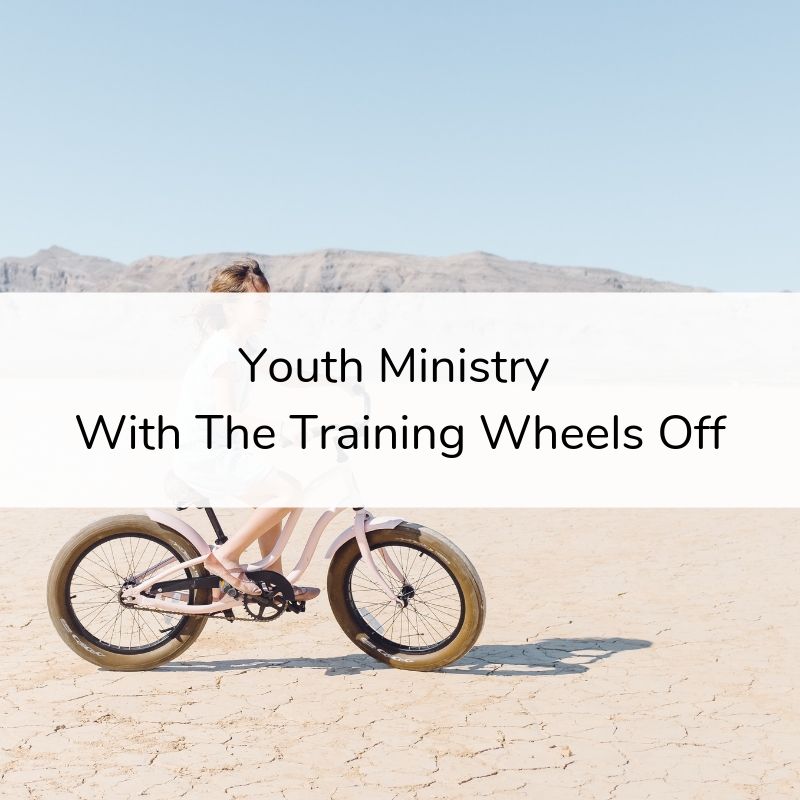
  • Youth Ministry With The Training Wheels Off

    On the outside basketball court, just down the road from where we live, we spent time as a family helping our eldest daughter with her bike riding. For a few hours we were focussed on helping her with her coordination, pedalling, steering, and balance as she learnt to ride a bike without training wheels.

    Youth Ministry With The Training Wheels Off

    It quickly became clear that this was the right time to do such an activity; she soon became a duck to water and was riding around too fast and confidently for her parents liking. At times she was overconfident, which resulted in a couple of crashes. But generally, she moved from training wheels to the two-wheeler without much trouble. It’s now time to keep the practice going so she continues to grow in confidence and skill.

    If you’re involved in youth ministry I wonder whether it’s time for you to take the training wheels off?

    What’s that mean, you ask?

    Perhaps the following points might help that.

    People Over Program

    Starting out in youth ministry finds all leaders more concerned about the program than the people coming to said program. Every rookie leader I have seen is more worried and anxious about pulling together a good program than they are in building relationships with those in attendance.

    This is not necessarily a bad thing. Learning the ropes about how to put together and run some games, write and deliver a talk, lead a discussion group, understand the flow of the night, and be involved in set up and pack up are all important parts of youth ministry. It is natural, and far easier, to learn the skills that are associated with those kind of tasks than it is to learn the art of conversation and care. It’s far easier to deal with these task-orientated responsibilities than being intentional about relationship building.

    A leader who takes their training wheels off will be one who begins to focus more on people over the program. They understand the relational connections with those who come along far outweigh whatever activities are happening on a particular night. Soon enough the programmatic nature of the ministry takes care of itself and conversations with leaders, parents, and students become the priority.

    Character Over Competence

    This, in reality, is a must at any stage.

    From a personal point of view, this is the idea of working on one’s character over working on one’s competency. Competency can include all the planning and organisation ability, relational nature, program tasks, idea generation, and even leadership skills. Yet, if the character of the person is not something you want modelled by others then it is probably best to reassess the situation.

    Someone who is taking the training wheels off in this regard will be intentional about their growth in character. In Galatians 5 we read a list of character traits, known as the ‘Fruits of the Spirit’, which are more worthy to be working on than any particular skill and ability. These include love, joy, peace, patience, kindness, goodness, faithfulness, gentleness, and self-control. Other character-forming virtues include, truthfulness, humility, forgiveness, compassion, empathy, and the like. It is these things that we seek to work on, be intentional about, and realise they all take a long time to grow within us.

    At the end of the day, character trumps everything.

    Initiative Over Instruction

    So you’ve been involved in your church’s youth ministry for a while. You build relationships. You can run a good game. You can do a talk. What’s the next step?

    Taking initiative.

    And this isn’t just doing those things above without thinking, or seeing the need to do more of these things and going for it. While that’s great, and it is an example of taking initiative, there are other areas to begin to explore.

    Taking initiative might look like:

    • beginning to think about how you can catch up with the one or two students after school.
    • sending a text or two during the week to encourage someone from the group.
    • asking a parent how you can pray for them and the family this coming week.
    • sharing a bible verse or thought to someone who God puts on your heart.
    • vacuuming the floor after the youth night is over without being asked.
    • getting to the event early and making sure you’re setting up and prepared.
    • writing an encouraging card to someone who you think needs it this week.
    • engaging with the strategy, vision, and big picture of how the youth ministry services others and the wider church.

    Initiative is doing those things that you know are worthwhile and important without being asked. And while initiative includes doing all the tasks required to pull off a great youth event, it is again centred on people. It is beginning to think and act in a way that actually ministers to people, not just performing a task.

    I wonder how you operate? Do you still have your training wheels on?

    Is it time to take them off?

  • 10 Tips For Leading Discussion Groups

    I don’t particularly like leading youth leader meetings where all we do is plan the coming term. To me, there needs to be something of substance in the meeting, something that can help us get better at what we do. At our most recent meeting I collected some thoughts around what makes for facilitating a good discussion group. Here are the 10 tips I came up with, ‘geniusly’ framed as an acrostic poem.

    10 Tips For Leading Discussion Groups

    1. Develop Rapport

    Quickly introduce yourself and gather everyone in. The best way to get people comfortable is asking them how they are, what they thought of the talk in general, and sharing something you found useful.

    2. Intentionally Listen

    You’re not there to simply tell others in the group your wisdom, you’re there to hear them share. When someone is speaking listen to what they’re saying and ask them follow up questions.

    3. Show Jesus

    Our topics and points in our talks should be centred on Jesus. Therefore, it would make sense for our discussion time to also include pointing to Jesus. This could be through mentioning another related Bible passage, or reflecting on how knowing Jesus has impacted you.

    4. Comfortable Silences

    We’re working with teenagers. There’s going to be awkward silences. Get comfortable with them. But, during this time always be thinking about another way you could ask the question or ask someone specifically in the group to share.

    5. Understand It’s A Growth Process

    Our discussion groups are a place, we hope, where people will learn and grow. But, realise it won’t all happen on one night. The ongoing nature of these groups, and the culture we foster in them, helps facilitate growth and maturity in life and faith.

    6. Share Your Stories And Heart

    Those in your group are wanting to know your perspective or your experience. As leaders we have a great opportunity to share something of ourselves. If you can think of an example of how the topic for discussion is something you’ve wrestled with before then share it.

    7. Simple Questions

    Ask simple and clear questions. Avoid confusing questions that are long and have different aspects to them.

    8. Involve Everyone

    Notice who is and isn’t talking. When asking a question sometimes it is good to ask someone specifically to share.

    9. Opportunity To Challenge

    We have an opportunity to challenge the thinking and behaviours of those in our groups. Don’t shy away from the challenging question. Even the simple question ‘Why?’ can do the trick.

    10. No Wrong Answers

    People should feel comfortable enough to share without being ridiculed or laughed at. Through your facilitation those in the group can sense whether it is safe for them to share. When someone does share we want to affirm them and thank them for sharing, even if we believe what they have said isn’t quite right.

    Would you add anything? (But realise, that if you do add anything you’ll ruin a beautifully constructed acrostic!)