Tag: Leadership

  • Recently Read: October 2017

    I’ve ploughed through a few books recently. I was hoping to write more detailed reflections on them, but alas, I’ll have to do with these summaries for the moment.

    Recently Read - Oct 2017

    Spiritual Friendship: Finding Love In The Church As A Celibate Gay Christian by Wesley Hill

    This is an excellent book. It really outlines a clear and attractive theology of Christian friendship. Friendship, true Christian friendship, and what that means and looks like, is not often talked about in church. This book does a great job describing a vision for friendship that is separate to small talk and serving together in some form of ministry. It is about hospitality, love for the other, and the elevating of friendship to a similar level as we evangelicals enjoy elevating marriage. It really is a profound book with plenty of ideas about how we can be better friends and provide opportunities for friendship in the life of the Christian. Unfortunately, some readers will be put off by the author being gay, celibate, or Christian. In some respects it doesn’t matter how he labels himself, he gives a good treatise on friendship and is a valuable read.

    Here I would love to include a couple of quotes, as I underlined heaps of the book, but it was so good that I gave the book away to a close friend. Ironic.

    Disappearing Church by Mark Sayers

    This seems to be the best I’ve read from Sayers. He pinpoints culture, analyses the way churches have sought to be relevant to culture, and then calls for a coming back to Word and prayer for the Christian and the Christian church. It is excellent in its cultural analysis and provides plenty of food for thought in how to live in a post-Christian, secular society. His main point is that we should be seeking to have a resilient faith, built upon understanding the Word and seeking God in prayer. You can read a more detailed reflection on Disappearing Church here.

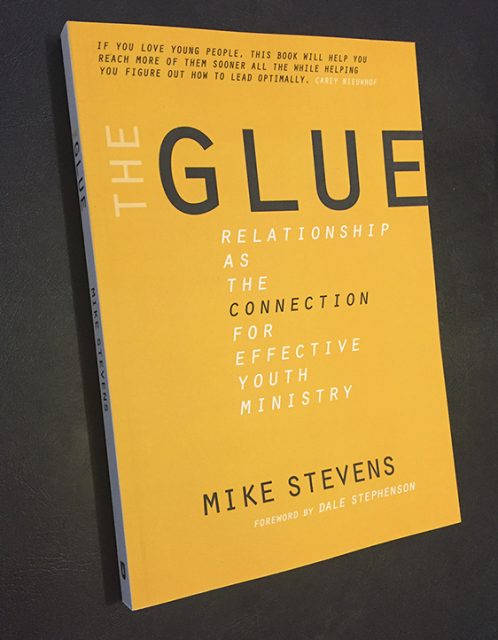
    The Glue: Relationship As The Connection For Effective Youth Ministry by Mike Stevens

    Read this post for a fuller reflection on the book.

    As I wrote in an endorsement for the book:

    “Whether you are leading a youth ministry in a small or large church The Glue is worth reading and reflecting on. Mike helps you understand the bigger picture of relational discipleship as well as providing detailed ideas to help your youth ministry move forward. This balance is fleshed out further through focussed questions at the end of each chapter, which were certainly helpful for me in processing what I was reading. The Glue is definitely worth reading.”

    Discipleship by Mark Dever

    Here’s a little book that helps anyone wishing to improve their discipling of others. The obvious case for making disciples is made and then the ‘how-to’s’ are provided. Because I’ve read a lot of Dever, and this kind of discipleship, then I understand how to go about it. For those who are unsure this is a good primer and will provide the foundations and the practical. It’s really as easy as meeting with someone, opening the bible with them, and simply talking and listening to one-another. This should really be a standard text for anyone wishing to disciple/mentor/coach or whatever you want to call it. If I was running an internship or ministry apprenticeship this would be on my reading list.

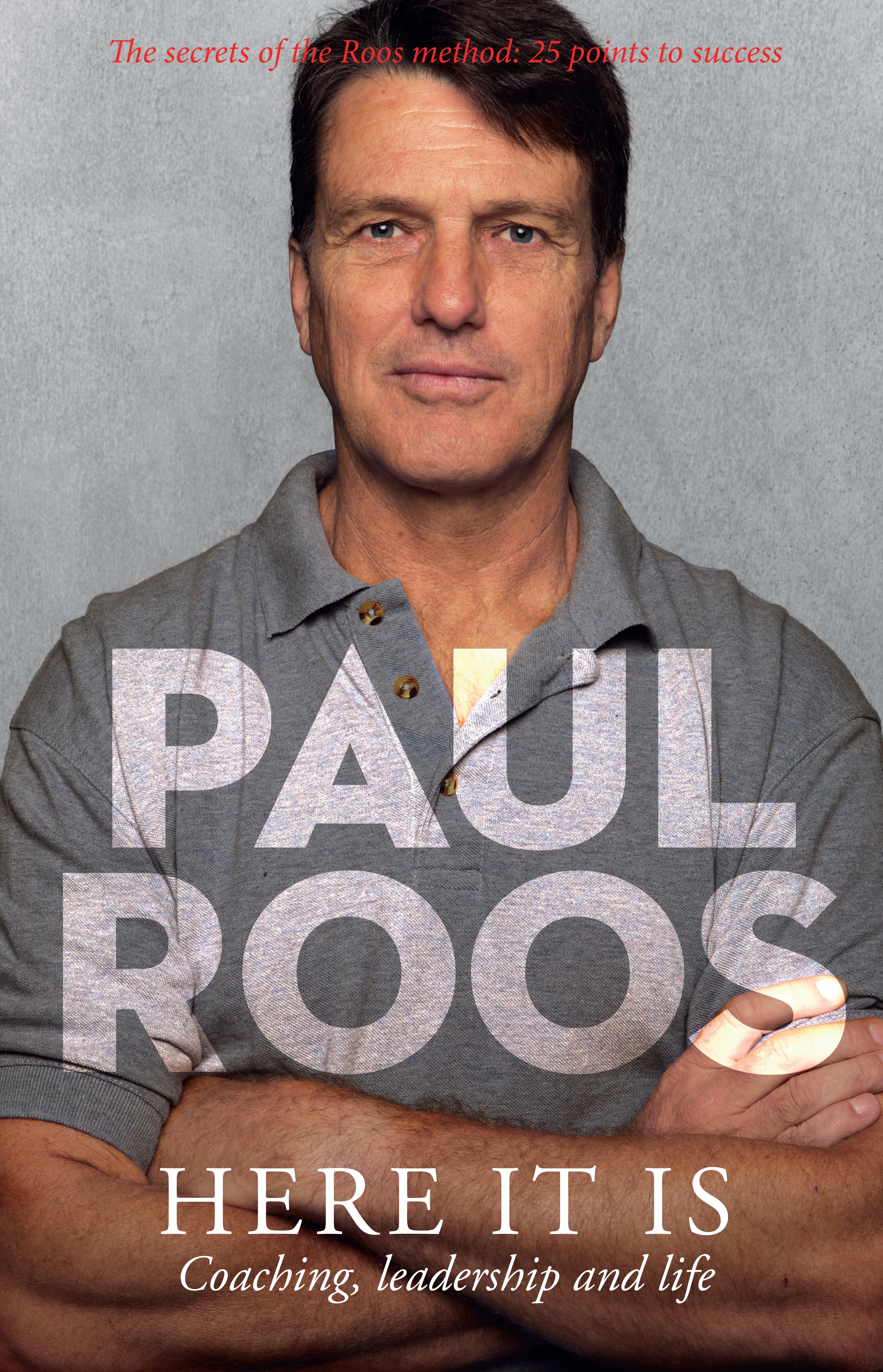
    Here It Is: Coaching, Leadership and Life by Paul Roos

    This was a fantastic biography by Paul Roos and gives insight into his coaching and leadership principles as an AFL coach. The fact that I enjoy sport and listening to Roosy on the radio helped me to buy the book in the first place. I kept seeing clear applications to youth ministry in much of his approach so I wrote a little something on that too. Go there for further details about the book.

    The Hate Race by Maxine Beneba Clarke

    I made it through to the 100 page mark and called it quits. It is a well regarded memoir, highlighting the racism and casual racism of Australians in the 1980s to today. I’ve got no criticism of the book, I just didn’t enjoy it and wondered where it was heading.

    Strange Days: Life In The Spirit by Mark Sayers

    This was full of cultural analysis, as per usual from Sayers. Strange Days is more about living in the tension of the world but seeking to be set apart from the world as a believer. The book examines the biblical text of what it means to live in exile, what it looks like to live in the world today, and then how to think as a Christian in these tension-heightened days. Like Disappearing Church, which I preferred, it is full of ideas, analysis, and application.

    Lion by Saroo Brierley

    What a memoir! This is the story of Saroo, who became separated from his mother at five years of age. He became lost in Calcutta and was eventually adopted by an Australia couple in Hobart. The story is just phenomenal. It’s an emotional rollercoaster at times, but written in a very positive and encouraging way. It’s a must read. You may have already seen the movie. I haven’t.

    What have you read recently?

  • The Glue by Mike Stevens

    Mike Stevens recently self-published a youth ministry book for youth pastors and youth ministry leaders. “The Glue: Relationship As The Connection For Effective Youth Ministry” is a helpful volume in thinking through the practicalities of youth ministry. It is a good addition to the youth ministry literature, and terrific to have another youth ministry resource produced here in Australia. Here are a few of my reflections on the book after reading it recently.

    thegluemikestevens

    In this book, Mike seeks to put his ideas about youth ministry leadership onto paper. He gives us a view into the way he thinks about youth ministry and its leadership, suggesting what might be most useful for us as youth pastors, leaders, and churches.

    What I found most beneficial in this book was to be reminded again of the importance of relationship in leadership, and in the developing of leaders. The relational element of the leadership development process is what stood out to me the most. While there is much to think through practically, which Mike outlines throughout, it is relationships that make youth ministry an actual ministry. Relationship is central to any youth ministry, both relationship with God and with one-another. And so, the main aim of this book is to remind us that youth ministry is relational ministry. This is front and centre throughout, and is the core of each chapter (or section).

    Clearly the book is focussed on being practical. There are sections and sub-sections on being a disciple, personal development, developing others, youth ministry foundations and the like. But within each chapter there are also short and sharp tips for anyone in youth ministry. This includes, how to communicate with leaders and parents, why camps are important, what questions to ask in beginning at a new church, how to finish a role well etc. The book aims at being practical and it does just that. This is opposed to being more theological in nature. There is brief mention of theological principles and foundations, which is quite common in youth ministry literature, and 99% of the word count is spent on application and concrete youth work. It’s clearly a practical youth ministry book.

    A unique aspect to this book is the reflection section at the end of each chapter. These reflection pieces enable the reader to dig deeper into the content and see how it applies to their context. I found these reflection sections a worthwhile addition to this book, with good questions asked of the reader. I think is particularly useful for youth leadership teams who may work through this book together and make the content specific to their ministry or church.

    I liked the reminder about relationship being central to youth ministry. Often we can quickly lose sight of the relationships we are building as we plan and prepare for the upcoming youth group event or small group. But, I also appreciated the sub-section on “The Four Big Asks of Youth Leadership” (p87-100). Here Mike outlines the clarity in which we need to communicate to our youth leaders. After all, what exactly are we asking them to do, say, on a Friday night? Mike summarises his answer to this in four parts: (1) Lead from your growing relationship with Jesus, (2) Follow up young people, (3) Prepare for Game Time (i.e. a youth group night or event), and (4) Deliver on Game Time (i.e. be punctual, present, willing to serve, and take initiative). This is not only an example of the practical nature of this book but also highlights the thinking and clarity we should be seeking to lead from.

    The Glue is a very easy read and is written like a series of blog posts, which I believe some of these chapters were originally. As I mentioned earlier, I think this is a good addition to the numerous books on youth ministry, particularly for us here in Australia. It is more for youth pastors and youth ministry leaders, but would be helpful for parents and the wider church too. Unless you’re already across the basics of a theology of youth ministry then I’d recommend reading this alongside “Gospel-Centred Youth Ministry” or Andrew Root’s “Taking Theology to Youth Ministry” series.


    It would be worth me disclosing that I do in fact know Mike! We have been colleagues for a few years now within the wider Baptist movement here in Australia. But even though I do know him, alas, I was not paid or given any sort of favour for this reflection! If you’re considering buying this book I’d recommend you get it directly from his website, as that’ll help him cover his self-publishing costs. Enjoy.

  • Here It Is: Paul Roos, Leadership, And Youth Ministry

    I recently finished reading the latest book by Paul Roos, “Here It Is: Coaching, Leadership and Life.” Paul Roos is a very successful AFL coach and highly sought after for his man-management and leadership coaching. This year I’ve enjoyed listening to him in the commentary box and was intrigued to read how he approached coaching and working with teams.

    I often wonder how closely coaching an elite sporting team and being involved in Christian ministry align. Obviously, there are significant differences, and the markers of success are worlds apart. However, leadership is still leadership and so part of reading this book was to gain insights for youth ministry. As I read the book I was constantly thinking how his principles for leadership applied to youth ministry. I found much of what he talked about helpful because (1) I enjoy sport and AFL, and (2) I could see his approach being similar to other things I’ve read or heard regarding ministry.

    Below are 10 ideas I found helpful. I wonder if they impact the way we approach youth ministry ourselves?
    Here it is

    (1) The Importance Of Relationships

    Roos emphasises relationships as the key to success at a football club. He played at a time where it was ‘old school’ football. A time where the players would simply train, turn up to play, and do whatever the coach would ask. Often there was little relationship between players, coach, and other staff. After observing this as a player he decided to approach things differently and have a focus on positive inter-club relationships.

    In youth ministry (and church ministry) it’s all about relationships. I’ve been reminded by this in other ways recently, and will hopefully elaborate on that in coming posts. But, needless to say, everything in youth ministry is about relationships. It’s about relationship with God and relationship between people. It’s about relationship with pastoral staff, it’s about relationship with leaders, and between leaders. It’s about relationship with young people and the relationships they have between themselves. It’s about relationship with everyone. Youth ministry is about relationships.

    (2) The 25-points

    Within a month of finishing up as a player Roos wrote down 25-points that were essentially values and standards he would articulate and live out as a coach. These 25-points include the majority of the points I am drawing out here, but the point is he actually wrote down the values he wanted to keep to and they helped guide him in his coaching.

    I wonder whether we as youth ministry write down standards and values that guide us in our leadership? It is worth considering what is most important to you, and where you believe leadership in youth ministry should be focussed on. When being interviewed for the role I currently have I took with me a sheet of paper that had some key scriptures for the way I approached ministry and also seven, what I called, ‘Pastoral Pillars’ that would be my guide as a Youth Pastor. The headings for each of these were: (1) Relational, (2) Disciple Development, (3) De-Program, (4) Leader Development, (5) Mission Posture, (6) Framed Risk, (7) Grey OK. This helped me articulate where I was at and also informed the committee who they were getting. I found it helpful. I think they did too. Do you have something similar?

    (3) The Calm Leader

    Roos played in an era where coaches going off their head was common practice. Giving a good dressing down, dragging the players off the field and onto the bench when they made a mistake, and generally trying to motivate players through yelling and shame. Roos saw this wasn’t benefiting anyone, particularly in keeping morale up, developing players, and providing motivation. His response was to make sure he kept himself calm. He made sure he was emotionally stable in his leadership and provided confidence in doing so. He didn’t want to react in an emotionally volatile way when winning or losing.

    In youth ministry, are you a stable and calm leader? A big influence on me has been the idea of being a ‘non-anxious presence’. That is, someone who is calm, not anxious, and emotionally stable during times of upset, crisis, and conflict. I have wondered whether this can be detrimental when certain situations call for passion, enthusiasm, and excitement. But, in general, a person who leads in youth ministry needs to be calm and in doing so inspire confidence and trust in their leadership.

    When a kid has fall and breaks their foot at a youth camp, be calm and deal with it appropriately. When a leader seems to be going through some sort of crisis and requires some extra attention, be calm and deal with it appropriately. When a parent doesn’t like an action that has been taken and let’s fly with their complaint, be calm and deal with it appropriately. In youth ministry, we need calm, non-anxious, leaders who in doing so help inspire, motivate, and build trust with people around them.

    (4) The Time It Takes To Develop People

    Roos understood that it takes time to develop players. He comments that the age of great learning for a footballer is 18-22 years old. They get drafted, and then take years to develop in their skills, learning about the game, and general aptitude for elite AFL football. Recognising this, Roos seemed to do a few things. First, he made sure the players understood his game plan, their role in the team, and the skills required for top level football. Second, he took time in bringing them into the elite league of the game, often keeping them in second tier competitions for longer than other coaches would. There is the implication that it takes a number of years to develop as a player, helping this development from a young age was his goal. This was clear within his chapters on leading the Sydney football academy for talented teenagers.

    In youth ministry, it takes time to develop faith and to develop in leadership. I think faith could be explored separately to this, but leadership and learning the ropes of youth ministry can begin to be taught while students are still going through youth group and the youth ‘programs’. The youth programs can be tools for discipleship, leadership development, and possibly even church leadership too. But even if we’re intentional it will take time. As hard as it sounds, not all people will have the character or aptitude for youth ministry leadership, I don’t think God has made everyone equal in this regard. However, there are plenty of people who one may not think as ‘youth ministry potential’ who are able to learn and grow in their leadership skills. This simply takes time.

    (5) Everyone Has A Role

    Following on from development is also the question of role. Roos outlined clearly how everyone in the team had a role. Sometimes this was different to what the player had always known. The player may have believed that getting 30 possessions a match was his role, but actually, his role was part of a larger system, the team system, to which they all played a vital part. If that player only had 20 possessions but played their role as they were supposed to then the team had better success than if they went it alone, believing they had to win the game for the team. Roos believes that everyone at the football club has a role and it needs to be defined. Everyone from the President, CEO, Senior Coach, Assistant Coaches, and the players. In some ways, this aligns with another of his values, which was to deal with every player individually, knowing their personal strengths and weaknesses. This avoids lumping everyone into the same box. It is about getting the most out of each person.

    I wonder how we view our youth ministries? Do we do that for our students? For our leaders? For our wider church? The Youth Pastor has a role, that seems to be more defined than others in the church. But, I would argue that just as Paul in 1 Corinthians 12:12-27 writes about the body of Christ, so too, everyone in the church has a role in regard to youth ministry. It’s just not defined or communicated. Therefore, rather than getting every youth leader to be involved in everything on a Friday night perhaps some people are better at talks and should those gifts more often. Perhaps others are good at social media and should look at being communication co-ordinators. Perhaps others are good at running games, explaining them well and getting the group involved. Perhaps others are good at administration and should be looking at the database and helping people in that way. This would help with leadership development, understanding of the various facets of youth ministry, and also help with delegation.

    (6) Team Formed Standards And Values

    A key aspect to Roos’s approach with coaching was to involve every one of the players in determining what the team stood for. The team would have a pre-season camp and flesh out what their values and standards were. This would include values like honesty, hard work, and a never give up attitude. As these values made their way through the team the players themselves would be the ones enforcing the standards. In this way, everyone is invested in the performance of everyone else. Not only on the field, but also off it.

    Could this be a way forward for youth leadership teams? I know I’ve done this a little with my youth leadership teams. We’ve created some leadership commitment guidelines to help guide what it means to be a leader in the youth ministry. I’m sure this could be enforced more, and with each other helping to lift their game in various areas. As an example, one of these guidelines is child safety. If a leader goes outside the bounds, say, initiates a hug with a student, and another leader sees this, they would then pull them up for it. If there is feedback given in terms of the talk or a game, then another leader can do that – encouraging them and also helping them to improve. I see big advantages when the leadership team is invested in creating the standards and values of the ministry.

    (7) A Yearly Review

    Each year Roos would sit down with each individual player and work through strengths and growth areas.

    In youth ministry this would be worth doing also, not only together as a team but individually. As a Youth Pastor I would expect to catch up with my leaders reasonably regularly anyway. But, there could be an intentional one-on-one at the end of the year. This could touch on topics such as discipleship growth, spiritual disciplines, church involvement, and an area to grow in next year.

    (8) The Attitude That Rubs Off

    Roos knew that his attitude would rub off on the players. As the central leader of the club his attitude meant everything. He made sure he was positive and had a positive outlook on the club, the players, and what they could achieve. This doesn’t mean he never made critical judgements about what was going on or was disappointed in players actions. He simply wanted to be positive in his attitude no matter the result.

    Youth ministry isn’t in the win-loss premiership game, but we still have indicators that mean we are satisfied or dissatisfied with the way things are going. At the end of youth group leaders can be up and about because they believe the night went well. Or, they can be flat and a bit disappointed. A process for assessing each youth event and program is vital. But, even more so, the positive attitude of the main leader keeps the big picture in mind and helps other leaders assess correctly. The attitude of the Youth Pastor or key leader has a big impact.

    (9) The Game Plan

    Once all his big blocks of values and standards, attitude and roles were in place Roos also had a game plan to win each match. This game plan seemed to be the same from year one to year ten. It didn’t seem to change much. However, there was a plan. As it has been said, “If you fail to plan, you are planning to fail”.

    It is important to plan in youth ministry. Not just planning a few months out but also having a plan for each event, small group, or youth group night. It is important that everyone on the team knows that plan. I am one who prefers to have those plans early in the week. Others prefer to bring the plan to the night an hour before we start. In any case, a basic plan for us on a Friday night is (1) Welcome, (2) Games, (3) Talk, (4) Discussion Groups. We may also include a time for snacks or for making sure a couple of leaders are at the door when parents arrive for pick-up. After the night is done and things are packed up we as leaders gather and chat through the highlights and lowlights of the evening. It is important to have a plan for youth ministry, one that is broad and one that is specific.

    (10) Communicate, Communicate

    With his commitment to relationships Roos had an emphasis on communication. He kept it simple and constant. Communication between everyone was vital is sustaining relationships and also reinforcing the values and standards of the football club.

    If there is little communication the youth ministry will not go well. There is communication needed between many different parties and in a variety of ways. Communication between Youth Pastor and leadership team and pastoral team. Communication between youth group leaders and parents and students. Communication between youth ministry and wider church. Any relationship you can think of relating to youth ministry requires some form of communication. It is an important part of the gig. And at the end of the day, it is another key aspect to building relationships.

  • The Privilege Of Youth Ministry

    When finishing up in any youth ministry role, paid or volunteer, I’ve always been struck by the privilege it’s been to have such a position.

    There’s something ironic about finishing up in a role and then being overwhelmed with the sense of satisfaction and privilege for being in it in the first place. While doing the tasks and duties associated with the position we are often unaware of the the privileges. We feel the grind and experience the drag, but hindsight, as they say, is a wonderful thing.

    I distinctly remember the feeling of concluding our time in Lebanon. The relationships built, the friendships formed. I remember saying goodbye and realising that it is unlikely I will ever see these people again. It was simply a privilege to meet them and be involved in their lives.

    I remember how it felt leaving Canterbury Baptist. We’d been there nearly 10 years and I had made a contribution as a volunteer leader right through to being on staff. There was, and still is, joy, satisfaction, and a large spoonful of pride in what had been accomplished. And of course, there were challenges along the way. Some unbelievably hard. But the privilege of being in such a position is what I remember most.

    When in the middle of it all it is easy to get bogged down in the day-to-day, week-to-week tasks that need to be done. The challenges are at the forefront of the mind, not the privileges. But with intentionality I believe fostering a sense of privilege during your time in youth ministry is vital for self-care, sustainability, and perspective.

    The realisation of such a privileged position doesn’t have to happen once it’s all gone.

    I have small children. And for nearly five years now I am often told by older and wiser parents, “It goes so fast, make sure you treasure every moment”. In the midst of parenting small children hearing the ‘treasure every moment’ thing can get on your nerves. But what these kindhearted people are saying is true. It goes fast, and there are numerous moments to treasure.

    The same could be said for youth ministry.

    Youth ministry is a privilege.


    When you’re in it no one is telling you how much of a privilege it is. Conversations with other youth ministry practitioners usually centre around the challenges and the problems. But let me tell you that youth ministry is a privilege, you should treasure every moment (OK, almost every moment).

    This is the final part in the ‘Youth Ministry Series’. It’s been a journey, and we’ve touched on a number of subjects. Each post has explored an aspect of youth ministry that I wish I had known more of before entering this gig. I’ve mused on these topics, and gained clarity for myself, as I’ve thought through what would have been helpful to me over 15 years ago.

    To finish this series, and capture the essence of what youth ministry is about, I think it is important to be reminded of the privilege it is to be in such a role.

    With that said, here are five privileges I believe are important to recognise in youth ministry.

    (1) The Privilege of Influence

    A leader is someone who influences others. This can be done with a title, but in most cases this influence occurs through the giving and receiving of trust. In any form of youth ministry role, paid or volunteer, trust is given to you and it is a privilege to receive it.

    Even more unbelievable is the fact that you have the opportunity to influence people for good. You become a voice in a young person’s life. A voice they respect and seek when making decisions or dealing with challenges in their life. You become someone they look up to, someone they seek to imitate.

    Furthermore, the influence that those in youth ministry carry helps frame how students think about their faith–how they think about God. Youth ministry research suggests that a young person needs connection with five older adults to help make faith ‘stick’. These days it can be hard for a student to find that many older adults interested in intentionally investing in them. This is where youth ministry leaders are so vital, and where inter-generational ministry is a must. The more people in youth ministry the greater the likelihood of teenagers continuing in faith.

    Here lies great responsibility and great privilege.   

    (2) The Privilege of Partnership

    Youth ministry isn’t done in a bubble, solely interacting with students.

    Well, it shouldn’t be.

    One amazing aspect to youth ministry is the ability to not only be part of a teenagers life but also the life of their family. Connecting with parents, siblings, and the extended family is a privilege.

    The opportunity to celebrate with families as they pass certain milestones is a unique aspect to a youth ministry role. Whether it is entering high school, getting L-plates and P-plates, turning 18 or 21, graduation ceremonies or celebrating sporting, art, or music successes, the involvement in family life is a special benefit.  

    And then once you hang around long enough you begin to take a more pastoral role with the parents as their kids move out, get engaged and married, and have children themselves.

    What a privilege.

    (3) The Privilege of Care

    This is a massive one for me.

    This week alone I could tell you story after story of the significant challenges young people have to face. Everything from the death of a grandparent, to a mental health diagnosis, to the separation of a family member, to the trauma of bullying, to the parent diagnosed with cancer, to the family member involved in a car crash, to the unhealthy home life, to the poor results at school.

    Young people are dealing with a lot. Sometimes too much. But it is such a privilege to be one of the first people they message when things aren’t going well. To be someone whom they seek out and lean on when challenging times are upon them. To be a person who they trust enough to share their struggles in faith, home, and life.

    The privilege of being there, of being present, is something that cannot be taken for granted.

    (4) The Privilege of Teaching

    Each week there are times for the opportunity to open the bible and pray with students.

    For someone, young or old, willing to sit down for an hour or two and read the bible and pray with you is a phenomenal privilege. They could be doing something else with their time. Instead, they purposefully choose to meet and spend time learning and growing in their faith. The want to make connections between the bible and their lives and pray with others. 

    This should blow our minds.

    The opportunity to do this keeps you sharp in teaching faith. It makes you think through how to make the scriptures relevant and applicable to teenagers. It brings with it the responsibility to teach the truths of God and allow space for them to explore it themselves.

    Having this chance to shape how people think about God and his Word in a deep and lifelong way is a privilege that makes me wonder how we actually get to do this.

    (5) The Privilege of Ministry

    The fact that churches employ people to help grow and lead their young people staggers me.

    It has become normative in churches for the second staff appointment to be that of a Youth Pastor. For a church to do that is quite a statement. It speaks of their intention to invest and disciple young people. It speaks of the priority they have in students. It speaks of the high regard they have for the ministry to teenagers.

    Most youth ministry leaders I know would be doing what they do even if they didn’t get paid for it. It’s the passion and heart they have for seeing those in high school come to faith and grow in faith that drives them. This, like anything, can be used and abused. Unfortunately, there are plenty of stories of this happening in churches around Victoria and Australia as we speak. But on the whole, it is a privilege to even have the opportunity to work in this sphere.

    Having the opportunity to be employed in Christian youth work, to connect and disciple young people, is such a privilege. To see them grow and mature as people and people of faith is something money can’t buy.

    I’m sure there are many other privileges to add to this as well. Some internal, some external. Perhaps you have more you could add to the list yourself. But if you’re involved in youth ministry in any form, whether it’s officially as a ‘Youth Leader’ or whether you happen to play in the church band with a 17-year-old and speak to them every so often, be reminded that it is a privilege to do so.

    In all the ministry, in all the challenges, in all the things we do within the sphere of youth work we need to remember that it is a privilege to do what we do.


    A while ago I wrote a post about what I wished I knew when entering youth ministry. This is part eleven of a series dedicated to elaborating each of those points. You can read part onepart twopart threepart fourpart five, part six, part seven, part eight, part nine, and part ten here.


    11 Things: A Youth Ministry Series
    Beginning As A Youth Pastor
    Part 1: Life With Jesus
    Part 2: The Senior Pastor-Youth Pastor Relationship
    Part 3: Church Health > Youth Ministry
    Part 4: Friends For The Journey And Friends For The Road
    Part 5: The Grass Isn’t Greener
    Part 6: Nothing Else Matters
    Part 7: Temptation And Holiness
    Part 8: Church Culture And Politics
    Part 9: Fixing People vs God’s Grace
    Part 10: Working Better
    Part 11: The Privilege Of Youth Ministry (this post)

  • Working Better

    ‘Adulting’ according to Urban Dictionary, is:

    “…to do grown up things and hold responsibilities, such as, a 9-5 job, a mortgage or rent, a car payment, or anything else that makes one think of grown-ups.”

    When entering youth ministry it is not uncommon to be in our early to mid-20s. In all reality, there is little of life lived and much more of life to come. Some things we aren’t taught in school and one of those things is adulting.

    Part of adulting is having a system to deal with all the adulting things we need to do in life and work. Having a system to deal with these things can be learnt and is important in any job, relationship, or area of responsibility you might find yourself in.

    With this in mind, I wish I had a better idea of organising my workflow and system when entering youth ministry. I have always considered myself someone who is pretty decent at organising and planning. For example, I have colour-coded calendars that tell me what’s coming up in church and family life. I have a spreadsheet that details every book I’ve read since 2005. I keep my books in categories. I keep notes of conversations I’ve had with people. I used to rename individual photos according to date and place. So, yeah, I think I’m OK at this organising thing…sometimes a bit too much.

    But starting out life in my twenties I had no idea. It took me a number of years, through working as a Personal Trainer and Gym Manager, and into missions and ministry, before I felt I had a good system.

    This system refers to how one handles their to-do-list and what you do with all the life administration you end up doing. This can include how to deal with email, reminding yourself of the improvements you need to make when running that camp again next year, setting a date to write a report, trying to remember the contact details of a new person at youth group. And so on.

    There is a lot to deal with in youth ministry, and in life, so a system to deal with this is always helpful.

    If I had my time over again I would begin thinking through this stuff earlier than I did. In many ways this is a learned process but there are plenty of resources to help young Youth Pastors think through the skills they need to improve as part of the job. In youth ministry there can be plenty of things going on in church life and it is hard to keep all the balls in the air at once. If starting out again, I’d think about how to structure my week, how to get my emails down to zero, how to plan the next 12 months and the next 3 years, how to understand the rhythm of the church’s year, how to deal with budgets, and how to plan one-off events.

    All this non-people work makes our world turn on its axis.

    What’s it called?

    That’s right, administration.

    The death of many a good Youth Pastor.

    In every job there are things that people don’t really wish to do. Some can be delegated but others need to done. This is one of them.

    So really, I’d simply encourage you to read two books.

    First, Do More Better by Tim Challies, outlines briefly how to approach a working system that is adaptable to your needs and scaleable to your work and life context.

    Second, What’s Best Next by Matt Perman is also an excellent resource on how to think about personal productivity and then how to apply it.

    Administration, it’s not the sexiest topic. But it’s important if you’re wanting to learn more about how to actually do the job of youth ministry in amongst all the caring and events.

    It’s something I wish I knew when I started out.


    A while ago I wrote a post about what I wished I knew when entering youth ministry. This is part ten of a series dedicated to elaborating each of those eleven points. You can read part onepart twopart threepart fourpart five, part six, part seven, part eight and part nine here.


    11 Things: A Youth Ministry Series
    Beginning As A Youth Pastor
    Part 1: Life With Jesus
    Part 2: The Senior Pastor-Youth Pastor Relationship
    Part 3: Church Health > Youth Ministry
    Part 4: Friends For The Journey And Friends For The Road
    Part 5: The Grass Isn’t Greener
    Part 6: Nothing Else Matters
    Part 7: Temptation And Holiness
    Part 8: Church Culture And Politics
    Part 9: Fixing People vs God’s Grace
    Part 10: Working Better (this post)
    Part 11: The Privilege Of Youth Ministry